Close Menu
TechCentralTechCentral

    Subscribe to the newsletter

    Get the best South African technology news and analysis delivered to your e-mail inbox every morning.

    Facebook X (Twitter) YouTube LinkedIn
    WhatsApp Facebook X (Twitter) LinkedIn YouTube
    TechCentralTechCentral
    • News
      Vodacom to take control of Safaricom in R36-billion deal - Shameel Joosub

      Vodacom to take control of Safaricom in R36-billion deal

      4 December 2025
      Black Friday goes digital in South Africa as online spending surges to record high

      Black Friday goes digital in South Africa as online spending surges to record high

      4 December 2025
      BYD takes direct aim at Toyota with launch of sub-R500 000 Sealion 5 PHEV

      BYD takes direct aim at Toyota with launch of sub-R500 000 Sealion 5 PHEV

      4 December 2025
      'Get it now': Takealot in new instant deliveries pilot

      ‘Get it now’: Takealot in new instant deliveries pilot

      4 December 2025
      What South Africans searched for most in 2025

      What South Africans searched for most in 2025, according to Google

      4 December 2025
    • World
      Amazon and Google launch multi-cloud service for faster connectivity

      Amazon and Google launch multi-cloud service for faster connectivity

      1 December 2025
      Google makes final court plea to stop US breakup

      Google makes final court plea to stop US breakup

      21 November 2025
      Bezos unveils monster rocket: New Glenn 9x4 set to dwarf Saturn V

      Bezos unveils monster rocket: New Glenn 9×4 set to dwarf Saturn V

      21 November 2025
      Tech shares turbocharged by Nvidia's stellar earnings

      Tech shares turbocharged by stellar Nvidia earnings

      20 November 2025
      Config file blamed for Cloudflare meltdown that disrupted the web

      Config file blamed for Cloudflare meltdown that disrupted the web

      19 November 2025
    • In-depth
      Jensen Huang Nvidia

      So, will China really win the AI race?

      14 November 2025
      Valve's Linux console takes aim at Microsoft's gaming empire

      Valve’s Linux console takes aim at Microsoft’s gaming empire

      13 November 2025
      iOCO's extraordinary comeback plan - Rhys Summerton

      iOCO’s extraordinary comeback plan

      28 October 2025
      Why smart glasses keep failing - no, it's not the tech - Mark Zuckerberg

      Why smart glasses keep failing – it’s not the tech

      19 October 2025
      BYD to blanket South Africa with megawatt-scale EV charging network - Stella Li

      BYD to blanket South Africa with megawatt-scale EV charging network

      16 October 2025
    • TCS
      TCS+ | How Cloud on Demand helps partners thrive in the AWS ecosystem - Odwa Ndyaluvane and Xenia Rhode

      TCS+ | How Cloud On Demand helps partners thrive in the AWS ecosystem

      4 December 2025
      TCS | MTN Group CEO Ralph Mupita on competition, AI and the future of mobile

      TCS | Ralph Mupita on competition, AI and the future of mobile

      28 November 2025
      TCS | Dominic Cull on fixing South Africa's ICT policy bottlenecks

      TCS | Dominic Cull on fixing South Africa’s ICT policy bottlenecks

      21 November 2025
      TCS | BMW CEO Peter van Binsbergen on the future of South Africa's automotive industry

      TCS | BMW CEO Peter van Binsbergen on the future of South Africa’s automotive industry

      6 November 2025
      TCS | Why Altron is building an AI factory - Bongani Andy Mabaso

      TCS | Why Altron is building an AI factory in Johannesburg

      28 October 2025
    • Opinion
      Your data, your hardware: the DIY AI revolution is coming - Duncan McLeod

      Your data, your hardware: the DIY AI revolution is coming

      20 November 2025
      Zero Carbon Charge founder Joubert Roux

      The energy revolution South Africa can’t afford to miss

      20 November 2025
      It's time for a new approach to government IT spend in South Africa - Richard Firth

      It’s time for a new approach to government IT spend in South Africa

      19 November 2025
      How South Africa's broken Rica system fuels murder and mayhem - Farhad Khan

      How South Africa’s broken Rica system fuels murder and mayhem

      10 November 2025
      South Africa's AI data centre boom risks overloading a fragile grid - Paul Colmer

      South Africa’s AI data centre boom risks overloading a fragile grid

      30 October 2025
    • Company Hubs
      • Africa Data Centres
      • AfriGIS
      • Altron Digital Business
      • Altron Document Solutions
      • Altron Group
      • Arctic Wolf
      • AvertITD
      • Braintree
      • CallMiner
      • CambriLearn
      • CYBER1 Solutions
      • Digicloud Africa
      • Digimune
      • Domains.co.za
      • ESET
      • Euphoria Telecom
      • Incredible Business
      • iONLINE
      • IQbusiness
      • Iris Network Systems
      • LSD Open
      • NEC XON
      • Netstar
      • Network Platforms
      • Next DLP
      • Ovations
      • Paracon
      • Paratus
      • Q-KON
      • SevenC
      • SkyWire
      • Solid8 Technologies
      • Telit Cinterion
      • Tenable
      • Vertiv
      • Videri Digital
      • Vodacom Business
      • Wipro
      • Workday
      • XLink
    • Sections
      • AI and machine learning
      • Banking
      • Broadcasting and Media
      • Cloud services
      • Contact centres and CX
      • Cryptocurrencies
      • Education and skills
      • Electronics and hardware
      • Energy and sustainability
      • Enterprise software
      • Financial services
      • Information security
      • Internet and connectivity
      • Internet of Things
      • Investment
      • IT services
      • Lifestyle
      • Motoring
      • Public sector
      • Retail and e-commerce
      • Satellite communications
      • Science
      • SMEs and start-ups
      • Social media
      • Talent and leadership
      • Telecoms
    • Events
    • Advertise
    TechCentralTechCentral
    Home » In-depth » The year that changed television forever

    The year that changed television forever

    By The Conversation28 December 2015
    Twitter LinkedIn Facebook WhatsApp Email Telegram Copy Link
    News Alerts
    WhatsApp

    television-tv-640

    “The end of television” is a headline that’s been liberally thrown around for the past 15 years.

    Indeed, the past year saw audiences becoming more and more amenable to adopting new ways to watch TV shows, with live audiences for broadcast and cable programmes declining sharply.

    Even entities like American sports network ESPN — which many thought immune to these changes in audience behaviour — acknowledged subscriber losses this year. In response, Wall Street engaged in a mass sell-off of media stocks. Most rebounded by year’s end, but the volatility is indicative of the uncertainty in a sector that finds its core business model being disrupted.

    But viewers are actually watching more TV than ever before. They’re simply shifting to on-demand options from cable operators and broadband services.

    In the past five years, an influx of new broadband-delivered offerings has driven changes in audience behaviour that challenge the businesses of traditional broadcast and cable television channels. Likewise, cable providers find themselves scrambling to adapt to new competition from leaner channel packages that offer flexible pricing options.

    Contrary to what the headlines often suggest, the Internet — or rather, broadband distribution — hasn’t come to kill television. Instead, it’s radically improving it.

    In the 1990s, many assumed the ascendance of what was dubbed “new media” (anything digital or delivered via the Internet) would bring about the demise of “old media” including television.

    But media don’t die. Rather, their distribution technologies are frequently replaced. So, while new media assassins still haven’t killed — or even maimed — television, a revolutionary transition did begin for the medium in 2015.

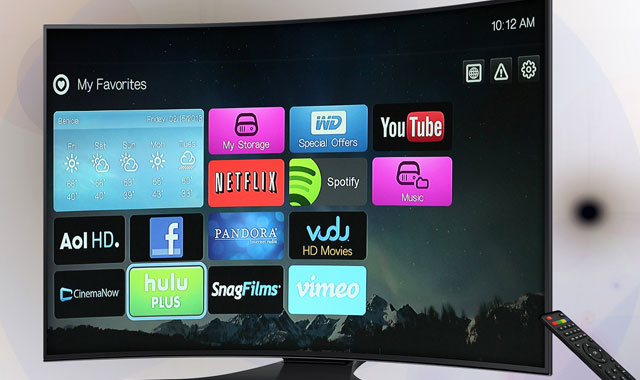
    The most disruptive form of “new media” for television is broadband distribution (what most casually think of as Internet streaming). Companies that deliver video over broadband — Netflix, Amazon, Hulu, YouTube — use a new (and in many ways, better) technology for delivering traditional television shows.

    Since 2010, broadband-delivered video services and “legacy television” (a more generous name for broadcast and cable TV than “old media”) actually enjoyed an unexpected symbiosis. Rather than battle to the death, the two quietly became neighbouring options for viewers, and to some extent, partners.

    Broadband television distributors (Netflix, in particular) provided a much-needed new revenue stream to traditional networks by paying them high fees to use their shows. In exchange, Netflix was able to disseminate the high-quality television content needed to woo viewers.

    As a result, Netflix slowly re-acculturated expectations of how television should be experienced: that it needn’t be watched at a specific time, with a week between episodes, and interrupted every 10 minutes with commercials.

    But this past year, the tenuous détente fell apart when some of the biggest players in the legacy television industry decided to launch their own broadband-distributed services.

    The biggest developments were HBO’s launch of HBO Now and CBS’s debut of CBS All Access. Like Netflix, both services require a subscription payment (though All Access has ads too) that allows customers to access a deep library of content they can watch according to their own schedules.

    Several other services also launched, including Nickelodeon’s Noggin, which has hundreds of episodes geared toward pre-schoolers. And NBC and Disney jumped in with the comedy portal SeeSo and DisneyLife, respectively.

    It’s broadcast technology that’s in peril
    Traditional broadcast technologies allowed for the transmission of only a single stream of programming at a time. This gave rise to almost all of the TV conventions that viewers have come to know: a schedule, channels, fixed programme lengths and intermittent advertising.

    If you think about it, these aren’t conventions specific to the television medium. Rather, they’re responses to broadcasting’s technological limitations.

    Sometimes the arrival of new distribution technologies introduces only moderate change, like when the music industry shifted from records to cassettes. Other times, new distribution technologies require a radical reconfiguration of business models and completely change the user experience of a medium.

    This is what’s now happening for television.

    The era of linear broadcast television is drawing to a close
    The era of linear broadcast television is drawing to a close

    And just as streaming makes for a very different viewing experience, it is also changing the nature of the shows that are made. Streaming services produce content targeted to narrower niches and sensibilities. They’ve also allowed for much greater experimentation and diversity in the ways stories are told and structured.

    These recent developments illustrate how profoundly norms of making and watching television will continue to shift in coming years.

    When announcing the new version of Apple TV in September, Apple CEO Tim Cook said that the “future of TV is apps”. That’s one way to characterise the new services. They also could be thought of as the “channels” of the post-network era of broadband distribution. At their core, they’re portals to content; most require a monthly fee, but many are also ad-free and can be easily viewed on a number of devices, from smartphones to traditional television sets.

    As portals have introduced new ways to view content, traditional cable bundles also appear to be at a crossroads. The cable bundle is the package of over 100 channels required in even the “basic” digital package. Since most viewers watch fewer than 20 channels, many feel that they’re overpaying for content.

    Dubbed “skinny bundles”, Sling TV, Sony Vue and Verizon’s Fios Custom TV all began offering packages of channels that can be experienced as a typical channel with scheduled programming, in addition to some on-demand content. Like the portals, these skinny bundles are delivered via broadband and add to the competition by providing a cheaper alternative (though also far fewer channel options) for consumers who want to reduce their cable bill.

    Despite the added competition, cable providers still find themselves in an enviable position. The portals and the skinny bundles both require high-speed Internet service, which most receive from those very same cable companies. And in 2015, Internet subscribers surpassed cable subscribers at Comcast, the nation’s largest “cable” company.

    In response to the growing reliance on high-speed Internet, several broadband providers are moving forward with plans to shift to usage-based billing, similar to data-use pricing from mobile phone companies.

    History suggests that fewer than half of the portals or broadband distributed bundles announced this year will exist once business models catch up with technology and the experimenting of the past year gives way to consolidation. It’s not clear who will eventually dominate the post-network era of broadband distribution. But based on the scope of new broadband-delivered entries, it’s obvious that legacy companies have been preparing to pivot to broadband distribution. The embrace of broadband technology makes clear that television’s future innovation won’t be confined to a linear schedule.

    Whether the portals are the chicken or the egg, a vision for the future of television is flickering into focus.The Conversation

    • Amanda Lotz is professor of communication studies and screen arts & cultures, University of Michigan
    • This article was originally published on The Conversation


    Amanda Lotz Amazon ESPN Hulu Netflix YouTube
    Subscribe to TechCentral Subscribe to TechCentral
    Share. Facebook Twitter LinkedIn WhatsApp Telegram Email Copy Link
    Previous ArticleE-toll fines may be in the works
    Next Article Boom in post-Christmas online trade

    Related Posts

    Black Friday goes digital in South Africa as online spending surges to record high

    Black Friday goes digital in South Africa as online spending surges to record high

    4 December 2025
    Bezos unveils monster rocket: New Glenn 9x4 set to dwarf Saturn V

    Bezos unveils monster rocket: New Glenn 9×4 set to dwarf Saturn V

    21 November 2025
    Kuiper no more: Amazon Leo steps up to challenge to Musk's Starlink

    Kuiper no more: Amazon Leo steps up to challenge Musk’s Starlink

    14 November 2025
    Company News
    AI is not a technology problem - iqbusiness

    AI is not a technology problem – iqbusiness

    5 December 2025
    Telcos are sitting on a data gold mine - but few know what do with it - Phillip du Plessis

    Telcos are sitting on a data gold mine – but few know what do with it

    4 December 2025
    Unlock smarter computing with your surface Copilot+ PC

    Unlock smarter computing with your Surface Copilot+ PC

    4 December 2025
    Opinion
    Your data, your hardware: the DIY AI revolution is coming - Duncan McLeod

    Your data, your hardware: the DIY AI revolution is coming

    20 November 2025
    Zero Carbon Charge founder Joubert Roux

    The energy revolution South Africa can’t afford to miss

    20 November 2025
    It's time for a new approach to government IT spend in South Africa - Richard Firth

    It’s time for a new approach to government IT spend in South Africa

    19 November 2025

    Subscribe to Updates

    Get the best South African technology news and analysis delivered to your e-mail inbox every morning.

    Latest Posts
    AI is not a technology problem - iqbusiness

    AI is not a technology problem – iqbusiness

    5 December 2025
    Vodacom to take control of Safaricom in R36-billion deal - Shameel Joosub

    Vodacom to take control of Safaricom in R36-billion deal

    4 December 2025
    Black Friday goes digital in South Africa as online spending surges to record high

    Black Friday goes digital in South Africa as online spending surges to record high

    4 December 2025
    BYD takes direct aim at Toyota with launch of sub-R500 000 Sealion 5 PHEV

    BYD takes direct aim at Toyota with launch of sub-R500 000 Sealion 5 PHEV

    4 December 2025
    © 2009 - 2025 NewsCentral Media
    • Cookie policy (ZA)
    • TechCentral – privacy and Popia

    Type above and press Enter to search. Press Esc to cancel.

    Manage consent

    TechCentral uses cookies to enhance its offerings. Consenting to these technologies allows us to serve you better. Not consenting or withdrawing consent may adversely affect certain features and functions of the website.

    Functional Always active
    The technical storage or access is strictly necessary for the legitimate purpose of enabling the use of a specific service explicitly requested by the subscriber or user, or for the sole purpose of carrying out the transmission of a communication over an electronic communications network.
    Preferences
    The technical storage or access is necessary for the legitimate purpose of storing preferences that are not requested by the subscriber or user.
    Statistics
    The technical storage or access that is used exclusively for statistical purposes. The technical storage or access that is used exclusively for anonymous statistical purposes. Without a subpoena, voluntary compliance on the part of your Internet Service Provider, or additional records from a third party, information stored or retrieved for this purpose alone cannot usually be used to identify you.
    Marketing
    The technical storage or access is required to create user profiles to send advertising, or to track the user on a website or across several websites for similar marketing purposes.
    • Manage options
    • Manage services
    • Manage {vendor_count} vendors
    • Read more about these purposes
    View preferences
    • {title}
    • {title}
    • {title}