South African software services group Adapt IT, which delisted from the JSE earlier this month, had a wild 2021. Not only was it courted by two suitors – one seen as hostile – but it also lost its CEO over serious allegations that surface in an ugly divorce case.
The year was dominated by the tussle between JSE-listed Huge Group – which made an all-share offer to buy out Adapt IT shareholders – and Canada’s Volaris Group, a unit of the Toronto-listed Constellation Software, which made an all-cash offer. The eventual sale to Volaris has now set the business on a new trajectory.
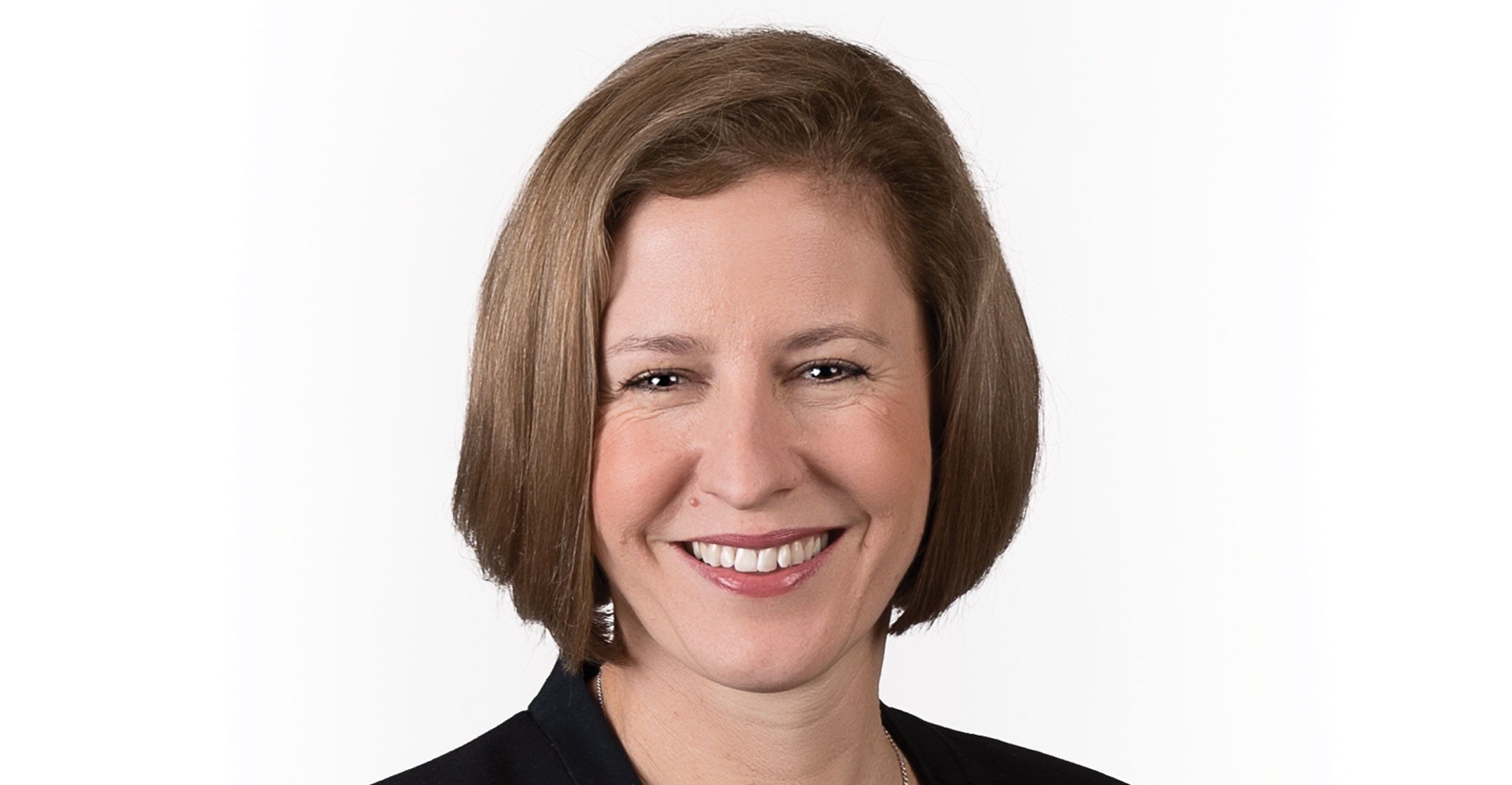
Adapt IT, now led by former chief commercial officer Tiffany Dunsdon – who replaced Sbu Shabalala – is looking forward to a less eventful 2022, one that will allow her and her colleagues to focus on growing the business and making a return to the bolt-on acquisitions that it used it the past successfully to grow its business.
TechCentral editor Duncan McLeod spoke to Dunsdon earlier this week about the twin corporate offers to buy Adapt IT, the scandal that erupted around Shabalala and how the group handled the crisis, and what the future holds for the software group as an unlisted entity. This is a shortened and edited version of that conversation.
Duncan McLeod: You must be feeling relieved after the wild year you had last year.
Tiffany Dunsdon: Delighted! (Laughs.) Delighted with the clean slate that 2022 presents. Last year was certainly very intense for us on all fronts.
DM: You are now delisted from the JSE? How long had you been on the bourse?
TD: It was listed in 1998 on the Development Capital Market of the JSE. That was the Y2K and dot-com bubble era. In 2008, we took it to the main board – we preferred that to going to the AltX.
DM: A different life awaits you now, out of the public eye. Are there any disadvantages, do you think, of no longer being a listed company on the JSE?
TD: There is a listing at the Constellation Software level. Investors and interested parties can still follow the group as a whole. We weren’t keen to have a listing under listing knowing the obligations of being listed and how much time that takes, and then to have another reporting level to Toronto – we didn’t feel that would be a great use of time in a small-cap business.
The structure of the transaction allowed any shareholder who wanted to come private to come with us. If you felt you wanted long-term exposure, you were invited to come along on the same terms. A number of shareholders have done that.
We will still be held to reporting and governance standards of a listed entity, just offshore. That will keep up the governance around everything we do and the quality of how we run the business.
Also, if we want to bid for work with a very large enterprise, or a multinational, they’ll be able to see the scale and the backend that we have behind us (through Volaris Group and Constellation Software).
As far as access to capital is concerned, if we identify a good opportunity and we have exhausted our internally generated capital …. we have shareholders who can back us with additional capital.
On a media profile in South Africa, I think we’ve been around long enough that people know us. We’ll continue to talk about the acquisitions we do and remind people we are here. We’ll make sure we don’t disappear off the radar.
DM: What percentage of your shareholders elected to come along with you?
TD: It’s been 5% and 10% of the total number of shareholders, representing 36% of the shares. It’s a tiny subset, but it’s still a mixed bag of shareholders.
DM: Is Volaris keen to buy out those minorities?
TD: They’d naturally want to acquire those shares in the fullness of time, but they are not in a hurry. They have said holders coming private would have to take a minimum five-year view. Volaris has a long-term lens on their acquisitions.
DM: How does the Volaris deal affect your black economic empowerment rating, particularly from an equity perspective?
TD: There is an obligation on the Competition Commission to assess the public interest aspect of the transaction. BEE and jobs were big components of that. In that, we committed to the commission that within two years we’d make sure a level of 20% of black ownership is achieved. With having the cash exit option through the scheme, we knew black shareholding would dilute because, naturally, a number of black shareholders would want to realise value.
So, there is a combination of measures: there is some continuing recognition, some black shareholding that has elected to stay in, and then there was an undertaking to top that back up by a 5% effective stake through a black education trust that will hold equity in Adapt IT. They will provide education benefits to employees, their dependents and some members of the public.
The other commitment is to maintain the current level of empowerment for at least five years. Volaris has gone into a lot of detail to understand the [empowerment] codes and the commitments we need to make [to maintain our BEE status]. There are measures in place to top up and address the dilution. We are comfortable with these, and we are delighted that Volaris is behind us, and very sincerely so, on that front.
DM: To what extent will your numbers be disclosed in Constellation Software’s financial reporting in Toronto?
TD: We represent about 2% by revenue of Constellation Software. We are going to be lost in the wash there. I don’t think that level of granularity will come out at all. We will report to the shareholders on our register, but it won’t be public information.
DM: Are you committed to staying on as full-time CEO after last year’s exit of Sbu Shabalala?
TD: I am. That’s a five- to 10-year commitment I have given. I am very excited about it. We have a clean runway now and my history has been very much on the M&A side, and that’s a big aspect of the business going forward. I have a very capable executive team who are really excited about the future.
Also, Volaris is very serious about talent development and growth within the group. That gives an opportunity for our people to learn and grow, to travel, and to work on exciting projects.
DM: Shabalala’s shareholding was about 10% of Adapt IT. Has he exited that stake?
TD: I’d prefer you ask him. That information is not in the public domain.
DM: Have you spoken to him since his exit, and do you see any role for him the business going forward?
TD: No comment. I would suggest you rather ask him what his intentions are. There is no proposed formal engagement with him as far as the business is concerned.
DM: It must have been a shock to the system when it happened – your CEO was suddenly in the headlines over the most awful allegations. Is there any advice you’d give to other companies facing what I guess can only be called a PR nightmare?
TD: I’m not really a PR expert. What I, and we, focused on was protecting the company’s reputation, protecting shareholder value, keeping everything stable and working out our obligations in the process – and saying, this is clearly a personal matter, but it affects the company in some way, shape and form, obtaining the right governance advice as to how this should properly be dealt with, engaging experts, and sending a very clear message to the market, to customers, to staff that the interim leadership is very comfortable running the company in the circumstances.
DM: What was Volaris’s take on the situation?
TD: They are very analytical and objective. They make database-driven decisions. They research and ask questions and do their homework well. They did that, in the same way they’d do due diligence on anything else, and evaluated how it impacted the business. The key thing is that at the senior leadership level, we’d had a lot of interactions with them. So, they knew broadly the management team at a high level and had exposure to the depth of management. They understood how well diversified the business was. They took a measured approach to that. They respected our board’s management of the process.
They also took their time to see what the outcome was and whether that gave them a path forward [with the transaction]. There were no knee-jerk reactions – they are seasoned professionals.
All of this helped us develop a strong trust relationship; it helped them see there was resilience in our governance and leadership structures. The business didn’t fall over through these events.
DM: Take us through the sequence of events with the Volaris Group and Huge Group offers.
TD: We had a conversation with Volaris in December 2020. Volaris and the whole Constellation group have been acquisitive for the longest time. We’d had approaches in years gone by, but we were never interested in entertaining those. We said the same thing to them [in December 2020]. It was exploratory and introductory only.
Sbu had met [Huge Group CEO] James [Herbst] in November 2020, and there no meeting of the minds there. Then the unsolicited offer came at the end of January 2021. That’s when Volaris made contact and said they were watching the developments. They said they’d be interested to accelerate discussions [about a deal]. We said we’d entertain that conversation. That’s how it evolved.
We felt it would be good for shareholders not to have one option versus the status quo. And so, we said to them, “You’re a party we would see as a strategic investor. Let us open that opportunity as one of the available options [to our shareholders]’.”
DM: So, if the Huge Group offer hadn’t come along, the Volaris Group talks probably wouldn’t have happened and you’d still be a listed entity on the JSE today?
TD: Probably. [The Huge Group offer] was the catalyst. We were happy to trade as we were and build back strongly from [the pandemic]. That luxury of time was intersected by the unsolicited offer.
DM: What were your thoughts on the Huge Group offer?
TD: Ultimately, it was unsolicited, and, in the fullness of time, we saw that it didn’t enjoy a high degree of support. I have never met anyone from Huge Group or even had a conversation with anyone from Huge Group. The outcome indicates the success rate that kind of approach may have. Having been involved in M&A, I understand that it’s important in a business combination to meet the people and connect with the people that are going to do the combination with. That approach [from Huge] was foreign to me. I am not surprised it didn’t yield a great result. A friendly offer is always going to have a better prospect than an unfriendly one.
Having said that, if one stands back from the two businesses, I also didn’t see the synergies that Huge saw – at all. There was nothing in our strategy that would have led to a conversation with Huge, prior to Huge approaching us. From their perspective, it had merit for their objectives, but it didn’t have mutual benefit.
The process needed to be followed. It was an expensive process for shareholders and good that our shareholders had an alternative that received resounding support. Our job was to manage the process properly and make sure shareholders were given options.
Volaris turned out to be an option that was well supported. By the same token, it didn’t force out any shareholder who wanted to come private, other than investors that don’t have a mandate for private investments. – © 2022 NewsCentral Media