Close Menu
TechCentralTechCentral

    Subscribe to the newsletter

    Get the best South African technology news and analysis delivered to your e-mail inbox every morning.

    Facebook X (Twitter) YouTube LinkedIn
    WhatsApp Facebook X (Twitter) LinkedIn YouTube
    TechCentralTechCentral
    • News
      Nedbank hires MTN's former tech chief as group CIO - Nikos Angelopoulos

      Nedbank hires MTN’s former tech chief as group CIO

      31 July 2026
      Eskom's diesel bill falls 86% as breakdowns hit eight-year low

      Eskom’s diesel bill falls 86% as breakdowns hit eight-year low

      31 July 2026
      Ramaphosa signs off on taking the grid away from Eskom

      Ramaphosa signs off on taking the grid away from Eskom

      31 July 2026
      Microsoft just had the biggest day in stock market history

      Microsoft just had the biggest day in stock market history

      31 July 2026
      MTN Nigeria's growth engine stalled in second quarter - Karl Toriola

      MTN Nigeria’s growth engine stalled in second quarter

      31 July 2026
    • World
      Meta AI will now tell parents if their teen is in crisis

      Meta AI will now tell parents if their teen is in crisis

      17 July 2026
      IBM shares crash 25% as AI upends software spending - Arvind Krishna

      IBM shares crash 25% as AI upends software spending

      15 July 2026
      Jony Ive's first OpenAI device: an AI smart speaker - Jony Ive and Sam Altman

      Jony Ive’s first OpenAI device: an AI smart speaker

      15 July 2026
      Stripe, Advent in talks to buy PayPal for $53-billion

      Stripe, Advent in talks to buy PayPal for $53-billion

      15 July 2026
      Memory crisis sends smartphone market into steep decline

      Memory crisis sends smartphone market into steep decline

      13 July 2026
    • In-depth
      The plan to stop AI from breaking the world - Google DeepMind CEO Demis Hassabis. Image: John Sears

      The plan to stop AI from breaking the world

      16 July 2026
      The internet has a Strait of Hormuz problem

      The internet has a Strait of Hormuz problem

      15 July 2026
      AI boom sparks rally, frenzy and fear

      AI boom sparks rally, frenzy and fear

      11 June 2026
      Every plug-in hybrid on sale in South Africa, ranked by price - Lamborghini Temerario

      Every plug-in hybrid on sale in South Africa, ranked by price

      7 June 2026
      What Wi-Fi 8 will mean for wireless networks

      What Wi-Fi 8 will mean for wireless networks

      1 June 2026
    • TCS
      TCS+ | Why South African workers must become supervisors of digital labour - Accelera Digital Group Cliff de Wit

      TCS+ | Why South African workers must become supervisors of digital labour

      31 July 2026
      TCS | Rapid deployment rules can't work without municipalities: ACT - Nomvuyiso Batyi

      TCS | Icasa’s rules skip the real bottleneck: ACT

      30 July 2026
      TCS+ | iStore Business on why Apple makes sense for SMEs - Sudesh Pillay and Tamia Nontsikelelo

      TCS+ | iStore Business on why Apple makes sense for SMEs

      30 July 2026
      TCS+ | A smarter approach to cloud for South African businesses - Joel Chacko and Jonathan Oaker

      TCS+ | A smarter approach to cloud for South African businesses

      28 July 2026
      TCS | How Optasia lends billions to people banks can't see - Salvador Anglada

      TCS | How Optasia lends billions to people banks can’t see

      23 July 2026
    • Opinion
      The author, Jannie van Zyl

      Selling vapour is corporate suicide in slow motion

      16 July 2026
      Brazil's online gambling crackdown is a lesson for South Africa

      How Amazon outmanoeuvred Starlink in South Africa

      15 July 2026
      The Popia problem with agentic AI - Herman Haasbroek

      The Popia problem with agentic AI

      14 July 2026
      The author, Fanie van Rooyen

      South Africa can still catch the AI wave – here’s how

      7 July 2026
      The author, Fanie van Rooyen

      The AI utopia South Africa can’t afford

      1 July 2026
    • Company Hubs
      • 1Stream
      • Africa Data Centres
      • AfriGIS
      • Altron Digital Business
      • Altron Document Solutions
      • Altron Group
      • Arctic Wolf
      • Ascent Technology
      • AvertITD
      • BBD
      • Braintree
      • CallMiner
      • CambriLearn
      • CM Telecom
      • Contactable
      • CYBER1 Solutions
      • Digicloud Africa
      • Digimune
      • Domains.co.za
      • ESET
      • Euphoria Telecom
      • HOSTAFRICA
      • Incredible Business
      • iONLINE
      • IQbusiness
      • Iris Network Systems
      • Kaspersky
      • LSD Open
      • Mitel
      • NEC XON
      • Netstar
      • Network Platforms
      • Next DLP
      • Ovations
      • Paracon
      • Paratus
      • Q-KON
      • SevenC
      • SkyWire
      • Solid8 Technologies
      • Telit Cinterion
      • Telviva
      • Tenable
      • Vertiv
      • Videri Digital
      • Vodacom Business
      • Vox
      • Wipro
      • Workday
      • XLink
    • Sections
      • AI and machine learning
      • Banking
      • Broadcasting and Media
      • Cloud services
      • Contact centres and CX
      • Cryptocurrencies
      • Education and skills
      • Electronics and hardware
      • Energy and sustainability
      • Enterprise software
      • Financial services
      • HealthTech
      • Information security
      • Internet and connectivity
      • Internet of Things
      • Investment
      • IT services
      • Lifestyle
      • Policy and regulation
      • Public sector
      • Retail and e-commerce
      • Satellite communications
      • Science
      • SMEs and start-ups
      • Social media
      • Talent and leadership
      • Telecoms
      • Watts & Wheels
    • Events
    • Advertise
    TechCentralTechCentral
    Home » World » US’s new tech curbs on China sow confusion

    US’s new tech curbs on China sow confusion

    US financial firms say the proposed new rules are too vague and put the onus of compliance on investors.
    By Agency Staff27 September 2023
    Twitter LinkedIn Facebook WhatsApp Email Telegram Copy Link
    News Alerts
    WhatsApp

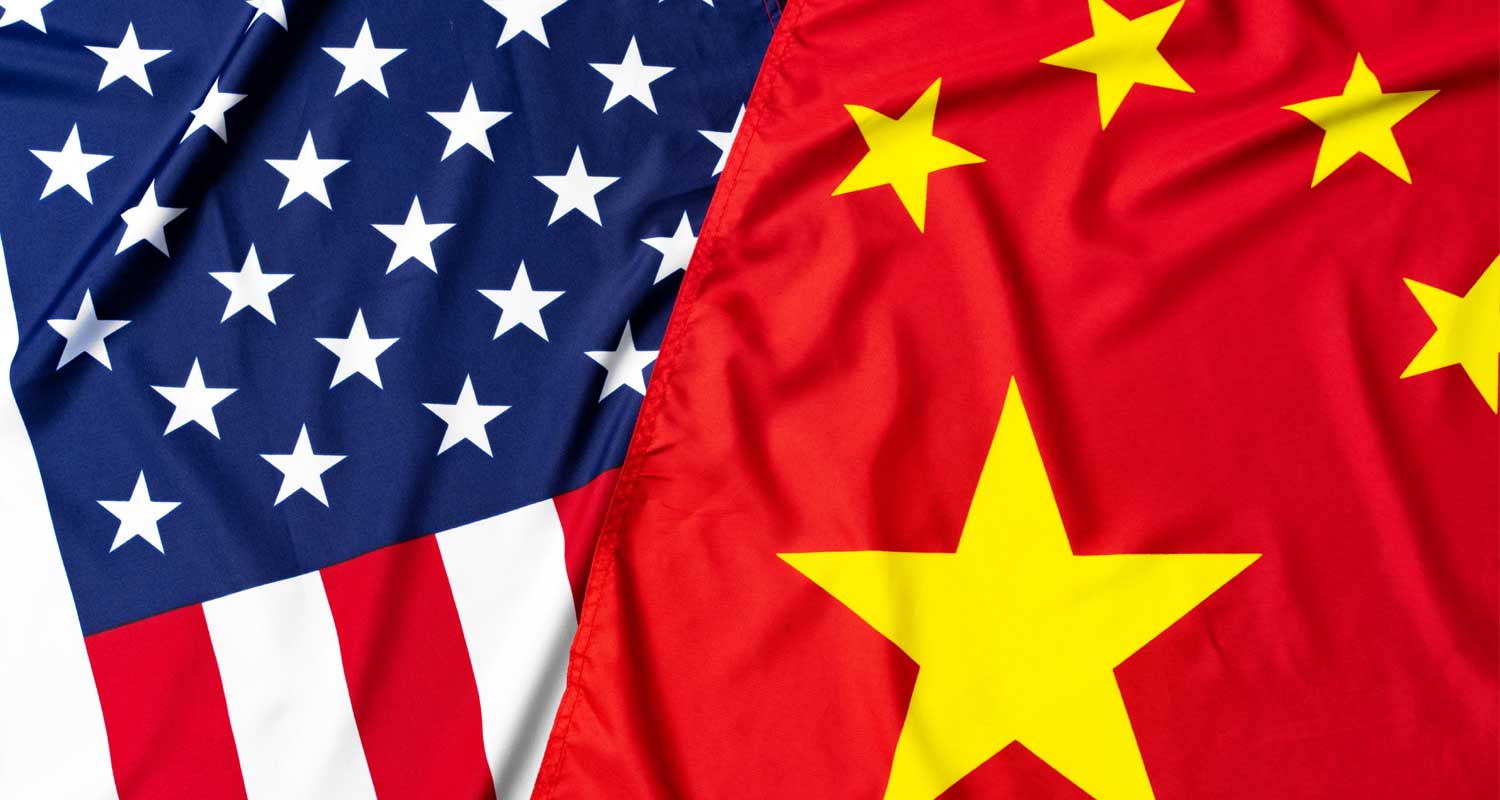
    US financial firms are pushing for greater clarity on proposed new rules curbing US investments in some China technology sectors which they say are too vague and put the onus of compliance on investors.

    Aiming to protect national security and prevent US capital from aiding China’s military, President Joe Biden issued an executive order last month restricting new US investments in sensitive Chinese technologies. The US treasury department subsequently kicked off a rule-making process to implement the order, and financial firms have been rushing to meet a 28 September deadline to provide input. The rules are expected to be implemented sometime next year.

    The proposed rule applies to US persons — including US citizens, residents, businesses and US units of overseas businesses. They must notify the treasury when making certain investments in China in the semiconductors and microelectronics, artificial intelligence and quantum information technologies sectors, and bans other such investments altogether.

    Protecting US national security is a paramount obligation of the federal government…

    In addition to venture capital and private equity firms, hedge funds, banks and potentially funds that track indexes are likely to be affected by the proposal, which financial industry executives and lawyers complain is broad and ambiguous.

    Among their key concerns: how the rules would apply to US persons; which specific Chinese entities would be subject to the restrictions; and better defining a proposed exemption for publicly traded securities.

    “The scope is pretty broad,” said Timothy Keeler, a partner at law firm Mayer Brown, noting it applies to Chinese entities operating beyond China. “It could apply to companies that are outside of China but are subsidiaries of Chinese companies or controlled by a Chinese person.”

    While the US already has restrictions on some Chinese investments in the US and US investments in China, the order creates a new programme. Unlike a process conducted by the Committee on Foreign Investment in the United States, a panel comprising US government agencies, the new programme will not involve case-by-case reviews of investments. And in contrast to sanctions, it does not envisage a list of restricted entities or companies.

    Burden

    That means investors have to figure out which investments come under the scope of the new rule and how to comply, creating significant compliance costs and legal risks. “That puts a fair amount of burden on an investor,” said a former treasury official.

    They may also bar US persons from “knowingly directing” covered transactions by non-US persons. But the threshold for knowledge, or what directing means, is unclear.

    “We are hearing a lot about the issue of a US person directing the activities of a non-US person,” said Jen Fernandez, a partner at law firm Sidley Austin. “At what level does ‘directing’ kick in and what does that mean for these non-US private equity funds that may have a dual national sitting as a partner?”

    Read: Teardown of Huawei Mate60 Pro shows China’s chip breakthrough

    The programme proposes exempting publicly traded securities and index and mutual funds, but financial firms want those securities to be more tightly defined. One key question is whether shares in initial public offerings allocated prior to trading would be carved out.

    To address these and other issues, some firms plan to push for a list of restricted entities and investments, similar to a sanctions regime. Former Securities and Exchange Commission chair Jay Clayton, now an adviser with law firm Sullivan & Cromwell, voiced this idea when he told a house of representatives committee on China this month that “Wall Street responds very quickly” to lists of barred entities.
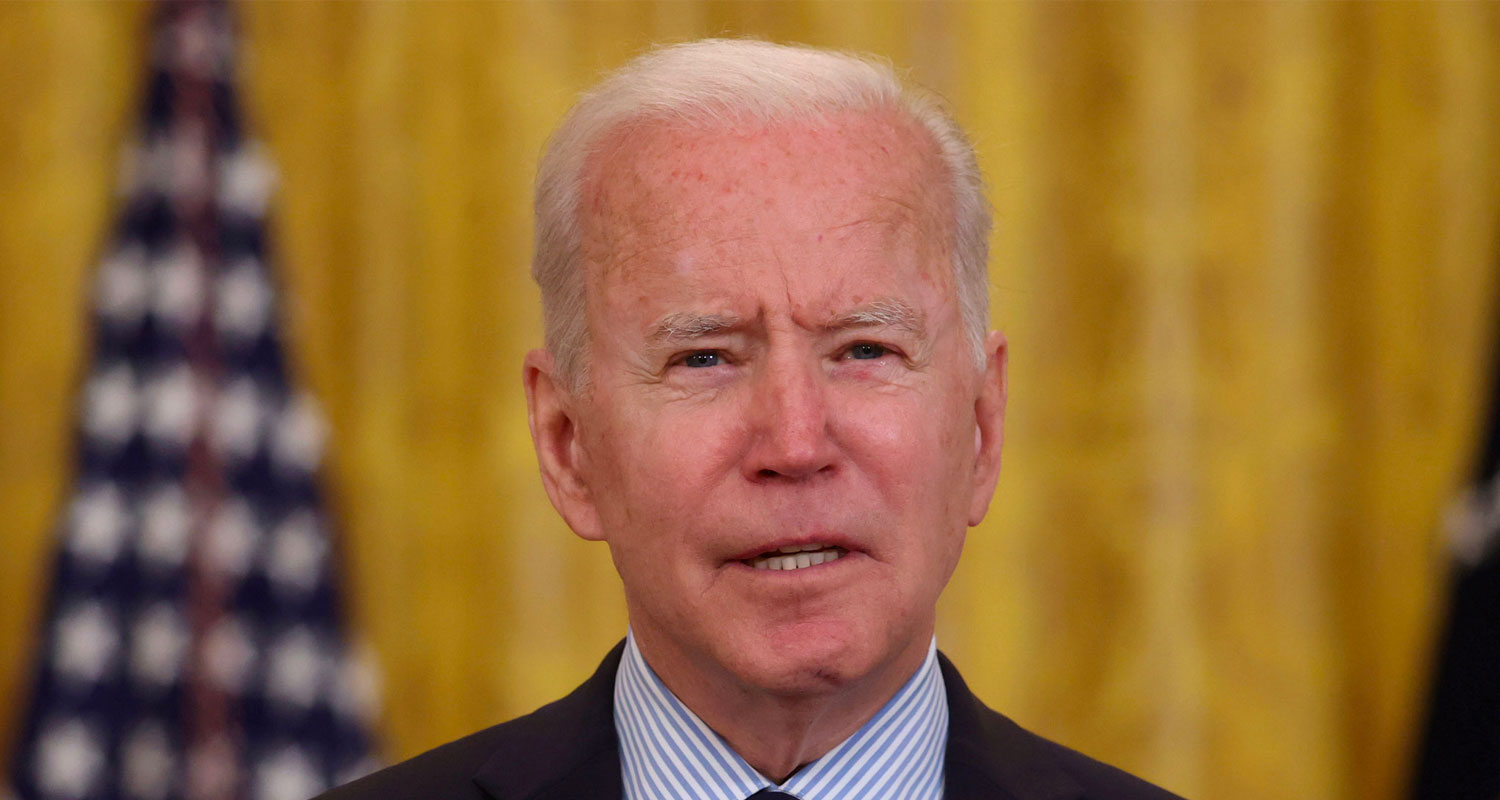
    Joe Biden. US tech war
    US President Joe Biden has ratcheted up pressure on China

    Some sources, though, said they doubted the treasury would go that route, which would reduce the programme’s flexibility and, since the target is cutting-edge technology, quickly become outdated. “That just doesn’t appear to be where this process is heading,” said Keeler.

    A treasury spokesman did not respond to a request for comment but said in the proposal that it welcomes input. The rules are necessary because US investments can be exploited to accelerate the development of sensitive technologies that threaten US national security, the treasury and administration have said.

    Financial firms say they support the administration’s national security goals but worry about increased liability and the economic costs of restricting capital flows. US-China tensions have already seen acquisitions of Chinese companies by US firms sink almost 60% from January to early August compared with the same period last year.

    “Protecting US national security is a paramount obligation of the federal government, but as the treasury states, maintaining global capital flows need not be inconsistent with that,” said Peter Matheson, MD at the Securities Industry and Financial Markets Association, a financial industry lobby group.

    Read: China’s iPhone ban appears to be retaliation, US says

    Lobbying to contain the rules, however, is politically sensitive, especially because China hawks in the US are pushing bills to make the restrictions tougher. Given the uncertainty, companies may start avoiding the covered sectors altogether, said Fernandez.

    “I do think we’re going to see a lot of de-risking,” she added.  — Pete Schroeder, Michelle Price and Carolina Mandl, (c) 2023 Reuters

    Get breaking news alerts from TechCentral on WhatsApp

    Follow TechCentral on Google News Add TechCentral as your preferred source on Google


    Huawei Joe Biden
    WhatsApp YouTube
    Share. Facebook Twitter LinkedIn WhatsApp Telegram Email Copy Link
    Previous ArticleMicrosoft buying Nintendo would have been a disaster
    Next Article Eskom’s plan to cap load shedding at stage 4 this summer

    Related Posts

    Huawei launches 12 intelligent transport solutions in South Africa - Sam Tang

    Huawei launches 12 intelligent transport solutions in South Africa

    30 July 2026
    Huawei Connect 2026: taking South African AI beyond pilots

    Huawei Connect 2026: taking South African AI beyond pilots

    29 July 2026
    Beijing warns of retaliation over US threats to Chinese AI firms

    China weighs blocking the West from its best AI

    21 July 2026
    Company News
    Domains.co.za launches self-hosted n8n VPS hosting

    Domains.co.za launches self-hosted n8n VPS hosting

    31 July 2026
    Smarter.tech '26 shows why smarter technology begins with context - Obsidian Systems

    Context is the missing piece in enterprise AI: Obsidian

    31 July 2026
    Huawei launches 12 intelligent transport solutions in South Africa - Sam Tang

    Huawei launches 12 intelligent transport solutions in South Africa

    30 July 2026
    Opinion
    The author, Jannie van Zyl

    Selling vapour is corporate suicide in slow motion

    16 July 2026
    Brazil's online gambling crackdown is a lesson for South Africa

    How Amazon outmanoeuvred Starlink in South Africa

    15 July 2026
    The Popia problem with agentic AI - Herman Haasbroek

    The Popia problem with agentic AI

    14 July 2026

    Subscribe to Updates

    Get the best South African technology news and analysis delivered to your e-mail inbox every morning.

    Latest Posts
    Nedbank hires MTN's former tech chief as group CIO - Nikos Angelopoulos

    Nedbank hires MTN’s former tech chief as group CIO

    31 July 2026
    Eskom's diesel bill falls 86% as breakdowns hit eight-year low

    Eskom’s diesel bill falls 86% as breakdowns hit eight-year low

    31 July 2026
    Ramaphosa signs off on taking the grid away from Eskom

    Ramaphosa signs off on taking the grid away from Eskom

    31 July 2026
    TCS+ | Why South African workers must become supervisors of digital labour - Accelera Digital Group Cliff de Wit

    TCS+ | Why South African workers must become supervisors of digital labour

    31 July 2026
    © 2009 - 2026 NewsCentral Media
    Built and maintained by Chronon
    • Cookie policy (ZA)
    • TechCentral – privacy and Popia

    Type above and press Enter to search. Press Esc to cancel.

    Manage consent

    TechCentral uses cookies to enhance its offerings. Consenting to these technologies allows us to serve you better. Not consenting or withdrawing consent may adversely affect certain features and functions of the website.

    Functional Always active
    The technical storage or access is strictly necessary for the legitimate purpose of enabling the use of a specific service explicitly requested by the subscriber or user, or for the sole purpose of carrying out the transmission of a communication over an electronic communications network.
    Preferences
    The technical storage or access is necessary for the legitimate purpose of storing preferences that are not requested by the subscriber or user.
    Statistics
    The technical storage or access that is used exclusively for statistical purposes. The technical storage or access that is used exclusively for anonymous statistical purposes. Without a subpoena, voluntary compliance on the part of your Internet Service Provider, or additional records from a third party, information stored or retrieved for this purpose alone cannot usually be used to identify you.
    Marketing
    The technical storage or access is required to create user profiles to send advertising, or to track the user on a website or across several websites for similar marketing purposes.
    • Manage options
    • Manage services
    • Manage {vendor_count} vendors
    • Read more about these purposes
    View preferences
    • {title}
    • {title}
    • {title}