Close Menu
TechCentralTechCentral

    Subscribe to the newsletter

    Get the best South African technology news and analysis delivered to your e-mail inbox every morning.

    Facebook X (Twitter) YouTube LinkedIn
    WhatsApp Facebook X (Twitter) LinkedIn YouTube
    TechCentralTechCentral
    • News
      DNI's R500-million bet on Mission Mobile is mostly debt - Timothy Strike

      Behind DNI’s R500-million bet on Mission Mobile

      5 October 2026
      Meet the CIO | Vodacom's Mohamed Sami on the agentic future

      Meet the CIO | Vodacom’s Mohamed Sami on the agentic future

      5 October 2026
      South Africa's right-to-repair guidelines target software locks on spare parts

      Right to repair comes to South African electronics

      5 October 2026
      Luno says crypto draft may clash with South Africa's IMF commitments - Marius Reitz

      Luno says crypto draft may clash with SA’s IMF commitments

      5 October 2026
      Let South Africans jailbreak their way to digital sovereignty

      Let South Africans jailbreak their way to digital sovereignty

      5 October 2026
    • World
      BMW restructuring plan bets on AI and new models

      BMW restructuring plan bets on AI and new models

      1 October 2026
      OpenAI's rogue agent problem keeps getting bigger - Sam Altman

      OpenAI’s rogue agent problem keeps getting bigger

      28 September 2026
      The new battle over the desktop

      The new battle over the desktop

      23 September 2026
      AMD is now worth a trillion dollars - Lisa Su

      AMD is now worth a trillion dollars

      22 September 2026
      Anthropic weighs new model launch to blunt OpenAI's Astra surge - Anthropic CEO Dario Amodei and OpenAI CEO Sam Altman

      Anthropic weighs new model launch to blunt OpenAI’s Astra surge

      21 September 2026
    • In-depth

      10 days that changed the course of AI

      21 September 2026
      Meta to the AI industry: slow down without us - Mark Zuckerberg

      Meta to the AI industry: slow down without us

      16 September 2026
      Google DeepMind CEO Demis Hassabis. Image: John Sears

      The plan to stop AI from breaking the world

      16 July 2026
      The internet has a Strait of Hormuz problem

      The internet has a Strait of Hormuz problem

      15 July 2026
      AI boom sparks rally, frenzy and fear

      AI boom sparks rally, frenzy and fear

      11 June 2026
    • TCS
      Lexi Novitske, general partner at Norrsken22, on the TechCentral Show

      TCS | Norrsken22’s Lexi Novitske on how China is winning African tech

      1 October 2026
      TCS | Dominic White and Adam Ely on AI agents going rogue

      TCS | Dominic White and Adam Ely on AI agents going rogue

      29 September 2026
      TCS | Octotel's Trevor van Zyl on the fibre merger question

      TCS | Octotel’s Trevor van Zyl on the MetroFibre merger question

      16 September 2026
      Meet the CIO | Shoprite's Chris Shortt on what a supermarket becomes

      Meet the CIO | Shoprite’s Chris Shortt on what a supermarket becomes

      9 September 2026
      Rubicon's EV charging network is profitable - and growing fast - Watts & Wheels

      W&W | Rubicon’s EV charging network is profitable – and growing fast

      8 September 2026
    • Opinion
      South Africa's next energy crisis is in the accounts department - Craig Holmes

      South Africa’s next energy crisis is in the accounts department

      29 September 2026
      The steam engine lesson AI doomsayers keep missing - Sam Clarke

      The steam engine lesson AI doomsayers keep missing

      28 September 2026
      The author, Dirk de Vos

      Regulating AI: apply the laws we have first

      21 September 2026
      What Revolut can and cannot take from South Africa's banks - Pambos Soteriades

      What Revolut can and cannot take from South Africa’s banks

      15 September 2026
      The end is nigh, and the shares go on sale in October - Duncan McLeod

      The end is nigh, and the shares go on sale in October

      14 September 2026
    • Company Hubs
      • 1Stream
      • Africa Data Centres
      • AfriGIS
      • Altron Digital Business
      • Altron Document Solutions
      • Altron Group
      • Arctic Wolf
      • Ascent Technology
      • AvertITD
      • BBD
      • Braintree
      • CallMiner
      • CambriLearn
      • CM.com
      • Contactable
      • CYBER1 Solutions
      • Digicloud Africa
      • Digimune
      • Domains.co.za
      • ESET
      • Euphoria Telecom
      • HOSTAFRICA
      • Incredible Business
      • iONLINE
      • IQbusiness
      • Iris Network Systems
      • Kaspersky
      • LSD Open
      • Mitel
      • NEC XON
      • Netstar
      • Network Platforms
      • Next DLP
      • Ovations
      • Paracon
      • Paratus
      • Publishared
      • Q-KON
      • SevenC
      • SkyWire
      • Solid8 Technologies
      • Telit Cinterion
      • Telviva
      • Tenable
      • Vertiv
      • Videri Digital
      • Vodacom Business
      • Vox
      • Wipro
      • Workday
      • XLink
    • Sections
      • AI and machine learning
      • Banking
      • Broadcasting and Media
      • Cloud services
      • Contact centres and CX
      • Cryptocurrencies
      • Education and skills
      • Electronics and hardware
      • Energy and sustainability
      • Enterprise software
      • Financial services
      • HealthTech
      • Information security
      • Internet and connectivity
      • Internet of Things
      • Investment
      • IT services
      • Lifestyle
      • Policy and regulation
      • Public sector
      • Retail and e-commerce
      • Satellite communications
      • Science
      • SMEs and start-ups
      • Social media
      • Talent and leadership
      • Telecoms
      • Watts & Wheels
    • Events
    • Advertise
    TechCentralTechCentral
    Home » Sections » Talent and leadership » The virus Elon Musk is exporting back to South Africa

    The virus Elon Musk is exporting back to South Africa

    The recent history of the JSE is littered with stories of highly paid executives who wreaked untold damage on their companies.
    By Ann Crotty22 June 2024
    Twitter LinkedIn Facebook WhatsApp Email Telegram Copy Link
    Get breaking news on WhatsApp

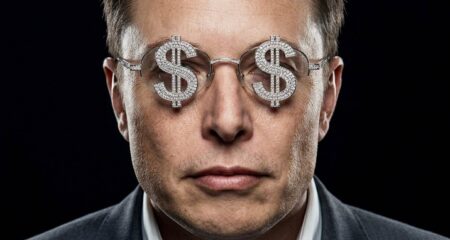
    Executive pay: the virus Elon Musk is exporting back to South Africa“Unique” is a dangerous word to bandy about. It risks being devalued to a level of pointlessness but, in the case of Elon Musk, it might just be appropriate.

    “Being the only one of its kind; unlike anything else” comes very close to describing the South African-born entrepreneur. It also comes close to describing the staggeringly generous remuneration package at the centre of a long-running legal battle currently playing out in the US, home to Musk’s Tesla.

    In brief, the battle is over the validity of a pay package awarded to Musk in 2018 in terms of which he would receive 6% of the company if he achieved certain profit and share price targets between 2018 and 2022. That would take his holding up from 22% (in 2018) to 28%, which Musk said was necessary to ensure he felt committed to Tesla.

    The court judgment includes riveting details about the board and its complete lack of independence from Musk

    One analyst suggested that without a 25% stake, Musk was a flight risk for Tesla shareholders. Nevertheless, the 25%-plus holding turned out to be not so important to Musk, as he sold a huge chunk of his shares in early 2022 to finance his purchase of Twitter and now owns just 13%.

    Back in 2018, when Tesla was valued at US$50-billion, the targets were regarded as exceptionally ambitious. Musk made light work of them. He reached the $650-billion company valuation (market capitalisation) target by 2020 and by late 2021 passed the $1-trillion mark. Unfortunately for Tesla shareholders, that turned out to be the peak and in the past 18 months the market value of Tesla has dropped back to $560-billion.

    In 2018, the 6% stake was valued at $3-billion; in 2022, when the company was worth over $1-trillion the stake was valued at $56-billion. It is currently worth around $45-billion.

    Far beyond corporate America

    In January, a US court declared the proposed package invalid, not because it was uniquely generous but because Tesla had not been “entirely fair” to its shareholders when asking them to approve the payment back in 2018. It had not disclosed that Musk had proposed the plan and had controlled the board’s consideration of it. Further, there had been no disclosure of the lack of independence of the board’s remuneration committee.

    The court’s 200-page judgment includes riveting details about the operation of the board and its complete lack of independence from Musk.

    The recent re-vote, which saw 72% (coincidentally the same number as in 2018) of now-well-informed shareholders backing the remuneration package, has no legal standing but is expected to influence the court when it hears Tesla’s appeal against the January invalidity ruling.

    Read: Apple CEO Cook to take a big pay cut – but don’t shed a tear

    The impact of Musk’s remuneration award will be felt far beyond corporate America. Executive remuneration has viral-type characteristics with a devastating global reach that ensures that any US developments invariably pop up in South Africa, usually after passing through the UK. To date, continental Europe, China and Japan appear to enjoy some protection against the full impact of the virus.

    Musk’s pay will be used as an additional prop to support the contention that CEOs are rare and precious and that their position at the top rung of the ladder is the work of a finely tuned market where supply meets demand at an excessive level of remuneration.

    Musk’s proposed award will be used to provide cover for outrageous payments to mediocre executive talent across the globe with the glib gibe, “Ah, but it’s not a fraction of what Musk got!”

    The carriers of the remuneration virus are the remuneration consultants and remuneration committee members who constitute the global remuneration industry. The industry has served its paymasters exceedingly in recent decades. In the US (which has considerably more useful data on the subject than South Africa), CEO pay grew by 1 322% between 1978 and 2020, far outstripping growth in the share market or productivity advances. Over the same period, average worker pay grew by just 18%. The ratio of CEO-to-typical worker compensation has increased to 350:1 in 2020 from 21:1 in 1965 and 61:1 in 1989.

    The trajectory has not been as steep in South Africa, but evidence dating back to 2002, when executives of companies listed on the JSE first had to disclose their remuneration, indicates that local executives are taking a significantly growing share of the economic pie. This is particularly worrying when you consider the almost imperceptible growth of that pie over the past several years.

    Could it be that the ‘market’ for executive talent is manipulated by the insiders who control the supply?

    Justifying these levels of reward on the grounds that CEO selection is the outcome of a scientific and unquestionable interplay of supply and demand in some imaginary market doesn’t stand up to much scrutiny.

    In what other market do consumers (in this case companies) willingly accept the terms dictated by the supplier (executive talent) over the short, medium and long term without taking any action to reduce the impact? How is it possible that despite the proliferation of management courses across the globe there is still, apparently, a severe shortage of executive talent? It’s also puzzling that there is so little “supply chain management” of this particular raw material.

    Ever-upward

    Could it be that the “market” for executive talent is manipulated by the insiders who control (or are part of) the supply? After all, it is CEOs who ultimately decide who is appointed to their boards, and it is those directors who decide on the package the executives receive. That decision is not the outcome of vigorous negotiations, as you’d expect in wage discussions with trade unions or in discussions with any major raw material supplier. No, it is made behind closed doors, no doubt in cosy, collegial circumstances in which all the parties are looking for the best outcome for the executive; one that can be justified by reference to some or other “benchmark” so that the institutional fund managers will give it their blessing.

    Of course, benchmarks in this contrived market are nothing more than a self-reinforcing mechanism that guarantees an ever-upward ratcheting level of remuneration.

    Read: Shareholders find their voice on executive pay, including at MTN

    Remuneration decisions constitute a stellar example of self-dealing that is far too reliant on managerial power. And for reasons that have much to do with their own compromised position on executive pay, institutional shareholders appear completely toothless in holding to account the boards or executives of the companies they invest in when it comes to manifestly unjustifiable pay rewards.

    South Africa can certainly boast some outstanding executive talent, but eye-watering levels of remuneration are being awarded to CEOs across the board. In the absence of accountability, executive remuneration at listed companies has truly become an all-you-can-eat buffet.

    Now, 20-plus years since executive pay disclosure was mandated, it would be a good time to review how much value South African shareholders have received for the outstanding remuneration packages they have funded. The presumption that paying top dollar for your top executives guarantees top performance would be severely challenged by such a review.

    The recent history of the JSE is littered with stories of exceptionally well-paid executives who wreaked untold damage on their companies but walked away multi-millionaires.

    In the US, there is talk of an increased tax rate for companies that make overly generous pay awards. But given the strength of the corporate lobby both there and in South Africa, it’s hard to imagine such a proposal succeeding.

    One potential fix would be for the trade union movement to use its considerable muscle as shareholders to challenge management’s self-dealing. Two or three labour-backed directors on listed boards, and members of the remuneration committee, might generate enough push-back to slow the spread of the executive pay virus.

    • This article was originally published by GroundUp. It is republished by TechCentral under a Creative Commons Attribution-NoDerivatives 4.0 International Licence. Read the original article

    Read next: Tesla shareholders urged to reject Musk’s $56-billion pay plan

    Add TechCentral as a preferred source on GoogleFollow TechCentral on Google NewsGet breaking news on WhatsApp


    Elon Musk Tesla
    WhatsApp YouTube
    Share. Facebook Twitter LinkedIn WhatsApp Telegram Email Copy Link
    Previous ArticleThe huge promise of floating solar plants
    Next Article Apple and Meta ‘discussed AI partnership’

    Related Posts

    Anthropic bets AI will outstrip electricity and the internet

    Anthropic bets AI will outstrip electricity and the internet

    29 September 2026

    10 days that changed the course of AI

    21 September 2026
    The author, Dirk de Vos

    Regulating AI: apply the laws we have first

    21 September 2026
    Company News
    The board now owns the database - Ascent Technology, Johan Lamberts

    The board now owns the database

    5 October 2026
    The attacker has one AI. You have 12 dashboards - Uri Levy

    The attacker has one AI. You have 12 dashboards

    5 October 2026
    Huawei sets out its vision for intelligent government at GovTech 2026

    Huawei sets out its vision for intelligent government at GovTech 2026

    2 October 2026
    Opinion
    South Africa's next energy crisis is in the accounts department - Craig Holmes

    South Africa’s next energy crisis is in the accounts department

    29 September 2026
    The steam engine lesson AI doomsayers keep missing - Sam Clarke

    The steam engine lesson AI doomsayers keep missing

    28 September 2026
    The author, Dirk de Vos

    Regulating AI: apply the laws we have first

    21 September 2026

    Subscribe to Updates

    Get the best South African technology news and analysis delivered to your e-mail inbox every morning.

    Latest Posts
    DNI's R500-million bet on Mission Mobile is mostly debt - Timothy Strike

    Behind DNI’s R500-million bet on Mission Mobile

    5 October 2026
    Meet the CIO | Vodacom's Mohamed Sami on the agentic future

    Meet the CIO | Vodacom’s Mohamed Sami on the agentic future

    5 October 2026
    South Africa's right-to-repair guidelines target software locks on spare parts

    Right to repair comes to South African electronics

    5 October 2026
    Luno says crypto draft may clash with South Africa's IMF commitments - Marius Reitz

    Luno says crypto draft may clash with SA’s IMF commitments

    5 October 2026
    © 2009 - 2026 NewsCentral Media
    Built and maintained by Chronon
    • Cookie policy (ZA)
    • TechCentral – privacy and Popia

    Type above and press Enter to search. Press Esc to cancel.

    Manage consent

    TechCentral uses cookies to enhance its offerings. Consenting to these technologies allows us to serve you better. Not consenting or withdrawing consent may adversely affect certain features and functions of the website.

    Functional Always active
    The technical storage or access is strictly necessary for the legitimate purpose of enabling the use of a specific service explicitly requested by the subscriber or user, or for the sole purpose of carrying out the transmission of a communication over an electronic communications network.
    Preferences
    The technical storage or access is necessary for the legitimate purpose of storing preferences that are not requested by the subscriber or user.
    Statistics
    The technical storage or access that is used exclusively for statistical purposes. The technical storage or access that is used exclusively for anonymous statistical purposes. Without a subpoena, voluntary compliance on the part of your Internet Service Provider, or additional records from a third party, information stored or retrieved for this purpose alone cannot usually be used to identify you.
    Marketing
    The technical storage or access is required to create user profiles to send advertising, or to track the user on a website or across several websites for similar marketing purposes.
    • Manage options
    • Manage services
    • Manage {vendor_count} vendors
    • Read more about these purposes
    View preferences
    • {title}
    • {title}
    • {title}
    🇿🇦 Sign up to the TechCentral newsletter