Close Menu
TechCentralTechCentral

    Subscribe to the newsletter

    Get the best South African technology news and analysis delivered to your e-mail inbox every morning.

    Facebook X (Twitter) YouTube LinkedIn
    WhatsApp Facebook X (Twitter) LinkedIn YouTube
    TechCentralTechCentral
    • News
      South Africa's digital ID gets a launch date

      South Africa’s digital ID gets a launch date

      21 April 2026
      More organic compounds detected on Mars - Nasa Curiosity rover

      More organic compounds detected on Mars

      21 April 2026
      Liquid dodges debt crunch - at a hefty price - Hardy Pemhiwa

      Liquid dodges debt crunch – at a hefty price

      21 April 2026
      Seacom takes aim at regional peering costs - Prenesh Padayachee

      Seacom takes aim at regional peering costs

      21 April 2026
      WhatsApp to go premium with new Plus subscription

      WhatsApp to go premium with new Plus subscription

      21 April 2026
    • World
      Adobe bets on AI agents to fend off cheaper rivals

      Adobe bets on AI agents to fend off cheaper rivals

      16 April 2026
      Google poised to lose ad crown to Meta

      Google poised to lose ad crown to Meta

      14 April 2026
      Grand Theft Data - hackers hit Rockstar Games - Grand Theft Auto

      Grand Theft Data – hackers hit Rockstar Games

      14 April 2026
      UK PM Keir Starmer declares war on doomscrolling

      UK PM Keir Starmer declares war on doomscrolling

      13 April 2026
      Big Tech is going nuclear

      Big Tech is going nuclear

      10 April 2026
    • In-depth
      Africa switches on as Europe dims the lights

      Africa switches on as Europe dims the lights

      9 April 2026
      The biggest untapped EV market on Earth is hiding in plain sight

      The biggest untapped EV market on Earth is hiding in plain sight

      1 April 2026
      The R18-billion tech giant hiding in plain sight - Jens Montanana

      The R16-billion tech giant hiding in plain sight

      26 March 2026
      The last generation of coders

      The last generation of coders

      18 February 2026
      Sentech is in dire straits

      Sentech is in dire straits

      10 February 2026
    • TCS

      TCS+ | ‘The ISP for ISPs’: Vox’s shift to wholesale aggregator

      20 April 2026
      TCS | Werner Lindemann on how AI is rewriting the infosec rulebook

      TCS | Werner Lindemann on how AI is rewriting the infosec rulebook

      15 April 2026
      TCS | Donovan Marsh on AI and the future of filmmaking

      TCS | Donovan Marsh on AI and the future of filmmaking

      7 April 2026
      TCS+ | Vodacom Business moves to crack the SME tech gap - Andrew Fulton, Sannesh Beharie

      TCS+ | Vodacom Business moves to crack the SME tech gap

      7 April 2026
      TCS | MTN's Divysh Joshi on the strategy behind Pi - Divyesh Joshi

      TCS | MTN’s Divyesh Joshi on the strategy behind Pi

      1 April 2026
    • Opinion
      The conflict of interest at the heart of PayShap's slow adoption - Cheslyn Jacobs

      The conflict of interest at the heart of PayShap’s slow adoption

      26 March 2026
      South Africa's energy future hinges on getting wheeling right - Aishah Gire

      South Africa’s energy future hinges on getting wheeling right

      10 March 2026
      Hold the doom: the case for a South African comeback - Duncan McLeod

      Apple just dropped a bomb on the Windows world

      5 March 2026
      R230-million in the bag for Endeavor's third Harvest Fund - Alison Collier

      VC’s centre of gravity is shifting – and South Africa is in the frame

      3 March 2026
      Hold the doom: the case for a South African comeback - Duncan McLeod

      Hold the doom: the case for a South African comeback

      26 February 2026
    • Company Hubs
      • 1Stream
      • Africa Data Centres
      • AfriGIS
      • Altron Digital Business
      • Altron Document Solutions
      • Altron Group
      • Arctic Wolf
      • Ascent Technology
      • AvertITD
      • BBD
      • Braintree
      • CallMiner
      • CambriLearn
      • CYBER1 Solutions
      • Digicloud Africa
      • Digimune
      • Domains.co.za
      • ESET
      • Euphoria Telecom
      • HOSTAFRICA
      • Incredible Business
      • iONLINE
      • IQbusiness
      • Iris Network Systems
      • Kaspersky
      • LSD Open
      • Mitel
      • NEC XON
      • Netstar
      • Network Platforms
      • Next DLP
      • Ovations
      • Paracon
      • Paratus
      • Q-KON
      • SevenC
      • SkyWire
      • Solid8 Technologies
      • Telit Cinterion
      • Telviva
      • Tenable
      • Vertiv
      • Videri Digital
      • Vodacom Business
      • Wipro
      • Workday
      • XLink
    • Sections
      • AI and machine learning
      • Banking
      • Broadcasting and Media
      • Cloud services
      • Contact centres and CX
      • Cryptocurrencies
      • Education and skills
      • Electronics and hardware
      • Energy and sustainability
      • Enterprise software
      • Financial services
      • HealthTech
      • Information security
      • Internet and connectivity
      • Internet of Things
      • Investment
      • IT services
      • Lifestyle
      • Motoring
      • Policy and regulation
      • Public sector
      • Retail and e-commerce
      • Satellite communications
      • Science
      • SMEs and start-ups
      • Social media
      • Talent and leadership
      • Telecoms
    • Events
    • Advertise
    TechCentralTechCentral
    Home » In-depth » Why breaking up Big Tech is (probably) not a good idea

    Why breaking up Big Tech is (probably) not a good idea

    By The Conversation18 July 2019
    Twitter LinkedIn Facebook WhatsApp Email Telegram Copy Link
    News Alerts
    WhatsApp

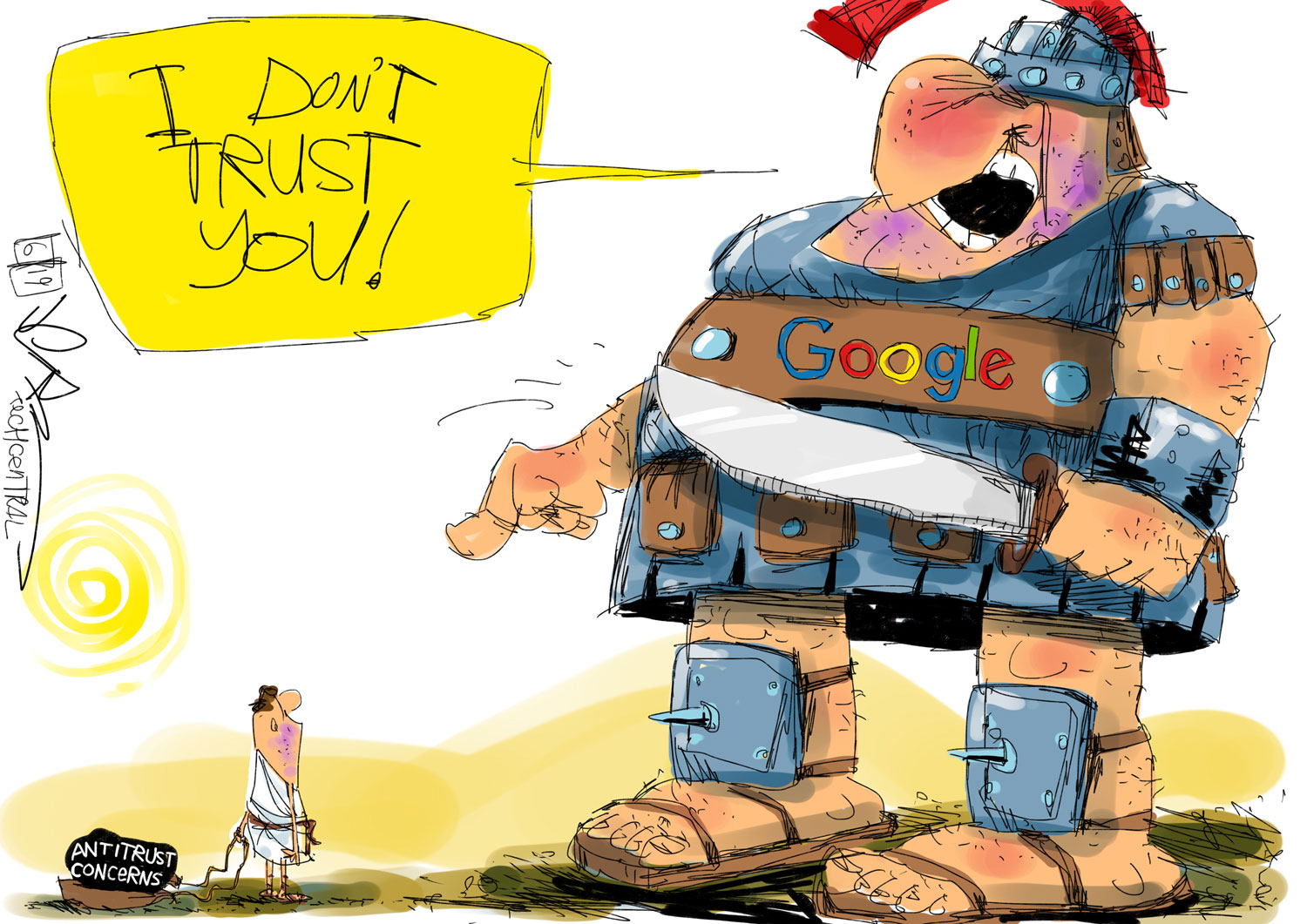
    As the public and government regulators around the world discuss whether and how to manage the power of technology companies, one idea that keeps coming up is breaking up these large conglomerate corporations into smaller pieces. Public distrust for tech companies has shifted to talk of antitrust action against them. Facebook, for instance, might then have to compete with Instagram for photo-sharing and WhatsApp for messaging — rather than owning both.

    The idea has managed to garner support from both Massachusetts senator Elizabeth Warren, a Democrat, and Republican President Donald Trump.

    However, advocates and opponents of breaking up big technology firms are falling prey to some serious misconceptions. I study the effects of digital technologies on lives and livelihoods across 85 countries and lead Tufts Fletcher School’s Digital Planet initiative studying technological innovation around the world. In my opinion, there are three myths worth busting before considering taking on big tech.

    Myth 1: Comparing Standard Oil and Google

    Arguments for and against antitrust action against tech firms rely heavily on the experiences of earlier cases. The massive 19th-century monopoly Standard Oil has, in fact, been referred to as the “Google of its day”. There are also people who are recalling the 1990s antitrust case against Microsoft’s dominant position in the era of personal computers.

    Those cases from the past may seem similar to today’s situation, but this era is different in one crucial way: the global technology marketplace. Currently, there are two parallel “big tech” clusters. One is in the US, dominated by Google, Amazon, Facebook and Apple. The other is based in China, dominated by Baidu, Alibaba, Tencent and Huawei. This global market is subject to different political and policy pressures than regulators faced when dealing with Standard Oil and Microsoft.

    Both clusters are attempting to add users to accumulate reservoirs of data, which will fuel the next stage of competitiveness in a future run by artificial intelligence. The Chinese government has blocked most of the US companies from entering the Chinese market, protecting its “AI national team”. The US government has done likewise, blacklisting some Chinese outfits for a period while discouraging others.

    If the US technology giants are broken up, the result would be a vastly uneven global playing field, pitting fragmented US companies against consolidated state-protected Chinese firms.

    Geopolitical factors aren’t limited to the US-China rivalry. The European Union, Russia and India are also heavy users of Silicon Valley technologies, and each is exploring its own options for legislation and regulation, too.

    US companies’ size and data accumulation capabilities give the country economic and political influence around the globe. Their power would change if they were broken up — and that should be a key consideration in regulators’ decisions.

    Myth 2: Price is right

    There are two main views of antitrust action in these discussions. One focuses on consumer welfare, which has been the prevailing approach federal lawyers have taken since the 1960s. The other view suggests that regulators should look at the underlying structure of the market and potential for powerful players to exploit their positions.

    Those two sides seem to agree that price plays a key role. People who argue against breaking up the tech giants point out that Facebook and Google provide services that are free to the consumer, and that Amazon’s marketplace power drives its products’ costs down. On the other side, though, are those who say that having low or no prices is evidence that these companies are artificially lowering consumer costs to draw users into company-controlled systems that are hard to leave.

    Both sides are missing the fact that the monetary price is less relevant as a measure of what users pay in the technology industry than it is in other types of business. Users pay for digital products with their data, rather than just money. Regulators shouldn’t focus only on the monetary costs to the users. Rather, they should ask whether users are being asked for more data than is strictly necessary, whether information is being collected in intrusive or abusive ways and whether customers are getting good value in exchange for their data.

    Myth 3: Trust-busting is all or nothing

    There aren’t just two ways for this debate to end, with either a breakup of one or more technology giants or simply leaving things as they are for the market to develop further.

    The best outcome would take a page from the history of antitrust litigation: the company that is sued is not broken up, and yet the very fact that there was a lawsuit leads to progress. That has happened in the past, in the cases against the Bell System, IBM and Microsoft.

    The best outcome would take a page from the history of antitrust litigation: the company that is sued is not broken up…

    In the 1956 federal consent decree against the Bell System, which settled a seven-year legal proceeding against the company, the company wasn’t split up, but Bell was required to license all its patents royalty-free to other firms. This meant that some of the most profound technological innovations in history — including the transistor, the solar cell and the laser — became widely available, yielding computers, solar power and other technologies that are crucial to the modern world. When the Bell System was eventually broken up in 1982, it did not do nearly as much to spread innovation and competition as the agreement that kept the Bells together a quarter of a century earlier.

    The antitrust action against IBM lasted 13 years and didn’t break up the firm. However, as part of its tactics to avoid appearing to be a monopoly, IBM agreed to separate pricing for its hardware and software products, previously sold as an indivisible bundle. This created an opportunity for entrepreneurs Bill Gates and Paul Allen to create a new software-only company, called Microsoft. The surge of software innovations that have followed can clearly trace their origins to the IBM settlement.

    Two decades later, Microsoft was itself the target of an antitrust action. In the resulting settlement, Microsoft agreed to ensure its products were compatible with competitors’ software. That made room in the emerging Internet marketplace for Web browsers, the predecessors of Apple’s Safari, Mozilla’s Firefox and Google Chrome.
    Even Margrethe Vestager, the European Union’s top antitrust official and frequent tech-giant nemesis, has said that “antitrust prosecutions are part of how technology grows”. But that doesn’t mean they all have to achieve their most extreme ends, of breaking up the companies.

    Antitrust rules are complicated enough, and plenty of experts will be called on to give their views on what to do with “Big Tech”. Technology pervades every aspect of modern lives, giving each person a responsibility to weigh in on this issue without misconceptions clouding their judgments. Technology has become a political issue. In a politically overheated climate, public sentiments may matter even more than the opinions of experts.The Conversation

    • Written by Bhaskar Chakravorti, dean of Global Business, The Fletcher School, Tufts University
    • This article is republished from The Conversation under a Creative Commons licence

    Follow TechCentral on Google News Add TechCentral as your preferred source on Google


    Bhaskar Chakravorti Facebook Google IBM Microsoft top
    WhatsApp YouTube
    Share. Facebook Twitter LinkedIn WhatsApp Telegram Email Copy Link
    Previous ArticleHalf of all phones shipped will support 5G by 2023
    Next Article Netflix enters ratings hell as Disney, HBO are reborn

    Related Posts

    Gemini gets personal for South African users

    Gemini gets personal for South African users

    16 April 2026
    Google poised to lose ad crown to Meta

    Google poised to lose ad crown to Meta

    14 April 2026
    Anthropic tightens the screws on OpenAI

    Anthropic tightens the screws on OpenAI

    14 April 2026
    Company News
    Why retail's future is digital - but still physical - NEC XON

    Why the future of retail is digital – but still physical

    21 April 2026
    Africa's AI dream needs bricks and gigawatts - Gary Galolo, head of technology, media, and telecommunications and digital infrastructure finance at Nedbank CIB

    Africa’s AI dream needs bricks and gigawatts

    21 April 2026
    Fibre: the backbone of South Africa's digital health ecosystem - Mweb

    Fibre: the backbone of South Africa’s digital health ecosystem

    16 April 2026
    Opinion
    The conflict of interest at the heart of PayShap's slow adoption - Cheslyn Jacobs

    The conflict of interest at the heart of PayShap’s slow adoption

    26 March 2026
    South Africa's energy future hinges on getting wheeling right - Aishah Gire

    South Africa’s energy future hinges on getting wheeling right

    10 March 2026
    Hold the doom: the case for a South African comeback - Duncan McLeod

    Apple just dropped a bomb on the Windows world

    5 March 2026

    Subscribe to Updates

    Get the best South African technology news and analysis delivered to your e-mail inbox every morning.

    Latest Posts
    South Africa's digital ID gets a launch date

    South Africa’s digital ID gets a launch date

    21 April 2026
    More organic compounds detected on Mars - Nasa Curiosity rover

    More organic compounds detected on Mars

    21 April 2026
    Why retail's future is digital - but still physical - NEC XON

    Why the future of retail is digital – but still physical

    21 April 2026
    Africa's AI dream needs bricks and gigawatts - Gary Galolo, head of technology, media, and telecommunications and digital infrastructure finance at Nedbank CIB

    Africa’s AI dream needs bricks and gigawatts

    21 April 2026
    © 2009 - 2026 NewsCentral Media
    • Cookie policy (ZA)
    • TechCentral – privacy and Popia

    Type above and press Enter to search. Press Esc to cancel.

    Manage consent

    TechCentral uses cookies to enhance its offerings. Consenting to these technologies allows us to serve you better. Not consenting or withdrawing consent may adversely affect certain features and functions of the website.

    Functional Always active
    The technical storage or access is strictly necessary for the legitimate purpose of enabling the use of a specific service explicitly requested by the subscriber or user, or for the sole purpose of carrying out the transmission of a communication over an electronic communications network.
    Preferences
    The technical storage or access is necessary for the legitimate purpose of storing preferences that are not requested by the subscriber or user.
    Statistics
    The technical storage or access that is used exclusively for statistical purposes. The technical storage or access that is used exclusively for anonymous statistical purposes. Without a subpoena, voluntary compliance on the part of your Internet Service Provider, or additional records from a third party, information stored or retrieved for this purpose alone cannot usually be used to identify you.
    Marketing
    The technical storage or access is required to create user profiles to send advertising, or to track the user on a website or across several websites for similar marketing purposes.
    • Manage options
    • Manage services
    • Manage {vendor_count} vendors
    • Read more about these purposes
    View preferences
    • {title}
    • {title}
    • {title}