Close Menu
TechCentralTechCentral

    Subscribe to the newsletter

    Get the best South African technology news and analysis delivered to your e-mail inbox every morning.

    Facebook X (Twitter) YouTube LinkedIn
    WhatsApp Facebook X (Twitter) LinkedIn YouTube
    TechCentralTechCentral
    • News
      Nedbank hires MTN's former tech chief as group CIO - Nikos Angelopoulos

      Nedbank hires MTN’s former tech chief as group CIO

      31 July 2026
      Eskom's diesel bill falls 86% as breakdowns hit eight-year low

      Eskom’s diesel bill falls 86% as breakdowns hit eight-year low

      31 July 2026
      Ramaphosa signs off on taking the grid away from Eskom

      Ramaphosa signs off on taking the grid away from Eskom

      31 July 2026
      Microsoft just had the biggest day in stock market history

      Microsoft just had the biggest day in stock market history

      31 July 2026
      MTN Nigeria's growth engine stalled in second quarter - Karl Toriola

      MTN Nigeria’s growth engine stalled in second quarter

      31 July 2026
    • World
      Meta AI will now tell parents if their teen is in crisis

      Meta AI will now tell parents if their teen is in crisis

      17 July 2026
      IBM shares crash 25% as AI upends software spending - Arvind Krishna

      IBM shares crash 25% as AI upends software spending

      15 July 2026
      Jony Ive's first OpenAI device: an AI smart speaker - Jony Ive and Sam Altman

      Jony Ive’s first OpenAI device: an AI smart speaker

      15 July 2026
      Stripe, Advent in talks to buy PayPal for $53-billion

      Stripe, Advent in talks to buy PayPal for $53-billion

      15 July 2026
      Memory crisis sends smartphone market into steep decline

      Memory crisis sends smartphone market into steep decline

      13 July 2026
    • In-depth
      The plan to stop AI from breaking the world - Google DeepMind CEO Demis Hassabis. Image: John Sears

      The plan to stop AI from breaking the world

      16 July 2026
      The internet has a Strait of Hormuz problem

      The internet has a Strait of Hormuz problem

      15 July 2026
      AI boom sparks rally, frenzy and fear

      AI boom sparks rally, frenzy and fear

      11 June 2026
      Every plug-in hybrid on sale in South Africa, ranked by price - Lamborghini Temerario

      Every plug-in hybrid on sale in South Africa, ranked by price

      7 June 2026
      What Wi-Fi 8 will mean for wireless networks

      What Wi-Fi 8 will mean for wireless networks

      1 June 2026
    • TCS
      TCS+ | Why South African workers must become supervisors of digital labour - Accelera Digital Group Cliff de Wit

      TCS+ | Why South African workers must become supervisors of digital labour

      31 July 2026
      TCS | Rapid deployment rules can't work without municipalities: ACT - Nomvuyiso Batyi

      TCS | Icasa’s rules skip the real bottleneck: ACT

      30 July 2026
      TCS+ | iStore Business on why Apple makes sense for SMEs - Sudesh Pillay and Tamia Nontsikelelo

      TCS+ | iStore Business on why Apple makes sense for SMEs

      30 July 2026
      TCS+ | A smarter approach to cloud for South African businesses - Joel Chacko and Jonathan Oaker

      TCS+ | A smarter approach to cloud for South African businesses

      28 July 2026
      TCS | How Optasia lends billions to people banks can't see - Salvador Anglada

      TCS | How Optasia lends billions to people banks can’t see

      23 July 2026
    • Opinion
      The author, Jannie van Zyl

      Selling vapour is corporate suicide in slow motion

      16 July 2026
      Brazil's online gambling crackdown is a lesson for South Africa

      How Amazon outmanoeuvred Starlink in South Africa

      15 July 2026
      The Popia problem with agentic AI - Herman Haasbroek

      The Popia problem with agentic AI

      14 July 2026
      The author, Fanie van Rooyen

      South Africa can still catch the AI wave – here’s how

      7 July 2026
      The author, Fanie van Rooyen

      The AI utopia South Africa can’t afford

      1 July 2026
    • Company Hubs
      • 1Stream
      • Africa Data Centres
      • AfriGIS
      • Altron Digital Business
      • Altron Document Solutions
      • Altron Group
      • Arctic Wolf
      • Ascent Technology
      • AvertITD
      • BBD
      • Braintree
      • CallMiner
      • CambriLearn
      • CM Telecom
      • Contactable
      • CYBER1 Solutions
      • Digicloud Africa
      • Digimune
      • Domains.co.za
      • ESET
      • Euphoria Telecom
      • HOSTAFRICA
      • Incredible Business
      • iONLINE
      • IQbusiness
      • Iris Network Systems
      • Kaspersky
      • LSD Open
      • Mitel
      • NEC XON
      • Netstar
      • Network Platforms
      • Next DLP
      • Ovations
      • Paracon
      • Paratus
      • Q-KON
      • SevenC
      • SkyWire
      • Solid8 Technologies
      • Telit Cinterion
      • Telviva
      • Tenable
      • Vertiv
      • Videri Digital
      • Vodacom Business
      • Vox
      • Wipro
      • Workday
      • XLink
    • Sections
      • AI and machine learning
      • Banking
      • Broadcasting and Media
      • Cloud services
      • Contact centres and CX
      • Cryptocurrencies
      • Education and skills
      • Electronics and hardware
      • Energy and sustainability
      • Enterprise software
      • Financial services
      • HealthTech
      • Information security
      • Internet and connectivity
      • Internet of Things
      • Investment
      • IT services
      • Lifestyle
      • Policy and regulation
      • Public sector
      • Retail and e-commerce
      • Satellite communications
      • Science
      • SMEs and start-ups
      • Social media
      • Talent and leadership
      • Telecoms
      • Watts & Wheels
    • Events
    • Advertise
    TechCentralTechCentral
    Home » Sections » Electronics and hardware » Why customised LCD modules are the way to go

    Why customised LCD modules are the way to go

    Promoted | LCD modules are used in a wide range of applications that require visual output in a compact and energy-efficient form.
    By Altron Arrow30 June 2023
    Twitter LinkedIn Facebook WhatsApp Email Telegram Copy Link
    News Alerts
    WhatsApp

    Liquid crystal display (LCD) modules are used in a wide range of applications that require visual output in a compact and energy-efficient form. For example, they are widely used in consumer electronics devices such as TVs, PC monitors, smartphones, tablets, digital cameras, portable gaming devices and smartwatches. They provide a flat, thin and lightweight display solution for these devices.

    They are also used in information display systems like digital signage, public transport and airport flight information displays, electronic billboards, and factory equipment displays. Medical devices such as patient monitoring systems, diagnostic equipment, ultrasound machines, and infusion pumps rely on them too, as do gaming devices, automotive applications, and even home appliances. In short, they have become a vital part of the technology chain.

    For more information, please contact Molebogeng Maponya at Altron Arrow

    When embarking on a project that uses LCD modules, users will need to look at the different display modules and weigh up the options, deciding whether to design around a standard module or have one customised for their application. While the question may seem straightforward enough, careful consideration is needed, while weighing up the pros and cons of each.

    What is LCD?

    To make an educated choice, users need to understand what an LCD module is: a self-contained unit that incorporates an LCD panel, driver circuitry and other components necessary for displaying information. LCD modules are commonly used in various electronic devices, such as calculators, digital watches, mobile phones, computer monitors and industrial equipment.

    The LCD panel in the module consists of a layer of liquid crystal material sandwiched between two transparent electrodes. When an electric current is applied to the electrodes, the liquid crystal molecules align in such a way that they control the passage of light through the panel, resulting in the display of characters, graphics or images.

    LCD modules typically have a standardised interface, such as parallel or serial, that enables them to be easily connected to a microcontroller or other controlling device, and often come with built-in controller chips that handle the low-level driving of the LCD panel, relieving the connected device of that charge. They have grown in popularity as a choice for displaying information due to their low power consumption, lightweight design, wide viewing angles and compatibility with various electronic devices.
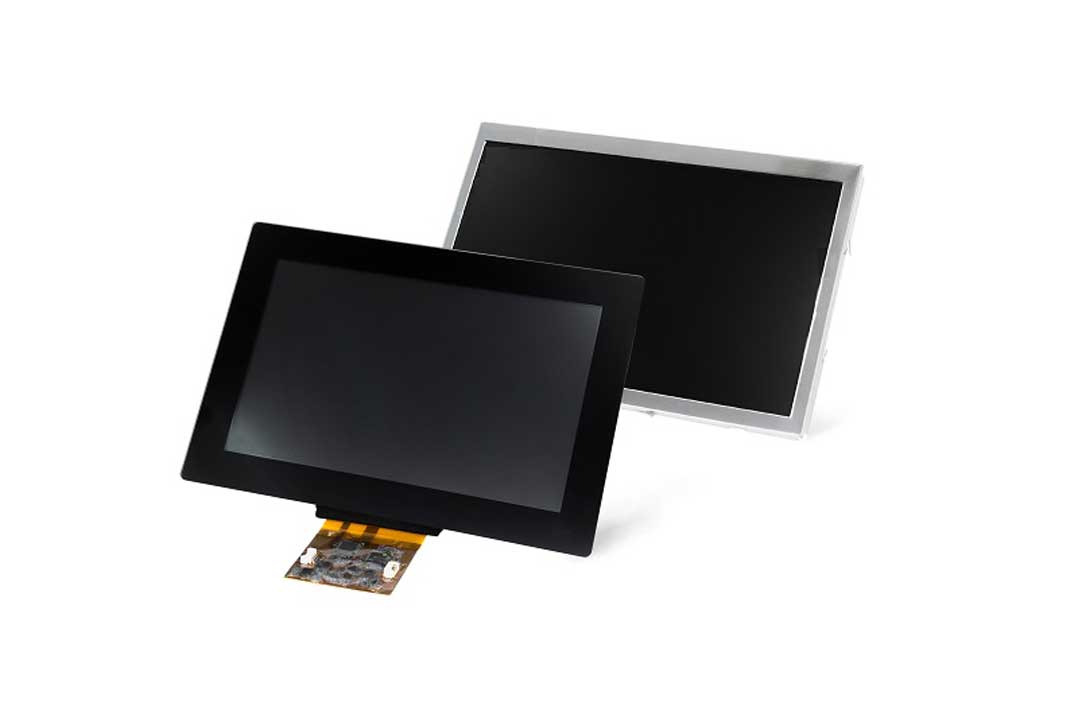
    Custom LCD modules are specifically designed to display a variety of images or low-information content according to unique requirements. These LCD modules can be categorised as positive or negative, depending on the intended application of the final product. In positive mode, the LCD module features a white background with black letters, while in negative mode the background is black and the letters appear in white.

    Common misconceptions

    When it comes to choosing which type of LCD module is the right one, many believe that getting a custom liquid-crystal display module up and running from scratch is resource heavy, both in time and money. They might also think the learning curve is steep and that focus could be taken away from other work.

    There is also the perception that small changes can cause big problems when it comes to maintaining solutions in the future. Some are also concerned about the danger of higher development costs or production targets that might be missed and think that maintenance will be an unnecessary headache. For all these reasons, many people opt for off-the-shelf modules instead.

    For more information, please contact Molebogeng Maponya at Altron Arrow

    However, nothing could be further from the truth. One misconception is that custom LCD display modules have a higher unit cost compared to standard off-the-shelf modules. Although there may be non-recurring engineering (NRE) costs associated with custom modules, the unit pricing for custom LCD modules is often comparable to or even lower than that of similar off-the-shelf products.

    There are several reasons for this. Standard display modules are usually tailored to maximise their implementation potential, which can lead to high pin counts that facilitate variable interface protocols, and high-output backlighting to maximise the potential of the application.
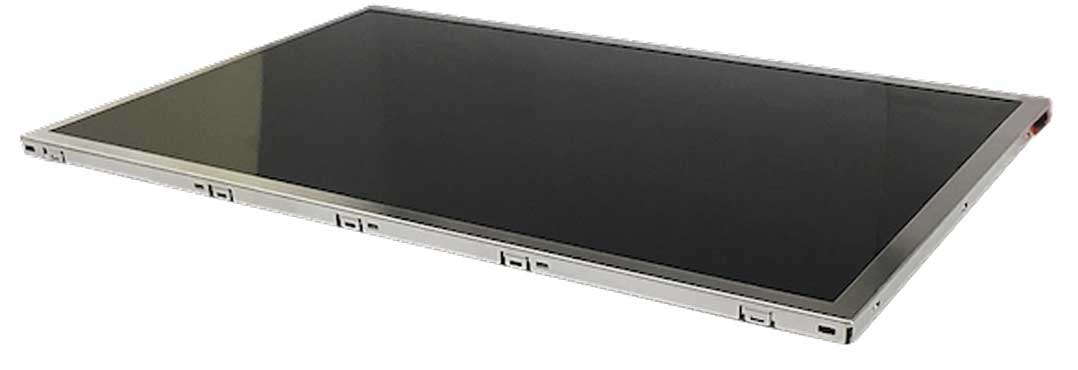
    Moreover, they are designed with fairly conservative mechanical design methods – and for a wide range of applications, design-specific changes can actually lower the unit production cost via application-specific simplification, often fairly dramatically.

    Another misconception is that custom NRE costs are too constraining. For the majority of passive matrix LCD modules, Altron Arrow is capable of delivering a custom LCD with custom backlight, mechanical housing and an electrical interface for a NRE cost that is surprisingly affordable. The bottom line is that the flexibility of design facilitated by customisation far outweighs the small extra NRE that is required.

    The final misconception is that designing custom modules extends delay production deadlines, and lead times. While an off-the-shelf option has the benefit of being instant, the lead time for a customised module is not as long as one might think.

    There’s no question that the design freedom and iterative optimisation that custom LCD modules bring to the table more than justifies the time and minimum extra expense.

    If you’d like to know more, please contact us on altronarrow.com or follow us on Facebook, Twitter or LinkedIn.

    • Read more articles by Altron Arrow on TechCentral
    • This promoted content was paid for by the party concerned

    Follow TechCentral on Google News Add TechCentral as your preferred source on Google


    Altron Altron Arrow
    WhatsApp YouTube
    Share. Facebook Twitter LinkedIn WhatsApp Telegram Email Copy Link
    Previous ArticleTakealot has a lot on its plate
    Next Article Data encryption a vital cog in cybersecurity

    Related Posts

    Huawei Connect 2026: taking South African AI beyond pilots

    Huawei Connect 2026: taking South African AI beyond pilots

    29 July 2026
    Altron appoints Collin Govender as MD of Altron HealthTech

    Altron appoints Collin Govender as MD of Altron HealthTech

    29 July 2026
    Altron Digital Business study links workplace tech to employee satisfaction - Craig Stewart

    Altron Digital Business study links workplace tech to employee satisfaction

    8 July 2026
    Add A Comment

    Comments are closed.

    Company News
    Domains.co.za launches self-hosted n8n VPS hosting

    Domains.co.za launches self-hosted n8n VPS hosting

    31 July 2026
    Smarter.tech '26 shows why smarter technology begins with context - Obsidian Systems

    Context is the missing piece in enterprise AI: Obsidian

    31 July 2026
    Huawei launches 12 intelligent transport solutions in South Africa - Sam Tang

    Huawei launches 12 intelligent transport solutions in South Africa

    30 July 2026
    Opinion
    The author, Jannie van Zyl

    Selling vapour is corporate suicide in slow motion

    16 July 2026
    Brazil's online gambling crackdown is a lesson for South Africa

    How Amazon outmanoeuvred Starlink in South Africa

    15 July 2026
    The Popia problem with agentic AI - Herman Haasbroek

    The Popia problem with agentic AI

    14 July 2026

    Subscribe to Updates

    Get the best South African technology news and analysis delivered to your e-mail inbox every morning.

    Latest Posts
    Nedbank hires MTN's former tech chief as group CIO - Nikos Angelopoulos

    Nedbank hires MTN’s former tech chief as group CIO

    31 July 2026
    Eskom's diesel bill falls 86% as breakdowns hit eight-year low

    Eskom’s diesel bill falls 86% as breakdowns hit eight-year low

    31 July 2026
    Ramaphosa signs off on taking the grid away from Eskom

    Ramaphosa signs off on taking the grid away from Eskom

    31 July 2026
    TCS+ | Why South African workers must become supervisors of digital labour - Accelera Digital Group Cliff de Wit

    TCS+ | Why South African workers must become supervisors of digital labour

    31 July 2026
    © 2009 - 2026 NewsCentral Media
    Built and maintained by Chronon
    • Cookie policy (ZA)
    • TechCentral – privacy and Popia

    Type above and press Enter to search. Press Esc to cancel.

    Manage consent

    TechCentral uses cookies to enhance its offerings. Consenting to these technologies allows us to serve you better. Not consenting or withdrawing consent may adversely affect certain features and functions of the website.

    Functional Always active
    The technical storage or access is strictly necessary for the legitimate purpose of enabling the use of a specific service explicitly requested by the subscriber or user, or for the sole purpose of carrying out the transmission of a communication over an electronic communications network.
    Preferences
    The technical storage or access is necessary for the legitimate purpose of storing preferences that are not requested by the subscriber or user.
    Statistics
    The technical storage or access that is used exclusively for statistical purposes. The technical storage or access that is used exclusively for anonymous statistical purposes. Without a subpoena, voluntary compliance on the part of your Internet Service Provider, or additional records from a third party, information stored or retrieved for this purpose alone cannot usually be used to identify you.
    Marketing
    The technical storage or access is required to create user profiles to send advertising, or to track the user on a website or across several websites for similar marketing purposes.
    • Manage options
    • Manage services
    • Manage {vendor_count} vendors
    • Read more about these purposes
    View preferences
    • {title}
    • {title}
    • {title}