 South Africa’s microwave connectivity market has taken centre stage in a new report by ICT market research specialist Africa Analysis, with the market size estimated at annual revenue of R8.3-billion in 2024.
The 2025 SA Microwave Connectivity Report zooms in on the strategies employed by mobile operators for microwave. Other aspects of the report include services provided, pricing, market size and forecast, and microwave equipment vendors.
“The role of microwave is poised to remain strategic. Emerging trends – including E-band densification, millimetre-wave spectrum reallocation and intelligent interference mitigation in unlicensed bands – will further enhance microwave’s relevance in both business and residential broadband markets,” said Andre Wills, MD at Africa Analysis, in a statement on Monday. “Hybrid models combining fibre and microwave are also gaining traction, especially in business parks and smart city deployments.”
Microwaves are the part of the electromagnetic frequency spectrum between 1GHz and 300GHz. The relatively high frequencies allow for a wide bandwidth, enabling large volumes of data to be transmitted quickly.
Microwave links are a commonly used backhaul solution for mobile networks across the world, especially in large, open countries like South Africa, where portions of the population are far from densely populated cities and the business case for fibre builds is weak.
Compared to fibre, microwave is relatively easy and cheap to deploy while still offering high-capacity throughput. Microwaves can be focused into narrow, highly directional beams that allow for secure, high-gain, point-to-point communications over distances of up to tens of kilometres or more. One major drawback, however, is that microwave antennas must have line of site of each other to operate effectively.
Fibre preferred
Another disadvantage of microwave is the technology’s susceptibility to bad weather. Fibre, on the other hand, maintains consistent throughput whatever the weather and is therefore usually the preferred backhaul technology.
Last month, fibre operator Maziv – following the consummation of an equity deal in which Vodacom purchased a 30% co-controlling stake in the company – announced a desire to connect more than 8 000 cellular base stations that are not already connect to fibre infrastructure in South Africa.
Read: Ham radio turns 100 in South Africa
Other uses for microwave connectivity, also highlighted in the Africa Analysis report, include satellite communications and fixed-wireless access. Microwaves are used to send signals between satellites and ground stations, allowing the satellites to connect to the rest of the internet. For fixed-wireless access, homes and business eliminate the need for wired connections by using microwave technology to expand coverage in ringfenced environments.
Microwave also plays an important role in disaster recovery, where telecoms network towers, overhead fibre cables and even underground conduits are damaged by high winds, fallen trees and shifting earth.
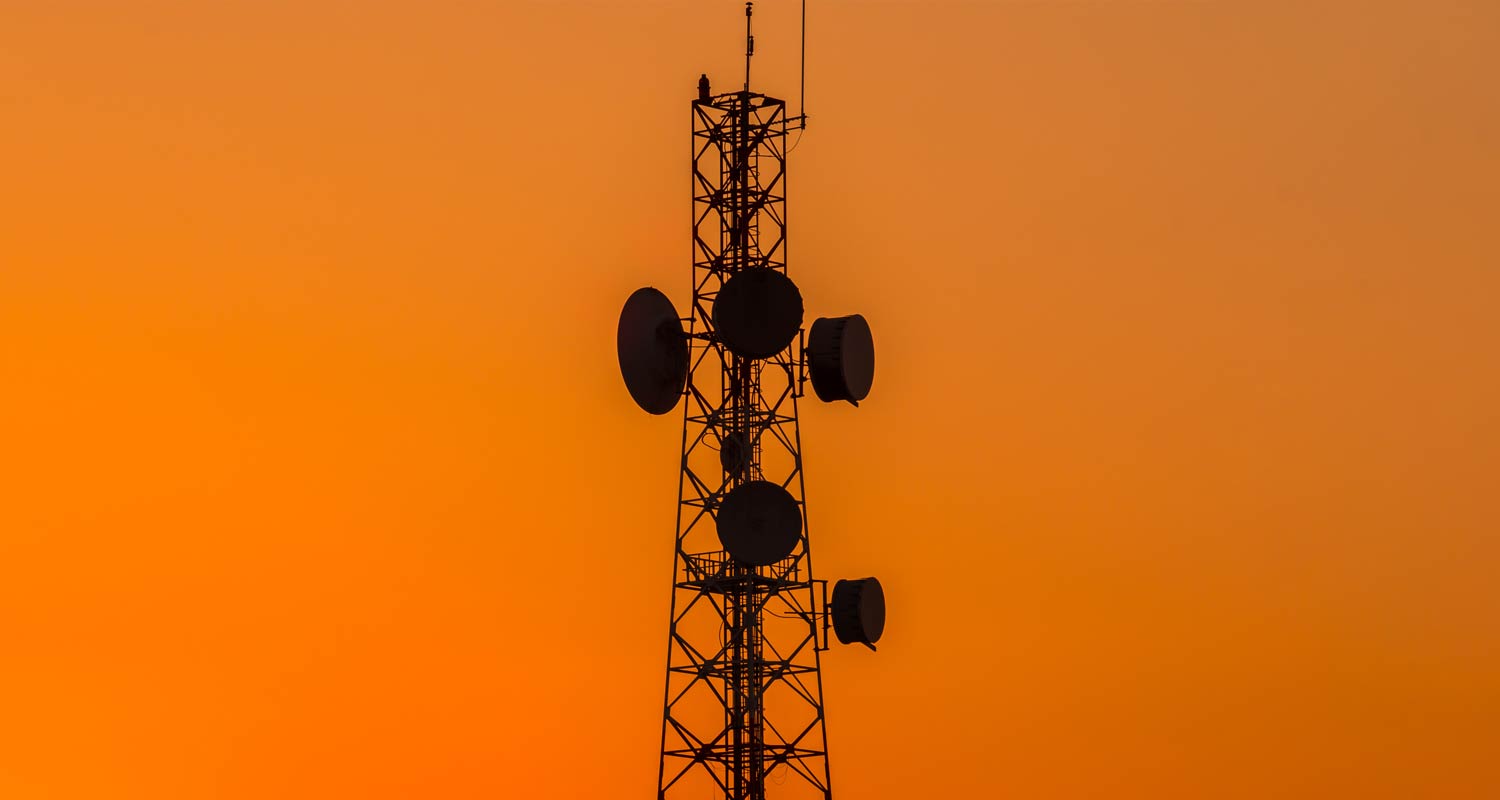 According to the Africa Analysis report, the number of microwave links in South Africa, across all functions, were in the region of 176 000 at the end of 2024. These include point-to-point and point-to-multipoint connections across all customer types and services.
“Microwave remains a strategic asset in South Africa’s evolving broadband future. It is a cornerstone of digital infrastructure, bridging structural gaps in fibre roll-out and enabling scalable broadband access across diverse geographies and market segments,” said Wills.
Read: Vodacom-backed Maziv eyes massive fibre expansion into rural South Africa
“The technology’s continual evolution ensures that microwave is not merely a stop-gap solution but has a sustainable future as an indispensable element of telecoms infrastructure.” – © 2025 NewsCentral Media
Get breaking news from TechCentral on WhatsApp. Sign up here.