Close Menu
TechCentralTechCentral

    Subscribe to the newsletter

    Get the best South African technology news and analysis delivered to your e-mail inbox every morning.

    Facebook X (Twitter) YouTube LinkedIn
    WhatsApp Facebook X (Twitter) LinkedIn YouTube
    TechCentralTechCentral
    • News
      South Africa's mobile operators strike spectrum gold

      South Africa’s mobile operators strike spectrum gold

      26 July 2026
      MTN, Vodacom take Icasa to court over data expiry rules

      MTN, Vodacom take Icasa to court over data expiry rules

      26 July 2026
      Africa's most popular phones have a tracking problem

      Africa’s most popular phones have a tracking problem

      24 July 2026
      Vodacom taps UJ, AWS to build its AI talent pipeline - Vodacom Group CEO Shameel Joosub

      Vodacom taps UJ, AWS to build its AI talent pipeline

      24 July 2026
      Intel is back in the game - Intel CEO Lip-Bu Tan. Laure Andrillon/Reuters

      Intel is back in the game

      24 July 2026
    • World
      Meta AI will now tell parents if their teen is in crisis

      Meta AI will now tell parents if their teen is in crisis

      17 July 2026
      IBM shares crash 25% as AI upends software spending - Arvind Krishna

      IBM shares crash 25% as AI upends software spending

      15 July 2026
      Jony Ive's first OpenAI device: an AI smart speaker - Jony Ive and Sam Altman

      Jony Ive’s first OpenAI device: an AI smart speaker

      15 July 2026
      Stripe, Advent in talks to buy PayPal for $53-billion

      Stripe, Advent in talks to buy PayPal for $53-billion

      15 July 2026
      Memory crisis sends smartphone market into steep decline

      Memory crisis sends smartphone market into steep decline

      13 July 2026
    • In-depth
      The plan to stop AI from breaking the world - Google DeepMind CEO Demis Hassabis. Image: John Sears

      The plan to stop AI from breaking the world

      16 July 2026
      The internet has a Strait of Hormuz problem

      The internet has a Strait of Hormuz problem

      15 July 2026
      AI boom sparks rally, frenzy and fear

      AI boom sparks rally, frenzy and fear

      11 June 2026
      Every plug-in hybrid on sale in South Africa, ranked by price - Lamborghini Temerario

      Every plug-in hybrid on sale in South Africa, ranked by price

      7 June 2026
      What Wi-Fi 8 will mean for wireless networks

      What Wi-Fi 8 will mean for wireless networks

      1 June 2026
    • TCS
      TCS | How Optasia lends billions to people banks can't see - Salvador Anglada

      TCS | How Optasia lends billions to people banks can’t see

      23 July 2026
      The rands-and-cents case for electric trucks - William Kelly Watts & Wheels with Wills

      The rands-and-cents case for electric trucks

      20 July 2026
      Watts & Wheels S1E7: 'Ferrari's EV breaks the internet'

      Watts & Wheels S1E7: ‘Ferrari’s EV breaks the internet’

      8 July 2026
      TCS | Pick n Pay's Enrico Ferigolli on Penny, the AI that shops for you

      TCS | Pick n Pay’s Enrico Ferigolli on Penny, the AI that shops for you

      2 July 2026
      TCS+ | How Tracker is turning vehicle data into business strategy - Silvia Schollenberger

      TCS+ | How Tracker is turning vehicle data into business strategy

      1 July 2026
    • Opinion
      Selling vapour is corporate suicide in slow motion - Jannie van Zyl

      Selling vapour is corporate suicide in slow motion

      16 July 2026
      Brazil's online gambling crackdown is a lesson for South Africa

      How Amazon outmanoeuvred Starlink in South Africa

      15 July 2026
      The Popia problem with agentic AI - Herman Haasbroek

      The Popia problem with agentic AI

      14 July 2026
      The author, Fanie van Rooyen

      South Africa can still catch the AI wave – here’s how

      7 July 2026
      The author, Fanie van Rooyen

      The AI utopia South Africa can’t afford

      1 July 2026
    • Company Hubs
      • 1Stream
      • Africa Data Centres
      • AfriGIS
      • Altron Digital Business
      • Altron Document Solutions
      • Altron Group
      • Arctic Wolf
      • Ascent Technology
      • AvertITD
      • BBD
      • Braintree
      • CallMiner
      • CambriLearn
      • CM Telecom
      • Contactable
      • CYBER1 Solutions
      • Digicloud Africa
      • Digimune
      • Domains.co.za
      • ESET
      • Euphoria Telecom
      • HOSTAFRICA
      • Incredible Business
      • iONLINE
      • IQbusiness
      • Iris Network Systems
      • Kaspersky
      • LSD Open
      • Mitel
      • NEC XON
      • Netstar
      • Network Platforms
      • Next DLP
      • Ovations
      • Paracon
      • Paratus
      • Q-KON
      • SevenC
      • SkyWire
      • Solid8 Technologies
      • Telit Cinterion
      • Telviva
      • Tenable
      • Vertiv
      • Videri Digital
      • Vodacom Business
      • Vox
      • Wipro
      • Workday
      • XLink
    • Sections
      • AI and machine learning
      • Banking
      • Broadcasting and Media
      • Cloud services
      • Contact centres and CX
      • Cryptocurrencies
      • Education and skills
      • Electronics and hardware
      • Energy and sustainability
      • Enterprise software
      • Financial services
      • HealthTech
      • Information security
      • Internet and connectivity
      • Internet of Things
      • Investment
      • IT services
      • Lifestyle
      • Policy and regulation
      • Public sector
      • Retail and e-commerce
      • Satellite communications
      • Science
      • SMEs and start-ups
      • Social media
      • Talent and leadership
      • Telecoms
      • Watts & Wheels
    • Events
    • Advertise
    TechCentralTechCentral
    Home » Sections » Internet and connectivity » Ham radio turns 100 in South Africa
    Ham radio turns 100 in South Africa

    Ham radio turns 100 in South Africa

    By Nkosinathi Ndlovu7 April 2025

    The South African Radio League (Sarl) wants to broaden its contribution to the growth of amateur radio in sub-Saharan Africa as the organisation celebrates its centenary next month.

    Amateur radio, also known as ham radio, is a hobby that involves experimenting with radio frequencies, building antennae and participating in radio contests. Amateur radio enthusiasts, also known as “hams”, play a key role by supporting emergency services with communications in disaster scenarios.

    “It’s a bit of a sad story that you’ve got amateur radio activity in Southern Africa that’s mainly in Namibia and South Africa but not much elsewhere in Africa. It’s slowly taking off in Mozambique and it’s very small in Tanzania,” said Sarl president Nico van Rensburg in an interview with TechCentral.

    When we sit and play around with amateur radio, it is very complementary to the electronics syllabus in schools

    “In the northern parts of Africa – Egypt and Nigeria and other countries there – you have national bodies and far more activity. But you have this middle part of Africa where there is nothing, absolutely nothing.”

    Sarl was formed in 1925 to represent the interests of radio amateurs, and one of its first key contributions to the field was to lobby for spectrum to be set aside for hams to experiment with. Today, communications regulator Icasa manages spectrum allocations for amateur radio enthusiasts through a licencing regime that requires hams to obtain an amateur broadcasting licence. Sarl administers the exam hams are required to take before obtaining a licence and also provides training to aspiring amateurs.

    Emergency response

    There is a direct correlation between the number of hams in a country and its ability to recover in times of distress. When floods ravaged parts of KwaZulu-Natal in April 2022, hams set up emergency radio communication stations at relief centres to help displaced residents, especially the elderly, reconnect with their loved ones. According to Brian Jacobs, national director at Hamnet, the emergency communications wing of Sarl, hams often happen to be the first responders in emergencies, allowing them to provide response teams and relief organisations a situational overview that informs the type of equipment needed on the ground.

    “Normally what happens when we have an emergency, and it even happens when we have massive sports events, is that the cellphone towers in the area become overloaded and fail. Once those start failing, other systems start failing as well. We have memoranda of understanding with various organisations, including the government, where we assist with communication. We provide what we call start-up communications: when everything fails in an area, we go in – normally for a period of 48 to 72 hours – until all the commercial communications systems can be brought back online,” said Jacobs.

    The training hams go through to prepare for high-pressure scenarios takes various forms, including formal study and practical experiments. Contests between amateurs in the same club or between clubs is one of Sarl’s key engagement drivers, providing hams with the opportunity to use their skills in real-world scenarios while socialising with likeminded individuals.
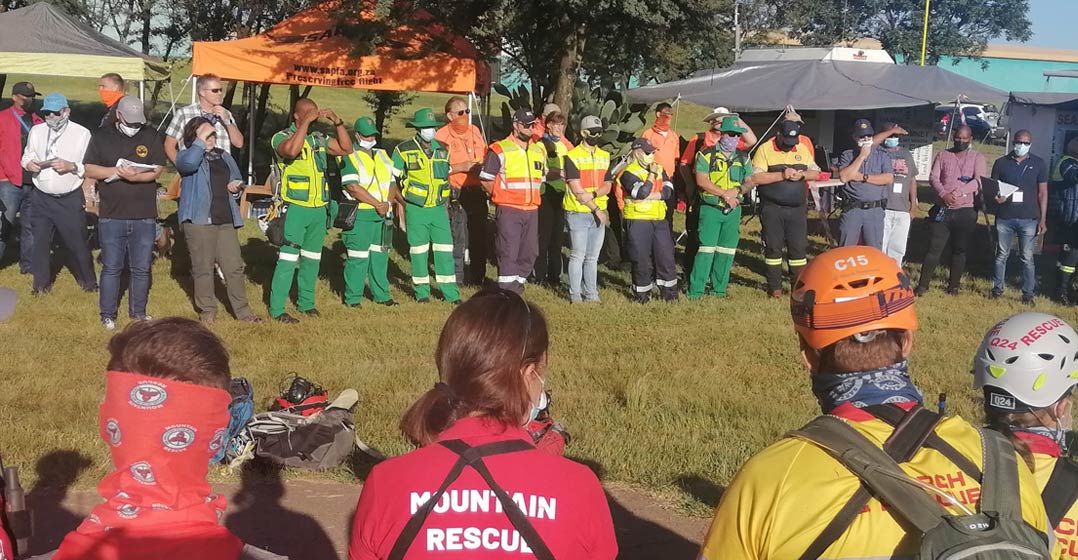
    Amateur radio is crucial in search and rescue operations, with hams fulfilling the communications function. Image: Sarl

    Despite developing the required skills, not all Sarl members choose to participate in Hamnet’s emergency communications activities. However, hams from different teams co-ordinate during contests like balloon launches, where one team focuses on the launch itself – and the experiment being sent up into the atmosphere – and Hamnet practices its skills by recovering the beacons attached to each balloon. Beacon recovery is critical in search-and-rescue operations.

    Sarl also runs a youth programme called ZU Call Sign, which teaches radio-related skills to teenagers between the ages of 12 and 20. Just like their adult counterparts, ZU Call Sign members also need to pass an exam to get their amateur radio licences. The frequencies they are assigned are limited so they cannot broadcast beyond South Africa’s borders.

    Youth are afforded opportunities for international exposure through contests and camps runs by the International Amateur Radio Union, of which Sarl is a member organisation.

    We didn’t have any handheld radios, so I called my friends over to my house – the satellite always came over at 3pm

    Guy Eales, who serves as Sarl’s vice president and runs the ZU Call Sign programme, said many of the youngsters use the experience gained to build meaningful careers in science and technology.

    “When we sit and play around with amateur radio, it is very complementary to the electronics syllabus they teach in schools. In amateur radio, we show what things like amplitude and frequency look like in a practical setting, and to my mind that brings electronics to life. We are doing Stem (science, technology, engineering and mathematics), we are not just talking about it, so the kids learn practical skills that will prepare them for a career,” said Eales.

    Sarl’s experiments with various forms of radio technology allow the organisation and its members to become key contributors to industry. Satellite tracking is a traditional amateur radio activity, allowing hams to communicate with their counterparts in other parts of the world when a satellite is in range. The first satellite dedicated to amateur radio activity, called Oscar 1 (Orbiting Satellite Carrying Amateur Radio) was launched by the US in 1961.

    Oscar and Sputnik

    Hans van de Groenendaal, a Sarl hall of famer who has been a member of the organisation since 1959, recalled tracking Oscar 1 and the Russian Sputnik 1 satellite from his mother’s kitchen as a teenager.

    “Oscar 1 was launched four years after the Russians beat the US to space. When I received the Sputnik signal I was still a youngster in high school. When I came home and tuned into the 20MHz band and heard that sound, it was really exciting. We didn’t have any handheld radios, so I called my friends over to my house – the satellite always came over at three o’clock in the afternoon.

    “I had to fight with my mother because at 3pm, there was a programme on Springbok Radio called Liefdeslied and there was no woman in this country who didn’t want to listen to that story.”

    Read: Zimbabwe government duped by radio wave energy ‘invention’

    Van de Groenendaal went on to become a key role player in the launch of two satellites originating from South Africa, SunSat and SumbandilaSat. Launched from the Vandenberg Air Force Base in California in February 1999, SunSat was the first satellite designed and manufactured in South Africa. The unit was built by postgraduate engineering students at the University of Stellenbosch. Van de Groenendaal’s contributions to the project later earned him an honorary degree in engineering from the university. SunSat was used extensively by US schools to teach students about satellite technology, he said.
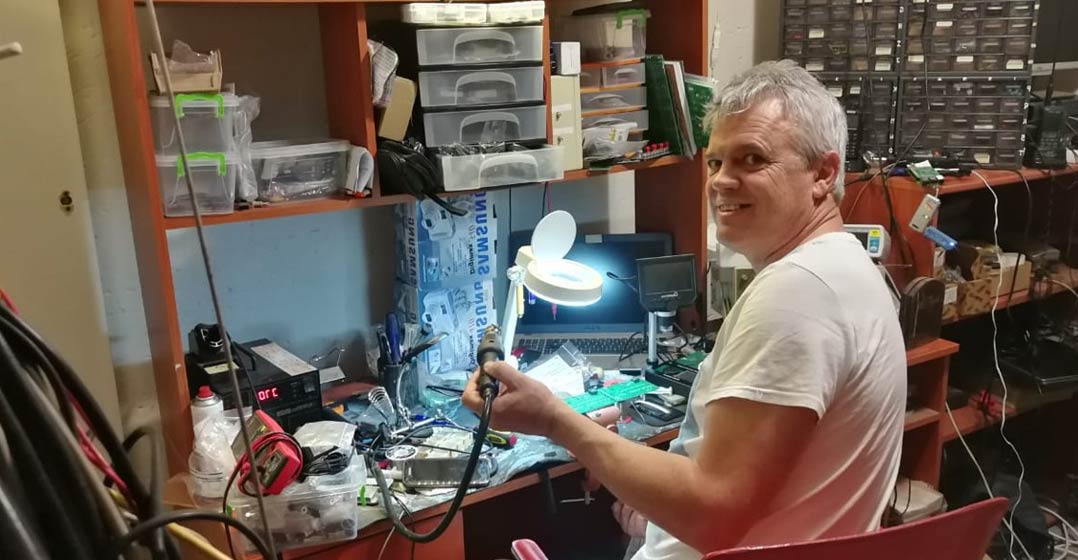
    An unnamed radio ham doing what a radio ham does best. Image: Sarl
    South African radio ham Anton Janovsky doing what a radio ham does best. Image: Sarl

    Protecting the spectrum allocated to amateur radio and emergency services from interference and cannibalisation by other industries is one of Sarl’s main responsibilities. However, hams also make contributions to the policy and regulatory space, working closely with Icasa, usually in an advisory capacity, to shape the regulations moving the industry forward. One of the ways Sarl provides the expertise of its members is by experimenting, testing and reporting on new technologies and how they make use of radio frequency spectrum.

    Replicating the success amateur radio has had through Sarl in South Africa over the last 100 years in less developed parts of Africa comes with many challenges, funding being key among them. Political will, or the lack thereof, is oftentimes a barrier, too.

    Read: Whatever happened to shortwave radio? 

    Years of disastrous flooding, along with post-election riots in 2024, have made the development of a reliable emergency communications system a priority for the Mozambican government, where amateur radio has become an important component of its disaster management strategy. Sarl hall of famer and lifelong ham Chris Turner has moved to the country to lend his expertise.

    “I have been assisting … to establish amateur radio stations in all the major towns [in Mozambique]. Their main objective is train radio amateurs so that they have a network of skilled and experienced radio operators in times of natural disaster,” said Turner.  – © 2025 NewsCentral Media

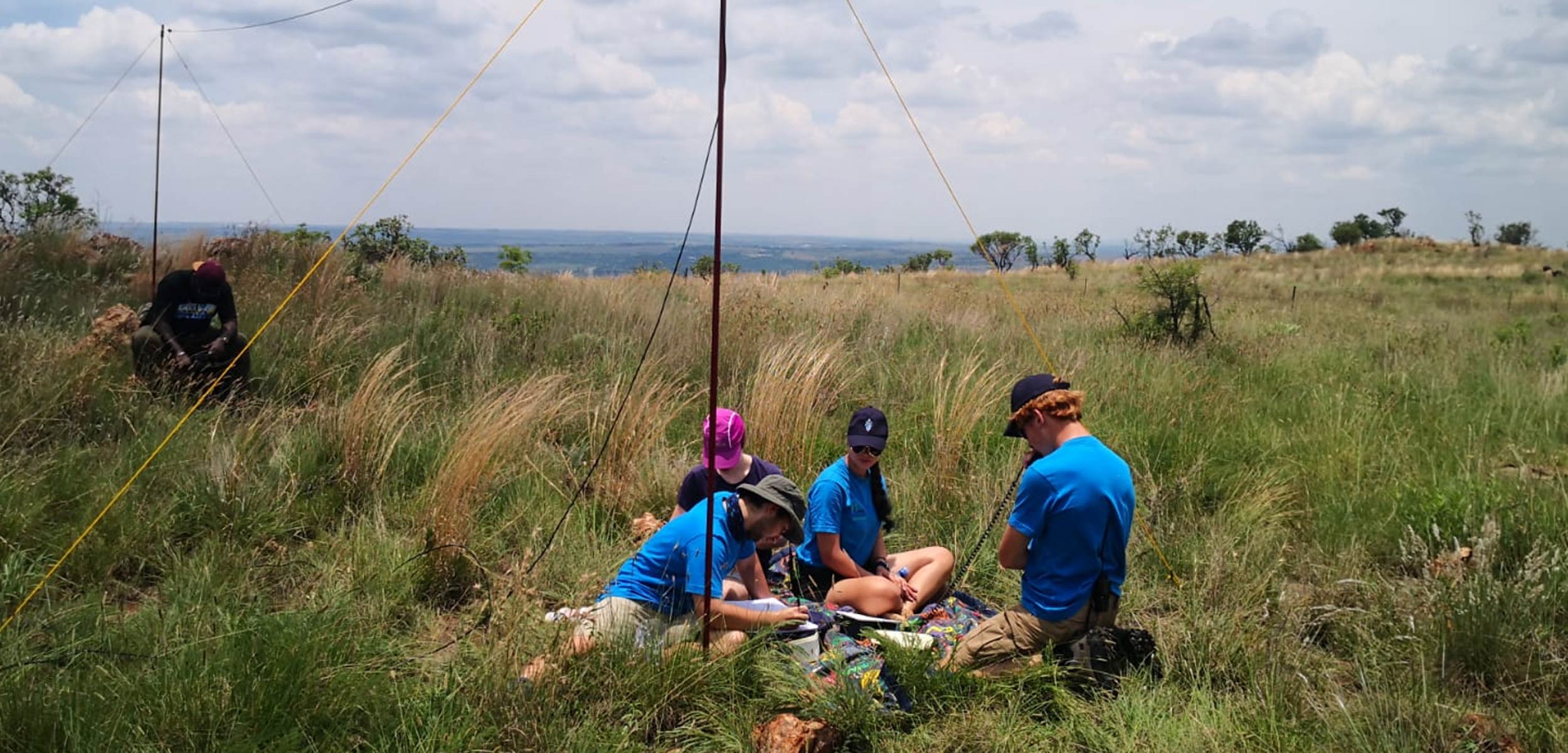
    • Main image: South African amateur radio enthusiasts building a radio antenna

    Get breaking news from TechCentral on WhatsApp. Sign up here.

    Don’t miss:

    Radio is surviving – but not thriving – in a digital world

    Follow TechCentral on Google News Add TechCentral as your preferred source on Google


    Brian Jacobs Chris Turner Hamnet Hans van de Groenendal Icasa Nico van Rensburg Sarl South African Radio League ZU Call Sign
    WhatsApp YouTube
    Share. Facebook Twitter LinkedIn WhatsApp Telegram Email Copy Link
    Previous ArticleTariff storm ravages tech’s ‘Magnificent Seven’
    Next Article Top tips to make the most of your Honor Magic7 Pro

    Related Posts

    South Africa's mobile operators strike spectrum gold

    South Africa’s mobile operators strike spectrum gold

    26 July 2026
    MTN, Vodacom take Icasa to court over data expiry rules

    MTN, Vodacom take Icasa to court over data expiry rules

    26 July 2026
    Brazil's online gambling crackdown is a lesson for South Africa

    How Amazon outmanoeuvred Starlink in South Africa

    15 July 2026
    Company News
    Why Europe is turning to South Africa for cross-border innovation - BBD Software

    Why Europe is turning to South Africa for cross-border innovation

    24 July 2026
    Green dashboards, stalled change: the CIO's blind spot - Change Logic Marchant van den Heever

    Green dashboards, stalled change: the CIO’s blind spot

    24 July 2026
    Why Africa's cloud needs more than one path - Africa Data Centres

    Why Africa’s cloud needs more than one path

    23 July 2026
    Opinion
    Selling vapour is corporate suicide in slow motion - Jannie van Zyl

    Selling vapour is corporate suicide in slow motion

    16 July 2026
    Brazil's online gambling crackdown is a lesson for South Africa

    How Amazon outmanoeuvred Starlink in South Africa

    15 July 2026
    The Popia problem with agentic AI - Herman Haasbroek

    The Popia problem with agentic AI

    14 July 2026

    Subscribe to Updates

    Get the best South African technology news and analysis delivered to your e-mail inbox every morning.

    Latest Posts
    South Africa's mobile operators strike spectrum gold

    South Africa’s mobile operators strike spectrum gold

    26 July 2026
    MTN, Vodacom take Icasa to court over data expiry rules

    MTN, Vodacom take Icasa to court over data expiry rules

    26 July 2026
    Africa's most popular phones have a tracking problem

    Africa’s most popular phones have a tracking problem

    24 July 2026
    Vodacom taps UJ, AWS to build its AI talent pipeline - Vodacom Group CEO Shameel Joosub

    Vodacom taps UJ, AWS to build its AI talent pipeline

    24 July 2026
    © 2009 - 2026 NewsCentral Media
    Built and maintained by Chronon
    • Cookie policy (ZA)
    • TechCentral – privacy and Popia

    Type above and press Enter to search. Press Esc to cancel.

    Manage consent

    TechCentral uses cookies to enhance its offerings. Consenting to these technologies allows us to serve you better. Not consenting or withdrawing consent may adversely affect certain features and functions of the website.

    Functional Always active
    The technical storage or access is strictly necessary for the legitimate purpose of enabling the use of a specific service explicitly requested by the subscriber or user, or for the sole purpose of carrying out the transmission of a communication over an electronic communications network.
    Preferences
    The technical storage or access is necessary for the legitimate purpose of storing preferences that are not requested by the subscriber or user.
    Statistics
    The technical storage or access that is used exclusively for statistical purposes. The technical storage or access that is used exclusively for anonymous statistical purposes. Without a subpoena, voluntary compliance on the part of your Internet Service Provider, or additional records from a third party, information stored or retrieved for this purpose alone cannot usually be used to identify you.
    Marketing
    The technical storage or access is required to create user profiles to send advertising, or to track the user on a website or across several websites for similar marketing purposes.
    • Manage options
    • Manage services
    • Manage {vendor_count} vendors
    • Read more about these purposes
    View preferences
    • {title}
    • {title}
    • {title}