Close Menu
TechCentralTechCentral

    Subscribe to the newsletter

    Get the best South African technology news and analysis delivered to your e-mail inbox every morning.

    Facebook X (Twitter) YouTube LinkedIn
    WhatsApp Facebook X (Twitter) LinkedIn YouTube
    TechCentralTechCentral
    • News
      How Russians juggle VPNs to outwit the Kremlin

      How Russians juggle VPNs to outwit the Kremlin

      15 June 2026
      The millions Vodacom spends protecting its CEO - Shameel Joosub

      The millions Vodacom spends protecting its CEO

      14 June 2026
      The missing number in Vodacom's annual report - Nkosana Makate please call me

      The missing number in Vodacom’s annual report

      12 June 2026
      How Sixty60 turned lockdown luck into a lasting lead

      How Sixty60 turned lockdown luck into a lasting lead

      12 June 2026
      SABC+ buckles as 477 000 fans pile in for Bafana opener

      SABC+ buckles as 477 000 fans pile in for Bafana opener

      12 June 2026
    • World
      Amazon CEO flagged Anthropic AI risks to Washington - Andy Jassy

      Amazon CEO flagged Anthropic AI risks to Washington

      14 June 2026
      Trouble at Xbox

      Trouble at Xbox

      11 June 2026
      Meta declares war on Israeli spyware firm

      Meta declares war on Israeli spyware firm

      8 June 2026
      Meta takes on OpenAI and Anthropic in enterprise AI

      Meta takes on OpenAI and Anthropic in enterprise AI

      4 June 2026
      AI demand sparks 'chipflation' warning

      AI demand sparks ‘chipflation’ warning

      4 June 2026
    • In-depth
      AI boom sparks rally, frenzy and fear

      AI boom sparks rally, frenzy and fear

      11 June 2026
      Every plug-in hybrid on sale in South Africa, ranked by price - Lamborghini Temerario

      Every plug-in hybrid on sale in South Africa, ranked by price

      7 June 2026
      What Wi-Fi 8 will mean for wireless networks

      What Wi-Fi 8 will mean for wireless networks

      1 June 2026
      Alfa's electric rebel - Alfa Romeo Junior Elettrica Veloce

      Alfa’s electric rebel

      29 April 2026
      Africa switches on as Europe dims the lights

      Africa switches on as Europe dims the lights

      9 April 2026
    • TCS
      Watts & Wheels S1E5: 'A Bentley of the bush and a car that swims'

      Watts & Wheels S1E5: ‘A Bentley of the bush and a car that swims’

      8 June 2026
      TCS | Charge's R1.8-billion bet on an off-grid EV future - Charge chairman Joubert Roux

      TCS | Charge’s R1.8-billion bet on an off-grid EV future

      18 May 2026
      TCS+ | The Up&Up Group on the hidden cost of AI - Jason Harrison

      TCS+ | The Up&Up Group on the hidden cost of AI

      13 May 2026
      Michael Rossouw

      TCS+ | The retirement decision most South Africans get wrong

      6 May 2026
      TCS | The Cape Town start-up listening for TB with AI - Braden van Breda

      TCS | The Cape Town start-up listening for TB with AI

      4 May 2026
    • Opinion
      The clock is ticking on South African banks' biggest advantage - Pambos Soteriades

      The clock is ticking on South African banks’ biggest advantage

      9 June 2026

      Clashing judgments leave South Africa’s crypto law unsettled

      2 June 2026
      The clock is ticking on South African banks' biggest advantage - Pambos Soteriades

      The trap inside South Africa’s banking MVNO boom

      1 June 2026
      The hidden cost of social media age bans is everyone's privacy - Petrus Potgieter

      The hidden cost of social media age bans is everyone’s privacy

      29 May 2026
      Treasury's crypto crackdown is a betrayal of Mandela's promise - Duncan McLeod

      Treasury’s crypto crackdown is a betrayal of Mandela’s promise

      22 May 2026
    • Company Hubs
      • 1Stream
      • Africa Data Centres
      • AfriGIS
      • Altron Digital Business
      • Altron Document Solutions
      • Altron Group
      • Arctic Wolf
      • Ascent Technology
      • AvertITD
      • BBD
      • Braintree
      • CallMiner
      • CambriLearn
      • CM Telecom
      • Contactable
      • CYBER1 Solutions
      • Digicloud Africa
      • Digimune
      • Domains.co.za
      • ESET
      • Euphoria Telecom
      • HOSTAFRICA
      • Incredible Business
      • iONLINE
      • IQbusiness
      • Iris Network Systems
      • Kaspersky
      • LSD Open
      • Mitel
      • NEC XON
      • Netstar
      • Network Platforms
      • Next DLP
      • Ovations
      • Paracon
      • Paratus
      • Q-KON
      • SevenC
      • SkyWire
      • Solid8 Technologies
      • Telit Cinterion
      • Telviva
      • Tenable
      • Vertiv
      • Videri Digital
      • Vodacom Business
      • Wipro
      • Workday
      • XLink
    • Sections
      • AI and machine learning
      • Banking
      • Broadcasting and Media
      • Cloud services
      • Contact centres and CX
      • Cryptocurrencies
      • Education and skills
      • Electronics and hardware
      • Energy and sustainability
      • Enterprise software
      • Financial services
      • HealthTech
      • Information security
      • Internet and connectivity
      • Internet of Things
      • Investment
      • IT services
      • Lifestyle
      • Motoring
      • Policy and regulation
      • Public sector
      • Retail and e-commerce
      • Satellite communications
      • Science
      • SMEs and start-ups
      • Social media
      • Talent and leadership
      • Telecoms
    • Events
    • Advertise
    TechCentralTechCentral
    Home » Sections » Internet and connectivity » How Russians juggle VPNs to outwit the Kremlin

    How Russians juggle VPNs to outwit the Kremlin

    VPN downloads have jumped 14-fold in Russia, and even loyal officials now juggle phones to stay private.
    By Agency Staff15 June 2026
    Twitter LinkedIn Facebook WhatsApp Email Telegram Copy Link
    News Alerts
    WhatsApp
    How Russians juggle VPNs to outwit the Kremlin
    Ramil Sitdikov/Reuters

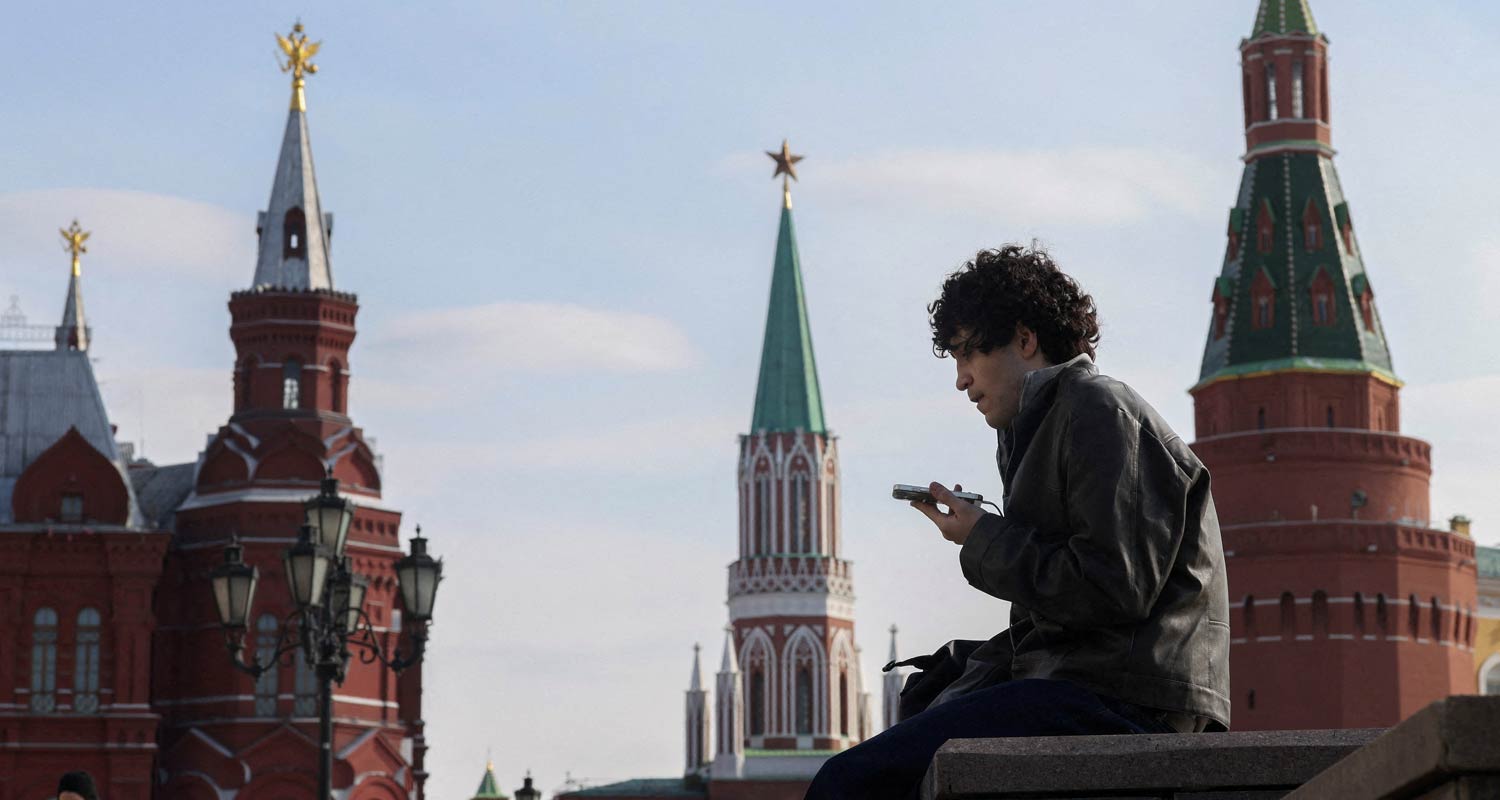
    In a quiet cafe popular for its free Wi-Fi and good coffee, a Russian interior designer logs onto a virtual private network so she can chat with friends abroad using the US messaging service WhatsApp, which is blocked inside Russia.

    Later, she toggles off the VPN to buy a ticket on the Russian Railways website, which bars anyone using the tools to obscure their location. She then picks up a second phone to check for messages from clients on the state-controlled app Max.

    Since the Kremlin ratcheted up control over the internet this year, Russians have been turning to increasingly convoluted technical solutions to circumvent state monitoring and restrictions on popular foreign apps like Meta Platforms’ WhatsApp and the Telegram messenger.

    Frustration over the curbs … is widely believed to have contributed to Putin’s falling approval ratings

    The biggest crackdown of its kind under President Vladimir Putin has at times disrupted banking, transport and e-commerce, irritating people ahead of a September parliamentary election, according to statements from Kremlin-friendly opposition parties, prominent bloggers and business leaders. Even some social media influencers, who usually stay clear of politics, criticised the restrictions.

    Frustration over the curbs – together with rising prices, tax hikes and war fatigue – is widely believed to have contributed to Putin’s falling approval ratings, which dropped from 75.1% in February to 65.6% in April, according to state pollster VTsIOM, their lowest level since he launched the all-out conflict in Ukraine in 2022. They now stand at nearly 67%.

    ‘Digital sovereignty’

    Officials have been pushing Russians to use state-backed alternatives to foreign apps and websites in a drive for “digital sovereignty”. But some users are wary following warnings from Kremlin critics and some Western tech companies that Max could be used to track them, which technology giant VK, its owner, denies.

    Quarantining the app on a second phone feels safer, said Irina, the 41-year-old interior designer.

    “Of course this is all a huge pain in the backside, but what else can we do?” she said, asking to be identified by one name due to the sensitivity of the matter. “You get used to it and spend your days turning VPNs on and off, toggling between different messengers and switching between different virtual countries or phones to use the apps and websites you need.”

    VPNs work by routing a user’s internet connection through private servers outside Russia. In March alone, there were 9.2 million downloads of the five most popular VPN services from the Google Play store, 14 times more than the same month last year, the Russian daily newspaper Kommersant reported, citing data from Digital Budget, a Moscow-based consultancy that tracks online behaviour.

    Anastasia Barashkova/Reuters

    “We’ve never seen this kind of take-up rate before,” said Sarkis Darbinyan, a Russian internet freedom activist based in Lisbon.

    Moscow has designated Darbinyan a “foreign agent”, a term it applies to people it views as engaged in anti-Russian activity.

    Kremlin spokesman Dmitry Peskov has said repeatedly that internet controls are necessary when Russia is locked in what officials cast as an existential clash with the West over Ukraine. But Putin instructed the government in April to tread more softly, telling lawmakers it was “counterproductive” to “focus solely on bans and restrictions”.

    WhatsApp and Telegram have accused Russia of trying to force people to use less secure apps

    Government officials did not respond to questions for this article.

    While many authoritarian countries impose strict limits on internet use, Russians had grown accustomed to a degree of online freedom. Security services have long sought to silence domestic critics, but authorities rarely interfered with people’s ability to use foreign apps or access Western media content before the Ukraine war.

    Since last year, the FSB security service, successor to the Soviet-era KGB, has been ordering telecommunications companies to shut down the mobile internet for days at a time in regions across Russia, saying Ukrainian attack drones can use it to aid navigation.

    Restricted access

    Authorities have also been blocking or slowing connections to a growing list of apps and websites, which state communications regulator Roskomnadzor alleges are platforms for illegal and extremist content.

    WhatsApp and Telegram have accused Russia of trying to force people to use less secure, government-mandated apps.

    The disruptions intensified in March with a nearly three-week outage in Moscow, upsetting senior bureaucrats who need the internet and Telegram to corral votes for the ruling United Russia party, according to two sources close to the Kremlin and some analysts.

    Read: Russia bans WhatsApp

    “The issue is not whether the regime will be able to secure the outcome it wants (it will), but whether the electoral process will be a smooth one,” Tatiana Stanovaya, a senior fellow at the Carnegie Russia Eurasia Centre, wrote in April.

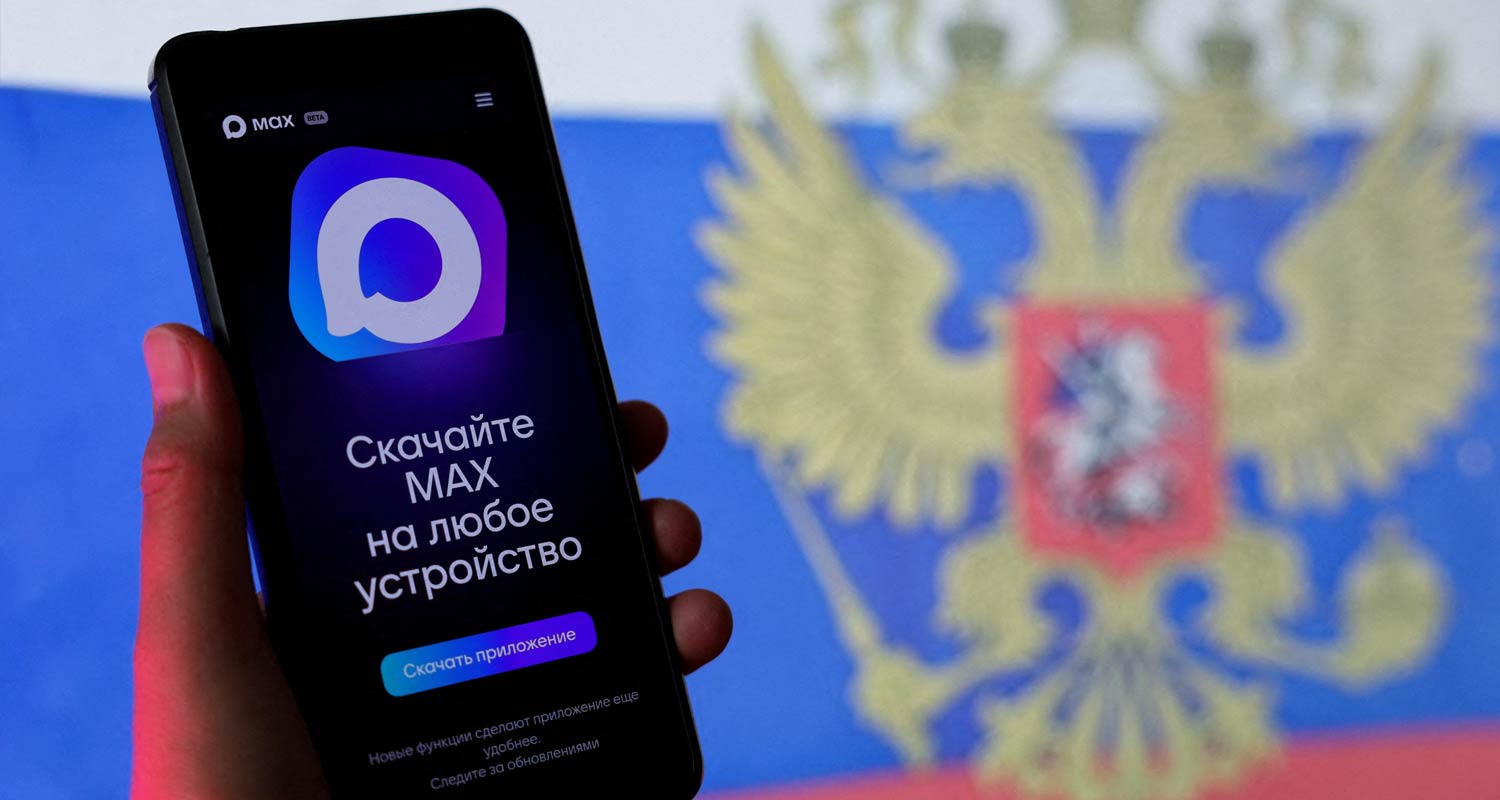
    Even loyal government officials download VPNs and carry multiple phones to keep government-backed apps like Max separate from the rest of their digital lives, the sources told Reuters.
    Ramil Sitdikov/Reuters

    Some also remove the microphone and camera from devices with Max installed in case the FSB can access them. “Even if you’re not up to any mischief, nobody wants the FSB reading your messages,” a source said.

    Putin’s special envoy, Kirill Dmitriev, does not try to hide his VPN use, posting regularly on X, which cannot be accessed inside Russia without one.

    While it is not illegal to use VPNs, Roskomnadzor has restricted access to hundreds of them, setting up a game ⁠of ​cat and mouse with users who must keep downloading new services to access content they want.

    Many users do not switch off their VPN to access the site and simply lose interest in making a purchase

    In April, government offices, banks and major online retailers – acting on the regulator’s instructions – started preventing people with a VPN enabled from accessing their sites. The move coincided with a 10% drop in internet traffic for Wildberries, Russia’s Amazon equivalent, according to Digital Budget.

    “As market participants note, many users do not switch off their VPN to access the site and simply lose interest in making a purchase if they cannot open the product page,” Digital Budget said in a Telegram post.

    The percentage of Russians who acknowledge using a VPN increased from 23% in 2022 to 36% this year, according to the Levada Centre, a non-government pollster that is on Moscow’s foreign agent list.

    Rhetoric softened

    Younger, tech-savvy adults will sometimes buy VPN subscriptions for their parents or set up their own custom-designed VPNs. But many Russians prefer to use apps and websites that work without them. Max, which launched last year, has over 85 million daily users, its owner said in May.

    With frustration building, the Kremlin softened its rhetoric in recent weeks, assuring the public that the mobile internet shutdowns are temporary.

    A plan to have mobile service providers charge customers extra for using more than 15GB of foreign data in a month was postponed in May, Russian media reported, saying the requirement targeting VPN users would probably be introduced after the election.

    Read: Russia to launch state-backed rival to WhatsApp

    Putin has also asked the government and FSB to work together to ensure critical services like healthcare platforms and online payment systems remain operational.

    Irina, the interior designer, is not expecting her digital life to get easier anytime soon, though. “In Russia, we have a saying: nothing is more permanent than the temporary.”  — Andrew Osborn, with Darya Korsunskaya, (c) 2026 Reuters

    • Subscribe to TechCentral’s daily newsletter
    • Get breaking news alerts on WhatsApp

    Follow TechCentral on Google News Add TechCentral as your preferred source on Google


    Telegram Vladimir Putin WhatsApp
    WhatsApp YouTube
    Share. Facebook Twitter LinkedIn WhatsApp Telegram Email Copy Link
    Previous ArticleThe millions Vodacom spends protecting its CEO

    Related Posts

    Meta declares war on Israeli spyware firm

    Meta declares war on Israeli spyware firm

    8 June 2026
    Meta takes on OpenAI and Anthropic in enterprise AI

    Meta takes on OpenAI and Anthropic in enterprise AI

    4 June 2026
    Major new security feature coming to WhatsApp

    Major new security feature coming to WhatsApp

    14 May 2026
    Company News
    When jammers kill the signal, AI goes blind too - Rory Atkinson Orange Logistics Sigfox South Africa

    When jammers kill the signal, AI goes blind too

    12 June 2026
    Workday Horizon shows SA firms how to make AI deliver - Kiv Moodley

    Workday Horizon shows SA firms how to make AI deliver

    12 June 2026
    Hisense, Makro team up for winter laundry promotion

    Hisense, Makro team up for winter laundry promotion

    12 June 2026
    Opinion
    The clock is ticking on South African banks' biggest advantage - Pambos Soteriades

    The clock is ticking on South African banks’ biggest advantage

    9 June 2026

    Clashing judgments leave South Africa’s crypto law unsettled

    2 June 2026
    The clock is ticking on South African banks' biggest advantage - Pambos Soteriades

    The trap inside South Africa’s banking MVNO boom

    1 June 2026

    Subscribe to Updates

    Get the best South African technology news and analysis delivered to your e-mail inbox every morning.

    Latest Posts
    How Russians juggle VPNs to outwit the Kremlin

    How Russians juggle VPNs to outwit the Kremlin

    15 June 2026
    The millions Vodacom spends protecting its CEO - Shameel Joosub

    The millions Vodacom spends protecting its CEO

    14 June 2026
    Amazon CEO flagged Anthropic AI risks to Washington - Andy Jassy

    Amazon CEO flagged Anthropic AI risks to Washington

    14 June 2026
    The missing number in Vodacom's annual report - Nkosana Makate please call me

    The missing number in Vodacom’s annual report

    12 June 2026
    © 2009 - 2026 NewsCentral Media
    • Cookie policy (ZA)
    • TechCentral – privacy and Popia

    Type above and press Enter to search. Press Esc to cancel.

    Manage consent

    TechCentral uses cookies to enhance its offerings. Consenting to these technologies allows us to serve you better. Not consenting or withdrawing consent may adversely affect certain features and functions of the website.

    Functional Always active
    The technical storage or access is strictly necessary for the legitimate purpose of enabling the use of a specific service explicitly requested by the subscriber or user, or for the sole purpose of carrying out the transmission of a communication over an electronic communications network.
    Preferences
    The technical storage or access is necessary for the legitimate purpose of storing preferences that are not requested by the subscriber or user.
    Statistics
    The technical storage or access that is used exclusively for statistical purposes. The technical storage or access that is used exclusively for anonymous statistical purposes. Without a subpoena, voluntary compliance on the part of your Internet Service Provider, or additional records from a third party, information stored or retrieved for this purpose alone cannot usually be used to identify you.
    Marketing
    The technical storage or access is required to create user profiles to send advertising, or to track the user on a website or across several websites for similar marketing purposes.
    • Manage options
    • Manage services
    • Manage {vendor_count} vendors
    • Read more about these purposes
    View preferences
    • {title}
    • {title}
    • {title}