Close Menu
TechCentralTechCentral

    Subscribe to the newsletter

    Get the best South African technology news and analysis delivered to your e-mail inbox every morning.

    Facebook X (Twitter) YouTube LinkedIn
    WhatsApp Facebook X (Twitter) LinkedIn YouTube
    TechCentralTechCentral
    • News
      Anthropic eyes $200-billion in revenue by 2028

      Anthropic eyes $200-billion in revenue by 2028

      15 August 2026
      Workday

      Silver Lake said to be in talks to buy Workday

      15 August 2026
      Icasa retracts collusion claim against mobile operators

      Icasa retracts collusion claim against mobile operators

      14 August 2026
      South Africa's next broadband war may be won by a bank - Capitec

      South Africa’s next broadband war may be won by a bank

      14 August 2026
      Bank robberies, ATM bombings collapse as criminals go digital

      Bank robberies, ATM bombings collapse as criminals go digital

      14 August 2026
    • World
      Russia building its own Starlink - and faster than expected - Vadym Skibitskyi

      Russia building its own Starlink – and faster than expected

      11 August 2026
      Meta AI will now tell parents if their teen is in crisis

      Meta AI will now tell parents if their teen is in crisis

      17 July 2026
      IBM shares crash 25% as AI upends software spending - Arvind Krishna

      IBM shares crash 25% as AI upends software spending

      15 July 2026
      Jony Ive's first OpenAI device: an AI smart speaker - Jony Ive and Sam Altman

      Jony Ive’s first OpenAI device: an AI smart speaker

      15 July 2026
      Stripe, Advent in talks to buy PayPal for $53-billion

      Stripe, Advent in talks to buy PayPal for $53-billion

      15 July 2026
    • In-depth
      Google DeepMind CEO Demis Hassabis. Image: John Sears

      The plan to stop AI from breaking the world

      16 July 2026
      The internet has a Strait of Hormuz problem

      The internet has a Strait of Hormuz problem

      15 July 2026
      AI boom sparks rally, frenzy and fear

      AI boom sparks rally, frenzy and fear

      11 June 2026
      Every plug-in hybrid on sale in South Africa, ranked by price - Lamborghini Temerario

      Every plug-in hybrid on sale in South Africa, ranked by price

      7 June 2026
      What Wi-Fi 8 will mean for wireless networks

      What Wi-Fi 8 will mean for wireless networks

      1 June 2026
    • TCS
      Meet the CIO | Discovery's Derek Wilcocks on AI, guardrails and growth

      Meet the CIO | Derek Wilcocks on how AI personalised Vitality

      13 August 2026
      TCS | Money just became native to the internet - Steven Boykey Sidley

      TCS | Money just became native to the internet – Steven Boykey Sidley

      12 August 2026
      TCS+ | Specops' Darren James on continuous trust in an AI world

      TCS+ | Specops’ Darren James on continuous trust in an AI world

      7 August 2026
      TCS+ | How AI is turning hardware into a subscription service - Shane van der Merwe Merchant West

      TCS+ | How AI is turning hardware into a subscription service

      6 August 2026
      TCS+ | Why South African workers must become supervisors of digital labour - Accelera Digital Group Cliff de Wit

      TCS+ | Why South African workers must become supervisors of digital labour

      31 July 2026
    • Opinion
      The author, Jannie van Zyl

      Selling vapour is corporate suicide in slow motion

      16 July 2026
      Brazil's online gambling crackdown is a lesson for South Africa

      How Amazon outmanoeuvred Starlink in South Africa

      15 July 2026
      The Popia problem with agentic AI - Herman Haasbroek

      The Popia problem with agentic AI

      14 July 2026
      The author, Fanie van Rooyen

      South Africa can still catch the AI wave – here’s how

      7 July 2026
      The author, Fanie van Rooyen

      The AI utopia South Africa can’t afford

      1 July 2026
    • Company Hubs
      • 1Stream
      • Africa Data Centres
      • AfriGIS
      • Altron Digital Business
      • Altron Document Solutions
      • Altron Group
      • Arctic Wolf
      • Ascent Technology
      • AvertITD
      • BBD
      • Braintree
      • CallMiner
      • CambriLearn
      • CM Telecom
      • Contactable
      • CYBER1 Solutions
      • Digicloud Africa
      • Digimune
      • Domains.co.za
      • ESET
      • Euphoria Telecom
      • HOSTAFRICA
      • Incredible Business
      • iONLINE
      • IQbusiness
      • Iris Network Systems
      • Kaspersky
      • LSD Open
      • Mitel
      • NEC XON
      • Netstar
      • Network Platforms
      • Next DLP
      • Ovations
      • Paracon
      • Paratus
      • Q-KON
      • SevenC
      • SkyWire
      • Solid8 Technologies
      • Telit Cinterion
      • Telviva
      • Tenable
      • Vertiv
      • Videri Digital
      • Vodacom Business
      • Vox
      • Wipro
      • Workday
      • XLink
    • Sections
      • AI and machine learning
      • Banking
      • Broadcasting and Media
      • Cloud services
      • Contact centres and CX
      • Cryptocurrencies
      • Education and skills
      • Electronics and hardware
      • Energy and sustainability
      • Enterprise software
      • Financial services
      • HealthTech
      • Information security
      • Internet and connectivity
      • Internet of Things
      • Investment
      • IT services
      • Lifestyle
      • Policy and regulation
      • Public sector
      • Retail and e-commerce
      • Satellite communications
      • Science
      • SMEs and start-ups
      • Social media
      • Talent and leadership
      • Telecoms
      • Watts & Wheels
    • Events
    • Advertise
    TechCentralTechCentral
    Home » Opinion » Genna Robb » Why mobile money has flopped in SA

    Why mobile money has flopped in SA

    By Genna Robb17 July 2015
    Twitter LinkedIn Facebook WhatsApp Email Telegram Copy Link
    News Alerts
    WhatsApp

    genna-robb-180Anyone who has recently spent time in Kenya, Zimbabwe or Tanzania will have noticed the pervasive influence of mobile money on everyday life. People use it for a wide range of purposes from buying airtime to paying taxi drivers to making loan repayments.

    Mobile money has revolutionised financial services in several African countries, lowering transaction costs, driving financial inclusion and providing consumers and small businesses with easy, cheap and safe ways to transact.

    More than that, the experience in Kenya has shown that mobile money can be instrumental in bringing people into the formal economy, generating information on individuals’ transacting behaviour and thus creating better risk profiles — and a credit record — which can be used to offer them financial services that would otherwise be inaccessible.

    The impact on financial inclusion is well documented, but it is not only the poor and unbanked in Kenya who use mobile payments. According to the GSMA, in 2014, 67% of transactions in Kenya’s National Payment System by volume were conducted using mobile money. Small businesses also use mobile payments as a way to pay their workers.

    In Tanzania, mobile money was slower to take off, but is now growing fast. Competition is already providing benefits to consumers in terms of low prices and convenience. In 2014, the major mobile money providers in Tanzania reached an agreement to allow their platforms to interoperate so that customers can send money to recipients with mobile wallets on other networks. This development, unprecedented internationally, allows consumers to benefit from a much bigger payment network.

    So, with such game-changing developments happening on our doorstep, the question for South Africa is: why are we so far behind? A number of attempts to launch mobile payments solutions have failed (including Vodacom’s M-Pesa), although recently both Vodacom and MTN have re-launched their services.

    It is often pointed out that South Africa has a much more sophisticated financial system than other African markets and more people already have access to financial services. In addition, cheap means of transferring money already exist, such as Shoprite’s R9,99 service that allows customers to send money to any Shoprite branch in the country.

    However, in 2014, according to the FinScope survey, 25% of adults in South Africa remained unbanked and of the 23% of adults who sent or received remittance transfers from friends or family within South Africa, the largest proportion, 32%, stated that they sent the cash with a relative or friend.

    Another area that is often cited as holding back developments in South Africa is its rigid regulatory framework. Mobile money proponents cite the flexible approach of the Central Bank of Kenya as a key success factor for M-Pesa. There is no denying that the South African regime is harder to navigate for new entrants.
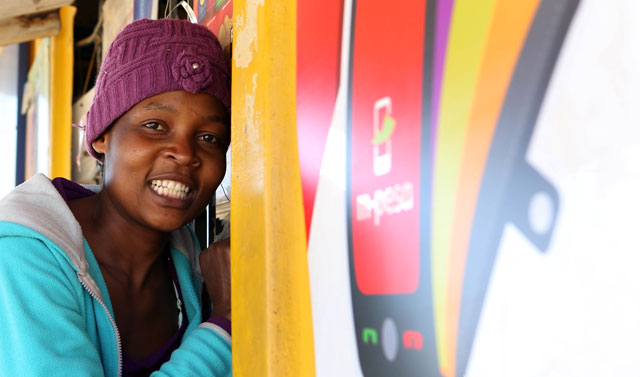
    M-Pesa has failed to live up to Vodacom's expectations in South Africa
    M-Pesa has failed to live up to Vodacom’s expectations in South Africa

    First of all, in the absence of a special dispensation for non-banks or e-money providers (which is the approach taken by the Tanzanian authorities, for example), payments providers in South Africa are treated as banks and subject to the full regulatory compliance requirements (and costs) associated with this.

    This forces providers to partner with banks, necessitating complicated joint ventures where banks naturally would like to see the mobile money product do well, but not too well.

    This approach is unnecessarily stringent and stifles innovation and disruption which would benefit consumers, especially the poor. In fact, mobile payments introduce very little risk into the payment system as the funds sent by customers are typically held in a trust account and not invested or on-lent by the mobile operators as would be done by a bank.

    This is why, in most jurisdictions, mobile money providers have not been regulated as fully fledged banks, but regulators with an eye on financial inclusion have come up with a more proportionate regulatory response. Unfortunately, this does not appear to be high on the regulatory agenda in South Africa.

    Fica regulations are another hurdle in South Africa, although here at least a more proportionate response to risk has prevailed. Exemption 17 allows clients to be registered for mobile money without proof of address or face-to-face ID verification as long as there is a low daily transaction limit.

    The benefits that mobile money can bring through driving competition in the payments space are clear. In Tanzania, to send the equivalent of R500 from one M-Pesa account to another costs only R3,23. Also, mobile money delivers more than just cheap money transfers: the money can remain in the wallet and be used for other transactions such as purchasing electricity. On the back of mobile money platforms, providers can build other solutions and services such as credit and savings products.

    If we truly want to create a more inclusive economy then creating the regulatory space, as other countries have done, for mobile money providers to innovate and compete is an important step.

    • Genna Robb is a senior research fellow at the Centre for Competition, Regulation and Economic Development (CCRED) and an economist at DNA Economics
    • CCRED will be hosting a public platform on mobile money on 22 July 2015. More details are available on the CCRED website

    Follow TechCentral on Google News Add TechCentral as your preferred source on Google


    CCRED Genna Robb M-Pesa MTN Vodacom
    WhatsApp YouTube
    Share. Facebook Twitter LinkedIn WhatsApp Telegram Email Copy Link
    Previous ArticleMTN embraces open access for fibre
    Next Article Icasa down to just three councillors

    Related Posts

    Icasa retracts collusion claim against mobile operators

    Icasa retracts collusion claim against mobile operators

    14 August 2026
    South Africa's next broadband war may be won by a bank - Capitec

    South Africa’s next broadband war may be won by a bank

    14 August 2026
    TCS | Herotel CEO Van Zyl Botha on beating Starlink to South Africa

    TCS | Herotel CEO Van Zyl Botha on beating Starlink to South Africa

    14 August 2026
    Company News
    Kaspersky on how to secure a supply chain you do not control

    Kaspersky on how to secure a supply chain you do not control

    13 August 2026
    Build or buy software? AI is rewriting the answer - BBD Software

    Build or buy software? AI is rewriting the answer

    12 August 2026
    Max zoom meets max speed with the new 5G Huawei Pura 90s series

    Max Zoom meets Max Speed with the 5G Huawei Pura 90s series

    11 August 2026
    Opinion
    The author, Jannie van Zyl

    Selling vapour is corporate suicide in slow motion

    16 July 2026
    Brazil's online gambling crackdown is a lesson for South Africa

    How Amazon outmanoeuvred Starlink in South Africa

    15 July 2026
    The Popia problem with agentic AI - Herman Haasbroek

    The Popia problem with agentic AI

    14 July 2026

    Subscribe to Updates

    Get the best South African technology news and analysis delivered to your e-mail inbox every morning.

    Latest Posts
    Anthropic eyes $200-billion in revenue by 2028

    Anthropic eyes $200-billion in revenue by 2028

    15 August 2026
    Workday

    Silver Lake said to be in talks to buy Workday

    15 August 2026
    Icasa retracts collusion claim against mobile operators

    Icasa retracts collusion claim against mobile operators

    14 August 2026
    South Africa's next broadband war may be won by a bank - Capitec

    South Africa’s next broadband war may be won by a bank

    14 August 2026
    © 2009 - 2026 NewsCentral Media
    Built and maintained by Chronon
    • Cookie policy (ZA)
    • TechCentral – privacy and Popia

    Type above and press Enter to search. Press Esc to cancel.

    Manage consent

    TechCentral uses cookies to enhance its offerings. Consenting to these technologies allows us to serve you better. Not consenting or withdrawing consent may adversely affect certain features and functions of the website.

    Functional Always active
    The technical storage or access is strictly necessary for the legitimate purpose of enabling the use of a specific service explicitly requested by the subscriber or user, or for the sole purpose of carrying out the transmission of a communication over an electronic communications network.
    Preferences
    The technical storage or access is necessary for the legitimate purpose of storing preferences that are not requested by the subscriber or user.
    Statistics
    The technical storage or access that is used exclusively for statistical purposes. The technical storage or access that is used exclusively for anonymous statistical purposes. Without a subpoena, voluntary compliance on the part of your Internet Service Provider, or additional records from a third party, information stored or retrieved for this purpose alone cannot usually be used to identify you.
    Marketing
    The technical storage or access is required to create user profiles to send advertising, or to track the user on a website or across several websites for similar marketing purposes.
    • Manage options
    • Manage services
    • Manage {vendor_count} vendors
    • Read more about these purposes
    View preferences
    • {title}
    • {title}
    • {title}