Close Menu
TechCentralTechCentral

    Subscribe to the newsletter

    Get the best South African technology news and analysis delivered to your e-mail inbox every morning.

    Facebook X (Twitter) YouTube LinkedIn
    WhatsApp Facebook X (Twitter) LinkedIn YouTube
    TechCentralTechCentral
    • News
      Haier plants its flag in South Africa

      Haier plants its flag in South Africa

      2 February 2026
      Microsoft's winning formula is starting to fray - Satya Nadella

      Microsoft’s winning formula may be starting to fray

      2 February 2026
      Meet the CIO | Inside the JSE's tech engine with CIO Tebalo Tsoaeli

      Meet the CIO | Inside the JSE’s tech engine with CIO Tebalo Tsoaeli

      2 February 2026
      Crypto has gone mainstream - will South African regulators catch up in 2026? - Marius Reitz

      Crypto has gone mainstream – will South African regulators catch up in 2026?

      2 February 2026
      Sixty60 smashes 100 million orders

      Shoprite keeps Sixty60 momentum as group sales rise 7.2%

      2 February 2026
    • World
      Apple acquires audio AI start-up Q.ai

      Apple acquires audio AI start-up Q.ai

      30 January 2026
      SpaceX IPO may be largest in history

      SpaceX IPO may be largest in history

      28 January 2026
      Nvidia throws AI at the weather

      Nvidia throws AI at weather forecasting

      27 January 2026
      Debate erupts over value of in-flight Wi-Fi

      Debate erupts over value of in-flight Wi-Fi

      26 January 2026
      Intel takes another hit - Intel CEO Lip-Bu Tan. Laure Andrillon/Reuters

      Intel takes another hit

      23 January 2026
    • In-depth
      How liberalisation is rewiring South Africa's power sector

      How liberalisation is rewiring South Africa’s power sector

      21 January 2026
      The top-performing South African tech shares of 2025

      The top-performing South African tech shares of 2025

      12 January 2026
      Digital authoritarianism grows as African states normalise internet blackouts

      Digital authoritarianism grows as African states normalise internet blackouts

      19 December 2025
      TechCentral's South African Newsmakers of 2025

      TechCentral’s South African Newsmakers of 2025

      18 December 2025
      Black Friday goes digital in South Africa as online spending surges to record high

      Black Friday goes digital in South Africa as online spending surges to record high

      4 December 2025
    • TCS
      TCS+ | How Cloud On Demand is helping SA businesses succeed in the cloud - Xhenia Rhode, Dion Kalicharan

      TCS+ | Cloud On Demand and Consnet: inside a real-world AWS partner success story

      30 January 2026
      Watts & Wheels S1E3: 'BYD's Corolla Cross challenger'

      Watts & Wheels S1E3: ‘BYD’s Corolla Cross challenger’

      30 January 2026
      Watts & Wheels S1E3: 'BYD's Corolla Cross challenger'

      Watts & Wheels S1E2: ‘China attacks, BMW digs in, Toyota’s sublime supercar’

      23 January 2026

      TCS+ | Why cybersecurity is becoming a competitive advantage for SA businesses

      20 January 2026
      Watts & Wheels S1E3: 'BYD's Corolla Cross challenger'

      Watts & Wheels: S1E1 – ‘William, Prince of Wheels’

      8 January 2026
    • Opinion
      South Africa's skills advantage is being overlooked at home - Richard Firth

      South Africa’s skills advantage is being overlooked at home

      29 January 2026
      Why Elon Musk's Starlink is a 'hard no' for me - Songezo Zibi

      Why Elon Musk’s Starlink is a ‘hard no’ for me

      26 January 2026
      South Africa's new fibre broadband battle - Duncan McLeod

      South Africa’s new fibre broadband battle

      20 January 2026
      AI moves from pilots to production in South African companies - Nazia Pillay SAP

      AI moves from pilots to production in South African companies

      20 January 2026
      South Africa's new fibre broadband battle - Duncan McLeod

      ANC’s attack on Solly Malatsi shows how BEE dogma trumps economic reality

      14 December 2025
    • Company Hubs
      • Africa Data Centres
      • AfriGIS
      • Altron Digital Business
      • Altron Document Solutions
      • Altron Group
      • Arctic Wolf
      • AvertITD
      • Braintree
      • CallMiner
      • CambriLearn
      • CYBER1 Solutions
      • Digicloud Africa
      • Digimune
      • Domains.co.za
      • ESET
      • Euphoria Telecom
      • Incredible Business
      • iONLINE
      • IQbusiness
      • Iris Network Systems
      • LSD Open
      • NEC XON
      • Netstar
      • Network Platforms
      • Next DLP
      • Ovations
      • Paracon
      • Paratus
      • Q-KON
      • SevenC
      • SkyWire
      • Solid8 Technologies
      • Telit Cinterion
      • Tenable
      • Vertiv
      • Videri Digital
      • Vodacom Business
      • Wipro
      • Workday
      • XLink
    • Sections
      • AI and machine learning
      • Banking
      • Broadcasting and Media
      • Cloud services
      • Contact centres and CX
      • Cryptocurrencies
      • Education and skills
      • Electronics and hardware
      • Energy and sustainability
      • Enterprise software
      • Financial services
      • Information security
      • Internet and connectivity
      • Internet of Things
      • Investment
      • IT services
      • Lifestyle
      • Motoring
      • Public sector
      • Retail and e-commerce
      • Satellite communications
      • Science
      • SMEs and start-ups
      • Social media
      • Talent and leadership
      • Telecoms
    • Events
    • Advertise
    TechCentralTechCentral
    Home » Sections » Energy and sustainability » Why SA can’t make a big shift to renewables – yet

    Why SA can’t make a big shift to renewables – yet

    By The Conversation29 October 2018
    Twitter LinkedIn Facebook WhatsApp Email Telegram Copy Link
    News Alerts
    WhatsApp

    There’s a lively debate raging in South Africa about the extent to which renewables should replace coal, particularly given the threat of climate change. The country’s electricity supply is currently highly dependent on coal. While it’s clear that coal power won’t disappear any time soon, is a 100% renewables-driven electricity generation scenario feasible — and desirable — in a generation from now?

    A major global energy transition is redefining the way electricity is generated and supplied. In the past, electricity production was dominated by large and often polluting power mega-plants distributed through big power lines. But the trend is now towards small-scale units primarily feeding localised electricity networks.

    These changes are being been driven by powerful factors. Firstly, there’s the grave threat of climate change which is being caused, to a significant degree, by the emission from coal power stations.

    Wind and solar power are intermittent, and new technologies haven’t yet been developed that allow for cheap and effective storage

    Another factor has been that nuclear energy — though clean — has become financially uncompetitive. And nuclear plants that are already under construction are invariably plagued by delays and cost overruns, as well as allegations of impropriety in the procurement process.

    The other major driving factor has been the development and scaling-up of renewable energy technologies. This has been made possible by major cost reductions that have made wind and solar photovoltaic electricity the cheapest options.

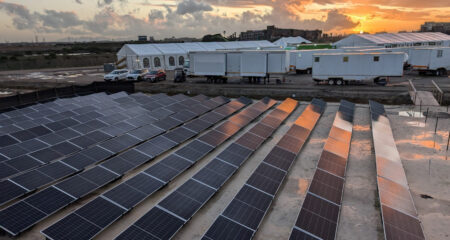
    South Africa has a lot going for it when it comes to renewable energy: good sunshine and coastlines that lend themselves to wind power generation. But several factors stand in the way of its ability to move entirely away from coal. The biggest is that wind and solar power are intermittent, and new technologies haven’t yet been developed that allow for cheap and effective storage.

    South Africa’s latest electricity plan — the Integrated Resource Plan for Electricity — is under discussion. A finalised plan covering the period up to 2030 is expected to be ratified before the end of this year.

    Positively received

    The present draft has largely been positively received. It envisages slower growth in electricity demand than previously projected. It also excludes any new nuclear development for the next 12 years.

    The new draft recommends a strategy that envisages considerable growth in renewable energy generating capacity. This would be coupled with intermittent short-term electricity generation from gas during phases when wind and solar are unable to meet electricity demand. This is recommended as the cheapest option.

    The reason for preferring gas to, say, nuclear, is that even though gas is the most expensive fuel used in electricity generation, gas power stations are far cheaper to build. They can also be switched on and off more quickly than competing fuel-based technologies such as coal and nuclear power.
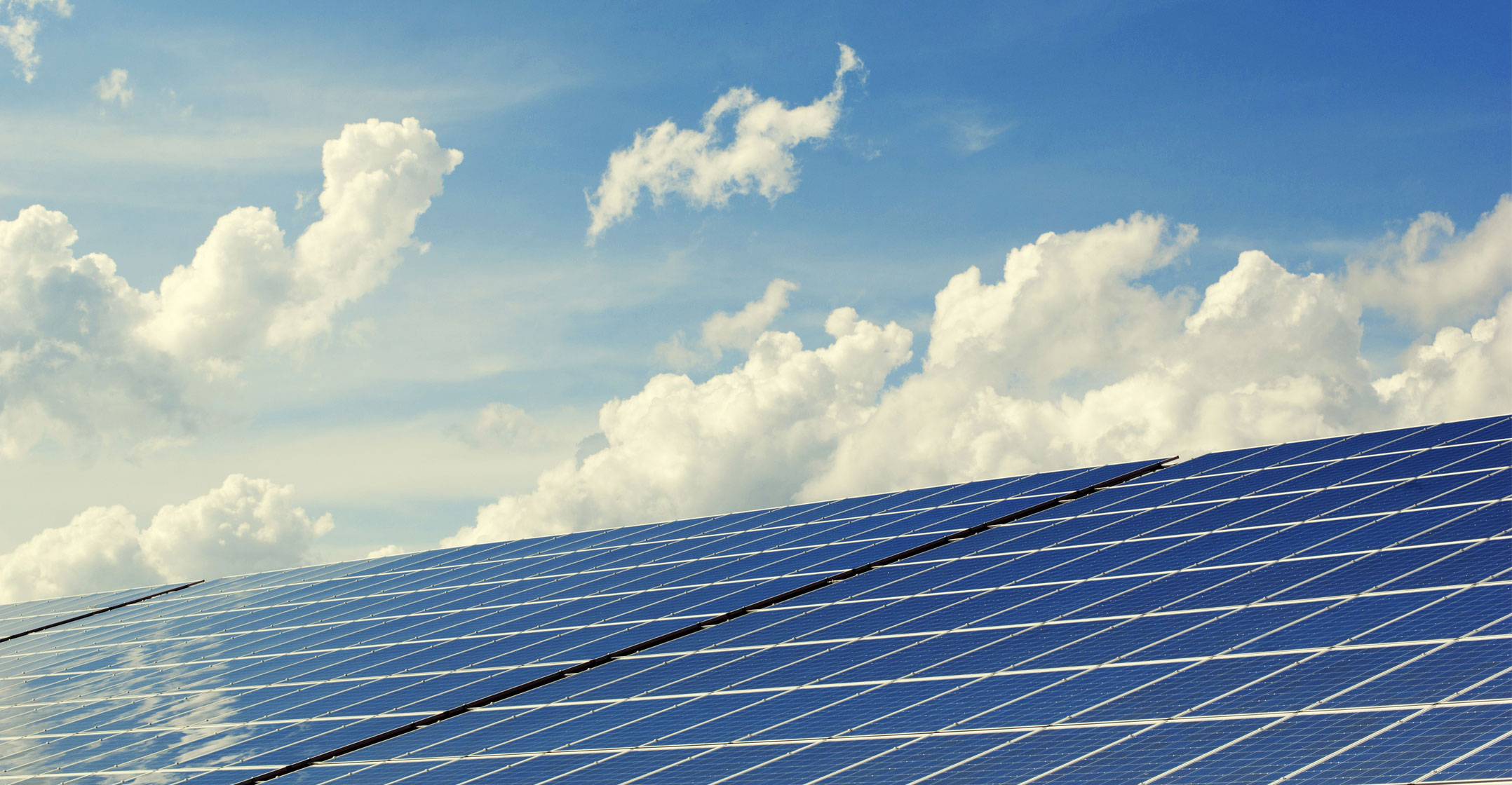
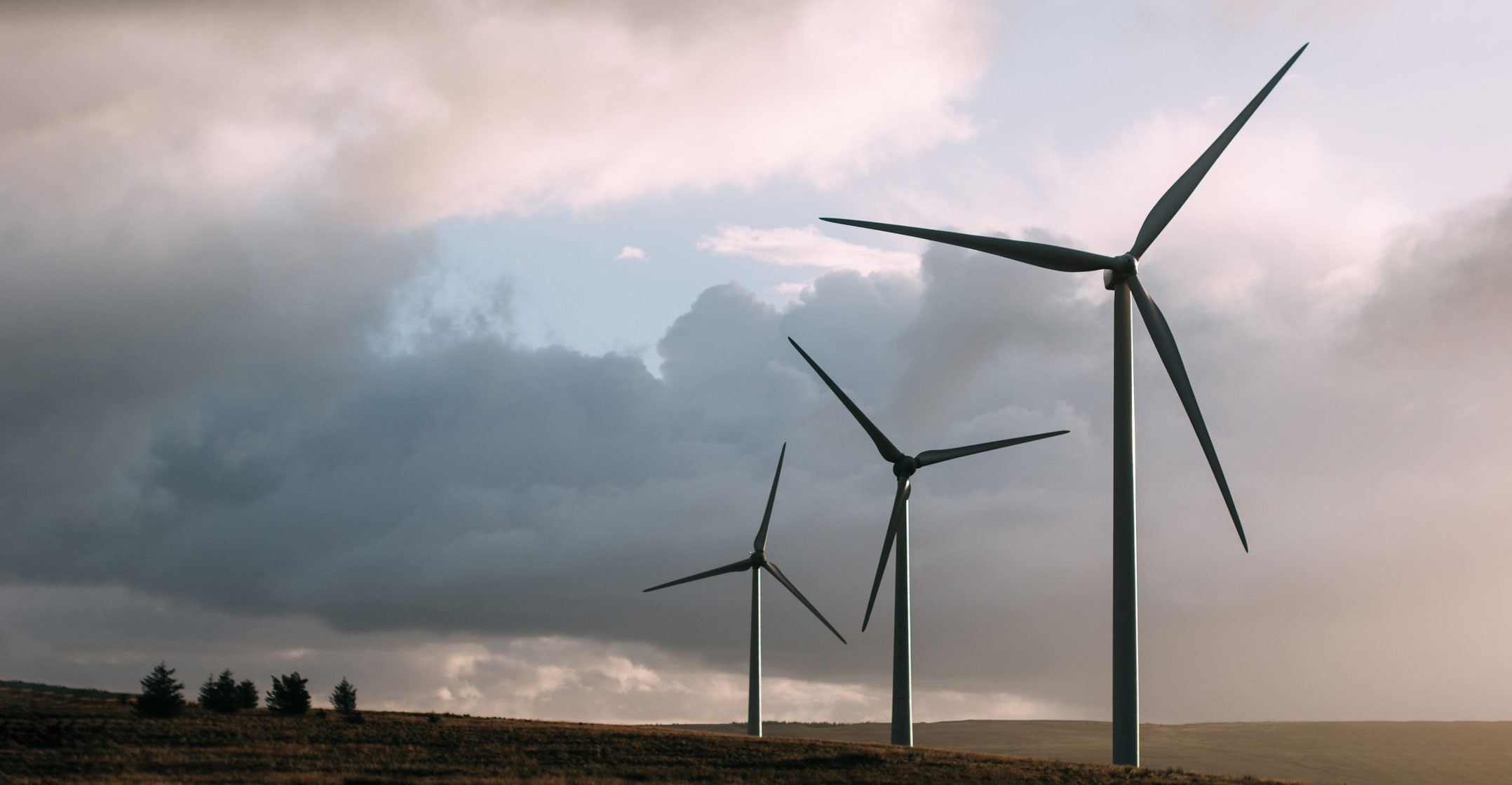
    The proposed scenario projects the addition of the following power generating capacity between 2019 and 2030: 9.5GW wind, 6.8GW solar, 8.1GW gas, 6.7GW coal and 2.5GW hydropower. This includes projects already approved, or under construction, in particular the remaining units from the Medupi and Kusile coal plants.

    These figures reflect what’s envisaged at maximum power generating capacity — for example, what wind farms would produce when it is windy and what solar devices would generate in sunny conditions. In the case of gas, the intention is to treat this capacity as a backup. These would only operate when the other sources can’t meet electricity demand.

    Looking at the average electricity to be generated South Africa’s energy mix would still be dominated by coal in 2030. The breakdown of electricity produced by source would be: coal 64%, wind 13%, solar 8%, nuclear 4%, hydropower 3% and gas 1%.

    Then there are interesting alternatives such as biofuels and ocean current power. But they haven’t been properly established

    The plan’s recommendations only cover the period 2019-2030. But it also provides draft models for the energy mix as far ahead as 2050. It predicts that in 2050, under the optimal scenario, 42% of electricity will come from wind, 20% from solar, 17% from coal, 11% from gas and no nuclear.

    This means that, according to most present energy planning models, 100% renewable electricity in South Africa is not on the horizon.

    Several countries already draw almost all of their electricity from renewable power sources. These include Costa Rica, Iceland, Norway and Paraguay. They are all much less populous than South Africa and enjoy large hydropower resources. South Africa, for its part, is a water-scarce country.

    But South Africa has a number of things going for it. It has a lot of sunshine, and its coastline and escarpment offer superb sites for wind farms.

    So, how would South Africa achieve 100% renewables in its mix? It can’t rely on gas, which is not a renewable energy source. Nor can it count on hydropower, even though mega-projects are planned along the Congo River.

    Then there are interesting alternatives such as biofuels and ocean current power. But they haven’t been properly established.

    This leaves wind and solar. The Achilles heel with both is that the quest for the fully renewable energy supply relies on the ability to store electricity generated over long periods.

    Tremendous progress has been achieved in improving the capacity of storage devices and in commercialising newly developed technologies. But cheap long-term electricity storage is still largely out of reach — or impractical.

    Ultimately, it’s the nature and cost of technological advances — whether in storage or in one of a wide range of power-generating technologies — that will determine whether South African can shift its energy mix dramatically towards renewables.The Conversation

    • Written by Hartmut Winkler, professor of physics, University of Johannesburg
    • This article is republished from The Conversation

    Eskom top
    WhatsApp YouTube Follow on Google News Add as preferred source on Google
    Share. Facebook Twitter LinkedIn WhatsApp Telegram Email Copy Link
    Previous ArticleIBM and Red Hat will be much better together – in theory
    Next Article MTN adds subscribers, vows to proceed with Nigeria listing

    Related Posts

    Outa warns homeowners against rushing to register rooftop solar

    Outa warns homeowners against rushing to register rooftop solar

    27 January 2026
    How liberalisation is rewiring South Africa's power sector

    How liberalisation is rewiring South Africa’s power sector

    21 January 2026
    No risk of load shedding after Koeberg output scaled back

    No risk of load shedding after Koeberg output scaled back

    21 January 2026
    Company News
    Breaking silos with SAS: Agile insurance in an uncertain world

    Breaking silos with SAS: agile insurance in an uncertain world

    2 February 2026
    Stellar year expected for Digicloud Africa and its reseller partners - Gregory MacLennan

    Stellar year expected for Digicloud Africa and its reseller partners

    2 February 2026
    How to subscribe to South Africa's best tech podcasts - TechCentral

    How to subscribe to South Africa’s best tech podcasts

    2 February 2026
    Opinion
    South Africa's skills advantage is being overlooked at home - Richard Firth

    South Africa’s skills advantage is being overlooked at home

    29 January 2026
    Why Elon Musk's Starlink is a 'hard no' for me - Songezo Zibi

    Why Elon Musk’s Starlink is a ‘hard no’ for me

    26 January 2026
    South Africa's new fibre broadband battle - Duncan McLeod

    South Africa’s new fibre broadband battle

    20 January 2026

    Subscribe to Updates

    Get the best South African technology news and analysis delivered to your e-mail inbox every morning.

    Latest Posts
    Haier plants its flag in South Africa

    Haier plants its flag in South Africa

    2 February 2026
    Microsoft's winning formula is starting to fray - Satya Nadella

    Microsoft’s winning formula may be starting to fray

    2 February 2026
    Meet the CIO | Inside the JSE's tech engine with CIO Tebalo Tsoaeli

    Meet the CIO | Inside the JSE’s tech engine with CIO Tebalo Tsoaeli

    2 February 2026
    Crypto has gone mainstream - will South African regulators catch up in 2026? - Marius Reitz

    Crypto has gone mainstream – will South African regulators catch up in 2026?

    2 February 2026
    © 2009 - 2026 NewsCentral Media
    • Cookie policy (ZA)
    • TechCentral – privacy and Popia

    Type above and press Enter to search. Press Esc to cancel.

    Manage consent

    TechCentral uses cookies to enhance its offerings. Consenting to these technologies allows us to serve you better. Not consenting or withdrawing consent may adversely affect certain features and functions of the website.

    Functional Always active
    The technical storage or access is strictly necessary for the legitimate purpose of enabling the use of a specific service explicitly requested by the subscriber or user, or for the sole purpose of carrying out the transmission of a communication over an electronic communications network.
    Preferences
    The technical storage or access is necessary for the legitimate purpose of storing preferences that are not requested by the subscriber or user.
    Statistics
    The technical storage or access that is used exclusively for statistical purposes. The technical storage or access that is used exclusively for anonymous statistical purposes. Without a subpoena, voluntary compliance on the part of your Internet Service Provider, or additional records from a third party, information stored or retrieved for this purpose alone cannot usually be used to identify you.
    Marketing
    The technical storage or access is required to create user profiles to send advertising, or to track the user on a website or across several websites for similar marketing purposes.
    • Manage options
    • Manage services
    • Manage {vendor_count} vendors
    • Read more about these purposes
    View preferences
    • {title}
    • {title}
    • {title}