Close Menu
TechCentralTechCentral

    Subscribe to the newsletter

    Get the best South African technology news and analysis delivered to your e-mail inbox every morning.

    Facebook X (Twitter) YouTube LinkedIn
    WhatsApp Facebook X (Twitter) LinkedIn YouTube
    TechCentralTechCentral
    • News
      Home affairs goes ghost-hunting on state payrolls - Leon Schreiber

      Home affairs goes ghost-hunting on state payrolls

      26 May 2026
      AI, cybersecurity power standout year for Datatec - Jens Montanana

      AI, cybersecurity power standout year for Datatec

      26 May 2026
      South Africa's unlikely telecoms giant

      South Africa’s unlikely telecoms giant

      26 May 2026
      Luce lit: Ferrari unveils its first electric car

      Luce lit: Ferrari unveils its first electric car

      26 May 2026
      Altron walked away from multiple M&A deals - Werner Kapp

      Altron walked away from multiple M&A deals

      25 May 2026
    • World
      Pope urges world to hit brakes on AI - Pope Leo

      Pope urges world to hit brakes on AI

      25 May 2026
      SpaceX's record-setting IPO is here

      SpaceX’s record-setting IPO is here

      21 May 2026
      The Mythos hacking threat is looking overblown

      The Mythos hacking threat is looking overblown

      20 May 2026
      Vatican confronts the age of artificial intelligence. Edgar Beltrán/The Pillar 

      Vatican confronts the age of artificial intelligence

      19 May 2026
      The walkout that could hit every laptop and AI server - Samsung

      The walkout that could hit every laptop and AI server

      18 May 2026
    • In-depth
      Alfa's electric rebel - Alfa Romeo Junior Elettrica Veloce

      Alfa’s electric rebel

      29 April 2026
      Africa switches on as Europe dims the lights

      Africa switches on as Europe dims the lights

      9 April 2026
      The biggest untapped EV market on Earth is hiding in plain sight

      The biggest untapped EV market on Earth is hiding in plain sight

      1 April 2026
      AI, cybersecurity power standout year for Datatec - Jens Montanana

      The R16-billion tech giant hiding in plain sight

      26 March 2026
      The last generation of coders

      The last generation of coders

      18 February 2026
    • TCS
      TCS+ | The Up&Up Group on the hidden cost of AI - Jason Harrison

      TCS+ | The Up&Up Group on the hidden cost of AI

      13 May 2026
      Michael Rossouw

      TCS+ | The retirement decision most South Africans get wrong

      6 May 2026
      TCS | The Cape Town start-up listening for TB with AI - Braden van Breda

      TCS | The Cape Town start-up listening for TB with AI

      4 May 2026

      TCS+ | ‘The ISP for ISPs’: Vox’s shift to wholesale aggregator

      20 April 2026
      TCS | Werner Lindemann on how AI is rewriting the infosec rulebook

      TCS | Werner Lindemann on how AI is rewriting the infosec rulebook

      15 April 2026
    • Opinion
      Treasury's crypto crackdown is a betrayal of Mandela's promise - Duncan McLeod

      Treasury’s crypto crackdown is a betrayal of Mandela’s promise

      22 May 2026
      South Africa is sleepwalking into another AI policy failure - Celeste Labuschagne

      South Africa is sleepwalking into another AI policy failure

      20 May 2026
      AI won't fix your culture - it will expose it - Jackie Kennedy

      AI won’t fix your culture – it will expose it

      19 May 2026
      Treasury's crypto crackdown is a betrayal of Mandela's promise - Duncan McLeod

      Free calls, dead voice and Shameel Joosub’s Spanish ghost

      22 April 2026
      The conflict of interest at the heart of PayShap's slow adoption - Cheslyn Jacobs

      The conflict of interest at the heart of PayShap’s slow adoption

      26 March 2026
    • Company Hubs
      • 1Stream
      • Africa Data Centres
      • AfriGIS
      • Altron Digital Business
      • Altron Document Solutions
      • Altron Group
      • Arctic Wolf
      • Ascent Technology
      • AvertITD
      • BBD
      • Braintree
      • CallMiner
      • CambriLearn
      • CM Telecom
      • Contactable
      • CYBER1 Solutions
      • Digicloud Africa
      • Digimune
      • Domains.co.za
      • ESET
      • Euphoria Telecom
      • HOSTAFRICA
      • Incredible Business
      • iONLINE
      • IQbusiness
      • Iris Network Systems
      • Kaspersky
      • LSD Open
      • Mitel
      • NEC XON
      • Netstar
      • Network Platforms
      • Next DLP
      • Ovations
      • Paracon
      • Paratus
      • Q-KON
      • SevenC
      • SkyWire
      • Solid8 Technologies
      • Telit Cinterion
      • Telviva
      • Tenable
      • Vertiv
      • Videri Digital
      • Vodacom Business
      • Wipro
      • Workday
      • XLink
    • Sections
      • AI and machine learning
      • Banking
      • Broadcasting and Media
      • Cloud services
      • Contact centres and CX
      • Cryptocurrencies
      • Education and skills
      • Electronics and hardware
      • Energy and sustainability
      • Enterprise software
      • Financial services
      • HealthTech
      • Information security
      • Internet and connectivity
      • Internet of Things
      • Investment
      • IT services
      • Lifestyle
      • Motoring
      • Policy and regulation
      • Public sector
      • Retail and e-commerce
      • Satellite communications
      • Science
      • SMEs and start-ups
      • Social media
      • Talent and leadership
      • Telecoms
    • Events
    • Advertise
    TechCentralTechCentral
    Home » Sections » Electronics and hardware » Your old phone is a security risk. Live with it

    Your old phone is a security risk. Live with it

    By Agency Staff11 November 2018
    Twitter LinkedIn Facebook WhatsApp Email Telegram Copy Link
    News Alerts
    WhatsApp

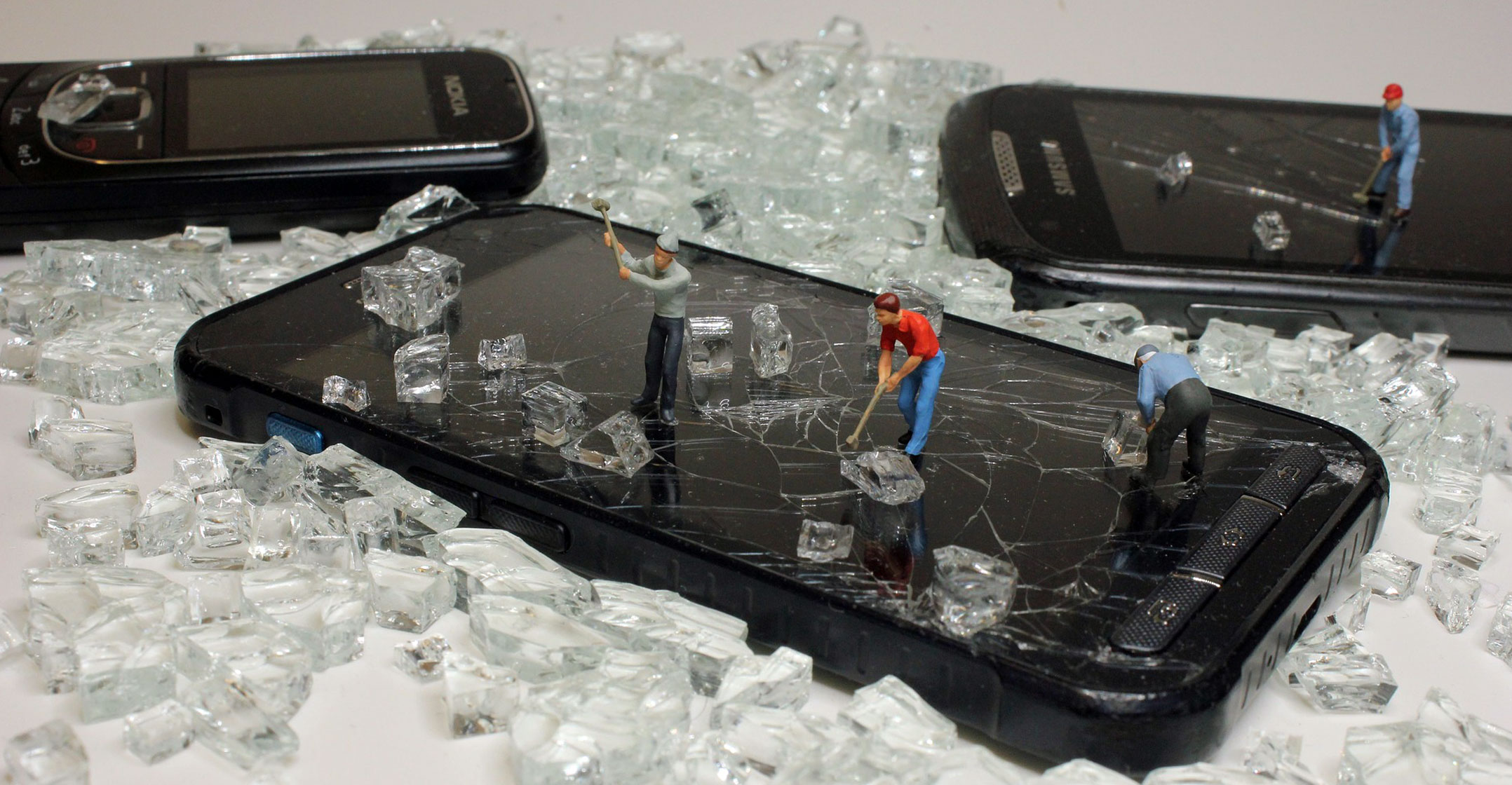
    That obsolete smartphone stashed away in a drawer or closet may not look like a national security risk, but the Trump administration is contemplating treating it as one.

    Unscrupulous Chinese recyclers and manufacturers could transform old phones into “counterfeit goods that may enter the US’s military and civilian electronics supply chain,” according to a draft rule. To prevent that from happening, the US department of commerce proposes to severely restrict the export of used electronics.

    It’s not a new idea. Over the last decade, similar proposals have failed repeatedly in congress. But the government’s anti-China policy and rhetoric have raised hopes among proponents of export restrictions that they have an ally in the White House.

    Many of those parts make their way into new devices. The most common destinations are lower-priced consumer goods aimed at developing nations

    America’s consumers, environmentalists and the military should hope that they don’t. The US accounted for less than 15% of the used electronic gadgets tossed out globally in 2017, ensuring that a ban would give only a false sense of security while exacting a significant economic and environmental toll.

    In the late 1990s, journalists and NGOs began documenting the horrific damage caused by low-tech electronics recycling in southern China. The reports were accurate, yet told only part of the story. The other, bigger element related to the second-hand market for electronics. Then and now, strong developing-country markets for affordable used devices and parts — working or not — are what draw e-waste offshore. In China, used electronics traders earn as much as 80% of their revenues by selling devices and parts to be used as such — and not as recyclable gold, copper or other raw materials.

    In plain view

    That trade exists in plain view. In Shenzhen, China’s hi-tech hub, the Huaqiangbei neighbourhood is home to thousands of companies buying and selling second-hand devices and parts, many sourced from the country’s recycling zones. Need a thousand iPhone 6 logic boards? Huaqiangbei’s vendors can arrange them by leveraging China’s vast, informal network of recyclers. Want 2 500 Samsung Galaxy 5 LCD screens (or LCDs that might pass as Galaxy 5 LCD screens)? Those, too, can be arranged, as can the universe of processors and other components necessary to make and repair electronics produced in the factories of southern China.

    Many of those parts make their way into new devices. The most common destinations are lower-priced consumer goods aimed at developing nations. For example, last year a Shenzhen-based dealer of used flat-panel displays told me that one of his manufacturing customers uses second-hand components in 10% of the “new” production coming out of his factory, so as to preserve profit margins.

    Similarly, smartphones manufactured for the African and Indian markets are often outfitted with recovered screens and other parts (and have the shorter lifespans and cheaper prices one would expect). Rarely are consumers informed of these substitutions, leading many critics to accuse Chinese suppliers — rightly — of counterfeiting.

    None of this is news to the US military. In 2012, the US senate armed services committee released a report revealing at least 1 800 cases in which a minimum of a million bogus parts turned up in military equipment. Most were sourced from China, with one supplier — Shenzhen-based Hong Dark Electronic Trade — supplying 84 000 suspect components. These counterfeit parts not only defraud the US military, they impose significant security and safety risks.

    After all, the re-use of a gadget is always a greener option than recycling it into raw materials

    In recent years, the military has taken steps to curb the trade. Shortly after the committee report, congress adopted legislation requiring enhanced inspections, reporting and penalties for procuring counterfeit parts. Export controls on used electronics weren’t among the recommendations, and that’s for a good reason. Asia, rather than Europe or North America, accounted for the greatest volume of e-waste generation, at around 40% of the total. China, home to more than a billion smartphone users, was the largest source.

    Who, then, would benefit from restrictions on used electronics exports from the US? Certainly not the military, which will still need to remain on guard against counterfeits entering from China. Instead, US export controls will provide a false sense of security to organisations that source parts in China, while imposing direct environmental costs on both countries.

    After all, the re-use of a gadget — whether a smartphone or a semiconductor — is always a greener option than recycling it into raw materials. It’s also more profitable and reduces the costs of disposal for consumers. The department of commerce shouldn’t be eager to curb those benefits in order to further the Trump administration’s anti-China strategy.  — Reported by Adam Minter, (c) 2018 Bloomberg LP

    Follow TechCentral on Google News Add TechCentral as your preferred source on Google


    Donald Trump top
    WhatsApp YouTube
    Share. Facebook Twitter LinkedIn WhatsApp Telegram Email Copy Link
    Previous ArticleTeraco said to be for sale with Permira seeking exit
    Next Article Samsung to make at least a million foldable phones

    Related Posts

    Vatican confronts the age of artificial intelligence. Edgar Beltrán/The Pillar 

    Vatican confronts the age of artificial intelligence

    19 May 2026
    Perfect storm for South African tech buyers

    Perfect storm for South African tech buyers

    23 March 2026
    US orders diplomats to fight foreign data sovereignty rules - Marco Rubio

    US orders diplomats to fight foreign data sovereignty rules

    25 February 2026
    Company News
    Retro Rabbit / SmarTek21 refines the art and science of product delivery - Rouan van der Walt

    Retro Rabbit / SmarTek21 refines the art and science of product delivery

    25 May 2026
    Webinar today: a 30-day plan to protect your SME from cyberattacks - SevenC

    Webinar today: a 30-day plan to protect your SME from cyberattacks

    25 May 2026
    How African enterprises can leapfrog the AI infrastructure trap - Huawei Cloud

    How African enterprises can leapfrog the AI infrastructure trap

    22 May 2026
    Opinion
    Treasury's crypto crackdown is a betrayal of Mandela's promise - Duncan McLeod

    Treasury’s crypto crackdown is a betrayal of Mandela’s promise

    22 May 2026
    South Africa is sleepwalking into another AI policy failure - Celeste Labuschagne

    South Africa is sleepwalking into another AI policy failure

    20 May 2026
    AI won't fix your culture - it will expose it - Jackie Kennedy

    AI won’t fix your culture – it will expose it

    19 May 2026

    Subscribe to Updates

    Get the best South African technology news and analysis delivered to your e-mail inbox every morning.

    Latest Posts
    Home affairs goes ghost-hunting on state payrolls - Leon Schreiber

    Home affairs goes ghost-hunting on state payrolls

    26 May 2026
    AI, cybersecurity power standout year for Datatec - Jens Montanana

    AI, cybersecurity power standout year for Datatec

    26 May 2026
    South Africa's unlikely telecoms giant

    South Africa’s unlikely telecoms giant

    26 May 2026
    Luce lit: Ferrari unveils its first electric car

    Luce lit: Ferrari unveils its first electric car

    26 May 2026
    © 2009 - 2026 NewsCentral Media
    • Cookie policy (ZA)
    • TechCentral – privacy and Popia

    Type above and press Enter to search. Press Esc to cancel.

    Manage consent

    TechCentral uses cookies to enhance its offerings. Consenting to these technologies allows us to serve you better. Not consenting or withdrawing consent may adversely affect certain features and functions of the website.

    Functional Always active
    The technical storage or access is strictly necessary for the legitimate purpose of enabling the use of a specific service explicitly requested by the subscriber or user, or for the sole purpose of carrying out the transmission of a communication over an electronic communications network.
    Preferences
    The technical storage or access is necessary for the legitimate purpose of storing preferences that are not requested by the subscriber or user.
    Statistics
    The technical storage or access that is used exclusively for statistical purposes. The technical storage or access that is used exclusively for anonymous statistical purposes. Without a subpoena, voluntary compliance on the part of your Internet Service Provider, or additional records from a third party, information stored or retrieved for this purpose alone cannot usually be used to identify you.
    Marketing
    The technical storage or access is required to create user profiles to send advertising, or to track the user on a website or across several websites for similar marketing purposes.
    • Manage options
    • Manage services
    • Manage {vendor_count} vendors
    • Read more about these purposes
    View preferences
    • {title}
    • {title}
    • {title}