


Close Menu
TechCentralTechCentral

    Subscribe to the newsletter

    Get the best South African technology news and analysis delivered to your e-mail inbox every morning.

    Facebook X (Twitter) YouTube LinkedIn
    WhatsApp Facebook X (Twitter) LinkedIn YouTube
    TechCentralTechCentral
    • News
      Big Microsoft 365 price increases coming next year

      Big Microsoft price increases coming next year

      5 December 2025
      Vodacom to take control of Safaricom in R36-billion deal - Shameel Joosub

      Vodacom to take control of Safaricom in R36-billion deal

      4 December 2025
      Black Friday goes digital in South Africa as online spending surges to record high

      Black Friday goes digital in South Africa as online spending surges to record high

      4 December 2025
      BYD takes direct aim at Toyota with launch of sub-R500 000 Sealion 5 PHEV

      BYD takes direct aim at Toyota with launch of sub-R500 000 Sealion 5 PHEV

      4 December 2025
      'Get it now': Takealot in new instant deliveries pilot

      ‘Get it now’: Takealot in new instant deliveries pilot

      4 December 2025
    • World
      Amazon and Google launch multi-cloud service for faster connectivity

      Amazon and Google launch multi-cloud service for faster connectivity

      1 December 2025
      Google makes final court plea to stop US breakup

      Google makes final court plea to stop US breakup

      21 November 2025
      Bezos unveils monster rocket: New Glenn 9x4 set to dwarf Saturn V

      Bezos unveils monster rocket: New Glenn 9×4 set to dwarf Saturn V

      21 November 2025
      Tech shares turbocharged by Nvidia's stellar earnings

      Tech shares turbocharged by stellar Nvidia earnings

      20 November 2025
      Config file blamed for Cloudflare meltdown that disrupted the web

      Config file blamed for Cloudflare meltdown that disrupted the web

      19 November 2025
    • In-depth
      Jensen Huang Nvidia

      So, will China really win the AI race?

      14 November 2025
      Valve's Linux console takes aim at Microsoft's gaming empire

      Valve’s Linux console takes aim at Microsoft’s gaming empire

      13 November 2025
      iOCO's extraordinary comeback plan - Rhys Summerton

      iOCO’s extraordinary comeback plan

      28 October 2025
      Why smart glasses keep failing - no, it's not the tech - Mark Zuckerberg

      Why smart glasses keep failing – it’s not the tech

      19 October 2025
      BYD to blanket South Africa with megawatt-scale EV charging network - Stella Li

      BYD to blanket South Africa with megawatt-scale EV charging network

      16 October 2025
    • TCS
      TCS+ | How Cloud on Demand helps partners thrive in the AWS ecosystem - Odwa Ndyaluvane and Xenia Rhode

      TCS+ | How Cloud On Demand helps partners thrive in the AWS ecosystem

      4 December 2025
      TCS | MTN Group CEO Ralph Mupita on competition, AI and the future of mobile

      TCS | Ralph Mupita on competition, AI and the future of mobile

      28 November 2025
      TCS | Dominic Cull on fixing South Africa's ICT policy bottlenecks

      TCS | Dominic Cull on fixing South Africa’s ICT policy bottlenecks

      21 November 2025
      TCS | BMW CEO Peter van Binsbergen on the future of South Africa's automotive industry

      TCS | BMW CEO Peter van Binsbergen on the future of South Africa’s automotive industry

      6 November 2025
      TCS | Why Altron is building an AI factory - Bongani Andy Mabaso

      TCS | Why Altron is building an AI factory in Johannesburg

      28 October 2025
    • Opinion
      Your data, your hardware: the DIY AI revolution is coming - Duncan McLeod

      Your data, your hardware: the DIY AI revolution is coming

      20 November 2025
      Zero Carbon Charge founder Joubert Roux

      The energy revolution South Africa can’t afford to miss

      20 November 2025
      It's time for a new approach to government IT spend in South Africa - Richard Firth

      It’s time for a new approach to government IT spend in South Africa

      19 November 2025
      How South Africa's broken Rica system fuels murder and mayhem - Farhad Khan

      How South Africa’s broken Rica system fuels murder and mayhem

      10 November 2025
      South Africa's AI data centre boom risks overloading a fragile grid - Paul Colmer

      South Africa’s AI data centre boom risks overloading a fragile grid

      30 October 2025
    • Company Hubs
      • Africa Data Centres
      • AfriGIS
      • Altron Digital Business
      • Altron Document Solutions
      • Altron Group
      • Arctic Wolf
      • AvertITD
      • Braintree
      • CallMiner
      • CambriLearn
      • CYBER1 Solutions
      • Digicloud Africa
      • Digimune
      • Domains.co.za
      • ESET
      • Euphoria Telecom
      • Incredible Business
      • iONLINE
      • IQbusiness
      • Iris Network Systems
      • LSD Open
      • NEC XON
      • Netstar
      • Network Platforms
      • Next DLP
      • Ovations
      • Paracon
      • Paratus
      • Q-KON
      • SevenC
      • SkyWire
      • Solid8 Technologies
      • Telit Cinterion
      • Tenable
      • Vertiv
      • Videri Digital
      • Vodacom Business
      • Wipro
      • Workday
      • XLink
    • Sections
      • AI and machine learning
      • Banking
      • Broadcasting and Media
      • Cloud services
      • Contact centres and CX
      • Cryptocurrencies
      • Education and skills
      • Electronics and hardware
      • Energy and sustainability
      • Enterprise software
      • Financial services
      • Information security
      • Internet and connectivity
      • Internet of Things
      • Investment
      • IT services
      • Lifestyle
      • Motoring
      • Public sector
      • Retail and e-commerce
      • Satellite communications
      • Science
      • SMEs and start-ups
      • Social media
      • Talent and leadership
      • Telecoms
    • Events
    • Advertise
    TechCentralTechCentral
    Home » Sections » AI and machine learning » A brief history of AI: how we got here; where we’re going

    A brief history of AI: how we got here; where we’re going

    To understand the current generation of AI tools and where they might lead, it is helpful to understand how we got here.
    By Adrian Hopgood20 August 2024
    Twitter LinkedIn Facebook WhatsApp Email Telegram Copy Link
    News Alerts
    WhatsApp

    A brief history of AI: how we got here; where we're goingTo understand the current generation of AI tools and where they might lead, it is helpful to understand how we got here.

    With the current buzz around artificial intelligence, it would be easy to assume that it is a recent innovation. In fact, AI has been around in one form or another for more than 70 years. To understand the current generation of AI tools and where they might lead, it is helpful to understand how we got here.

    Each generation of AI tools can be seen as an improvement on those that went before, but none of the tools is headed towards consciousness.

    From those early beginnings, a branch of AI that became known as expert systems was developed from the 1960s

    The mathematician and computing pioneer Alan Turing published an article in 1950 with the opening sentence: “I propose to consider the question, ‘Can machines think?’.” He goes on to propose something called the imitation game, now commonly called the Turing test, in which a machine is considered intelligent if it cannot be distinguished from a human in a blind conversation.

    Five years later came the first published use of the phrase “artificial intelligence” in a proposal for the Dartmouth Summer Research Project on Artificial Intelligence.

    From those early beginnings, a branch of AI that became known as expert systems was developed from the 1960s onward. Those systems were designed to capture human expertise in specialised domains. They used explicit representations of knowledge and are, therefore, an example of what’s called symbolic AI.

    Early successes

    There were many well-publicised early successes, including systems for identifying organic molecules, diagnosing blood infections and prospecting for minerals. One of the most eye-catching examples was a system called R1 that, in 1982, was reportedly saving the Digital Equipment Corporation US$25-million/year by designing efficient configurations of its minicomputer systems.

    The key benefit of expert systems was that a subject specialist without any coding expertise could, in principle, build and maintain the computer’s knowledge base. A software component known as the inference engine then applied that knowledge to solve new problems within the subject domain, with a trail of evidence providing a form of explanation.

    These were all the rage in the 1980s, with organisations clamouring to build their own expert systems, and they remain a useful part of AI today.

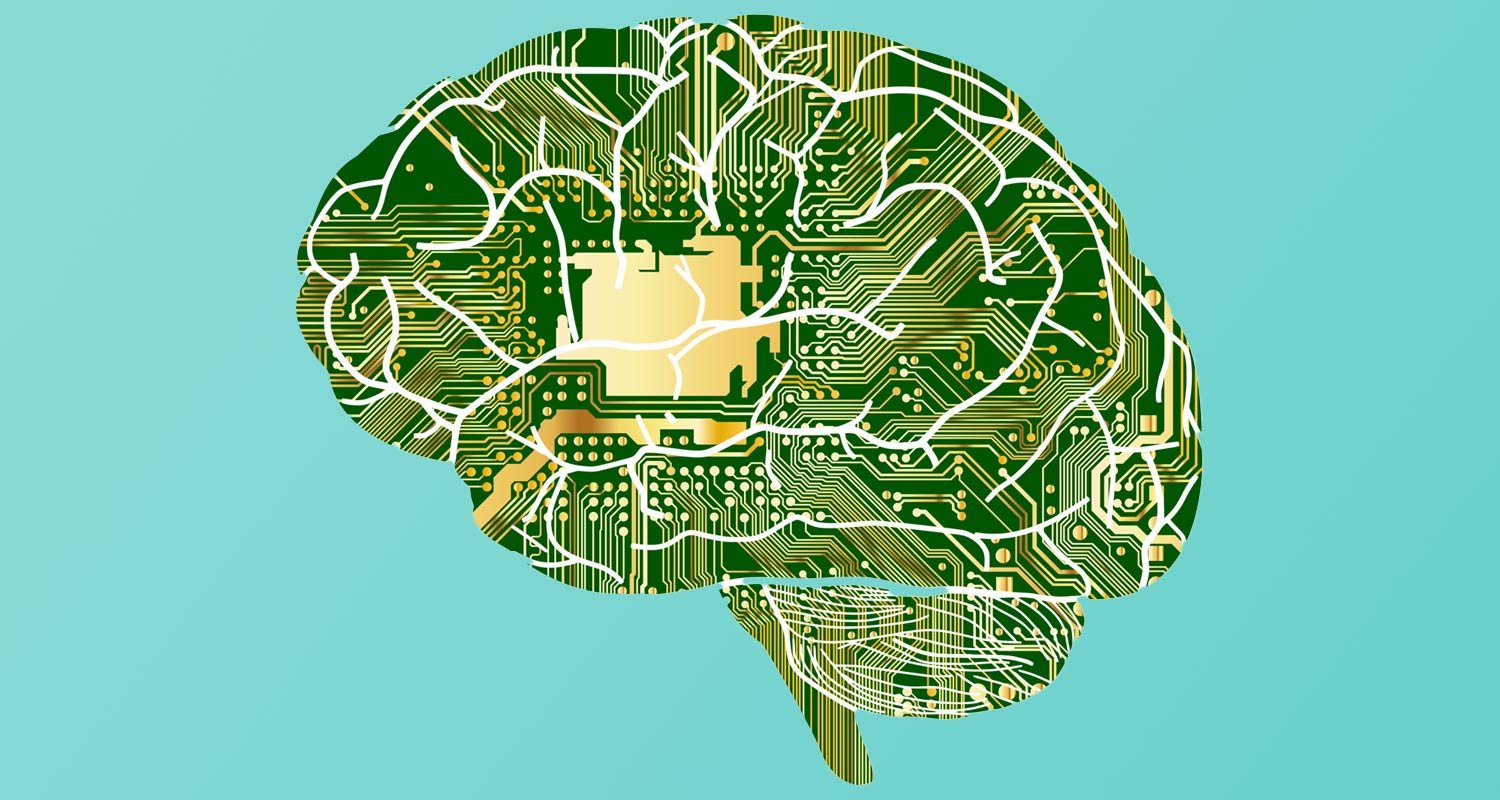
    The human brain contains around 100 billion nerve cells, or neurons, interconnected by a dendritic (branching) structure. So, while expert systems aimed to model human knowledge, a separate field known as connectionism was also emerging that aimed to model the human brain in a more literal way. In 1943, two researchers called Warren McCulloch and Walter Pitts had produced a mathematical model for neurons, whereby each one would produce a binary output depending on its inputs.
    One of the earliest computer implementations of connected neurons was developed by Bernard Widrow and Ted Hoff in 1960. Such developments were interesting, but they were of limited practical use until the development of a learning algorithm for a software model called the multi-layered perceptron (MLP) in 1986.

    The MLP is an arrangement of typically three or four layers of simple simulated neurons, where each layer is fully interconnected with the next. The learning algorithm for the MLP was a breakthrough. It enabled the first practical tool that could learn from a set of examples (the training data) and then generalise so that it could classify previously unseen input data (the testing data).

    It achieved this feat by attaching numerical weightings on the connections between neurons and adjusting them to get the best classification with the training data, before being deployed to classify previously unseen examples.

    The MLP could handle a wide range of practical applications, provided the data was presented in a format that it could use. A classic example was the recognition of handwritten characters, but only if the images were pre-processed to pick out the key features.

    Newer AI models

    Following the success of the MLP, numerous alternative forms of neural network began to emerge. An important one was the convolutional neural network (CNN) in 1998, which was similar to an MLP apart from its additional layers of neurons for identifying the key features of an image, thereby removing the need for pre-processing.

    Both the MLP and the CNN were discriminative models, meaning that they could make a decision, typically classifying their inputs to produce an interpretation, diagnosis, prediction or recommendation. Meanwhile, other neural network models were being developed that were generative, meaning that they could create something new, after being trained on large numbers of prior examples.

    Generative neural networks could produce text, images or music, as well as generate new sequences to assist in scientific discoveries.

    The capabilities of LLMs have led to dire predictions of AI taking over the world. Such scaremongering is unjustified

    Two models of generative neural network have stood out: generative-adversarial networks (GANs) and transformer networks. GANs achieve good results because they are partly “adversarial”, which can be thought of as a built-in critic that demands improved quality from the “generative” component.

    Transformer networks have come to prominence through models such as GPT4 (Generative Pre-trained Transformer 4) and its text-based version, ChatGPT. These large-language models (LLMs) have been trained on enormous datasets, drawn from the internet. Human feedback improves their performance further still through so-called reinforcement learning.

    As well as producing an impressive generative capability, the vast training set has meant that such networks are no longer limited to specialised narrow domains like their predecessors, but they are now generalised to cover any topic.

    Where is AI going?

    The capabilities of LLMs have led to dire predictions of AI taking over the world. Such scaremongering is unjustified. Although current models are evidently more powerful than their predecessors, the trajectory remains firmly towards greater capacity, reliability and accuracy, rather than towards any form of consciousness.

    As Prof Michael Wooldridge remarked in his evidence to the UK parliament’s House of Lords in 2017, “the Hollywood dream of conscious machines is not imminent, and indeed I see no path taking us there”. Seven years later, his assessment still holds true.

    There are many positive and exciting potential applications for AI, but a look at the history shows that machine learning is not the only tool. Symbolic AI still has a role, as it allows known facts, understanding and human perspectives to be incorporated.

    A driverless car, for example, can be provided with the rules of the road rather than learning them by example. A medical diagnosis system can be checked against medical knowledge to provide verification and explanation of the outputs from a machine learning system.

    Societal knowledge can be applied to filter out offensive or biased outputs. The future is bright, and it will involve the use of a range of AI techniques, including some that have been around for many years.The Conversation

    • The author, Adrian Hopgood, is independent consultant and emeritus professor of intelligent systems, University of Portsmouth
    • This article is republished from The Conversation under a Creative Commons licence

    Read next: How Google’s search dominance threatens publishers in the AI era


    Adrian Hopgood
    Subscribe to TechCentral Subscribe to TechCentral
    Share. Facebook Twitter LinkedIn WhatsApp Telegram Email Copy Link
    Previous ArticleTrump open to naming Elon Musk as a top adviser
    Next Article Internet giants must ‘pay to play’ in South Africa
    Company News
    AI is not a technology problem - iqbusiness

    AI is not a technology problem – iqbusiness

    5 December 2025
    Telcos are sitting on a data gold mine - but few know what do with it - Phillip du Plessis

    Telcos are sitting on a data gold mine – but few know what do with it

    4 December 2025
    Unlock smarter computing with your surface Copilot+ PC

    Unlock smarter computing with your Surface Copilot+ PC

    4 December 2025
    Opinion
    Your data, your hardware: the DIY AI revolution is coming - Duncan McLeod

    Your data, your hardware: the DIY AI revolution is coming

    20 November 2025
    Zero Carbon Charge founder Joubert Roux

    The energy revolution South Africa can’t afford to miss

    20 November 2025
    It's time for a new approach to government IT spend in South Africa - Richard Firth

    It’s time for a new approach to government IT spend in South Africa

    19 November 2025

    Subscribe to Updates

    Get the best South African technology news and analysis delivered to your e-mail inbox every morning.

    Latest Posts
    Big Microsoft 365 price increases coming next year

    Big Microsoft price increases coming next year

    5 December 2025
    AI is not a technology problem - iqbusiness

    AI is not a technology problem – iqbusiness

    5 December 2025
    Vodacom to take control of Safaricom in R36-billion deal - Shameel Joosub

    Vodacom to take control of Safaricom in R36-billion deal

    4 December 2025
    Black Friday goes digital in South Africa as online spending surges to record high

    Black Friday goes digital in South Africa as online spending surges to record high

    4 December 2025
    © 2009 - 2025 NewsCentral Media
    • Cookie policy (ZA)
    • TechCentral – privacy and Popia

    Type above and press Enter to search. Press Esc to cancel.

    Manage consent

    TechCentral uses cookies to enhance its offerings. Consenting to these technologies allows us to serve you better. Not consenting or withdrawing consent may adversely affect certain features and functions of the website.

    Functional Always active
    The technical storage or access is strictly necessary for the legitimate purpose of enabling the use of a specific service explicitly requested by the subscriber or user, or for the sole purpose of carrying out the transmission of a communication over an electronic communications network.
    Preferences
    The technical storage or access is necessary for the legitimate purpose of storing preferences that are not requested by the subscriber or user.
    Statistics
    The technical storage or access that is used exclusively for statistical purposes. The technical storage or access that is used exclusively for anonymous statistical purposes. Without a subpoena, voluntary compliance on the part of your Internet Service Provider, or additional records from a third party, information stored or retrieved for this purpose alone cannot usually be used to identify you.
    Marketing
    The technical storage or access is required to create user profiles to send advertising, or to track the user on a website or across several websites for similar marketing purposes.
    • Manage options
    • Manage services
    • Manage {vendor_count} vendors
    • Read more about these purposes
    View preferences
    • {title}
    • {title}
    • {title}