Close Menu
TechCentralTechCentral

    Subscribe to the newsletter

    Get the best South African technology news and analysis delivered to your e-mail inbox every morning.

    Facebook X (Twitter) YouTube LinkedIn
    WhatsApp Facebook X (Twitter) LinkedIn YouTube
    TechCentralTechCentral
    • News
      DStv's high entry price is killing subscriber growth, says Canal+

      DStv’s high entry price is killing subscriber growth, says Canal+

      12 March 2026
      Standard Bank IT bill tops R14-billion as software spending shifts

      Standard Bank IT bill tops R14-billion as software spending shifts

      12 March 2026
      Illegal streaming crackdown nets arrests, convictions in Cape Town

      Illegal streaming crackdown nets arrests, convictions in Cape Town

      12 March 2026
      Vodacom claims African first with 254Mbit/s 5G uplink test

      Vodacom claims African first with 254Mbit/s 5G uplink test

      12 March 2026
      UCT astronomers uncover vast hidden supercluster behind the Milky Way

      UCT astronomers uncover vast hidden supercluster behind the Milky Way

      12 March 2026
    • World
      Musk launches Macrohard in cheeky nod to Microsoft - Elon Musk

      Musk launches Macrohard in cheeky nod to Microsoft

      12 March 2026
      Europe is building an alternative to Microsoft Office

      Europe is building an alternative to Microsoft Office

      11 March 2026
      Microsoft bets on Anthropic as it loosens ties with OpenAI

      Microsoft bets on Anthropic as it loosens ties with OpenAI

      10 March 2026
      World hit by worst oil shock since the 1970s

      World hit by worst oil shock since the 1970s

      9 March 2026
      iStore prices MacBook Neo at R11 999 in South Africa

      Apple debuts MacBook Neo to challenge Windows PCs, Chromebooks

      5 March 2026
    • In-depth
      The last generation of coders

      The last generation of coders

      18 February 2026
      Sentech is in dire straits

      Sentech is in dire straits

      10 February 2026
      How liberalisation is rewiring South Africa's power sector

      How liberalisation is rewiring South Africa’s power sector

      21 January 2026
      The top-performing South African tech shares of 2025

      The top-performing South African tech shares of 2025

      12 January 2026
      Digital authoritarianism grows as African states normalise internet blackouts

      Digital authoritarianism grows as African states normalise internet blackouts

      19 December 2025
    • TCS
      TCS | Sink or swim? Antony Makins on how AI is rewriting the rules of work

      TCS | Sink or swim? Antony Makins on how AI is rewriting the rules of work

      5 March 2026
      TCS+ | Bolt ups the ante on platform safety - Simo Kalajdzic

      TCS+ | Bolt ups the ante on platform safety

      4 March 2026
      Watts & Wheels S1E4: 'We drive an electric Uber'

      Watts & Wheels S1E4: ‘We drive an electric Uber’

      10 February 2026
      TCS+ | How Cloud On Demand is helping SA businesses succeed in the cloud - Xhenia Rhode, Dion Kalicharan

      TCS+ | Cloud On Demand and Consnet: inside a real-world AWS partner success story

      30 January 2026
      Watts & Wheels S1E4: 'We drive an electric Uber'

      Watts & Wheels S1E3: ‘BYD’s Corolla Cross challenger’

      30 January 2026
    • Opinion
      South Africa's energy future hinges on getting wheeling right - Aishah Gire

      South Africa’s energy future hinges on getting wheeling right

      10 March 2026
      Hold the doom: the case for a South African comeback - Duncan McLeod

      Apple just dropped a bomb on the Windows world

      5 March 2026
      VC's centre of gravity is shifting - and South Africa is in the frame - Alison Collier

      VC’s centre of gravity is shifting – and South Africa is in the frame

      3 March 2026
      Hold the doom: the case for a South African comeback - Duncan McLeod

      Hold the doom: the case for a South African comeback

      26 February 2026
      The AI fraud crisis your bank is not ready for - Andries Maritz

      The AI fraud crisis your bank is not ready for

      18 February 2026
    • Company Hubs
      • 1Stream
      • Africa Data Centres
      • AfriGIS
      • Altron Digital Business
      • Altron Document Solutions
      • Altron Group
      • Arctic Wolf
      • AvertITD
      • Braintree
      • CallMiner
      • CambriLearn
      • CYBER1 Solutions
      • Digicloud Africa
      • Digimune
      • Domains.co.za
      • ESET
      • Euphoria Telecom
      • HOSTAFRICA
      • Incredible Business
      • iONLINE
      • IQbusiness
      • Iris Network Systems
      • LSD Open
      • Mitel
      • NEC XON
      • Netstar
      • Network Platforms
      • Next DLP
      • Ovations
      • Paracon
      • Paratus
      • Q-KON
      • SevenC
      • SkyWire
      • Solid8 Technologies
      • Telit Cinterion
      • Tenable
      • Vertiv
      • Videri Digital
      • Vodacom Business
      • Wipro
      • Workday
      • XLink
    • Sections
      • AI and machine learning
      • Banking
      • Broadcasting and Media
      • Cloud services
      • Contact centres and CX
      • Cryptocurrencies
      • Education and skills
      • Electronics and hardware
      • Energy and sustainability
      • Enterprise software
      • Financial services
      • HealthTech
      • Information security
      • Internet and connectivity
      • Internet of Things
      • Investment
      • IT services
      • Lifestyle
      • Motoring
      • Policy and regulation
      • Public sector
      • Retail and e-commerce
      • Satellite communications
      • Science
      • SMEs and start-ups
      • Social media
      • Talent and leadership
      • Telecoms
    • Events
    • Advertise
    TechCentralTechCentral
    Home » Sections » Telecoms » Africa needs China for its digital development – but at what price?

    Africa needs China for its digital development – but at what price?

    China’s involvement has become critical as African countries made great strides in digital development.
    By The Conversation1 March 2024
    Twitter LinkedIn Facebook WhatsApp Email Telegram Copy Link
    News Alerts
    WhatsApp

    Digital technologies have many potential benefits for people in Africa. They can support the delivery of healthcare services, promote access to education and lifelong learning, and enhance financial inclusion.

    But there are obstacles to realising these benefits. The backbone infrastructure needed to connect communities is missing in places. Technology and finance are lacking, too.

    In 2023, only 83% of the population of sub-Saharan Africa was covered by at least a 3G mobile network. In all other regions the coverage was more than 95%. In the same year, less than half of Africa’s population had an active mobile broadband subscription, lagging behind Arab states (75%) and the Asia-Pacific region (88%). Therefore, Africans made up a substantial share of the estimated 2.6 billion people globally who remained offline in 2023.

    There is a risk that foreign-driven digital development will keep existing dependence structures in place

    A key partner in Africa in unclogging this bottleneck is China. Several African countries depend on China as their main technology provider and sponsor of large digital infrastructure projects.

    This relationship is the subject of a study I published recently, which shows that at least 38 countries worked closely with Chinese companies to advance their domestic fibre-optic network and data centre infrastructure or their technological know-how.

    China’s involvement was critical as African countries made great strides in digital development. Despite the persisting digital divide between Africa and other regions, 3G network coverage increased from 22% to 83% between 2010 and 2023. Active mobile broadband subscriptions increased from less than 2% in 2010 to 48% in 2023.

    For governments, however, there is a risk that foreign-driven digital development will keep existing dependence structures in place.

    Reasons for dependence on foreign technology and finance

    The global market ICT infrastructure is controlled by a handful of producers. For instance, the main suppliers of fibre-optic cables, a network component that enables high-speed internet, are China-based Huawei and ZTE and the Swedish company Ericsson.

    Many African countries, with limited internal revenues, can’t afford these network components. Infrastructure investments depend on foreign finance, including concessional loans, commercial credits or public-private partnerships. These may also influence a state’s choice of infrastructure provider.

    The African continent’s terrain adds to the technological and financial difficulties. Vast lands and challenging topographies make the roll-out of infrastructure very expensive. Private investors avoid sparsely populated areas because it doesn’t pay them to deliver a service there.

    Landlocked states depend on the infrastructure and goodwill of coastal countries to connect to international fibre-optic landing stations.
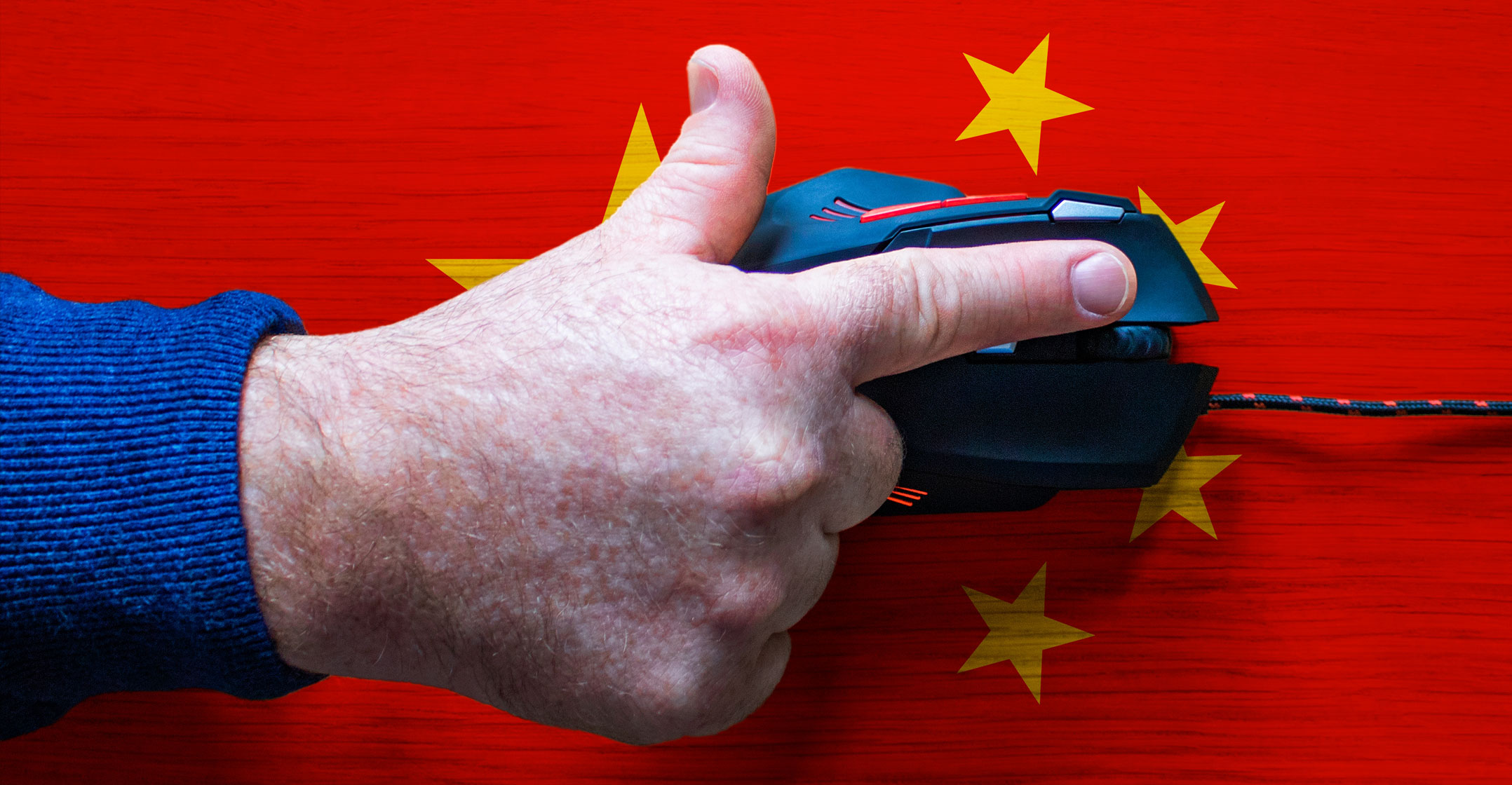
    It is sometimes assumed that African leaders choose Chinese providers because they offer the cheapest technology. Anecdotal evidence suggests otherwise. Chinese contractors are attractive partners because they can offer full-package solutions that include finance.

    Under the so-called “EPC+F” (Engineer, Procure, Construct + Fund/Finance) scheme, Chinese companies like Huawei and ZTE oversee the engineering, procurement and construction while Chinese banks provide state-backed finance. Angola, Uganda and Zambia are just some of the countries which seem to have benefited from this type of deal.

    All-round solutions like this appeal to African countries.

    What is in it for China?

    As part of its “go-global” strategy, the Chinese government encourages Chinese companies to invest and operate overseas. The government offers financial backing and expects companies to raise the global competitiveness of Chinese products and the national economy.

    In the long term, Beijing seeks to establish and promote Chinese digital standards and norms. Research partnerships and training opportunities expose a growing number of students to Chinese technology. The Chinese government’s expectation is that mobile applications and start-ups in Africa will increasingly reflect Beijing’s technological and ideological principles. That includes China’s interpretation of human rights, data privacy and freedom of speech.

    This aligns with the vision of China’s “Digital Silk Road”, which complements its Belt and Road Initiative, creating new trade routes.

    The remedy is to diversify infrastructure supply, training opportunities and partnerships

    In the digital realm, the goal is technological primacy and greater autonomy from western suppliers. The government is striving for a more Sino-centric global digital order. Infrastructure investments and training partnerships in African countries offer a starting point.

    From a technological perspective, overreliance on a single infrastructure supplier makes the client state more vulnerable. When a customer depends heavily on a particular supplier, it’s difficult and costly to switch to a different provider. African countries could become locked into the Chinese digital ecosystem.

    Researchers like Arthur Gwagwa from the Ethics Institute at Utrecht University (Netherlands) believe that China’s export of critical infrastructure components will enable military and industrial espionage. These claims assert that Chinese-made equipment is designed in a way that could facilitate cyberattacks.

    Human Rights Watch, an international NGO that conducts research and advocacy on human rights, has raised concerns that Chinese infrastructure increases the risk of technology-enabled authoritarianism. In particular, Huawei has been accused of colluding with governments to spy on political opponents in Uganda and Zambia. Huawei has denied the allegations.

    The way forward

    Chinese involvement provides a rapid path to digital progress for African nations. It also exposes African states to the risk of long-term dependence. The remedy is to diversify infrastructure supply, training opportunities and partnerships.

    There is also a need to call for interoperability in international forums such as the International Telecommunication Union, a UN agency responsible for issues related to ICTs. Interoperability allows a product or system to interact with other products and systems. It means clients can buy technological components from different providers and switch to other technological solutions. It favours market competition and higher quality solutions by preventing users from being locked in to one vendor.

    Finally, in the long term, African countries should produce their own infrastructure and become less dependent.The Conversation

    • The author, Stephanie Arnold, is a PhD candidate at Università di Bologna
    • This article is republished from The Conversation under a Creative Commons licence

    Get breaking news alerts from TechCentral on WhatsApp

    Follow TechCentral on Google News Add TechCentral as your preferred source on Google


    Huawei Stephanie Arnold ZTE
    WhatsApp YouTube
    Share. Facebook Twitter LinkedIn WhatsApp Telegram Email Copy Link
    Previous ArticleTelecoms specialists complete epic cross-Africa road trip
    Next Article Icasa walks back plan for tough data expiry rules

    Related Posts

    AI is breaking the link between university degrees and employment

    AI is breaking the link between university degrees and employment

    4 March 2026
    Eskom to rationalise AI pilots as costs rise

    Eskom to rationalise AI pilots as costs rise

    2 March 2026
    AI complexity is crippling IT departments - Thomas Meyer

    AI complexity is crippling IT departments

    2 March 2026
    Company News
    How AI is changing the way we work - Angela Ho, Obsidian Systems

    How AI is changing the way we work

    12 March 2026
    Domains.co.za introduces complete domain protection service

    Domains.co.za introduces complete domain protection service

    12 March 2026
    Mitel launches Edge platform for mission-critical on-premises communications

    Mitel launches Edge platform for mission-critical on-premises communications

    11 March 2026
    Opinion
    South Africa's energy future hinges on getting wheeling right - Aishah Gire

    South Africa’s energy future hinges on getting wheeling right

    10 March 2026
    Hold the doom: the case for a South African comeback - Duncan McLeod

    Apple just dropped a bomb on the Windows world

    5 March 2026
    VC's centre of gravity is shifting - and South Africa is in the frame - Alison Collier

    VC’s centre of gravity is shifting – and South Africa is in the frame

    3 March 2026

    Subscribe to Updates

    Get the best South African technology news and analysis delivered to your e-mail inbox every morning.

    Latest Posts
    DStv's high entry price is killing subscriber growth, says Canal+

    DStv’s high entry price is killing subscriber growth, says Canal+

    12 March 2026
    Standard Bank IT bill tops R14-billion as software spending shifts

    Standard Bank IT bill tops R14-billion as software spending shifts

    12 March 2026
    Illegal streaming crackdown nets arrests, convictions in Cape Town

    Illegal streaming crackdown nets arrests, convictions in Cape Town

    12 March 2026
    Vodacom claims African first with 254Mbit/s 5G uplink test

    Vodacom claims African first with 254Mbit/s 5G uplink test

    12 March 2026
    © 2009 - 2026 NewsCentral Media
    • Cookie policy (ZA)
    • TechCentral – privacy and Popia

    Type above and press Enter to search. Press Esc to cancel.

    Manage consent

    TechCentral uses cookies to enhance its offerings. Consenting to these technologies allows us to serve you better. Not consenting or withdrawing consent may adversely affect certain features and functions of the website.

    Functional Always active
    The technical storage or access is strictly necessary for the legitimate purpose of enabling the use of a specific service explicitly requested by the subscriber or user, or for the sole purpose of carrying out the transmission of a communication over an electronic communications network.
    Preferences
    The technical storage or access is necessary for the legitimate purpose of storing preferences that are not requested by the subscriber or user.
    Statistics
    The technical storage or access that is used exclusively for statistical purposes. The technical storage or access that is used exclusively for anonymous statistical purposes. Without a subpoena, voluntary compliance on the part of your Internet Service Provider, or additional records from a third party, information stored or retrieved for this purpose alone cannot usually be used to identify you.
    Marketing
    The technical storage or access is required to create user profiles to send advertising, or to track the user on a website or across several websites for similar marketing purposes.
    • Manage options
    • Manage services
    • Manage {vendor_count} vendors
    • Read more about these purposes
    View preferences
    • {title}
    • {title}
    • {title}