The design for Africa2Moon, the African radio telescope selected to fly to the lunar south pole aboard China’s Chang’e-8 mission in 2029, has been published in Nature Astronomy. The paper sets out how the instrument is meant to work – and the mechanism is stranger than the mission summary suggested.
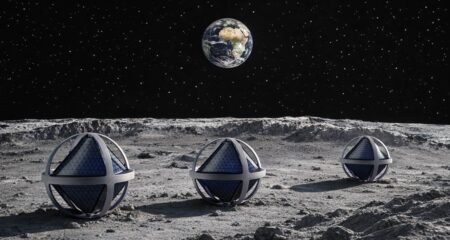
The three Bounced African Low Lunar Spheres, or Balls, are not simply placed on the surface. Once delivered, they are designed to roll freely across it, spreading apart until the distance between them forms the baseline of a single telescope. If it works, it will be the first radio interferometer to operate on the lunar surface.
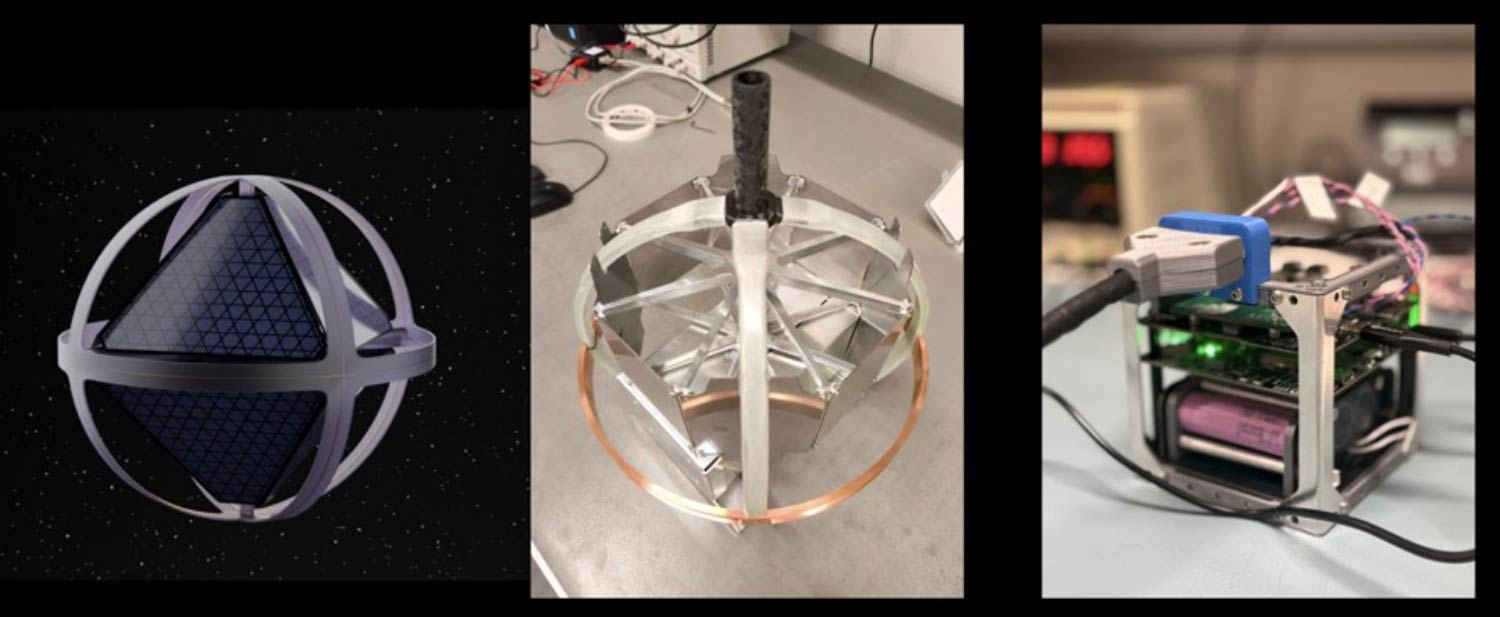
Each sphere is about 30cm across and weighs under 4kg. Inside are three concentric orthogonal loop antennas, eight solar panels and a contained electronics box, and each functions as an independent radio receiver. They are expected to operate for at least six Earth days.
In that window, the array will observe the Earth, the sun, the galaxy and the lunar surface itself. It will also search for technosignatures – possible evidence of technology beyond Earth. That puts an African instrument on the moon doing Seti-type work, which is not something the mission has previously been described as attempting.
The observing programme also underlines a distinction that is easy to lose. The radio-quiet case for the moon rests on the far side, which at night is shielded from human-made noise and from the sun. This demonstrator lands at the south pole, where the Earth stays in view – which is part of why Earth is on the target list. The far side is the destination for the full mission, with its eventual 55 antennas, one for each African nation.
Rhodes University’s involvement
The paper also brings Rhodes University to the front of a mission that has so far been told largely through Stellenbosch. Distinguished professor Oleg Smirnov, who holds the Sarao (South African Radio Astronomy Observatory) research chair in radio astronomy techniques and technologies, is principal investigator for radio astronomy.
His group, the Centre for Radio Astronomy Techniques and Technologies, has spent more than a decade on precisely the problem the mission poses: combining faint signals from a handful of scattered antennas into one sharp image. That is the discipline behind MeerKAT and the Square Kilometre Array.
“The very expertise South Africa has built through MeerKAT and the SKA is what this mission needs,” Smirnov said in a statement issued by Rhodes. “This is Rhodes University, and African radio astronomy, stepping off the planet.”
Adriana Marais, director and head of science at the Foundation for Space Development Africa, is lead author on the paper. Mission director Carla Sharpe Mitchell is among the authors.
One number puts the Chinese launch slot in perspective. Marais told Forbes Africa in April that flying the payload alone would have cost around R1.3-billion. A place among Chang’e-8’s international payloads removes that cost, which is the difference between a mission that flies and one that stays on paper. — © 2026 NewsCentral Media
- Subscribe to TechCentral’s daily newsletter
- Get breaking news alerts on WhatsApp