Google parent Alphabet reported disappointing results in its core search advertising business and a sharp acceleration in cash burn as it poured money into building out AI.
Google Cloud revenue more than doubled, a sign that corporate customers are embracing the technology. But investors, unnerved by the huge price tag and slowing growth at the market-dominating search engine, sent the shares down 10% in after-hours trading on Wednesday.
“In a market worried about AI cannibalising the franchise, investors need to see search accelerating, not decelerating,” said Dave Wagner, portfolio manager at Aptus Capital Advisors. “Cloud is carrying the story, but until search shows AI is additive, the stock’s probably going to trade lower.”
The Mountain View, California, company reported negative free cash flow of US$9.1-billion, against analyst expectations that it would come close to breaking even, LSEG data showed.
It was Alphabet’s second straight quarter of negative free cash flow. In the previous quarter, aggressive spending on cloud capacity and AI development led it to burn $5.9-billion, the first time it had gone negative in 22 years as a listed company. That is a sharp turn for a company that was long one of the tech sector’s most prolific cash generators.
Total third-quarter revenue of $127.6-billion fell short of analysts’ estimate of $128.2-billion. Google Cloud beat expectations, but not by enough to offset a $1.4-billion miss in advertising: ad revenue came in at $82-billion, against expectations of $83.4-billion.
Net income available to Alphabet’s common shareholders fell 25% to $26.17-billion, and adjusted earnings per share of $2.67 missed Wall Street’s target of $3.02.
AI Mode
Chief business officer Philipp Schindler attributed a larger-than-expected slowdown in search advertising growth to greater use of AI Mode, a chatbot interface for the search engine on which the company is still experimenting with ads. Google would begin rolling out advertisements in AI Mode to international markets, he told analysts on a conference call.
Alphabet still plans to increase its capital expenditure significantly in 2027 from this year’s forecast of $195-billion to $205-billion, chief financial officer Anat Ashkenazi told analysts. Executives did not put a number on next year’s outlay, but investors were nervous about a big jump.
“A $300-billion capital expenditure number could potentially scare the market, because free cash flow now is finally negative,” said Jeremy Saltsburg, senior investment officer at Check Capital.
Ashkenazi added that she expected near-term pressure on margins from the use of third-party cloud capacity.
The results reflect the huge costs of the AI build-out, with investors worried both about potential overspending and about the risk of falling behind rivals by not spending enough.
In contrast, rival Microsoft, which also reported results on Wednesday, saw its shares rise more than 5%, fuelled by positive free cash flow that beat analyst estimates.
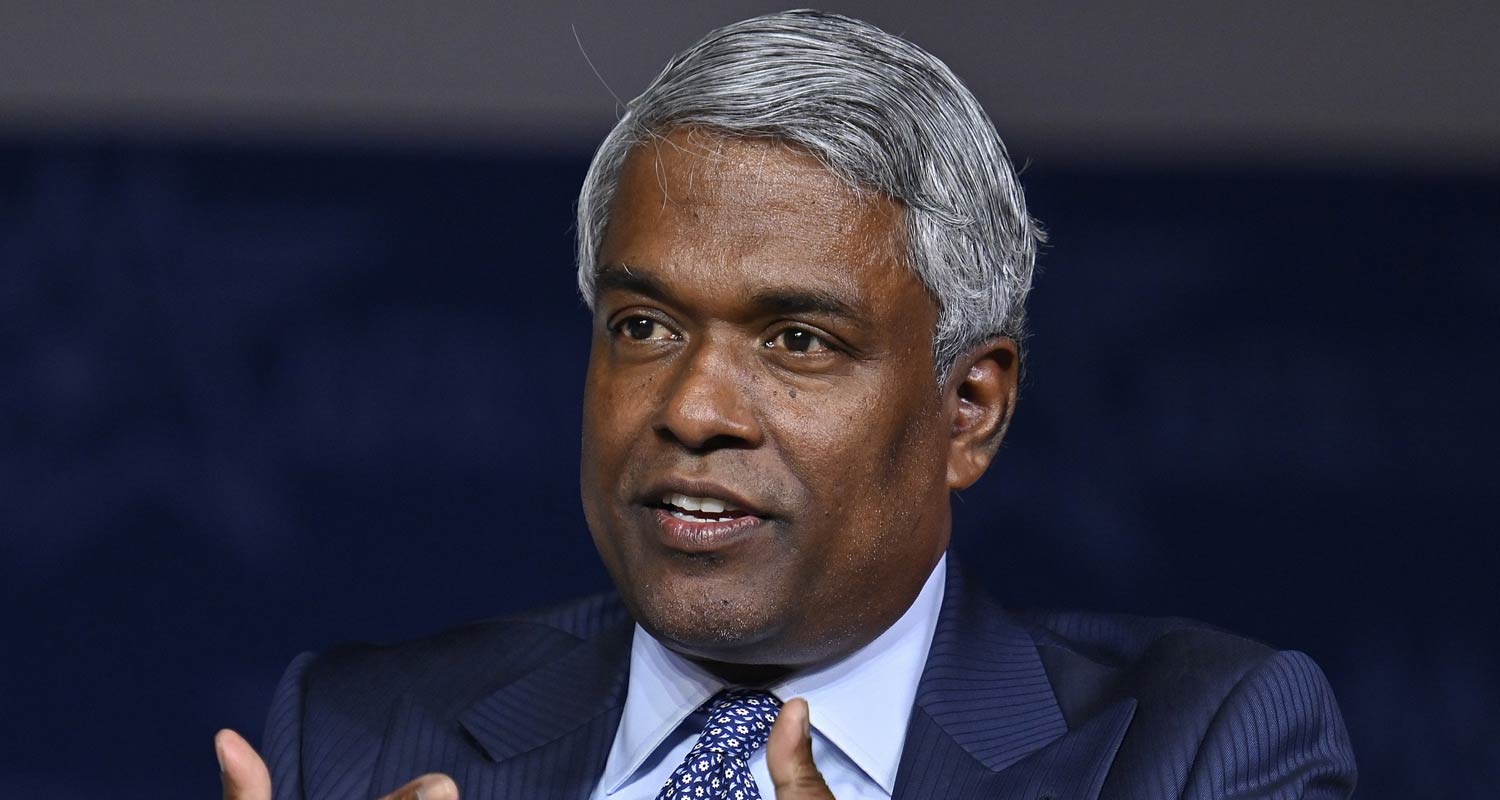
Alphabet tried to offset the disappointing advertising performance by playing up its cloud computing unit, most notably by bringing Thomas Kurian, CEO of Google Cloud, onto the earnings call as a speaker for the first time.
Google Cloud’s revenue more than doubled to $30.71-billion in the third quarter to 30 September, beating estimates.
Kurian said sales of Google’s tensor processing units (TPUs), which compete with Nvidia’s GPUs, had become a meaningful contributor to the business. Alphabet began recognising revenue from direct sales of what it calls its “TPU systems”, which span the chips and the associated hardware and software, in the previous quarter.
But Ashkenazi cautioned that building up TPU inventory would put further pressure on free cash flow.
Google Cloud’s backlog has grown to $561-billion, and Alphabet expects to recognise more than 55% of it as revenue in the next 24 months, she said.
Google Cloud, the world’s third-largest cloud services provider after Amazon Web Services and Microsoft Azure, has expanded its enterprise commitments, supported by multi-year cloud and AI infrastructure deals in cybersecurity, retail and financial services.
Alphabet, Microsoft, Amazon and Meta are projected to spend well over $700-billion between them in 2026 to expand their AI data centres, chips and high-performance networking capacity. With advanced chips and data centre power in short supply, Alphabet’s investment in its own TPUs alongside third-party GPUs has helped it expand capacity.
Gemini 4 Carbon
Earlier on Wednesday, Google sought to pre-empt the results and counter a perception that it was losing out in the AI race by unveiling its new Gemini 4 Carbon model. This meant the company was again “leading at the frontier”, CEO Sundar Pichai said on the call.
Afterwards, analysts at Bernstein asked in a note: “Did Google rush the deployment of Gemini 4 models as an offset to softer financial metrics? And are the models ready for commercial deployment?” — Akash Sriram and Kenrick Cai, (c) 2026 Reuters