Close Menu
TechCentralTechCentral

    Subscribe to the newsletter

    Get the best South African technology news and analysis delivered to your e-mail inbox every morning.

    Facebook X (Twitter) YouTube LinkedIn
    WhatsApp Facebook X (Twitter) LinkedIn YouTube
    TechCentralTechCentral
    • News
      DStv's biggest shake-up in 15 years lands on 17 September

      DStv’s biggest shake-up in 15 years lands on 17 September

      7 September 2026
      The man now carrying South Africa's auto industry fight - Mncane Mthunzi

      The man now carrying South Africa’s auto industry fight

      7 September 2026
      UN warns AI could disrupt democracy itself - Mohamed Azakir

      UN warns AI could disrupt democracy itself

      7 September 2026
      R1.5-billion to switch off the sun

      R1.5-billion to switch off the sun

      7 September 2026
      Ageing Safe cable prompts new R1.7-billion Indian Ocean link

      Ageing Safe cable prompts new R1.7-billion Indian Ocean link

      7 September 2026
    • World
      'This is not circular': Jensen Huang defends $3.5-billion MediaTek deal

      ‘This is not circular’: Jensen Huang defends $3.5-billion MediaTek deal

      2 September 2026
      AI-generated music banned from Australian charts

      AI-generated music banned from Australian charts

      26 August 2026
      Traders brace for a R4.5-trillion swing in Nvidia's value

      Traders brace for a R4.5-trillion swing in Nvidia’s value

      25 August 2026
      Russia building its own Starlink - and faster than expected - Vadym Skibitskyi

      Russia building its own Starlink – and faster than expected

      11 August 2026
      Meta AI will now tell parents if their teen is in crisis

      Meta AI will now tell parents if their teen is in crisis

      17 July 2026
    • In-depth
      Google DeepMind CEO Demis Hassabis. Image: John Sears

      The plan to stop AI from breaking the world

      16 July 2026
      The internet has a Strait of Hormuz problem

      The internet has a Strait of Hormuz problem

      15 July 2026
      AI boom sparks rally, frenzy and fear

      AI boom sparks rally, frenzy and fear

      11 June 2026
      Every plug-in hybrid on sale in South Africa, ranked by price - Lamborghini Temerario

      Every plug-in hybrid on sale in South Africa, ranked by price

      7 June 2026
      What Wi-Fi 8 will mean for wireless networks

      What Wi-Fi 8 will mean for wireless networks

      1 June 2026
    • TCS
      Winstone Jordaan on building a national EV charging network

      Winstone Jordaan on building a national EV charging network

      2 September 2026
      Watts & Wheels S1E8: 'Tesla lands in Africa, just not here'

      Watts & Wheels S1E8: ‘Tesla lands in Africa, just not here’

      24 August 2026
      TCS | Herotel CEO Van Zyl Botha on beating Starlink to South Africa

      TCS | Herotel CEO Van Zyl Botha on beating Starlink to South Africa

      14 August 2026
      Meet the CIO | Discovery's Derek Wilcocks on AI, guardrails and growth

      Meet the CIO | Derek Wilcocks on how AI personalised Vitality

      13 August 2026
      TCS | Money just became native to the internet - Steven Boykey Sidley

      TCS | Money just became native to the internet – Steven Boykey Sidley

      12 August 2026
    • Opinion
      The fragile joint in the Capitec machine - Pambos Soteriades

      The R197-billion market the banks can’t reach

      25 August 2026
      South African tech's compounding debt problem - Jannie van Zyl

      Management consulting as we know it is over

      21 August 2026
      South African tech's compounding debt problem - Jannie van Zyl

      The most dangerous customer is the quiet one

      10 August 2026
      South African tech's compounding debt problem - Jannie van Zyl

      South African tech’s compounding debt problem

      29 July 2026
      The fragile joint in the Capitec machine - Pambos Soteriades

      Best network, worst vibes: the puzzle of SA telecoms

      20 July 2026
    • Company Hubs
      • 1Stream
      • Africa Data Centres
      • AfriGIS
      • Altron Digital Business
      • Altron Document Solutions
      • Altron Group
      • Arctic Wolf
      • Ascent Technology
      • AvertITD
      • BBD
      • Braintree
      • CallMiner
      • CambriLearn
      • CM.com
      • Contactable
      • CYBER1 Solutions
      • Digicloud Africa
      • Digimune
      • Domains.co.za
      • ESET
      • Euphoria Telecom
      • HOSTAFRICA
      • Incredible Business
      • iONLINE
      • IQbusiness
      • Iris Network Systems
      • Kaspersky
      • LSD Open
      • Mitel
      • NEC XON
      • Netstar
      • Network Platforms
      • Next DLP
      • Ovations
      • Paracon
      • Paratus
      • Q-KON
      • SevenC
      • SkyWire
      • Solid8 Technologies
      • Telit Cinterion
      • Telviva
      • Tenable
      • Vertiv
      • Videri Digital
      • Vodacom Business
      • Vox
      • Wipro
      • Workday
      • XLink
    • Sections
      • AI and machine learning
      • Banking
      • Broadcasting and Media
      • Cloud services
      • Contact centres and CX
      • Cryptocurrencies
      • Education and skills
      • Electronics and hardware
      • Energy and sustainability
      • Enterprise software
      • Financial services
      • HealthTech
      • Information security
      • Internet and connectivity
      • Internet of Things
      • Investment
      • IT services
      • Lifestyle
      • Policy and regulation
      • Public sector
      • Retail and e-commerce
      • Satellite communications
      • Science
      • SMEs and start-ups
      • Social media
      • Talent and leadership
      • Telecoms
      • Watts & Wheels
    • Events
    • Advertise
    TechCentralTechCentral
    Home » Sections » AI and machine learning » AI guardrails: the fastest way to move fast

    AI guardrails: the fastest way to move fast

    Promoted | Liquid C2 and Cloudflare on why AI governance belongs in the infrastructure, not the policy file.
    By Liquid C27 September 2026
    Twitter LinkedIn Facebook WhatsApp Email Telegram Copy Link
    News Alerts
    WhatsApp
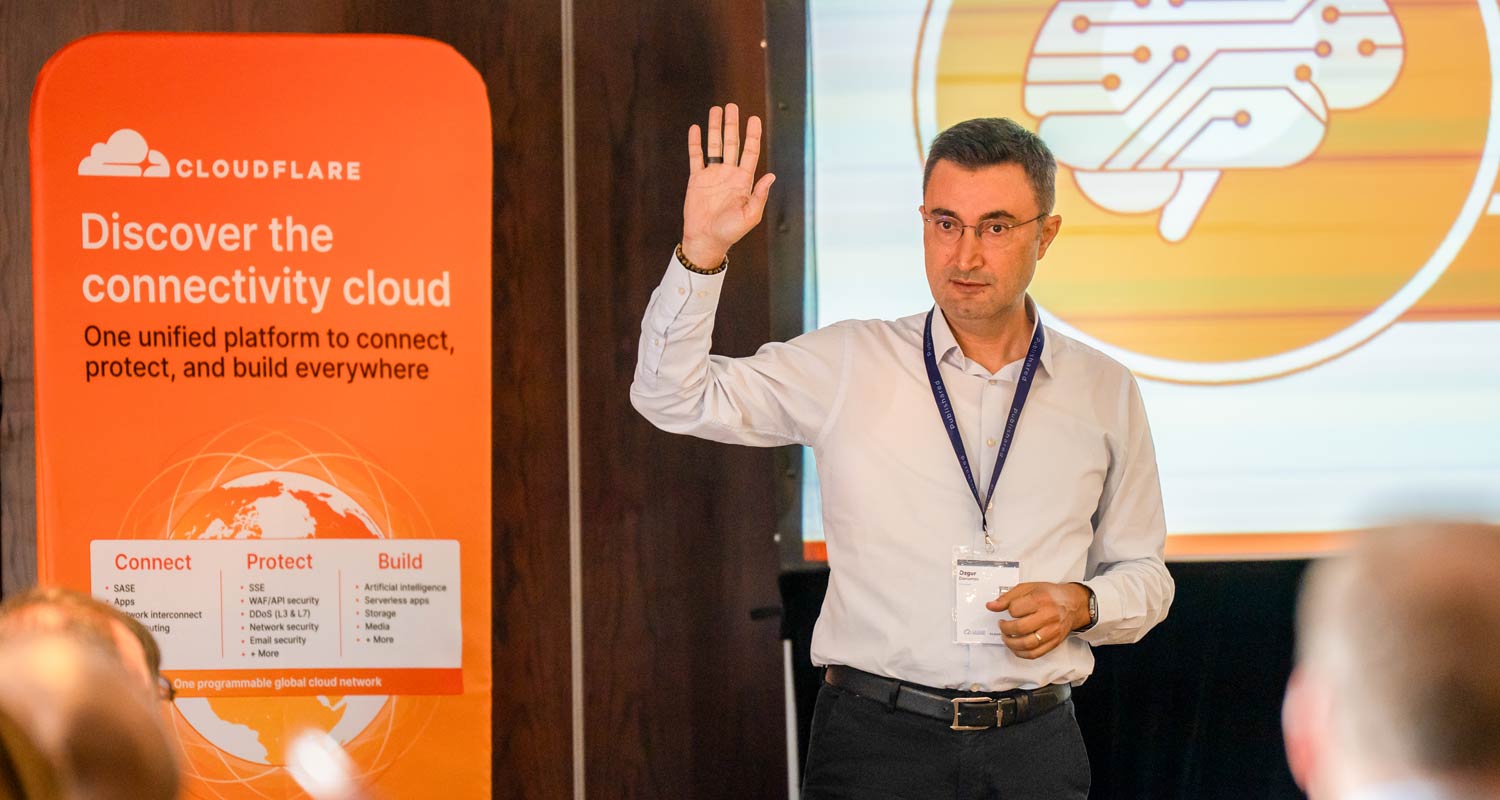
    Ozgur Danisman, Cloudflare’s director of solutions engineering
    Ozgur Danisman, Cloudflare’s director of solutions engineering

    The conventional wisdom on AI governance is that it slows you down. Lock the tools down and run everything through committee — and a competitor ships first.

    Inside the businesses moving fastest with AI, the conversation sounds nothing like that.

    That was the case put to Johannesburg’s technology and security leaders on Friday, 31 July 2026, at the Liquid C2 & Cloudflare Executive CISO Breakfast, a session titled “The AI Guardrail Advantage”. Liquid C2, a business of Cassava Technologies, the pan-African group founded by Strive Masiyiwa, hosted the session with Cloudflare. The argument: governance works when it is treated as infrastructure from day one, not policy bolted on after adoption has already spread.

    Generative AI use climbed from 33% of organisations in 2023 to 71%, according to McKinsey’s State of AI survey published in March 2025. That adoption curve is the real problem. Most companies are already deep into AI use before security or compliance has been asked to sign off on it.

    The pressure is coming from inside the business

    Brandon Rochat, Cloudflare’s senior sales manager, said the push for AI governance is coming from customers, not from Cloudflare’s own sales team. “Honestly, it’s client-led,” he said. “Many companies are asking what does AI mean to us, what does it mean for our businesses? We need it, but we don’t know how to control it.”

    His answer for businesses still treating governance as tomorrow’s problem was blunt: “All businesses need to look at this. You need to understand AI, and you need to see where you want to make purposeful AI part of your process.”

    Where the real exposure sits

    Then there is the part of the AI stack most boards haven’t thought about: agents.

    Ozgur Danisman, Cloudflare’s director of solutions engineering, singled out autonomous agents — booking, e-mailing and querying systems without a human approving each step — as where he sees companies going wrong. “These agents are having access rights to very critical internal or external systems,” he said, and without the relevant guardrails a business is left with blind spots it cannot see into.

    Asked what failure looks like, he gave two specific scenarios. “The next day you come to the office and see a US$10 000 bill because that agent did a lot of queries with the LLM and you didn’t put a budget boundary. Or that agent is over-authorised and just deletes the core database, so your whole system is gone.”

    One of those is a bill. The other is the business.

    The gateway does the boring, essential work

    The mechanism on offer is an AI gateway sitting between people, models and agents, inspecting traffic before it becomes a problem. “So if you have PII information or customer information leaking in an unauthorised way, the AI gateway will stop it before it goes out,” Danisman said, referring to personally identifiable information.

    The same layer handles cost, letting businesses set a budget per employee and enforce it. It is the least glamorous form of AI governance and, on the evidence of a $10 000 surprise invoice, possibly the most necessary.

    Built on what’s already there

    None of this required customers to rip out existing infrastructure, in Liquid C2 and Cloudflare’s telling. Danisman said Cloudflare had been investing in the region for 15 years and had spent the past two years investing in GPUs, with facilities in Johannesburg and Durban — investment customers could draw on rather than build from scratch.

    Nor did it require lock-in. “They need a flexible environment where they can easily change to the latest model when they need to,” Danisman said.

    The seven-part framework unveiled at the breakfast wasn’t positioned as a product. Liquid C2 and Cloudflare describe it as a governance framework, introduced at the session to help organisations adopt AI securely — starting with how AI is currently being used across different business functions, the regulation it now sits inside, and the risks it poses as adoption outpaces oversight. The framework works through seven governance areas in turn: strategy, documentation, risk, third-party management, compliance, data security and assurance. Liquid C2 and Cloudflare say they will support organisations in putting it into practice across those same areas, including risk and policy development.

    The underlying diagnosis holds regardless. Rochat argued the challenge does not vary by how established a business is. “The AI journey is the same for all types of businesses, whether mature or not. Mature businesses have a jump on immature ones, but their needs are the same: using AI to increase productivity, reduce costs, be more competitive.”
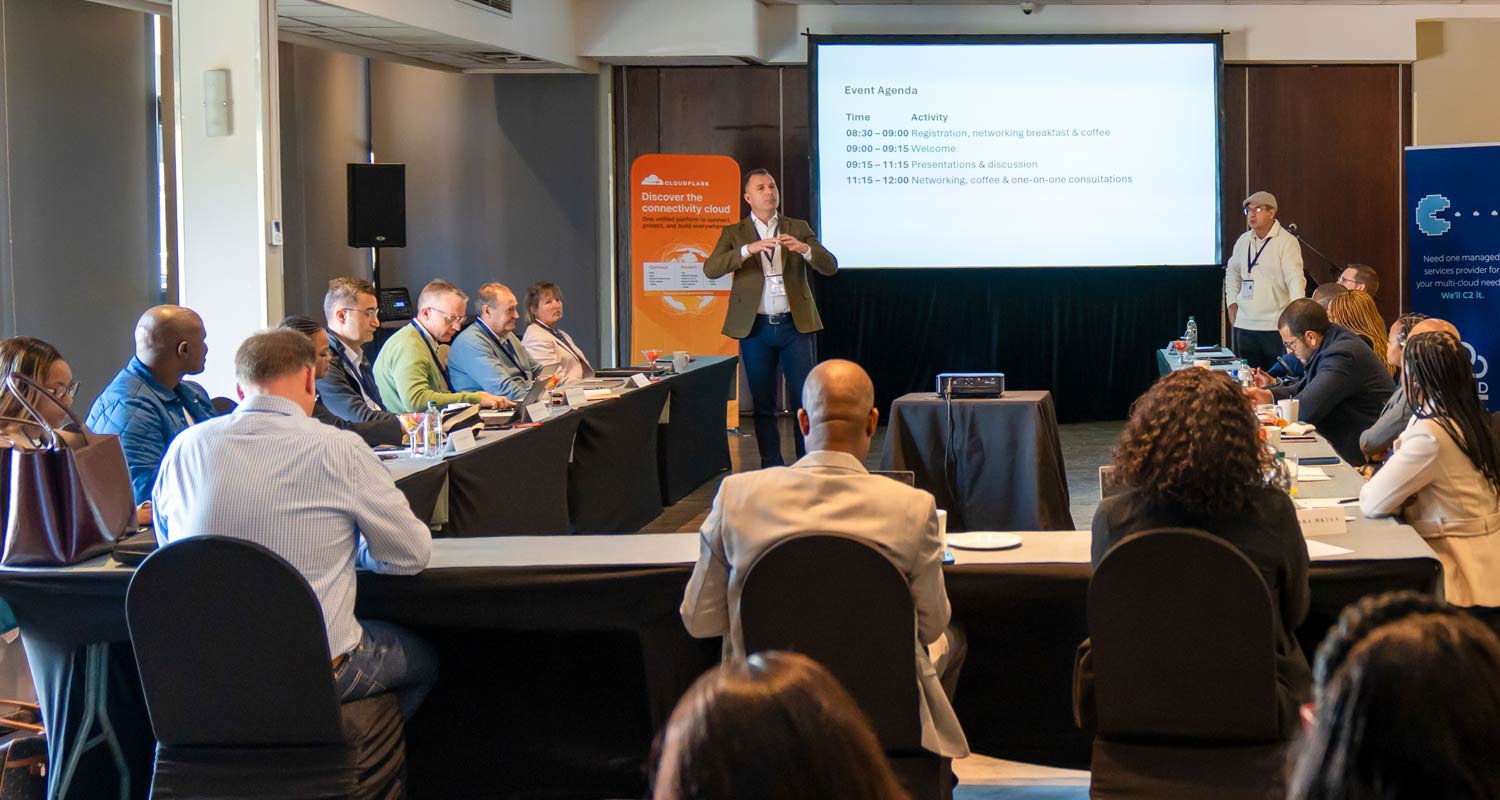
    The session worked through the risk areas in board language: staff pasting sensitive data into unapproved AI tools, compliance exposure under regulation such as Popia, agent autonomy widening the blast radius of a single mistake, and third-party AI vendors on the risk register. It closed on a practical model: understand AI use cases and ownership, set policy, inspect traffic at the gateway, control access and govern agents.

    Guardrails are not the brake. They are what lets a business put its foot down with both hands on the wheel.

    For the CISOs who left that breakfast, the next step wasn’t a sales pitch. It was a working session to move the conversation from principle to implementation. Whether that translates into fewer $10 000 surprises will be the real test.

    • Read more articles by Liquid C2 on TechCentral
    • This promoted content was paid for by the party concerned

    Follow TechCentral on Google News Add TechCentral as your preferred source on Google


    Brandon Rochat Cassava Technologies CloudFlare Liquid C2 McKinsey Ozgur Danisman Strive Masiyiwa
    WhatsApp YouTube
    Share. Facebook Twitter LinkedIn WhatsApp Telegram Email Copy Link
    Previous ArticleR1.5-billion to switch off the sun
    Next Article UN warns AI could disrupt democracy itself

    Related Posts

    Nvidia's top AI chips are coming to a Centurion data centre

    Nvidia’s top AI chips are coming to a Centurion data centre

    26 August 2026
    South African tech's compounding debt problem - Jannie van Zyl

    Management consulting as we know it is over

    21 August 2026
    Anthropic eyes $200-billion in revenue by 2028

    Anthropic eyes $200-billion in revenue by 2028

    15 August 2026
    Add A Comment

    Comments are closed.

    Company News
    Most enterprises don't have an identity strategy - they have a patchwork - Contactable

    Most enterprises don’t have an identity strategy – they have a patchwork

    7 September 2026
    Ozgur Danisman, Cloudflare’s director of solutions engineering

    AI guardrails: the fastest way to move fast

    7 September 2026
    How to build a security operations centre that actually works - Kaspersky

    How to build a security operations centre that actually works

    3 September 2026
    Opinion
    The fragile joint in the Capitec machine - Pambos Soteriades

    The R197-billion market the banks can’t reach

    25 August 2026
    South African tech's compounding debt problem - Jannie van Zyl

    Management consulting as we know it is over

    21 August 2026
    South African tech's compounding debt problem - Jannie van Zyl

    The most dangerous customer is the quiet one

    10 August 2026

    Subscribe to Updates

    Get the best South African technology news and analysis delivered to your e-mail inbox every morning.

    Latest Posts
    DStv's biggest shake-up in 15 years lands on 17 September

    DStv’s biggest shake-up in 15 years lands on 17 September

    7 September 2026
    The man now carrying South Africa's auto industry fight - Mncane Mthunzi

    The man now carrying South Africa’s auto industry fight

    7 September 2026
    Most enterprises don't have an identity strategy - they have a patchwork - Contactable

    Most enterprises don’t have an identity strategy – they have a patchwork

    7 September 2026
    UN warns AI could disrupt democracy itself - Mohamed Azakir

    UN warns AI could disrupt democracy itself

    7 September 2026
    © 2009 - 2026 NewsCentral Media
    Built and maintained by Chronon
    • Cookie policy (ZA)
    • TechCentral – privacy and Popia

    Type above and press Enter to search. Press Esc to cancel.

    Manage consent

    TechCentral uses cookies to enhance its offerings. Consenting to these technologies allows us to serve you better. Not consenting or withdrawing consent may adversely affect certain features and functions of the website.

    Functional Always active
    The technical storage or access is strictly necessary for the legitimate purpose of enabling the use of a specific service explicitly requested by the subscriber or user, or for the sole purpose of carrying out the transmission of a communication over an electronic communications network.
    Preferences
    The technical storage or access is necessary for the legitimate purpose of storing preferences that are not requested by the subscriber or user.
    Statistics
    The technical storage or access that is used exclusively for statistical purposes. The technical storage or access that is used exclusively for anonymous statistical purposes. Without a subpoena, voluntary compliance on the part of your Internet Service Provider, or additional records from a third party, information stored or retrieved for this purpose alone cannot usually be used to identify you.
    Marketing
    The technical storage or access is required to create user profiles to send advertising, or to track the user on a website or across several websites for similar marketing purposes.
    • Manage options
    • Manage services
    • Manage {vendor_count} vendors
    • Read more about these purposes
    View preferences
    • {title}
    • {title}
    • {title}