Close Menu
TechCentralTechCentral

    Subscribe to the newsletter

    Get the best South African technology news and analysis delivered to your e-mail inbox every morning.

    Facebook X (Twitter) YouTube LinkedIn
    WhatsApp Facebook X (Twitter) LinkedIn YouTube
    TechCentralTechCentral
    • News
      Haier plants its flag in South Africa

      Haier plants its flag in South Africa

      2 February 2026
      Microsoft's winning formula is starting to fray - Satya Nadella

      Microsoft’s winning formula may be starting to fray

      2 February 2026
      Meet the CIO | Inside the JSE's tech engine with CIO Tebalo Tsoaeli

      Meet the CIO | Inside the JSE’s tech engine with CIO Tebalo Tsoaeli

      2 February 2026
      Crypto has gone mainstream - will South African regulators catch up in 2026? - Marius Reitz

      Crypto has gone mainstream – will South African regulators catch up in 2026?

      2 February 2026
      Sixty60 smashes 100 million orders

      Shoprite keeps Sixty60 momentum as group sales rise 7.2%

      2 February 2026
    • World
      Apple acquires audio AI start-up Q.ai

      Apple acquires audio AI start-up Q.ai

      30 January 2026
      SpaceX IPO may be largest in history

      SpaceX IPO may be largest in history

      28 January 2026
      Nvidia throws AI at the weather

      Nvidia throws AI at weather forecasting

      27 January 2026
      Debate erupts over value of in-flight Wi-Fi

      Debate erupts over value of in-flight Wi-Fi

      26 January 2026
      Intel takes another hit - Intel CEO Lip-Bu Tan. Laure Andrillon/Reuters

      Intel takes another hit

      23 January 2026
    • In-depth
      How liberalisation is rewiring South Africa's power sector

      How liberalisation is rewiring South Africa’s power sector

      21 January 2026
      The top-performing South African tech shares of 2025

      The top-performing South African tech shares of 2025

      12 January 2026
      Digital authoritarianism grows as African states normalise internet blackouts

      Digital authoritarianism grows as African states normalise internet blackouts

      19 December 2025
      TechCentral's South African Newsmakers of 2025

      TechCentral’s South African Newsmakers of 2025

      18 December 2025
      Black Friday goes digital in South Africa as online spending surges to record high

      Black Friday goes digital in South Africa as online spending surges to record high

      4 December 2025
    • TCS
      TCS+ | How Cloud On Demand is helping SA businesses succeed in the cloud - Xhenia Rhode, Dion Kalicharan

      TCS+ | Cloud On Demand and Consnet: inside a real-world AWS partner success story

      30 January 2026
      Watts & Wheels S1E3: 'BYD's Corolla Cross challenger'

      Watts & Wheels S1E3: ‘BYD’s Corolla Cross challenger’

      30 January 2026
      Watts & Wheels S1E3: 'BYD's Corolla Cross challenger'

      Watts & Wheels S1E2: ‘China attacks, BMW digs in, Toyota’s sublime supercar’

      23 January 2026

      TCS+ | Why cybersecurity is becoming a competitive advantage for SA businesses

      20 January 2026
      Watts & Wheels S1E3: 'BYD's Corolla Cross challenger'

      Watts & Wheels: S1E1 – ‘William, Prince of Wheels’

      8 January 2026
    • Opinion
      South Africa's skills advantage is being overlooked at home - Richard Firth

      South Africa’s skills advantage is being overlooked at home

      29 January 2026
      Why Elon Musk's Starlink is a 'hard no' for me - Songezo Zibi

      Why Elon Musk’s Starlink is a ‘hard no’ for me

      26 January 2026
      South Africa's new fibre broadband battle - Duncan McLeod

      South Africa’s new fibre broadband battle

      20 January 2026
      AI moves from pilots to production in South African companies - Nazia Pillay SAP

      AI moves from pilots to production in South African companies

      20 January 2026
      South Africa's new fibre broadband battle - Duncan McLeod

      ANC’s attack on Solly Malatsi shows how BEE dogma trumps economic reality

      14 December 2025
    • Company Hubs
      • Africa Data Centres
      • AfriGIS
      • Altron Digital Business
      • Altron Document Solutions
      • Altron Group
      • Arctic Wolf
      • AvertITD
      • Braintree
      • CallMiner
      • CambriLearn
      • CYBER1 Solutions
      • Digicloud Africa
      • Digimune
      • Domains.co.za
      • ESET
      • Euphoria Telecom
      • Incredible Business
      • iONLINE
      • IQbusiness
      • Iris Network Systems
      • LSD Open
      • NEC XON
      • Netstar
      • Network Platforms
      • Next DLP
      • Ovations
      • Paracon
      • Paratus
      • Q-KON
      • SevenC
      • SkyWire
      • Solid8 Technologies
      • Telit Cinterion
      • Tenable
      • Vertiv
      • Videri Digital
      • Vodacom Business
      • Wipro
      • Workday
      • XLink
    • Sections
      • AI and machine learning
      • Banking
      • Broadcasting and Media
      • Cloud services
      • Contact centres and CX
      • Cryptocurrencies
      • Education and skills
      • Electronics and hardware
      • Energy and sustainability
      • Enterprise software
      • Financial services
      • Information security
      • Internet and connectivity
      • Internet of Things
      • Investment
      • IT services
      • Lifestyle
      • Motoring
      • Public sector
      • Retail and e-commerce
      • Satellite communications
      • Science
      • SMEs and start-ups
      • Social media
      • Talent and leadership
      • Telecoms
    • Events
    • Advertise
    TechCentralTechCentral
    Home » Current affairs » ANC’s rhetoric a serious risk to SA

    ANC’s rhetoric a serious risk to SA

    By The Conversation8 May 2017
    Twitter LinkedIn Facebook WhatsApp Email Telegram Copy Link
    News Alerts
    WhatsApp
    Jacob Zuma

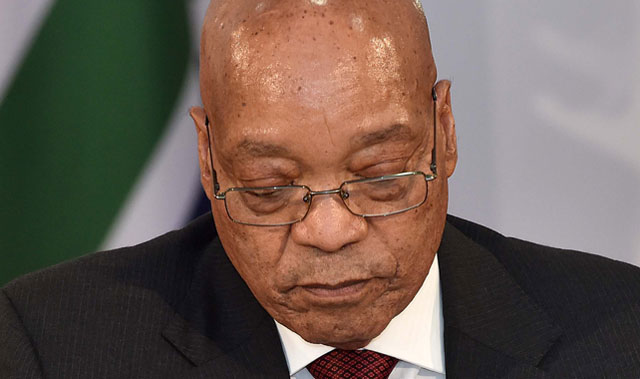
    The ANC is adopting a dangerous political approach used in failing states like Algeria, Zimbabwe and Venezuela. Its aim is to deflect attention from its policy failures and from numerous scandals surrounding President Jacob Zuma, his family and the politically connected Gupta network.

    The approach was allegedly crafted by Bell Pottinger, a London based PR firm. It focuses on two concepts.

    The first is the term “white monopoly capital”. The phrase broadly refers to control of the economy by apartheid beneficiary capitalist oligopolies at the expense of South Africa’s black majority.

    Accompanying it is the term “radical economic transformation”. This is defined differently by various senior government officials. But is understood to mean rapidly changing the economy’s ownership, control, and production patterns in favour of the previously disadvantaged.

    However, beyond damaging South Africa’s social fabric, framing the country’s current economic impasse in such a dichotomous politically charged way has negative consequences.

    Firstly, it distracts attention from the private sector’s real sins. This makes it more difficult to objectively hold business to account for its own nefarious activities. These include tender fraud, collusion, price fixing, fronting, illicit capital flows and tax evasion. Framing the discourse as “white monopoly capital” muddies the waters. It becomes unclear whether exposing private sector crimes is merely a politically motivated assault, or an attempt to uphold the law.

    Secondly, the ongoing rhetoric will further damage the chances of economic recovery. This is because it will deter long-term domestic and international investment. It will also encourage companies to move their capital elsewhere and use complex tax avoidance mechanisms.

    Thirdly, trumpeting vacuous slogans is also unlikely to raise the prospects of credible policies that will deal with the country’s structural challenges.

    In the past two decades, South Africa has failed to modernise its labour and education systems. This has meant limited success in rolling back poverty, inequality and unemployment. As a result, the country has one of the highest unemployment rates and gini coefficients in the world.

    The structural problems in the education system have resulted in poorly prepared senior school and university graduates. This is despite the number of children attending school increasing exponentially since compulsory education was introduced in 1994.
    Consequently, the country is poorly positioned to take advantage of the “fourth industrial revolution”.

    Making things worse is the failure to adopt industrial policies to diversify the country’s export mix away from commodities to more sophisticated beneficiation and manufacturing activities. Commodities such as gold, platinum and coal, thus continue to comprise a significant portion of the country’s export earnings.
    Malusi Gigaba

    Although the services-based sectors have given rise to an emerging middle class, this new wealth is largely debt-fuelled and consumption driven. This limits savings, capital accumulation and class mobility for most of the population.

    What’s at stake

    In mid-2017, the rating agency Moody’s will review South Africa’s sovereign credit rating. This comes after two recent downgrades by global credit rating agencies S&P and Fitch.

    A great deal hangs on Moody’s decision. If it downgrades the government’s rand-based bond credit rating two notches to junk status, the country will be expelled from the World Government Bond Index. This will compromise its credibility as an investment destination. It will stimulate significant capital flight as international bond funds with investment-grade mandates are forced to sell off South African sub-investment grade bonds.

    The rand will then depreciate and the trade deficit will widen. The central bank could then be forced to hike interest rates to curb inflationary pressures. Unemployment will rise and the government’s fiscal slack will be further depleted.

    A downgrade of the rand denominated bonds would spark economic instability, and potentially significantly weaken the country’s private sector. The country’s politically connected elite could respond to this crisis by seeking to consolidate political power. This could be achieved using “radical economic transformation” to decimate the vestiges of “white monopoly capital”.

    In the wake of the recent downgrades, some politicians have been peddling an illusion that the country’s current woes are simply “short-term pain for long-term gain” for the majority of South Africans.

    But the experiences of numerous countries have shown that there is no gain from going down the populist economic path — only state failure.

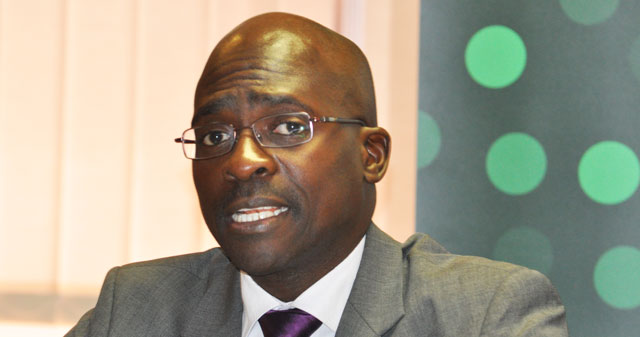
    There are tentative signs that this risk is beginning to take hold among some ANC leaders. Even Zuma’s newly appointed finance minister began watering down the term “radical economic transformation” at the recent World Economic Forum Africa gathering. Instead, he opted to use the phrase “inclusive growth”.

    What needs to be made clear is that the debate around “white monopoly capital” and “radical economic transformation” is about much more than statistics and definitions. It is about the ownership and control of both public and private capital by a politically connected elite. Thus it comes with the potential risk of turning South Africa’s entire economy into a centrally controlled patronage network.The Conversation

    • Sean Gossel is senior lecturer, UCT Graduate School of Business, and Misheck Mutize is lecturer of finance and PhD candidate specialising in finance, University of Cape Town
    • This article was originally published on The Conversation


    WhatsApp YouTube Follow on Google News Add as preferred source on Google
    Share. Facebook Twitter LinkedIn WhatsApp Telegram Email Copy Link
    Previous ArticleSamsung replaces ADH for S8, S8+
    Next Article Amazon dominating in smart speaker race

    Related Posts

    Haier plants its flag in South Africa

    Haier plants its flag in South Africa

    2 February 2026
    Microsoft's winning formula is starting to fray - Satya Nadella

    Microsoft’s winning formula may be starting to fray

    2 February 2026
    Meet the CIO | Inside the JSE's tech engine with CIO Tebalo Tsoaeli

    Meet the CIO | Inside the JSE’s tech engine with CIO Tebalo Tsoaeli

    2 February 2026
    Company News
    Breaking silos with SAS: Agile insurance in an uncertain world

    Breaking silos with SAS: agile insurance in an uncertain world

    2 February 2026
    Stellar year expected for Digicloud Africa and its reseller partners - Gregory MacLennan

    Stellar year expected for Digicloud Africa and its reseller partners

    2 February 2026
    How to subscribe to South Africa's best tech podcasts - TechCentral

    How to subscribe to South Africa’s best tech podcasts

    2 February 2026
    Opinion
    South Africa's skills advantage is being overlooked at home - Richard Firth

    South Africa’s skills advantage is being overlooked at home

    29 January 2026
    Why Elon Musk's Starlink is a 'hard no' for me - Songezo Zibi

    Why Elon Musk’s Starlink is a ‘hard no’ for me

    26 January 2026
    South Africa's new fibre broadband battle - Duncan McLeod

    South Africa’s new fibre broadband battle

    20 January 2026

    Subscribe to Updates

    Get the best South African technology news and analysis delivered to your e-mail inbox every morning.

    Latest Posts
    Haier plants its flag in South Africa

    Haier plants its flag in South Africa

    2 February 2026
    Microsoft's winning formula is starting to fray - Satya Nadella

    Microsoft’s winning formula may be starting to fray

    2 February 2026
    Meet the CIO | Inside the JSE's tech engine with CIO Tebalo Tsoaeli

    Meet the CIO | Inside the JSE’s tech engine with CIO Tebalo Tsoaeli

    2 February 2026
    Crypto has gone mainstream - will South African regulators catch up in 2026? - Marius Reitz

    Crypto has gone mainstream – will South African regulators catch up in 2026?

    2 February 2026
    © 2009 - 2026 NewsCentral Media
    • Cookie policy (ZA)
    • TechCentral – privacy and Popia

    Type above and press Enter to search. Press Esc to cancel.

    Manage consent

    TechCentral uses cookies to enhance its offerings. Consenting to these technologies allows us to serve you better. Not consenting or withdrawing consent may adversely affect certain features and functions of the website.

    Functional Always active
    The technical storage or access is strictly necessary for the legitimate purpose of enabling the use of a specific service explicitly requested by the subscriber or user, or for the sole purpose of carrying out the transmission of a communication over an electronic communications network.
    Preferences
    The technical storage or access is necessary for the legitimate purpose of storing preferences that are not requested by the subscriber or user.
    Statistics
    The technical storage or access that is used exclusively for statistical purposes. The technical storage or access that is used exclusively for anonymous statistical purposes. Without a subpoena, voluntary compliance on the part of your Internet Service Provider, or additional records from a third party, information stored or retrieved for this purpose alone cannot usually be used to identify you.
    Marketing
    The technical storage or access is required to create user profiles to send advertising, or to track the user on a website or across several websites for similar marketing purposes.
    • Manage options
    • Manage services
    • Manage {vendor_count} vendors
    • Read more about these purposes
    View preferences
    • {title}
    • {title}
    • {title}