Close Menu
TechCentralTechCentral

    Subscribe to the newsletter

    Get the best South African technology news and analysis delivered to your e-mail inbox every morning.

    Facebook X (Twitter) YouTube LinkedIn
    WhatsApp Facebook X (Twitter) LinkedIn YouTube
    TechCentralTechCentral
    • News
      South Africa marks a full year without load shedding

      South Africa marks a full year without load shedding

      15 May 2026
      Absa's defence against frontier AI cyberthreats: more AI - Johnson Idesoh

      Absa’s defence against frontier AI cyberthreats: more AI

      15 May 2026
      Green ID's days numbered as smart ID roll-out accelerates

      Green ID’s days numbered as smart ID roll-out accelerates

      15 May 2026
      Solly Malatsi pitches Reit overhaul to channel capital into digital infrastructure

      Malatsi pitches Reit overhaul to channel capital into digital infrastructure

      15 May 2026
      The lesson Seacom learnt from its massive 2024 outage - Richard Schumacher

      The lessons Seacom learnt from its massive 2024 outage

      14 May 2026
    • World
      Pop star sues Samsung for $15-million - Dua Lipa

      Pop star sues Samsung for $15-million

      11 May 2026
      OpenAI's new audio APIs aim for conversational voice agents

      OpenAI’s new audio APIs aim for conversational voice agents

      8 May 2026
      'It was my idea': Musk claims paternity of OpenAI - Elon Musk

      ‘It was my idea’: Musk claims paternity of OpenAI

      29 April 2026
      Pivotal week for US tech stocks

      Pivotal week for US tech stocks

      28 April 2026
      Sam Altman denies betraying Elon Musk. Shelby Tauber/Reuters

      Worries over OpenAI’s growth as Anthropic gains ground

      28 April 2026
    • In-depth
      Alfa's electric rebel - Alfa Romeo Junior Elettrica Veloce

      Alfa’s electric rebel

      29 April 2026
      Africa switches on as Europe dims the lights

      Africa switches on as Europe dims the lights

      9 April 2026
      The biggest untapped EV market on Earth is hiding in plain sight

      The biggest untapped EV market on Earth is hiding in plain sight

      1 April 2026
      Datatec is firing on all cylinders - Jens Montanana

      The R16-billion tech giant hiding in plain sight

      26 March 2026
      The last generation of coders

      The last generation of coders

      18 February 2026
    • TCS
      TCS+ | The Up&Up Group on the hidden cost of AI - Jason Harrison

      TCS+ | The Up&Up Group on the hidden cost of AI

      13 May 2026
      Michael Rossouw

      TCS+ | The retirement decision most South Africans get wrong

      6 May 2026
      TCS | The Cape Town start-up listening for TB with AI - Braden van Breda

      TCS | The Cape Town start-up listening for TB with AI

      4 May 2026

      TCS+ | ‘The ISP for ISPs’: Vox’s shift to wholesale aggregator

      20 April 2026
      TCS | Werner Lindemann on how AI is rewriting the infosec rulebook

      TCS | Werner Lindemann on how AI is rewriting the infosec rulebook

      15 April 2026
    • Opinion
      Free calls, dead voice and Shameel Joosub's Spanish ghost - Duncan McLeod

      Free calls, dead voice and Shameel Joosub’s Spanish ghost

      22 April 2026
      The conflict of interest at the heart of PayShap's slow adoption - Cheslyn Jacobs

      The conflict of interest at the heart of PayShap’s slow adoption

      26 March 2026
      South Africa's energy future hinges on getting wheeling right - Aishah Gire

      South Africa’s energy future hinges on getting wheeling right

      10 March 2026
      Free calls, dead voice and Shameel Joosub's Spanish ghost - Duncan McLeod

      Apple just dropped a bomb on the Windows world

      5 March 2026
      R230-million in the bag for Endeavor's third Harvest Fund - Alison Collier

      VC’s centre of gravity is shifting – and South Africa is in the frame

      3 March 2026
    • Company Hubs
      • 1Stream
      • Africa Data Centres
      • AfriGIS
      • Altron Digital Business
      • Altron Document Solutions
      • Altron Group
      • Arctic Wolf
      • Ascent Technology
      • AvertITD
      • BBD
      • Braintree
      • CallMiner
      • CambriLearn
      • CM Telecom
      • Contactable
      • CYBER1 Solutions
      • Digicloud Africa
      • Digimune
      • Domains.co.za
      • ESET
      • Euphoria Telecom
      • HOSTAFRICA
      • Incredible Business
      • iONLINE
      • IQbusiness
      • Iris Network Systems
      • Kaspersky
      • LSD Open
      • Mitel
      • NEC XON
      • Netstar
      • Network Platforms
      • Next DLP
      • Ovations
      • Paracon
      • Paratus
      • Q-KON
      • SevenC
      • SkyWire
      • Solid8 Technologies
      • Telit Cinterion
      • Telviva
      • Tenable
      • Vertiv
      • Videri Digital
      • Vodacom Business
      • Wipro
      • Workday
      • XLink
    • Sections
      • AI and machine learning
      • Banking
      • Broadcasting and Media
      • Cloud services
      • Contact centres and CX
      • Cryptocurrencies
      • Education and skills
      • Electronics and hardware
      • Energy and sustainability
      • Enterprise software
      • Financial services
      • HealthTech
      • Information security
      • Internet and connectivity
      • Internet of Things
      • Investment
      • IT services
      • Lifestyle
      • Motoring
      • Policy and regulation
      • Public sector
      • Retail and e-commerce
      • Satellite communications
      • Science
      • SMEs and start-ups
      • Social media
      • Talent and leadership
      • Telecoms
    • Events
    • Advertise
    TechCentralTechCentral
    Home » Sections » Electronics and hardware » Apple’s aversion to default third-party apps attracts antitrust attention

    Apple’s aversion to default third-party apps attracts antitrust attention

    By Agency Staff2 October 2019
    Twitter LinkedIn Facebook WhatsApp Email Telegram Copy Link
    News Alerts
    WhatsApp

    When consumers fire up the latest iPhones for the first time in the coming weeks, they’ll find the device brimming with Apple’s homegrown apps, already installed and set as default programs. This prized status isn’t available to outside software, making it hard for some developers to compete, and that’s catching the eye of lawmakers probing potential antitrust violations in the technology industry.

    Being a default app on the world’s best-selling smartphone is valuable because consumers are subtly coaxed and prodded into using this more established software rather than alternatives. For example, Safari is the iPhone’s default Web browser, so when a user clicks a link to a website, it will automatically open there, even if other browsers are on the handset.

    The issue has become more prevalent as Apple’s selection of apps has grown. In 2007, the iPhone had 17 pre-installed apps. Today, there are 38. And since the App Store launched in 2008, Apple has never let consumers set a third-party app as a default option, unlike on Android, Windows and Apple’s own macOS computer operating system. Android users can pick Firefox as their go-to browser relatively easily, for instance.

    A US antitrust panel wrote to Apple recently to demand executive communications relating to iPhone default apps

    A US antitrust panel wrote to Apple recently to demand executive communications relating to iPhone default apps. The lawmakers want to learn about the company’s policies on whether iPhone users can set non-Apple apps as defaults in categories including Web browsers, maps, e-mail and music.

    “This sounds like Microsoft in the 90s,” said David Reichenberg, an antitrust lawyer at Cozen O’Connor. Back then, the US sued Microsoft for trying to shut out other Web browsers by bundling Internet Explorer with its Windows operating system and making it hard to install replacements.

    Powerful player

    Windows was much more dominant than Apple’s iOS mobile operating system, which has 35% of the US market for smartphones, according to International Data Corp. However, Apple is a more powerful player in the app market. In this first half of this year, Apple’s App Store handled US$25.5-billion in consumer spending — almost two-thirds of the total worldwide, according to Sensor Tower data. This gives outside developers little choice: they must be on iPhones to reach consumers — even if more of Apple’s in-house software stands in the way.

    “Apple could and ultimately should allow third-party apps to have the same power as first-party ones,” said David Barnard, creator of Launch Center Pro, which competes against and works with Apple’s Shortcuts app. “I get there are security implications, but they’re not even allowing simple things that don’t impact security.”

    Apple said new iPhones come with in-house default apps to create a seamless user experience, while improving performance, battery life, security and privacy. “We have also created the App Store, the safest place to get apps, so customers can choose from millions of apps to find the ones that further enhance their iPhone,” a company spokesman said in a statement. “In the few categories where Apple also has an app, we have many successful competitors.”
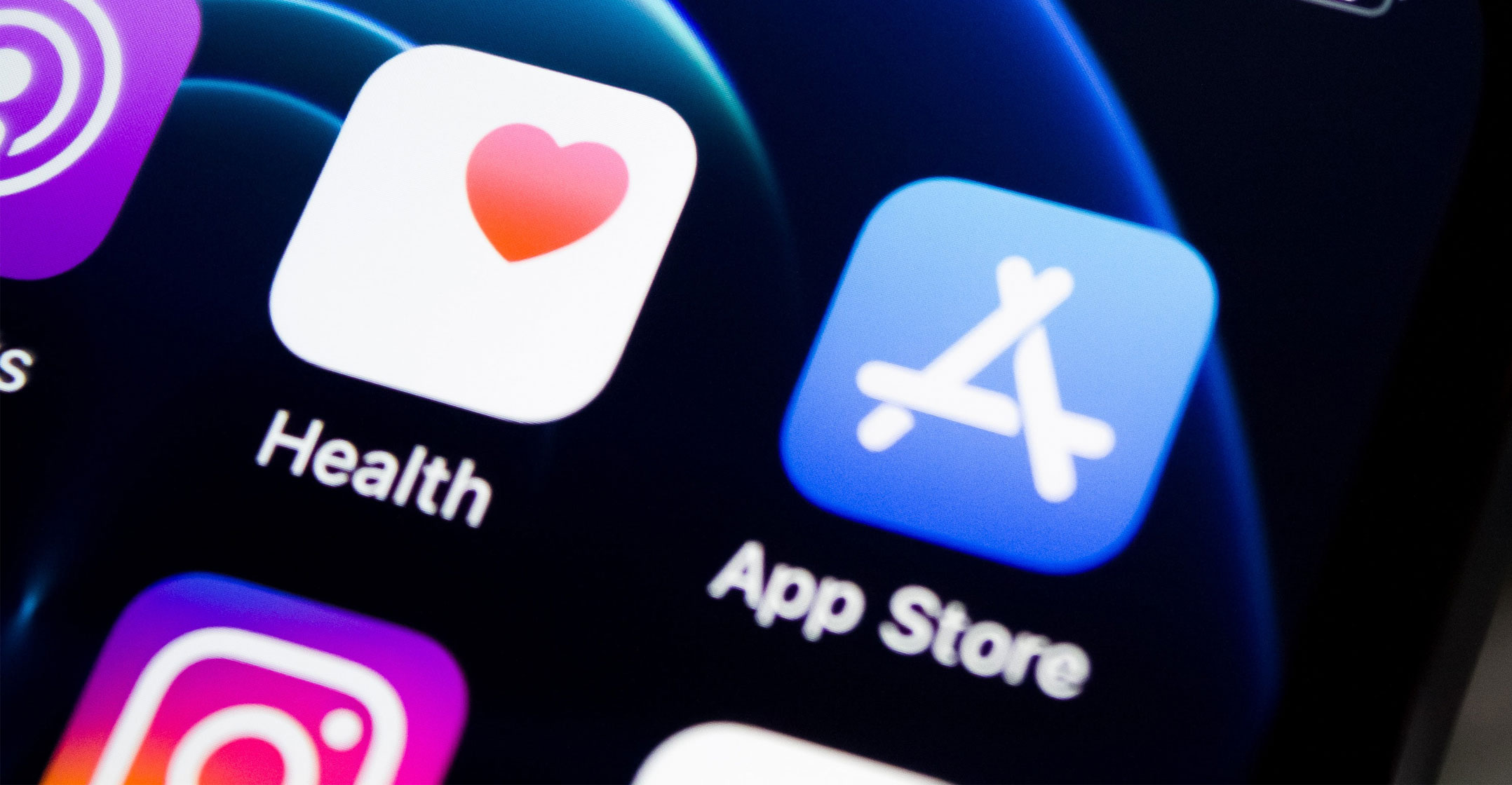
    The company also noted that a recent review of Top Free section of the App Store showed that competitors across many categories are easily accessible and popular with consumers.

    Homegrown iPhone software, such as Safari, Reminders, Mail, Notes and Podcasts, is also crucial to Apple’s fight for smartphone shoppers against Samsung Electronics and other handset manufacturers. These rivals also pre-install their own apps. Google’s Pixel smartphones ship with nearly 30 default apps, and the Android operating system comes with a suite of Google software pre-loaded. Europe’s antitrust regulator fined Google a record $4.7-billion last year for strong-arming device makers into pre-installing its Search service and Chrome browser, giving the company a leg up because users are unlikely to look for alternatives.

    There’s also a downside to giving outside developers more access: many Android phones ship with apps from wireless carriers that users often don’t want. Apple has barred these types of apps from being pre-installed on iPhones. The AT&T version of Samsung’s new Fold handset includes an app for DirectTV, while Android now comes with YouTube Music.

    While Apple Mail, Calendar and Music apps can be removed, third-party apps still can’t replace them as defaults

    Still, Apple has not allowed third-party apps to become system defaults partly to thwart the encroachment of rival software, according to one executive who used to work at the company. In an interview this year, former App Store review head Phillip Shoemaker said the “number one fear” in the early days of the iPhone and the App Store was that major third-parties like Google or Facebook would create a suite of mobile apps that would replace those built by Apple. “There is now a conflict as Apple goes into these spaces that are ripe with competition,” he said. Apple says competition is alive and well on the App Store.

    In 2016, Apple started letting iPhone users delete most of its pre-installed default apps. But while Apple Mail, Calendar and Music apps can be removed, third-party apps still can’t replace them as defaults. If a user deletes the Mail app and they go to send an e-mail, they are prompted with a message to re-download the Apple e-mail app rather than use an already-installed third-party option like Microsoft Outlook.

    Should be a choice

    Readdle, which builds iPhone productivity apps, said Apple not offering default status for third-party software degrades the user experience. “Even if you delete the Mail app, you still can’t set up a default e-mail client, so if someone wants to use Spark, Superhuman or Outlook, they should be given a choice,” Readdle marketing chief Denys Zhadanov said.

    This issue manifests itself in several important app categories, including Web browsing, e-mail and music. Similarly, competing apps in other categories, including mobile payments, coding and secondary displays, are limited by Apple keeping some of its device functionality exclusively for its own software.

    Android is more flexible, giving outside developers more access. It offers a central panel in the settings menu to change system-wide default apps for the Google voice assistant, Web browser, phone, messaging and mobile payment apps. Android also lets users choose a default music service for the Google Assistant, so that users don’t need to specify which music service to play a particular song from. In a test on a Google Pixel 3 XL, users can also set a default maps app. When accessing e-mail for the first time, any e-mail app on the device can be chosen as the default. On other Android phones, the default apps page offers additional options to choose different camera, music and photos apps.

    Consumers sometimes prefer apps from third-party developers because they are often updated more regularly than Apple’s software, and sometimes have unique functionality that Apple doesn’t offer. Apple typically only issues major updates to its pre-installed apps when it releases new versions of iOS every September. Even then, some of Apple’s apps can often go multiple years without significant changes.

    Some major app developers with several iPhone programs have begun building workarounds to set default apps within their own ecosystem. For example, an iPhone user can set the Gmail app to open all Web links in Chrome and Google Maps. Google also offers buttons known as Extensions to access its apps via other third-party apps in the iPhone’s share menu.

    Only Apple can access the API needed to build reliable apps that turn iPads into second screens for Mac computers

    Some developers blame the limitations of their iPhone apps on Apple keeping several application programming interfaces to itself. APIs are crucial connections between operating systems and developers, providing access to the data and features that apps need to work well.

    Only Apple can access the API needed to build reliable apps that turn iPads into second screens for Mac computers, according to developer Matt Ronge, who co-created Astropad and Luna Display, two apps that offer this feature. There are older APIs available, but they are inferior, making it hard for developers to compete with Sidecar, Apple’s own second-screen app, he said. Apple says it actively works to evaluate requests and feedback from developers.

    Still, Apple makes many of its APIs public. For phone and video calling apps, developers get the same incoming call interface as Apple uses. When you want to make a call, third-party apps get equal billing alongside the default iPhone calling program. The iPhone’s standard Camera app also has hundreds of competitors that can access Apple hardware, such as sensors and machine-learning tools.  — Reported by Mark Gurman, (c) 2019 Bloomberg LP

    Follow TechCentral on Google News Add TechCentral as your preferred source on Google


    Apple Google Microsoft top
    WhatsApp YouTube
    Share. Facebook Twitter LinkedIn WhatsApp Telegram Email Copy Link
    Previous ArticleSA scores poorly for WhatsApp calls on mobile: report
    Next Article Sars terminates employment of ex-IT chief

    Related Posts

    Hyperscalers ate my next computer

    Hyperscalers ate my next computer

    8 May 2026
    Alphabet closes in on Nvidia as world's most valuable company

    Alphabet closes in on Nvidia as world’s most valuable company

    6 May 2026
    More details about Apple's AI plans emerge

    More details about Apple’s AI plans emerge

    6 May 2026
    Company News
    7 key digital platforms to market your business online - Domains.co.za

    7 key digital platforms to market your business online

    14 May 2026
    In crypto, trust is the new currency - Binance South Africa's Sam Mkhize

    In crypto, trust is the new currency

    13 May 2026
    Don't miss the Telviva Tech Insights webinar

    Don’t miss the Telviva Tech Insights webinar

    13 May 2026
    Opinion
    Free calls, dead voice and Shameel Joosub's Spanish ghost - Duncan McLeod

    Free calls, dead voice and Shameel Joosub’s Spanish ghost

    22 April 2026
    The conflict of interest at the heart of PayShap's slow adoption - Cheslyn Jacobs

    The conflict of interest at the heart of PayShap’s slow adoption

    26 March 2026
    South Africa's energy future hinges on getting wheeling right - Aishah Gire

    South Africa’s energy future hinges on getting wheeling right

    10 March 2026

    Subscribe to Updates

    Get the best South African technology news and analysis delivered to your e-mail inbox every morning.

    Latest Posts
    South Africa marks a full year without load shedding

    South Africa marks a full year without load shedding

    15 May 2026
    Absa's defence against frontier AI cyberthreats: more AI - Johnson Idesoh

    Absa’s defence against frontier AI cyberthreats: more AI

    15 May 2026
    Green ID's days numbered as smart ID roll-out accelerates

    Green ID’s days numbered as smart ID roll-out accelerates

    15 May 2026
    Solly Malatsi pitches Reit overhaul to channel capital into digital infrastructure

    Malatsi pitches Reit overhaul to channel capital into digital infrastructure

    15 May 2026
    © 2009 - 2026 NewsCentral Media
    • Cookie policy (ZA)
    • TechCentral – privacy and Popia

    Type above and press Enter to search. Press Esc to cancel.

    Manage consent

    TechCentral uses cookies to enhance its offerings. Consenting to these technologies allows us to serve you better. Not consenting or withdrawing consent may adversely affect certain features and functions of the website.

    Functional Always active
    The technical storage or access is strictly necessary for the legitimate purpose of enabling the use of a specific service explicitly requested by the subscriber or user, or for the sole purpose of carrying out the transmission of a communication over an electronic communications network.
    Preferences
    The technical storage or access is necessary for the legitimate purpose of storing preferences that are not requested by the subscriber or user.
    Statistics
    The technical storage or access that is used exclusively for statistical purposes. The technical storage or access that is used exclusively for anonymous statistical purposes. Without a subpoena, voluntary compliance on the part of your Internet Service Provider, or additional records from a third party, information stored or retrieved for this purpose alone cannot usually be used to identify you.
    Marketing
    The technical storage or access is required to create user profiles to send advertising, or to track the user on a website or across several websites for similar marketing purposes.
    • Manage options
    • Manage services
    • Manage {vendor_count} vendors
    • Read more about these purposes
    View preferences
    • {title}
    • {title}
    • {title}