

Close Menu
TechCentralTechCentral

    Subscribe to the newsletter

    Get the best South African technology news and analysis delivered to your e-mail inbox every morning.

    Facebook X (Twitter) YouTube LinkedIn
    WhatsApp Facebook X (Twitter) LinkedIn YouTube
    TechCentralTechCentral
    • News
      Rowboats and solar panels: the reality of connecting rural Africa

      Rowboats and solar panels: the reality of connecting rural Africa

      12 March 2026
      DStv's high entry price is killing subscriber growth, says Canal+

      DStv’s high entry price is killing subscriber growth, says Canal+

      12 March 2026
      Illegal streaming crackdown nets arrests, convictions in Cape Town

      Illegal streaming crackdown nets arrests, convictions in Cape Town

      12 March 2026
      Vodacom claims African first with 254Mbit/s 5G uplink test

      Vodacom claims African first with 254Mbit/s 5G uplink test

      12 March 2026
      UCT astronomers uncover vast hidden supercluster behind the Milky Way

      UCT astronomers uncover vast hidden supercluster behind the Milky Way

      12 March 2026
    • World
      Musk launches Macrohard in cheeky nod to Microsoft - Elon Musk

      Musk launches Macrohard in cheeky nod to Microsoft

      12 March 2026
      Europe is building an alternative to Microsoft Office

      Europe is building an alternative to Microsoft Office

      11 March 2026
      Microsoft bets on Anthropic as it loosens ties with OpenAI

      Microsoft bets on Anthropic as it loosens ties with OpenAI

      10 March 2026
      World hit by worst oil shock since the 1970s

      World hit by worst oil shock since the 1970s

      9 March 2026
      iStore prices MacBook Neo at R11 999 in South Africa

      Apple debuts MacBook Neo to challenge Windows PCs, Chromebooks

      5 March 2026
    • In-depth
      The last generation of coders

      The last generation of coders

      18 February 2026
      Sentech is in dire straits

      Sentech is in dire straits

      10 February 2026
      How liberalisation is rewiring South Africa's power sector

      How liberalisation is rewiring South Africa’s power sector

      21 January 2026
      The top-performing South African tech shares of 2025

      The top-performing South African tech shares of 2025

      12 January 2026
      Digital authoritarianism grows as African states normalise internet blackouts

      Digital authoritarianism grows as African states normalise internet blackouts

      19 December 2025
    • TCS
      TCS | Sink or swim? Antony Makins on how AI is rewriting the rules of work

      TCS | Sink or swim? Antony Makins on how AI is rewriting the rules of work

      5 March 2026
      TCS+ | Bolt ups the ante on platform safety - Simo Kalajdzic

      TCS+ | Bolt ups the ante on platform safety

      4 March 2026
      Watts & Wheels S1E4: 'We drive an electric Uber'

      Watts & Wheels S1E4: ‘We drive an electric Uber’

      10 February 2026
      TCS+ | How Cloud On Demand is helping SA businesses succeed in the cloud - Xhenia Rhode, Dion Kalicharan

      TCS+ | Cloud On Demand and Consnet: inside a real-world AWS partner success story

      30 January 2026
      Watts & Wheels S1E4: 'We drive an electric Uber'

      Watts & Wheels S1E3: ‘BYD’s Corolla Cross challenger’

      30 January 2026
    • Opinion
      South Africa's energy future hinges on getting wheeling right - Aishah Gire

      South Africa’s energy future hinges on getting wheeling right

      10 March 2026
      Hold the doom: the case for a South African comeback - Duncan McLeod

      Apple just dropped a bomb on the Windows world

      5 March 2026
      VC's centre of gravity is shifting - and South Africa is in the frame - Alison Collier

      VC’s centre of gravity is shifting – and South Africa is in the frame

      3 March 2026
      Hold the doom: the case for a South African comeback - Duncan McLeod

      Hold the doom: the case for a South African comeback

      26 February 2026
      The AI fraud crisis your bank is not ready for - Andries Maritz

      The AI fraud crisis your bank is not ready for

      18 February 2026
    • Company Hubs
      • 1Stream
      • Africa Data Centres
      • AfriGIS
      • Altron Digital Business
      • Altron Document Solutions
      • Altron Group
      • Arctic Wolf
      • AvertITD
      • Braintree
      • CallMiner
      • CambriLearn
      • CYBER1 Solutions
      • Digicloud Africa
      • Digimune
      • Domains.co.za
      • ESET
      • Euphoria Telecom
      • HOSTAFRICA
      • Incredible Business
      • iONLINE
      • IQbusiness
      • Iris Network Systems
      • LSD Open
      • Mitel
      • NEC XON
      • Netstar
      • Network Platforms
      • Next DLP
      • Ovations
      • Paracon
      • Paratus
      • Q-KON
      • SevenC
      • SkyWire
      • Solid8 Technologies
      • Telit Cinterion
      • Tenable
      • Vertiv
      • Videri Digital
      • Vodacom Business
      • Wipro
      • Workday
      • XLink
    • Sections
      • AI and machine learning
      • Banking
      • Broadcasting and Media
      • Cloud services
      • Contact centres and CX
      • Cryptocurrencies
      • Education and skills
      • Electronics and hardware
      • Energy and sustainability
      • Enterprise software
      • Financial services
      • HealthTech
      • Information security
      • Internet and connectivity
      • Internet of Things
      • Investment
      • IT services
      • Lifestyle
      • Motoring
      • Policy and regulation
      • Public sector
      • Retail and e-commerce
      • Satellite communications
      • Science
      • SMEs and start-ups
      • Social media
      • Talent and leadership
      • Telecoms
    • Events
    • Advertise
    TechCentralTechCentral
    Home » Top » At its core, American Sniper is about white fear

    At its core, American Sniper is about white fear

    By The Conversation22 February 2015
    Twitter LinkedIn Facebook WhatsApp Email Telegram Copy Link
    News Alerts
    WhatsApp
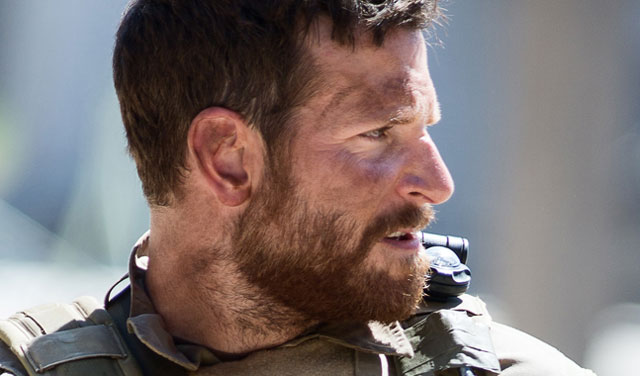
    Caption
    Bradley Cooper as Chris Kyle in American Sniper

    Warning: this review contains spoilers

    Liberal writers have been lining up for the last month and a half to decry American Sniper along comfortable and predictable ideological lines. “Macho Sludge” was the title of an Alternet piece by David Masciotra. Chris Hedges called it “a grotesque hypermasculinity that banishes compassion and pity”. Meanwhile, comedian Bill Maher characterised it as a film “about a psychopath patriot”.

    For certain, the film makes a hero out of a killer — Navy Seal sniper Chris Kyle, who was responsible for more deaths than any other sniper in US history. It romanticises his desire to protect fellow soldiers in the US war in Iraq. Perhaps worst of all, it trades on longstanding Western stereotypes of Arabs and Muslims, ranging from inscrutable to untrustworthy to profoundly sadistic.

    But straight propaganda rarely makes for compelling entertainment, so the enormous popularity of American Sniper (hauling in a mind-boggling US$306,5m in the US alone so far) suggests that it has resonated far beyond the hardcore group of ultraconservatives these reviewers would expect to embrace the film.

    Far from being a film that simply trumpets the superiority of American values and military might, American Sniper depicts white, male vulnerability, along with the tragic costs of war — at least, for Americans.

    Ambiguity over violence and its purposes — both at the societal and individual level — is a common theme in the films of American Sniper’s director and producer Clint Eastwood. Indeed, Eastwood has said that that American Sniper was meant to criticise war. As he put it, antiwar films are most powerful when they show “what [war] does to the family and the people who have to go back into civilian life like Chris Kyle did”.

    There are two Eastwoods in the popular imagination. On the one hand, there’s the apostle of violence in the Dirty Harry movies and Sergio Leone’s spaghetti westerns; on the other, there’s the man who laments violence in films such as Unforgiven and Gran Torino.
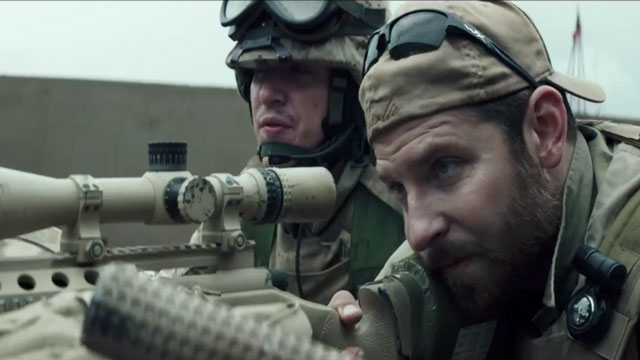
    In Clint Eastwood's American Sniper, Bradley Cooper plays US Navy Seal sniper Chris Kyle, who is said to have had the most confirmed kills in US military history
    In Clint Eastwood’s American Sniper, Bradley Cooper plays US Navy Seal sniper Chris Kyle, who is said to have had the most confirmed kills in US military history

    But as American Sniper demonstrates, those two archetypes are not so different. Eastwood does here what he’s done repeatedly in his career: he resolves his hero’s ambivalence, psychic pain and sense of structural powerlessness through masculine honour, sacrifice and vulnerability (often played out on a highly racialised landscape).

    Eastwood hit on this formula in one of the first films he directed, The Outlaw Josey Wales (1976). Josey Wales is a poor farmer in the Missouri Territory who, after his home is attacked by Union soldiers, sees no choice but to take up arms and become a Confederate guerrilla. Similarly, in American Sniper, after Chris Kyle watches the World Trade Centre collapse, he feels as though he must go to war. In doing so, both prove to be unusually good — if reluctant — marksmen and killers even as, in both films, the argument for war remains ambivalent.

    Their challenge, ultimately, is to work out a way of living peacefully in the absence of war. As Josey says to a Comanche warrior, “Dyin’ ain’t so hard for men like us … it’s living that’s hard.”

    The Outlaw Josey Wales contained anti-government sentiments that appealed to Americans on both the left and the right. Coming on the heels of the Vietnam War and Watergate, the film reflected popular disillusionment with both.

    When promoting the film, Eastwood often referenced Vietnam and Watergate, alluding to the profound distrust that Americans were starting to feel towards the federal government. But he didn’t simply appear as an opponent of the war and the Nixon administration. Eastwood was openly, angrily anti-government — in a way that not only blamed elected leaders, but also derided impoverished recipients of government assistance. As he told one audience: “Today we live in a welfare-orientated society, and people expect more from Big Daddy Government, more from Big Daddy Charity. That philosophy never got you anywhere. I worked for every crust of bread I ever ate.”

    It was the state and people of colour who ultimately violated the Confederate Josey Wales and his family, even though he makes common cause with a Cherokee against imperial expansion of the US state. It is political ambivalence that made The Outlaw Josey Wales popular with a broad public, not unlike American Sniper.

    In the beginning of American Sniper, Chris Kyle’s father tells him:

    There are three types of people in this world: sheep, wolves and sheepdogs. Some people prefer to think that evil doesn’t exist in the world. If there were ever dark on their doorsteps, they wouldn’t know how to protect themselves. Those are the sheep. Then you have predators who use violence to prey on the weak. They’re wolves. Then there are those who are blessed with the gift of aggression with an overpowering need to protect the flock. These men are the rare breed who live to confront the wolf. They are the sheep dog.

    In Eastwood’s rendering of Chris Kyle, Kyle’s need to be a killer of almost superhuman proportions makes him not sociopathic, but rather the sheepdog: someone who operates in a state of constant, anxious alertness against inevitable attack. With this characterisation, Chris Kyle’s violence is justified in advance. Perched up on a rooftop, his rifle cocked, he offers protection from the chaotic aggression of people of colour (just as the real-life Kyle told stories about picking off looters from the roof of the Superdome in the aftermath of Hurricane Katrina).
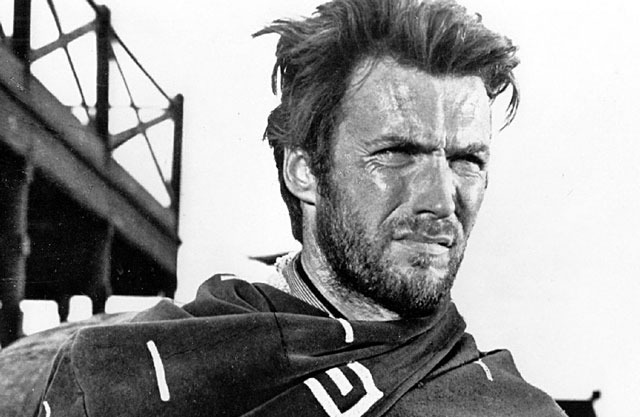
    clint-eastwood-640
    There are two Clint Eastwoods in the popular imagination, says the writer

    In Clint Eastwood’s Sudden Impact (1983), Dirty Harry Callahan, a white police officer pointing his gun at the head of a black criminal who is holding a white woman hostage at knifepoint. Referring to this scene, political theorist George Shulman has argued that this demonic love triangle between women, blacks and the state fueled the rage of white men who opposed welfare, affirmative action and the ERA in Reagan-era America.

    From Sudden Impact, to American Sniper, to the recent cases of police who have killed unarmed African Americans, we can see this logic of white fear and vulnerability at play. Think of Ferguson police officer Darren Wilson, who shot an unarmed Michael Brown 12 times.

    “The only way I can describe it,” Wilson testified, “[is] it looks like a demon… It looked like he was almost bulking up to run through the shots, like it was making him mad that I’m shooting at him.”

    Ultimately, American Sniper dispenses with conventional political ideology to portray the raw, emotional core of white vulnerability — and its connection to bloodshed in the face of triple insecurities of race, gender and empire in an unstable political era.

    But unlike Dirty Harry or Josey Wales, Chris Kyle evinces a woundedness — and, ultimately, a kind of powerlessness — that does not re-establish white male superiority.

    After all, Kyle dies — and at the hands of another veteran, no less.

    The long, final scene of the film presents actual footage from Chris Kyle’s funeral procession along Texas Interstate 35. Showing thousands of mourners on overpasses (accompanied by a beautiful, melancholy trumpet piece), it asks us to bear witness to the death of a hero. We are not asked to question or challenge the war that made him a killer, or that made him the victim of another American veteran who suffered from post-traumatic stress disorder. Rather we mourn the sheepdog, the emotionally wounded martyr.

    In his Studies in Classic American Literature, DH Lawrence wrote: “The essential American soul is hard, isolate, stoic, and a killer. It has never yet melted.” James Baldwin, offering deeper insight on the vulnerable core of this soul, held that that the monstrous violence visited by white Americans on the world is due to their having opted for safety over life.

    American Sniper’s Chris Kyle — the sheepdog, the last line of defence — serves as an exclamation point to Baldwin’s keen insight.The Conversation

    • Joseph Lowndes is associate professor of political science at the University of Oregon
    • This article was originally published on The Conversation
    Follow TechCentral on Google News Add TechCentral as your preferred source on Google


    American Sniper American Sniper review Clint Eastwood Joseph Lowndes
    WhatsApp YouTube
    Share. Facebook Twitter LinkedIn WhatsApp Telegram Email Copy Link
    Previous ArticleWBS sale moves ahead
    Next Article SA’s securocrats serious about cyberwarfare

    Related Posts

    Somewhat soggy, somewhat sweet, never bitter

    11 December 2009
    Company News
    Domains.co.za introduces complete domain protection service

    Domains.co.za introduces complete domain protection service

    12 March 2026
    How AI is changing the way we work - Angela Ho, Obsidian Systems

    How AI is changing the way we work

    12 March 2026
    Mitel launches Edge platform for mission-critical on-premises communications

    Mitel launches Edge platform for mission-critical on-premises communications

    11 March 2026
    Opinion
    South Africa's energy future hinges on getting wheeling right - Aishah Gire

    South Africa’s energy future hinges on getting wheeling right

    10 March 2026
    Hold the doom: the case for a South African comeback - Duncan McLeod

    Apple just dropped a bomb on the Windows world

    5 March 2026
    VC's centre of gravity is shifting - and South Africa is in the frame - Alison Collier

    VC’s centre of gravity is shifting – and South Africa is in the frame

    3 March 2026

    Subscribe to Updates

    Get the best South African technology news and analysis delivered to your e-mail inbox every morning.

    Latest Posts
    Rowboats and solar panels: the reality of connecting rural Africa

    Rowboats and solar panels: the reality of connecting rural Africa

    12 March 2026
    DStv's high entry price is killing subscriber growth, says Canal+

    DStv’s high entry price is killing subscriber growth, says Canal+

    12 March 2026
    Domains.co.za introduces complete domain protection service

    Domains.co.za introduces complete domain protection service

    12 March 2026
    Illegal streaming crackdown nets arrests, convictions in Cape Town

    Illegal streaming crackdown nets arrests, convictions in Cape Town

    12 March 2026
    © 2009 - 2026 NewsCentral Media
    • Cookie policy (ZA)
    • TechCentral – privacy and Popia

    Type above and press Enter to search. Press Esc to cancel.

    Manage consent

    TechCentral uses cookies to enhance its offerings. Consenting to these technologies allows us to serve you better. Not consenting or withdrawing consent may adversely affect certain features and functions of the website.

    Functional Always active
    The technical storage or access is strictly necessary for the legitimate purpose of enabling the use of a specific service explicitly requested by the subscriber or user, or for the sole purpose of carrying out the transmission of a communication over an electronic communications network.
    Preferences
    The technical storage or access is necessary for the legitimate purpose of storing preferences that are not requested by the subscriber or user.
    Statistics
    The technical storage or access that is used exclusively for statistical purposes. The technical storage or access that is used exclusively for anonymous statistical purposes. Without a subpoena, voluntary compliance on the part of your Internet Service Provider, or additional records from a third party, information stored or retrieved for this purpose alone cannot usually be used to identify you.
    Marketing
    The technical storage or access is required to create user profiles to send advertising, or to track the user on a website or across several websites for similar marketing purposes.
    • Manage options
    • Manage services
    • Manage {vendor_count} vendors
    • Read more about these purposes
    View preferences
    • {title}
    • {title}
    • {title}