

Close Menu
TechCentralTechCentral

    Subscribe to the newsletter

    Get the best South African technology news and analysis delivered to your e-mail inbox every morning.

    Facebook X (Twitter) YouTube LinkedIn
    WhatsApp Facebook X (Twitter) LinkedIn YouTube
    TechCentralTechCentral
    • News
      Big Microsoft 365 price increases coming next year

      Big Microsoft price increases coming next year

      5 December 2025
      Vodacom to take control of Safaricom in R36-billion deal - Shameel Joosub

      Vodacom to take control of Safaricom in R36-billion deal

      4 December 2025
      Black Friday goes digital in South Africa as online spending surges to record high

      Black Friday goes digital in South Africa as online spending surges to record high

      4 December 2025
      BYD takes direct aim at Toyota with launch of sub-R500 000 Sealion 5 PHEV

      BYD takes direct aim at Toyota with launch of sub-R500 000 Sealion 5 PHEV

      4 December 2025
      'Get it now': Takealot in new instant deliveries pilot

      ‘Get it now’: Takealot in new instant deliveries pilot

      4 December 2025
    • World
      Amazon and Google launch multi-cloud service for faster connectivity

      Amazon and Google launch multi-cloud service for faster connectivity

      1 December 2025
      Google makes final court plea to stop US breakup

      Google makes final court plea to stop US breakup

      21 November 2025
      Bezos unveils monster rocket: New Glenn 9x4 set to dwarf Saturn V

      Bezos unveils monster rocket: New Glenn 9×4 set to dwarf Saturn V

      21 November 2025
      Tech shares turbocharged by Nvidia's stellar earnings

      Tech shares turbocharged by stellar Nvidia earnings

      20 November 2025
      Config file blamed for Cloudflare meltdown that disrupted the web

      Config file blamed for Cloudflare meltdown that disrupted the web

      19 November 2025
    • In-depth
      Jensen Huang Nvidia

      So, will China really win the AI race?

      14 November 2025
      Valve's Linux console takes aim at Microsoft's gaming empire

      Valve’s Linux console takes aim at Microsoft’s gaming empire

      13 November 2025
      iOCO's extraordinary comeback plan - Rhys Summerton

      iOCO’s extraordinary comeback plan

      28 October 2025
      Why smart glasses keep failing - no, it's not the tech - Mark Zuckerberg

      Why smart glasses keep failing – it’s not the tech

      19 October 2025
      BYD to blanket South Africa with megawatt-scale EV charging network - Stella Li

      BYD to blanket South Africa with megawatt-scale EV charging network

      16 October 2025
    • TCS
      TCS+ | How Cloud on Demand helps partners thrive in the AWS ecosystem - Odwa Ndyaluvane and Xenia Rhode

      TCS+ | How Cloud On Demand helps partners thrive in the AWS ecosystem

      4 December 2025
      TCS | MTN Group CEO Ralph Mupita on competition, AI and the future of mobile

      TCS | Ralph Mupita on competition, AI and the future of mobile

      28 November 2025
      TCS | Dominic Cull on fixing South Africa's ICT policy bottlenecks

      TCS | Dominic Cull on fixing South Africa’s ICT policy bottlenecks

      21 November 2025
      TCS | BMW CEO Peter van Binsbergen on the future of South Africa's automotive industry

      TCS | BMW CEO Peter van Binsbergen on the future of South Africa’s automotive industry

      6 November 2025
      TCS | Why Altron is building an AI factory - Bongani Andy Mabaso

      TCS | Why Altron is building an AI factory in Johannesburg

      28 October 2025
    • Opinion
      Your data, your hardware: the DIY AI revolution is coming - Duncan McLeod

      Your data, your hardware: the DIY AI revolution is coming

      20 November 2025
      Zero Carbon Charge founder Joubert Roux

      The energy revolution South Africa can’t afford to miss

      20 November 2025
      It's time for a new approach to government IT spend in South Africa - Richard Firth

      It’s time for a new approach to government IT spend in South Africa

      19 November 2025
      How South Africa's broken Rica system fuels murder and mayhem - Farhad Khan

      How South Africa’s broken Rica system fuels murder and mayhem

      10 November 2025
      South Africa's AI data centre boom risks overloading a fragile grid - Paul Colmer

      South Africa’s AI data centre boom risks overloading a fragile grid

      30 October 2025
    • Company Hubs
      • Africa Data Centres
      • AfriGIS
      • Altron Digital Business
      • Altron Document Solutions
      • Altron Group
      • Arctic Wolf
      • AvertITD
      • Braintree
      • CallMiner
      • CambriLearn
      • CYBER1 Solutions
      • Digicloud Africa
      • Digimune
      • Domains.co.za
      • ESET
      • Euphoria Telecom
      • Incredible Business
      • iONLINE
      • IQbusiness
      • Iris Network Systems
      • LSD Open
      • NEC XON
      • Netstar
      • Network Platforms
      • Next DLP
      • Ovations
      • Paracon
      • Paratus
      • Q-KON
      • SevenC
      • SkyWire
      • Solid8 Technologies
      • Telit Cinterion
      • Tenable
      • Vertiv
      • Videri Digital
      • Vodacom Business
      • Wipro
      • Workday
      • XLink
    • Sections
      • AI and machine learning
      • Banking
      • Broadcasting and Media
      • Cloud services
      • Contact centres and CX
      • Cryptocurrencies
      • Education and skills
      • Electronics and hardware
      • Energy and sustainability
      • Enterprise software
      • Financial services
      • Information security
      • Internet and connectivity
      • Internet of Things
      • Investment
      • IT services
      • Lifestyle
      • Motoring
      • Public sector
      • Retail and e-commerce
      • Satellite communications
      • Science
      • SMEs and start-ups
      • Social media
      • Talent and leadership
      • Telecoms
    • Events
    • Advertise
    TechCentralTechCentral
    Home » Top » Avoiding Vint Cerf’s ‘digital dark age’

    Avoiding Vint Cerf’s ‘digital dark age’

    By The Conversation24 February 2015
    Twitter LinkedIn Facebook WhatsApp Email Telegram Copy Link
    News Alerts
    WhatsApp
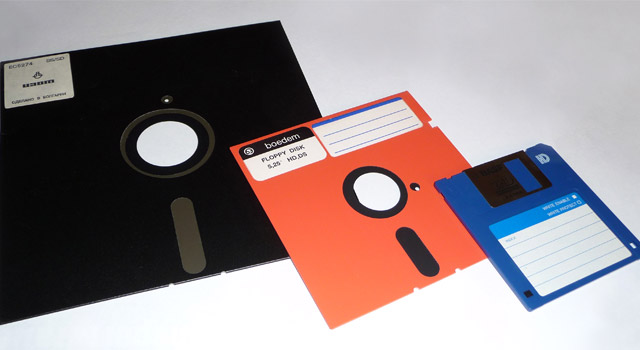
    No way of preserving data for the long term
    This is no way of preserving data for the long term

    “The Internet is forever.” So goes a saying regarding the impossibility of removing material — such as stolen photographs — permanently from the Web. Yet, paradoxically, the vast and growing digital sphere faces enormous losses. Google has been criticised for failing to ensure access to its archive of Usenet newsgroup postings that stretch back to the early 1980s. And now Web pioneer Vint Cerf has warned of a “digital dark age” that would result if decades of data — e-mails, photographs, website postings — becomes lost or unreadable.

    Millions of paper records more than 500 years old exist today. But your entire family photo collection could be lost forever with just a single hard drive failure. Stone tablets, parchment, paper, printed photographs have all lasted through the centuries. But some of our data may not. What do we do about preserving the digital deluge?

    Technical solutions already exist, but they’re not well known and relatively expensive. How much are we prepared to pay to ensure that digital stuff today is usable in the future? Because if there’s cost involved, inevitably we have to think about what has value that makes it worth keeping.

    How can we calculate that value? As an example, the holdings of the UK Data Archive include machine-readable versions of all of the General Household Surveys (GHS) carried out between 1971 and 2011. This was a continuous national survey of people living in private households conducted on an annual basis. The cost of the GHS in 2001 was reported as £1,43m, making the value of the survey and its data at least that. As it was the thirtieth year of this survey the value could be said to be higher as it was part of a series, so we could say they survey was worth more than it cost.

    The Office for National Statistics transferred the 2001 data to the UK Data Archive in 2002, where we prepared them for preservation and access and published them. Up until today, this survey data has been downloaded by 426 people working in government departments, 759 staff working in education, 1 331 students and 109 others for various uses. So benefits accrue from making the data available even after its creators have exhausted their primary value — re-use is a significant benefit from preserving data and adds value.

    But there are also cultural and intellectual and not just economic arguments for preserving data. Survey data like these and their supplementary materials provide a window to the concerns of survey designers and, by extension, society at the time. True, cultural arguments for preservation can be expressed more forcefully for artefacts such as images, films or written works than survey data. But these data stand a good chance of being included within Britain’s cultural and intellectual heritage precisely because they have been carefully managed and preserved.

    How can we improve the chances of something being preserved? Prof Michael Clanchy, writing in his seminal From Memory to Written Record, discusses how the concept of records developed. Owing to the media available to scribes in the Middle Ages, they made conscious choices between creating an ephemeral document (on a wax tablet) or a permanent record (on parchment). Today, digital media proliferates mainly because it provides the easiest means to transmit a work, and so that distinction has to a point disappeared.

    Documents and records are now both digital, but the question remains as to what should be kept for posterity and why. These are hard questions which lead to hard choices, because by their nature the cost of preserving digital materials can be much more expensive than their analogue counterparts. You can’t just put them in a box and walk away — the effort and tools required to read a 100-year-old letter is considerably less than the effort required to read a 30-year-old LocoScript popular on Amstrad computers in the 1980s.

    Most born-digital material is, with the right resources, recoverable. However, the chances of born-digital material being usable in, say, 100 years is considerably improved by actively taking steps to ensure that it will — just as medieval scribes made similar decisions in centuries past. Effective digital preservation relies, to some extent, on the activities of the creator as well as the archivist. Today those decisions include providing context, using standard and open file formats, organising material sensibly and making provision for rights issues to avoid the problem of orphan works.

    Organisations can do a better job than individuals, but require a business model and a mandate to do so. Asking someone to pay for something a long time before its value can be realised (if at all) is not an attractive business proposition. What we can do, at a minimum, is try and convince people that it is possible.

    Of course, neither creator nor archivist can fully understand how future users may approach digital information preserved over time. Social and cultural historians have, by necessity, used records for purposes for which they were not created and often in inventive and interesting ways. Historians are often helped by context, and the digital material we’re creating today needs the same contextual information to ensure its usefulness.The Conversation

    • Matthew Woollard is professor and director at the UK Data Archive and the UK Data Service at the University of Essex
    • This article was originally published on The Conversation


    Matthew Woollard
    Subscribe to TechCentral Subscribe to TechCentral
    Share. Facebook Twitter LinkedIn WhatsApp Telegram Email Copy Link
    Previous ArticleZATS: Ep 321 – ‘Finite Fs’
    Next Article SA scores from lower mobile tariffs
    Company News
    AI is not a technology problem - iqbusiness

    AI is not a technology problem – iqbusiness

    5 December 2025
    Telcos are sitting on a data gold mine - but few know what do with it - Phillip du Plessis

    Telcos are sitting on a data gold mine – but few know what do with it

    4 December 2025
    Unlock smarter computing with your surface Copilot+ PC

    Unlock smarter computing with your Surface Copilot+ PC

    4 December 2025
    Opinion
    Your data, your hardware: the DIY AI revolution is coming - Duncan McLeod

    Your data, your hardware: the DIY AI revolution is coming

    20 November 2025
    Zero Carbon Charge founder Joubert Roux

    The energy revolution South Africa can’t afford to miss

    20 November 2025
    It's time for a new approach to government IT spend in South Africa - Richard Firth

    It’s time for a new approach to government IT spend in South Africa

    19 November 2025

    Subscribe to Updates

    Get the best South African technology news and analysis delivered to your e-mail inbox every morning.

    Latest Posts
    Big Microsoft 365 price increases coming next year

    Big Microsoft price increases coming next year

    5 December 2025
    AI is not a technology problem - iqbusiness

    AI is not a technology problem – iqbusiness

    5 December 2025
    Vodacom to take control of Safaricom in R36-billion deal - Shameel Joosub

    Vodacom to take control of Safaricom in R36-billion deal

    4 December 2025
    Black Friday goes digital in South Africa as online spending surges to record high

    Black Friday goes digital in South Africa as online spending surges to record high

    4 December 2025
    © 2009 - 2025 NewsCentral Media
    • Cookie policy (ZA)
    • TechCentral – privacy and Popia

    Type above and press Enter to search. Press Esc to cancel.

    Manage consent

    TechCentral uses cookies to enhance its offerings. Consenting to these technologies allows us to serve you better. Not consenting or withdrawing consent may adversely affect certain features and functions of the website.

    Functional Always active
    The technical storage or access is strictly necessary for the legitimate purpose of enabling the use of a specific service explicitly requested by the subscriber or user, or for the sole purpose of carrying out the transmission of a communication over an electronic communications network.
    Preferences
    The technical storage or access is necessary for the legitimate purpose of storing preferences that are not requested by the subscriber or user.
    Statistics
    The technical storage or access that is used exclusively for statistical purposes. The technical storage or access that is used exclusively for anonymous statistical purposes. Without a subpoena, voluntary compliance on the part of your Internet Service Provider, or additional records from a third party, information stored or retrieved for this purpose alone cannot usually be used to identify you.
    Marketing
    The technical storage or access is required to create user profiles to send advertising, or to track the user on a website or across several websites for similar marketing purposes.
    • Manage options
    • Manage services
    • Manage {vendor_count} vendors
    • Read more about these purposes
    View preferences
    • {title}
    • {title}
    • {title}