
Close Menu
TechCentralTechCentral

    Subscribe to the newsletter

    Get the best South African technology news and analysis delivered to your e-mail inbox every morning.

    Facebook X (Twitter) YouTube LinkedIn
    WhatsApp Facebook X (Twitter) LinkedIn YouTube
    TechCentralTechCentral
    • News
      Vodacom to take control of Safaricom in R36-billion deal - Shameel Joosub

      Vodacom to take control of Safaricom in R36-billion deal

      4 December 2025
      Black Friday goes digital in South Africa as online spending surges to record high

      Black Friday goes digital in South Africa as online spending surges to record high

      4 December 2025
      BYD takes direct aim at Toyota with launch of sub-R500 000 Sealion 5 PHEV

      BYD takes direct aim at Toyota with launch of sub-R500 000 Sealion 5 PHEV

      4 December 2025
      'Get it now': Takealot in new instant deliveries pilot

      ‘Get it now’: Takealot in new instant deliveries pilot

      4 December 2025
      What South Africans searched for most in 2025

      What South Africans searched for most in 2025, according to Google

      4 December 2025
    • World
      Amazon and Google launch multi-cloud service for faster connectivity

      Amazon and Google launch multi-cloud service for faster connectivity

      1 December 2025
      Google makes final court plea to stop US breakup

      Google makes final court plea to stop US breakup

      21 November 2025
      Bezos unveils monster rocket: New Glenn 9x4 set to dwarf Saturn V

      Bezos unveils monster rocket: New Glenn 9×4 set to dwarf Saturn V

      21 November 2025
      Tech shares turbocharged by Nvidia's stellar earnings

      Tech shares turbocharged by stellar Nvidia earnings

      20 November 2025
      Config file blamed for Cloudflare meltdown that disrupted the web

      Config file blamed for Cloudflare meltdown that disrupted the web

      19 November 2025
    • In-depth
      Jensen Huang Nvidia

      So, will China really win the AI race?

      14 November 2025
      Valve's Linux console takes aim at Microsoft's gaming empire

      Valve’s Linux console takes aim at Microsoft’s gaming empire

      13 November 2025
      iOCO's extraordinary comeback plan - Rhys Summerton

      iOCO’s extraordinary comeback plan

      28 October 2025
      Why smart glasses keep failing - no, it's not the tech - Mark Zuckerberg

      Why smart glasses keep failing – it’s not the tech

      19 October 2025
      BYD to blanket South Africa with megawatt-scale EV charging network - Stella Li

      BYD to blanket South Africa with megawatt-scale EV charging network

      16 October 2025
    • TCS
      TCS+ | How Cloud on Demand helps partners thrive in the AWS ecosystem - Odwa Ndyaluvane and Xenia Rhode

      TCS+ | How Cloud On Demand helps partners thrive in the AWS ecosystem

      4 December 2025
      TCS | MTN Group CEO Ralph Mupita on competition, AI and the future of mobile

      TCS | Ralph Mupita on competition, AI and the future of mobile

      28 November 2025
      TCS | Dominic Cull on fixing South Africa's ICT policy bottlenecks

      TCS | Dominic Cull on fixing South Africa’s ICT policy bottlenecks

      21 November 2025
      TCS | BMW CEO Peter van Binsbergen on the future of South Africa's automotive industry

      TCS | BMW CEO Peter van Binsbergen on the future of South Africa’s automotive industry

      6 November 2025
      TCS | Why Altron is building an AI factory - Bongani Andy Mabaso

      TCS | Why Altron is building an AI factory in Johannesburg

      28 October 2025
    • Opinion
      Your data, your hardware: the DIY AI revolution is coming - Duncan McLeod

      Your data, your hardware: the DIY AI revolution is coming

      20 November 2025
      Zero Carbon Charge founder Joubert Roux

      The energy revolution South Africa can’t afford to miss

      20 November 2025
      It's time for a new approach to government IT spend in South Africa - Richard Firth

      It’s time for a new approach to government IT spend in South Africa

      19 November 2025
      How South Africa's broken Rica system fuels murder and mayhem - Farhad Khan

      How South Africa’s broken Rica system fuels murder and mayhem

      10 November 2025
      South Africa's AI data centre boom risks overloading a fragile grid - Paul Colmer

      South Africa’s AI data centre boom risks overloading a fragile grid

      30 October 2025
    • Company Hubs
      • Africa Data Centres
      • AfriGIS
      • Altron Digital Business
      • Altron Document Solutions
      • Altron Group
      • Arctic Wolf
      • AvertITD
      • Braintree
      • CallMiner
      • CambriLearn
      • CYBER1 Solutions
      • Digicloud Africa
      • Digimune
      • Domains.co.za
      • ESET
      • Euphoria Telecom
      • Incredible Business
      • iONLINE
      • IQbusiness
      • Iris Network Systems
      • LSD Open
      • NEC XON
      • Netstar
      • Network Platforms
      • Next DLP
      • Ovations
      • Paracon
      • Paratus
      • Q-KON
      • SevenC
      • SkyWire
      • Solid8 Technologies
      • Telit Cinterion
      • Tenable
      • Vertiv
      • Videri Digital
      • Vodacom Business
      • Wipro
      • Workday
      • XLink
    • Sections
      • AI and machine learning
      • Banking
      • Broadcasting and Media
      • Cloud services
      • Contact centres and CX
      • Cryptocurrencies
      • Education and skills
      • Electronics and hardware
      • Energy and sustainability
      • Enterprise software
      • Financial services
      • Information security
      • Internet and connectivity
      • Internet of Things
      • Investment
      • IT services
      • Lifestyle
      • Motoring
      • Public sector
      • Retail and e-commerce
      • Satellite communications
      • Science
      • SMEs and start-ups
      • Social media
      • Talent and leadership
      • Telecoms
    • Events
    • Advertise
    TechCentralTechCentral
    Home » In-depth » Banking is not about to be ‘Ubered’

    Banking is not about to be ‘Ubered’

    By The Conversation15 March 2016
    Twitter LinkedIn Facebook WhatsApp Email Telegram Copy Link
    News Alerts
    WhatsApp

    bank-640

    It’s not every day that I feel the need to fight with Martin Wolf. The Financial Times commentator is an eminently respectable analyst and most of the time makes good sense. However, last week he sort of lost the plot.

    Wolf has written that technology will do to finance what it has done to media, taxi companies and hotel rooms. The financial version of Twitter, Uber and Airbnb will soon emerge, taking on banks which are — his words — inefficient, costly, unethical, untrustworthy and prone to threaten global economic stability to boot.

    At the end of the day, said Wolf, finance is an information business. All information industries have been transformed by the Internet of everything. Ergo, so too will finance.

    The vision is enticing, holding forth the promise of a day when money will be democratised and flow without friction through the system. A day when bank scandals no longer make headlines, because banks themselves will be automated platforms owned by their users and not corporations owned by their shareholders.

    But this vision is also unrealistic. To understand why, we need to remind ourselves what the financial sector is, and what it is not.

    Contrary to Wolf’s assessment, finance is not an information business. Information is important in the industry, but not its core offering. Rather, we can think of finance as a warehousing business. Bank warehouses hold mainly deposits and loans. Fund managers hold assets such as shares and bonds. Insurance companies warehouse assets against the insurance liabilities they underwrite.

    It is often the case that financial firms are required to warehouse their products for a very long time. They need to ensure that they do so properly, and that their customers are aware of the risks the products entail. If the job is done correctly — and clearly that is not always the case — then financial firms collectively support economic activity by transforming savings into capital (and loans), providing liquidity to the market and helping households and firms mitigate their financial risks.

    In Australia, for example, this is huge business. That country’s big four banks together hold more than A$2 trillion of financial products on their balance sheets. There is more than $2 trillion of assets in the superannuation system (some of which is also held by banks). The three largest general insurers in Australia hold nearly $200bn on their balance sheets, and the list goes on.

    So much more than financial products

    Around this core set of financial products, financial companies offer a whole lot of services. These include the things we use every day such as PayPass, international money transfers, account verification, share trading and automatic billing. They also include activities we don’t like to think about so much, such as disputed credit card transactions, property damage pay-outs, security against hacking and a 30-year guarantee of a pay-out upon death.

    When fintech startups first entered the system, they focused on offering new financial services rather than products. Examples include companies like PayPal — no longer thought of as a start-up — which introduced a better, cheaper and more convenient payment platform to the US that allowed individuals and businesses to transfer payments to each other nearly anonymously.

    PayPal still relies, however, on the credit cards and bank accounts of its customers. That very traditional financial system — guaranteed by highly regulated bank balance sheets — provides confidence that the buyer has an account with funds that can be received and then held by the seller’s account.

    More recent examples of new fintech entrants in Australia include the many firms deploying blockchain technology in a distributed ledger system (CoinTree, CoinLoft) or using big data sets and algorithms to shorten loan approval times from days or weeks to less than 10 minutes (Kikka, Nimble). These are welcome innovations in the financial ecosystem, and are disrupting the way in which banks engage and interact with their customers in terms of the services they provide.

    But at either end of this transaction, more often than not, there will be a bank sitting with a balance sheet to warehouse the payment or the loan in a way that the customer can be certain that their money will be safe over time.
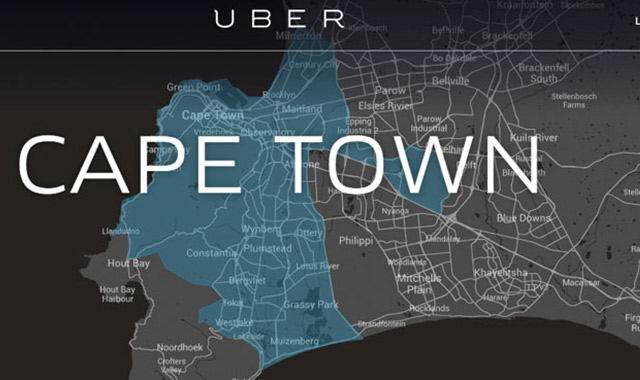
    Banking is very different to the taxi business
    Banking is very different to the taxi business

    Consider this against the model of Uber or Airbnb. These are outstandingly successful companies in the “sharing” economy, where individuals with something small and personal to sell are able to make that offer via a safe and secure platform and where customers can feel confident that the product will meet their requirements. Uber and Airbnb have successfully disrupted the old warehousing businesses model of taxi companies and hotels.

    So, why couldn’t the same be true in finance — a sharing platform that renders the financial warehouse obsolete? The main reason is in the nature of the product itself. First, financial products — money — can lose value if stored for a long period of time. That can be risky, particularly for people with low levels of financial skills or literacy. Booking a single Uber ride where the transaction will be completed in 30 minutes is low risk, even if the driver is bad or doesn’t turn up. Paying US$1 000 now to book that specific driver for 20 rides scheduled to take place in 2025 is a different kettle of fish. Will the $1 000 still buy the same number of rides and will the driver accept the currency on offer?

    Easier to steal than a hotel room

    Second, money is fungible. It is much easier to steal than, say, a hotel room. To reduce the risk of fraud and misappropriation of funds, financial regulators impose huge requirements on financial firms to verify that transactions are legitimate. This creates friction in our financial system — for example, it slows down the pace at which we might otherwise undertake financial transactions. Humans have been experimenting with the “right” level of friction in the financial system ever since the time of the Medicis, and arguably we have yet get the balance right. One thing we know, however, is that a frictionless financial system would carry huge risks. In fact, it would be downright scary.

    The closest concept to a frictionless, shared, Uber-like company in the world of banking is peer-to-peer and crowdfunding lending platforms. This is a credit-sharing model, where individual lenders can make their household savings available and attract higher rates of return on a platform that pools their funds into loans for people who are willing to borrow off that platform. One benefit of borrowing off a platform can be the potential for lower interest rates based upon a wider set of information (such as mobile phone payment history for example) that may allow borrowers to access more favourable interest rates.

    This is a welcome development, albeit with limitations. There are commercial banks in the US and UK that now utilise peer-to-peer providers to find customers in much the same way that professional real estate firms have invaded the online shared property rental market. More worryingly, predatory lending and usurious interest rates are not the sole domain of established players, and commentators are suggesting that some elements of the PtoP market in the US may be starting to resemble the subprime market of the noughties.

    The potential emergence of high-risk lending in the PtoP space — and, for that matter, evidence of unsavoury actors exploiting the anonymity of digital currency — is a reminder as to why the financial sector remains one of the most heavily regulated in the world.
    Rather than “replacing” banks or other traditional financial firms, fintech start-ups seem to be developing a symbiotic relationship, utilising the balance sheets of established players while disrupting and in many ways improving the customer interface — the ways in which people and businesses engage with their money.

    Last week, the headline from Australian bank ANZ that it was poaching Maile Carnegie from Google to run its digital banking service captured the zeitgeist. Are banks now tech companies? The answer is no, not really. But they are looking to technology to better serve their customers. And that is something we can all agree is a good thing.The Conversation

    • Amy Auster is executive director, Australian Centre for Financial Studies
    • This article was originally published on The Conversation


    Subscribe to TechCentral Subscribe to TechCentral
    Share. Facebook Twitter LinkedIn WhatsApp Telegram Email Copy Link
    Previous ArticleWhy SA is struggling to kick its coal habit
    Next Article LG launches first DAB+ smartphone

    Related Posts

    AI is not a technology problem - iqbusiness

    AI is not a technology problem – iqbusiness

    5 December 2025
    Vodacom to take control of Safaricom in R36-billion deal - Shameel Joosub

    Vodacom to take control of Safaricom in R36-billion deal

    4 December 2025
    Black Friday goes digital in South Africa as online spending surges to record high

    Black Friday goes digital in South Africa as online spending surges to record high

    4 December 2025
    Company News
    AI is not a technology problem - iqbusiness

    AI is not a technology problem – iqbusiness

    5 December 2025
    Telcos are sitting on a data gold mine - but few know what do with it - Phillip du Plessis

    Telcos are sitting on a data gold mine – but few know what do with it

    4 December 2025
    Unlock smarter computing with your surface Copilot+ PC

    Unlock smarter computing with your Surface Copilot+ PC

    4 December 2025
    Opinion
    Your data, your hardware: the DIY AI revolution is coming - Duncan McLeod

    Your data, your hardware: the DIY AI revolution is coming

    20 November 2025
    Zero Carbon Charge founder Joubert Roux

    The energy revolution South Africa can’t afford to miss

    20 November 2025
    It's time for a new approach to government IT spend in South Africa - Richard Firth

    It’s time for a new approach to government IT spend in South Africa

    19 November 2025

    Subscribe to Updates

    Get the best South African technology news and analysis delivered to your e-mail inbox every morning.

    Latest Posts
    AI is not a technology problem - iqbusiness

    AI is not a technology problem – iqbusiness

    5 December 2025
    Vodacom to take control of Safaricom in R36-billion deal - Shameel Joosub

    Vodacom to take control of Safaricom in R36-billion deal

    4 December 2025
    Black Friday goes digital in South Africa as online spending surges to record high

    Black Friday goes digital in South Africa as online spending surges to record high

    4 December 2025
    BYD takes direct aim at Toyota with launch of sub-R500 000 Sealion 5 PHEV

    BYD takes direct aim at Toyota with launch of sub-R500 000 Sealion 5 PHEV

    4 December 2025
    © 2009 - 2025 NewsCentral Media
    • Cookie policy (ZA)
    • TechCentral – privacy and Popia

    Type above and press Enter to search. Press Esc to cancel.

    Manage consent

    TechCentral uses cookies to enhance its offerings. Consenting to these technologies allows us to serve you better. Not consenting or withdrawing consent may adversely affect certain features and functions of the website.

    Functional Always active
    The technical storage or access is strictly necessary for the legitimate purpose of enabling the use of a specific service explicitly requested by the subscriber or user, or for the sole purpose of carrying out the transmission of a communication over an electronic communications network.
    Preferences
    The technical storage or access is necessary for the legitimate purpose of storing preferences that are not requested by the subscriber or user.
    Statistics
    The technical storage or access that is used exclusively for statistical purposes. The technical storage or access that is used exclusively for anonymous statistical purposes. Without a subpoena, voluntary compliance on the part of your Internet Service Provider, or additional records from a third party, information stored or retrieved for this purpose alone cannot usually be used to identify you.
    Marketing
    The technical storage or access is required to create user profiles to send advertising, or to track the user on a website or across several websites for similar marketing purposes.
    • Manage options
    • Manage services
    • Manage {vendor_count} vendors
    • Read more about these purposes
    View preferences
    • {title}
    • {title}
    • {title}