Close Menu
TechCentralTechCentral

    Subscribe to the newsletter

    Get the best South African technology news and analysis delivered to your e-mail inbox every morning.

    Facebook X (Twitter) YouTube LinkedIn
    WhatsApp Facebook X (Twitter) LinkedIn YouTube
    TechCentralTechCentral
    • News
      Every electric car you can buy in South Africa in early 2026, ranked by price

      Every electric car you can buy in South Africa in early 2026, ranked by price

      6 February 2026
      From stocks to crypto, markets reel as AI doubts grow

      From stocks to crypto, markets reel as AI doubts grow

      6 February 2026
      South Africa deepens China ties as US trade tensions escalate

      South Africa deepens China ties as US trade tensions escalate

      6 February 2026
      Big changes at Lesaka as Bank Zero deal nears completion - Lincoln Mali

      Big changes at Lesaka as Bank Zero deal nears completion

      6 February 2026
      South Africa's stablecoin silence is becoming a policy failure

      South Africa’s stablecoin silence is becoming a policy failure

      6 February 2026
    • World
      AI won't replace software, says Nvidia CEO amid market rout - Jensen Huang

      AI won’t replace software, says Nvidia CEO amid market rout

      4 February 2026
      Apple acquires audio AI start-up Q.ai

      Apple acquires audio AI start-up Q.ai

      30 January 2026
      SpaceX IPO may be largest in history

      SpaceX IPO may be largest in history

      28 January 2026
      Nvidia throws AI at the weather

      Nvidia throws AI at weather forecasting

      27 January 2026
      Debate erupts over value of in-flight Wi-Fi

      Debate erupts over value of in-flight Wi-Fi

      26 January 2026
    • In-depth
      How liberalisation is rewiring South Africa's power sector

      How liberalisation is rewiring South Africa’s power sector

      21 January 2026
      The top-performing South African tech shares of 2025

      The top-performing South African tech shares of 2025

      12 January 2026
      Digital authoritarianism grows as African states normalise internet blackouts

      Digital authoritarianism grows as African states normalise internet blackouts

      19 December 2025
      TechCentral's South African Newsmakers of 2025

      TechCentral’s South African Newsmakers of 2025

      18 December 2025
      Black Friday goes digital in South Africa as online spending surges to record high

      Black Friday goes digital in South Africa as online spending surges to record high

      4 December 2025
    • TCS
      TCS+ | How Cloud On Demand is helping SA businesses succeed in the cloud - Xhenia Rhode, Dion Kalicharan

      TCS+ | Cloud On Demand and Consnet: inside a real-world AWS partner success story

      30 January 2026
      Watts & Wheels S1E3: 'BYD's Corolla Cross challenger'

      Watts & Wheels S1E3: ‘BYD’s Corolla Cross challenger’

      30 January 2026
      Watts & Wheels S1E3: 'BYD's Corolla Cross challenger'

      Watts & Wheels S1E2: ‘China attacks, BMW digs in, Toyota’s sublime supercar’

      23 January 2026

      TCS+ | Why cybersecurity is becoming a competitive advantage for SA businesses

      20 January 2026
      Watts & Wheels S1E3: 'BYD's Corolla Cross challenger'

      Watts & Wheels: S1E1 – ‘William, Prince of Wheels’

      8 January 2026
    • Opinion
      South Africa's skills advantage is being overlooked at home - Richard Firth

      South Africa’s skills advantage is being overlooked at home

      29 January 2026
      Why Elon Musk's Starlink is a 'hard no' for me - Songezo Zibi

      Why Elon Musk’s Starlink is a ‘hard no’ for me

      26 January 2026
      South Africa's new fibre broadband battle - Duncan McLeod

      South Africa’s new fibre broadband battle

      20 January 2026
      AI moves from pilots to production in South African companies - Nazia Pillay SAP

      AI moves from pilots to production in South African companies

      20 January 2026
      South Africa's new fibre broadband battle - Duncan McLeod

      ANC’s attack on Solly Malatsi shows how BEE dogma trumps economic reality

      14 December 2025
    • Company Hubs
      • Africa Data Centres
      • AfriGIS
      • Altron Digital Business
      • Altron Document Solutions
      • Altron Group
      • Arctic Wolf
      • AvertITD
      • Braintree
      • CallMiner
      • CambriLearn
      • CYBER1 Solutions
      • Digicloud Africa
      • Digimune
      • Domains.co.za
      • ESET
      • Euphoria Telecom
      • Incredible Business
      • iONLINE
      • IQbusiness
      • Iris Network Systems
      • LSD Open
      • NEC XON
      • Netstar
      • Network Platforms
      • Next DLP
      • Ovations
      • Paracon
      • Paratus
      • Q-KON
      • SevenC
      • SkyWire
      • Solid8 Technologies
      • Telit Cinterion
      • Tenable
      • Vertiv
      • Videri Digital
      • Vodacom Business
      • Wipro
      • Workday
      • XLink
    • Sections
      • AI and machine learning
      • Banking
      • Broadcasting and Media
      • Cloud services
      • Contact centres and CX
      • Cryptocurrencies
      • Education and skills
      • Electronics and hardware
      • Energy and sustainability
      • Enterprise software
      • Financial services
      • Information security
      • Internet and connectivity
      • Internet of Things
      • Investment
      • IT services
      • Lifestyle
      • Motoring
      • Public sector
      • Retail and e-commerce
      • Satellite communications
      • Science
      • SMEs and start-ups
      • Social media
      • Talent and leadership
      • Telecoms
    • Events
    • Advertise
    TechCentralTechCentral
    Home » World » Blockchain about to revolutionise global shipping

    Blockchain about to revolutionise global shipping

    By Agency Staff19 April 2018
    Twitter LinkedIn Facebook WhatsApp Email Telegram Copy Link
    News Alerts
    WhatsApp

    Globalisation has brought the most advanced trading networks the world has seen, with the biggest, fastest vessels, robot-operated ports and vast computer databases tracking cargoes. But it all still relies on millions and millions of paper documents.

    That last throwback to 19th century trade is about to fall. AP Moeller-Maersk and other container shipping lines have teamed up with technology companies to upgrade the world’s most complex logistics network.

    The prize is a revolution in world trade on a scale not seen since the move to standard containers in the 1960s — a change that ushered in the age of globalisation. But the undertaking is as big as the potential upheaval it will cause. To make it work, dozens of shipping lines and thousands of related businesses around the world — including manufacturers, banks, insurers, brokers and port authorities — will have to work out a protocol that can integrate all the new systems onto one vast platform.

    This would be the biggest innovation in the industry since the containerisation. It basically brings more transparency and efficiency

    Should they succeed, documentation that takes days will eventually be done in minutes, much of it without the need for human input. The cost of moving goods across continents could drop dramatically, adding fresh impetus to relocate manufacturing or source materials and goods from overseas.

    “This would be the biggest innovation in the industry since the containerisation,” said Rahul Kapoor, an analyst at Bloomberg Intelligence in Singapore. “It basically brings more transparency and efficiency. The container shipping lines are coming out of their shells and playing catch-up in technology.”

    The key, as in so many other industries, from oil tankers to cryptocurrencies, is blockchain, the electronic ledger system that allows transactions to be verified autonomously. And the benefits wouldn’t be confined to shipping. Improving communications and border administration using blockchain could generate an additional $1 trillion in global trade, according to the World Economic Forum.

    APL, owned by the world’s third largest container line, CMA CGM, together with Anheuser-Busch InBev, Accenture, a European customs organisation and other companies said last month that they’ve tested a blockchain-based platform. South Korea’s Hyundai Merchant Marine held trial runs last year using a system developed with Samsung SDS.

    Paper trail

    The shipping paper trail begins when a cargo owner books space on a ship to move goods. Documents need to be filled in and approved before cargo can enter or leave a port. A single shipment can require hundreds of pages that need to be physically delivered to dozens of different agencies, banks, customs bureaus and other entities.

    In 2014, Maersk followed a refrigerated container filled with roses and avocados from Kenya to the Netherlands. The company found that almost 30 people and organisations were involved in processing the box on its journey to Europe. The shipment took about 34 days to get from the farm to the retailers, including 10 days waiting for documents to be processed. One of the critical documents went missing, only to be found later amid a pile of paper.

    “The paperwork and processes vital to global trade are also one of its biggest burdens,” according to Maersk, the world’s largest container shipping company, which has teamed up with IBM to enable real-time tracking of its cargo and documents using blockchain. “The paper trail research that Maersk did uncovered the extent of the burden that documents and processes inflict on trade and the consequences.”

    That plethora of paper processors has been one of the reasons shipping has lagged other industries in moving to electronic forms. The variety of different languages, laws and organisations involved in moving cargoes in the past made standardisation a slow process.

    Instead, the industry has relied on advances in transport technology and cargo handling to improve efficiency, with the great Clipper sailing vessels replaced by steamships and then modern oil-powered leviathans — the largest ships on the oceans. In the 1850s, it took more than three months to move chests of tea from southern China to London. Today, that journey would take about 30 days.

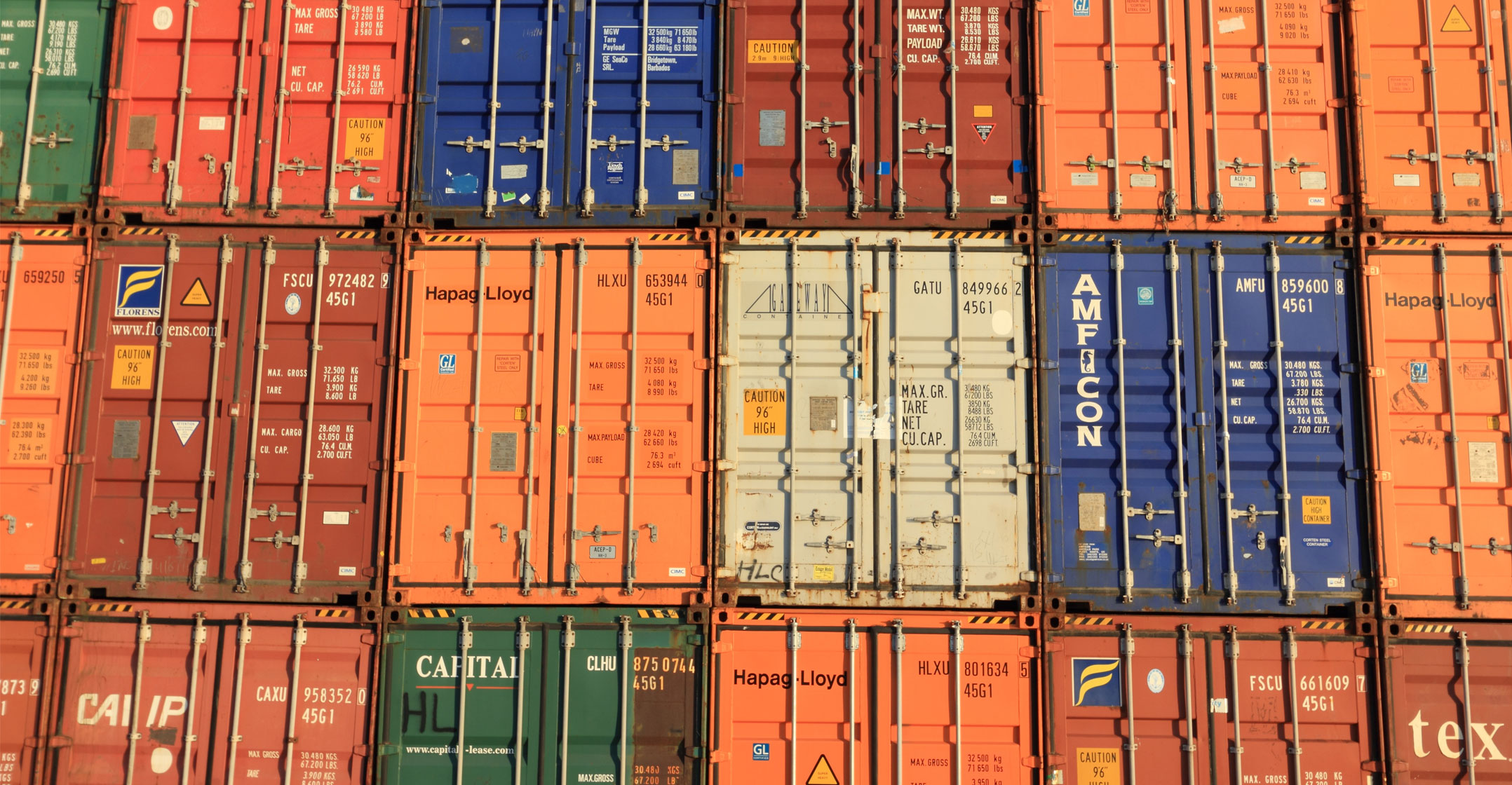
    The biggest change came in the 1960s, when the industry adopted the standard-size steel boxes in use today, replacing the wooden crates, chests and sacks that stevedores had hauled on the docks for centuries.

    Not all stakeholders are looking at deploying the same blockchain solution and platforms. This can pose as a challenge

    With these containers sometimes holding products from different suppliers, and ship cargoes sometimes ending up with thousands of customers in dozens of countries, the transition to a uniform electronic system presents major challenges.

    “Not all stakeholders are looking at deploying the same blockchain solution and platforms,” APL said in response to questions. “This can pose as a challenge if stakeholders are expected to trade via a common platform or solution.”

    And the shipping lines will also need to persuade the ports and other organisations involved in cargo trading to adopt their systems. Maersk said Singapore-based port operator PSA International and APM Terminals, based in The Hague in the Netherlands, will use its platform. APL and Accenture said they plan to pilot their product by the end of this year. Accenture said it has tested its technology with other pilot shipments that range from beer to medical supplies.

    The cost savings could be visible in the companies’ financial statements in about two years, Kapoor of Bloomberg Intelligence said.

    “Shipping needs to stop thinking about itself as this standalone middle sector,” said KD Adamson, CEO of Futurenautics Group. “It needs to start thinking about how the different elements of shipping fit into other ecosystems.”  — Reported by Kyunghee Park, (c) 2018 Bloomberg LP



    top
    WhatsApp YouTube Follow on Google News Add as preferred source on Google
    Share. Facebook Twitter LinkedIn WhatsApp Telegram Email Copy Link
    Previous ArticleFNB targets Capitec with entry-level mobile bank account
    Next Article Facebook looking to build its own silicon

    Related Posts

    18GW in unplanned breakdowns cripple Eskom

    2 November 2021

    Nersa kicks the Karpowership can down the road

    13 September 2021

    If you think South African load shedding is bad, try Zimbabwe’s

    13 September 2021
    Company News
    The skills gap is a thinking gap: why South African employers can't find problem solvers

    The skills gap is a thinking gap: why SA employers can’t find problem solvers

    6 February 2026
    Vox Kiwi Wireless: fibre-like broadband for South African homes

    Vox Kiwi Wireless: fibre-like broadband for South African homes

    5 February 2026
    NEC XON achieves an African first with full Fortinet accreditation - Ian Kruger

    NEC XON achieves an African first with full Fortinet accreditation

    5 February 2026
    Opinion
    South Africa's skills advantage is being overlooked at home - Richard Firth

    South Africa’s skills advantage is being overlooked at home

    29 January 2026
    Why Elon Musk's Starlink is a 'hard no' for me - Songezo Zibi

    Why Elon Musk’s Starlink is a ‘hard no’ for me

    26 January 2026
    South Africa's new fibre broadband battle - Duncan McLeod

    South Africa’s new fibre broadband battle

    20 January 2026

    Subscribe to Updates

    Get the best South African technology news and analysis delivered to your e-mail inbox every morning.

    Latest Posts
    Every electric car you can buy in South Africa in early 2026, ranked by price

    Every electric car you can buy in South Africa in early 2026, ranked by price

    6 February 2026
    From stocks to crypto, markets reel as AI doubts grow

    From stocks to crypto, markets reel as AI doubts grow

    6 February 2026
    South Africa deepens China ties as US trade tensions escalate

    South Africa deepens China ties as US trade tensions escalate

    6 February 2026
    The skills gap is a thinking gap: why South African employers can't find problem solvers

    The skills gap is a thinking gap: why SA employers can’t find problem solvers

    6 February 2026
    © 2009 - 2026 NewsCentral Media
    • Cookie policy (ZA)
    • TechCentral – privacy and Popia

    Type above and press Enter to search. Press Esc to cancel.

    Manage consent

    TechCentral uses cookies to enhance its offerings. Consenting to these technologies allows us to serve you better. Not consenting or withdrawing consent may adversely affect certain features and functions of the website.

    Functional Always active
    The technical storage or access is strictly necessary for the legitimate purpose of enabling the use of a specific service explicitly requested by the subscriber or user, or for the sole purpose of carrying out the transmission of a communication over an electronic communications network.
    Preferences
    The technical storage or access is necessary for the legitimate purpose of storing preferences that are not requested by the subscriber or user.
    Statistics
    The technical storage or access that is used exclusively for statistical purposes. The technical storage or access that is used exclusively for anonymous statistical purposes. Without a subpoena, voluntary compliance on the part of your Internet Service Provider, or additional records from a third party, information stored or retrieved for this purpose alone cannot usually be used to identify you.
    Marketing
    The technical storage or access is required to create user profiles to send advertising, or to track the user on a website or across several websites for similar marketing purposes.
    • Manage options
    • Manage services
    • Manage {vendor_count} vendors
    • Read more about these purposes
    View preferences
    • {title}
    • {title}
    • {title}