 China’s ByteDance created one of the country’s rare global hits with the addictive video app TikTok. Now the US government is threatening that success as officials in Washington warn the service presents a security threat.
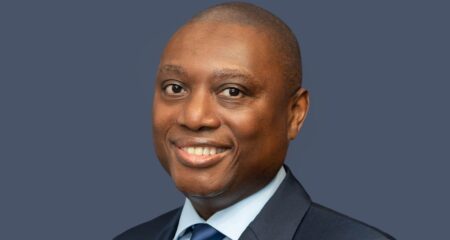
The Beijing-based company, led by CEO Yiming Zhang, is weighing a range of options to address those concerns, according to people familiar with the matter. Advisors are pitching everything from an aggressive legal defence and operational separation for TikTok to sale of a majority stake, said the people, asking not to be named because the discussions are private. Selling more than half the business could raise substantially more than US$10-billion, one person said.
ByteDance would prefer to maintain full control of the business if possible, given its soaring popularity and profit potential. It may argue that TikTok presents no security threat or that the US has no legal standing over the business.
ByteDance has considered selling a chunk of TikTok if necessary to protect the value of the business, the people said. The most likely sale scenario would be for the company to sell a majority stake to financial investors, one person said. Earlier investors include SoftBank Group, Sequoia Capital and Susquehanna International Group.
Talks about TikTok’s future are preliminary and no formal decision has been made, the people said. A representative for the company said there have been no discussions about any partial or full sale of TikTok. “These rumours are completely meritless,” the representative said.
ByteDance has emerged as the world’s most valuable start-up on the explosive popularity of TikTok, where more than a billion, largely young, users share short clips of lip-syncing and dance videos. But with escalating tensions between China and the US, American politicians have warned the app represents a national security threat and urged an investigation. The Committee on Foreign Investment in the US, better known as CFIUS, has begun a review of ByteDance’s 2017 purchase of the business that became TikTok, Bloomberg News reported in November.
‘Deeply concerned’
“I remain deeply concerned that any platform or application that has Chinese ownership or direct links to China, such as TikTok, can be used as a tool by the Chinese Communist Party to extend its authoritarian censorship of information outside China’s borders and amass data on millions of unsuspecting users,” senator Marco Rubio wrote in a letter to the treasury department, which chairs CFIUS.
TikTok has said it strives to create a safe and positive online environment. “We are not influenced by any foreign government, including the Chinese government; TikTok does not operate in China, nor do we have any intention of doing so in the future,” the company said in October.
It’s not clear whether US regulators have authority in the case. CFIUS historically has reviewed foreign companies’ investments in the US, including acquisitions, for national security concerns, but Musical.ly, the app that would become TikTok, was a Shanghai-headquartered business when ByteDance purchased it two years ago for about $800-million. ByteDance didn’t seek CFIUS approval at the time, perhaps because it was a deal between two Chinese companies, even though the app had a substantial following in the US.
 ByteDance may have a legal argument that the US committee doesn’t have legal standing to force a divestiture, like it did in the case of the gay dating app Grindr. Beijing Kunlun Tech Co acquired the US app in January 2018, but in May CFIUS required the company to sell off the service no later than June 2020 because it could give foreigners access to sensitive data. ByteDance may also be able to argue that its data is less sensitive or that all operations and data could be quarantined in a separate US subsidiary. The Trump administration broadened CFIUS’s powers last year.
The advantage to selling a stake quickly would be to reap profits from TikTok’s success now, rather than risk a deterioration in value if the US takes punitive measures. ByteDance prefers financial backers rather than strategic investors, like a music or media company, to avoid conflicts in the future, one person said.
Though ByteDance has become synonymous with TikTok, its business goes well beyond the music-orientated video app. Zhang founded the business in 2012 as a laboratory for the country’s leading artificial intelligence engineers to come up with innovative products. His first hit was a news app called Jinri Toutiao, or Today’s Headlines, which spawned dozens of copycats from rivals.
In China, Zhang is the rare entrepreneur who has kept his independence from the country’s twin giants, Alibaba Group and Tencent. Indeed, he built a reputation for raiding China’s established tech giants for talent, paying premium compensation of $1-million or more a year.
Toutiao became a model for how ByteDance could generate profit, creating a mobile experience that’s a cross between Google and Facebook for advertisers. The start-up reached a valuation of $75-billion last year, according to CB Insights.
TikTok was one of the most popular apps in the world last year with 656 million installs, according to Sensor Tower. It’s on track to surpass that total this year, the research firm said. The US has had about 124 million downloads.
In October, senate minority leader Chuck Schumer of New York and Republican senator Tom Cotton of Arkansas wrote to the acting director of National Intelligence, referring to TikTok as a “potential counterintelligence threat we cannot ignore”. They said their concerns include the safety of data on the platform and possible foreign influence campaigns in the US.
‘One knock on the door’
“A company compromised by the Chinese Communist Party knows where your children are, knows what they look like, what their voices sound like, what they’re watching and what they share with each other,” senator Josh Hawley said during a hearing in November. “All it takes is one knock on the door of their parent company, based in China, from a Communist Party official, for that data to be transferred to the Chinese government’s hands whenever they need it.”
Even Facebook CEO Mark Zuckerberg called out TikTok, citing privacy and freedom of speech concerns after the Chinese firm allegedly scrubbed its platform of politically sensitive content, such as videos of pro-democracy protests in Hong Kong. TikTok, which has denied those allegations, announced in October it has formed a team that includes two former US lawmakers to review its content moderation policy. It also said US data is beyond the reach of China’s government.
“We store all TikTok US user data in the United States, with backup redundancy in Singapore,” it said in the October post. “Our data centres are located entirely outside of China, and none of our data is subject to Chinese law.”
 ByteDance has been building TikTok’s operations in the US, hiring hundreds and establishing American data centres to quarantine local information. It has also begun bringing on lobbyists in Washington, seeking to hire a US policy chief and retaining the public affairs and lobbying firm Monument Advocacy.
Zhang has hoped ByteDance would be able to retain full control of TikTok by splitting off the US business operationally, one person said. But it’s not clear whether that will be enough given the continued political pressure.
“While it tried to run its overseas operation independently from its China operation, given that the overseas operation is eventually held by the same entity that owns the China operation, it is hard to say that it is completely out of influence from the Chinese government,” said Ke Yan, a Singapore-based analyst with Aequitas Research.
A TikTok stake sale would likely push back any initial public offering for ByteDance. The company has considered an IPO in the US or Hong Kong as soon as next year, but still needs to beef up its international operations and hire a chief financial officer. Selling equity in TikTok would provide the parent company with more cash and delay the need for a capital fundraising.
Zhang and his investors would likely see benefits in buying more time for an IPO, given the US-China trade war and recent stumbles by high profile start-ups such as WeWork and Uber Technologies. SoftBank is a backer of all three companies and just engineered a bailout for WeWork. — Reported by Zheping Huang, Lulu Yilun Chen and Peter Elstrom, with assistance from Manuel Baigorri, (c) 2019 Bloomberg LP