Close Menu
TechCentralTechCentral

    Subscribe to the newsletter

    Get the best South African technology news and analysis delivered to your e-mail inbox every morning.

    Facebook X (Twitter) YouTube LinkedIn
    WhatsApp Facebook X (Twitter) LinkedIn YouTube
    TechCentralTechCentral
    • News
      Cell C cleans up its balance sheet but faces tough trading reality

      Cell C cleans up its balance sheet but faces tough trading reality

      13 February 2026
      MVNO business shines in Cell C's first post-listing results - Jorges Mendes

      MVNO business shines in Cell C’s first post-listing results

      13 February 2026
      Ramaphosa presses ahead with Eskom break-up - Cyril Ramaphosa

      Ramaphosa presses ahead with Eskom break-up

      13 February 2026
      The key technology takeaways from Ramaphosa's 2026 Sona - Cyril Ramaphosa

      The key technology takeaways from Ramaphosa’s 2026 Sona

      13 February 2026
      Toyota SA CEO: NEV inaction will cost South Africa its motoring industry - Andrew Kirby

      Toyota SA CEO: NEV inaction will cost South Africa its motoring industry

      12 February 2026
    • World
      Russia bans WhatsApp

      Russia bans WhatsApp

      12 February 2026
      EU regulators take aim at WhatsApp

      EU regulators take aim at WhatsApp

      9 February 2026
      Musk hits brakes on Mars mission

      Musk hits brakes on Mars mission

      9 February 2026
      Crypto firm accidentally sends R700-billion in bitcoin to its users

      Crypto firm accidentally sends R700-billion in bitcoin to its users

      8 February 2026
      AI won't replace software, says Nvidia CEO amid market rout - Jensen Huang

      AI won’t replace software, says Nvidia CEO amid market rout

      4 February 2026
    • In-depth
      How liberalisation is rewiring South Africa's power sector

      How liberalisation is rewiring South Africa’s power sector

      21 January 2026
      The top-performing South African tech shares of 2025

      The top-performing South African tech shares of 2025

      12 January 2026
      Digital authoritarianism grows as African states normalise internet blackouts

      Digital authoritarianism grows as African states normalise internet blackouts

      19 December 2025
      TechCentral's South African Newsmakers of 2025

      TechCentral’s South African Newsmakers of 2025

      18 December 2025
      Black Friday goes digital in South Africa as online spending surges to record high

      Black Friday goes digital in South Africa as online spending surges to record high

      4 December 2025
    • TCS
      Watts & Wheels S1E4: 'We drive an electric Uber'

      Watts & Wheels S1E4: ‘We drive an electric Uber’

      10 February 2026
      TCS+ | How Cloud On Demand is helping SA businesses succeed in the cloud - Xhenia Rhode, Dion Kalicharan

      TCS+ | Cloud On Demand and Consnet: inside a real-world AWS partner success story

      30 January 2026
      Watts & Wheels S1E4: 'We drive an electric Uber'

      Watts & Wheels S1E3: ‘BYD’s Corolla Cross challenger’

      30 January 2026
      Watts & Wheels S1E4: 'We drive an electric Uber'

      Watts & Wheels S1E2: ‘China attacks, BMW digs in, Toyota’s sublime supercar’

      23 January 2026

      TCS+ | Why cybersecurity is becoming a competitive advantage for SA businesses

      20 January 2026
    • Opinion
      A million reasons monopolies don't work - Duncan McLeod

      A million reasons monopolies don’t work

      10 February 2026
      Eskom unbundling U-turn threatens to undo hard-won electricity gains - Busi Mavuso

      Eskom unbundling U-turn threatens to undo hard-won electricity gains

      9 February 2026
      South Africa's skills advantage is being overlooked at home - Richard Firth

      South Africa’s skills advantage is being overlooked at home

      29 January 2026
      Why Elon Musk's Starlink is a 'hard no' for me - Songezo Zibi

      Why Elon Musk’s Starlink is a ‘hard no’ for me

      26 January 2026
      A million reasons monopolies don't work - Duncan McLeod

      South Africa’s new fibre broadband battle

      20 January 2026
    • Company Hubs
      • Africa Data Centres
      • AfriGIS
      • Altron Digital Business
      • Altron Document Solutions
      • Altron Group
      • Arctic Wolf
      • AvertITD
      • Braintree
      • CallMiner
      • CambriLearn
      • CYBER1 Solutions
      • Digicloud Africa
      • Digimune
      • Domains.co.za
      • ESET
      • Euphoria Telecom
      • Incredible Business
      • iONLINE
      • IQbusiness
      • Iris Network Systems
      • LSD Open
      • Mitel
      • NEC XON
      • Netstar
      • Network Platforms
      • Next DLP
      • Ovations
      • Paracon
      • Paratus
      • Q-KON
      • SevenC
      • SkyWire
      • Solid8 Technologies
      • Telit Cinterion
      • Tenable
      • Vertiv
      • Videri Digital
      • Vodacom Business
      • Wipro
      • Workday
      • XLink
    • Sections
      • AI and machine learning
      • Banking
      • Broadcasting and Media
      • Cloud services
      • Contact centres and CX
      • Cryptocurrencies
      • Education and skills
      • Electronics and hardware
      • Energy and sustainability
      • Enterprise software
      • Financial services
      • Information security
      • Internet and connectivity
      • Internet of Things
      • Investment
      • IT services
      • Lifestyle
      • Motoring
      • Public sector
      • Retail and e-commerce
      • Satellite communications
      • Science
      • SMEs and start-ups
      • Social media
      • Talent and leadership
      • Telecoms
    • Events
    • Advertise
    TechCentralTechCentral
    Home » Current affairs » Can the ANC survive its current crisis?

    Can the ANC survive its current crisis?

    By The Conversation9 April 2016
    Twitter LinkedIn Facebook WhatsApp Email Telegram Copy Link
    News Alerts
    WhatsApp
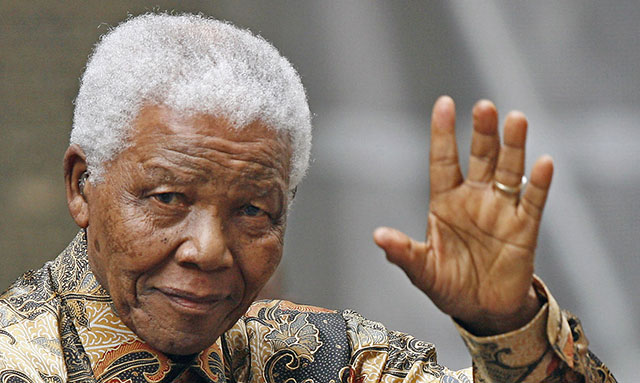
    Former President Nelson Mandela represented a different era in the ANC
    Former President Nelson Mandela represented a different era in the ANC, before the arrival of the tenderpreneurs and careerists

    The ANC has gone through episodic crises in its century of existence. Right now, the media and commentators are seized with debate about whether or not it is in a crisis and whether it is as serious as any other.

    The party has survived tumultuous times, including a major split that resulted in the Pan Africanist Congress (PAC) in 1959 as well as friction in the post-democratic era. The present crisis differs because the party has governed the country for more than 20 years and faces different threats such as “clientelism” and patronage.

    History should serve as a sombre warning to the ANC of what might happen if it does not manage leadership rivalries within its ranks. Though the party has won between 62% and 68% of votes cast in every election since 1994, history does not guarantee any party predestination to govern for ever.

    During the 1920s, ANC members were demoralised and dropped out when their delegations to the British government and Conference of Versailles elicited no support for their opposition to the Natives Land Act and other racist laws. So big was the loss in numbers that the Industrial and Commercial Workers Union overtook it as the largest black organisation in the country.

    But by the end of the 1920s, the ANC had again became the largest as administrative incompetence and corruption, as much as repression, saw the union collapse.

    The publication of the draft Native Trust and Land Bill in the mid-1930s saw the ANC’s fortunes again take a turn for the worse. The All-African Convention (AAC) swiftly grew in size to outnumber the ANC. The rump of the AAC constituted itself in the 1940s as the Non-European Unity Movement. But it alienated and expelled many in repeated dogmatic schisms.

    During the 1940s, the ANC rejuvenated itself organisationally when it founded its Youth League. It also got a new lease on life ideologically with its African Claims manifesto. It peaked with 100 000 members during the Defiance Campaign of 1952. After that, state repression started to gradually grind it down, though it remained the largest black political party.

    A split over ideology and tactics saw the formation of the PAC in 1959. This split was perhaps the most serious in ANC history; the PAC attracted crowds perhaps one-third the size of those attending ANC meetings, until both parties suffered banning and repression in the 1960 state of emergency.

    During the harrowing decades of underground and exile, only a few small cells of ANC and PAC veterans managed to evade and survive within South Africa. In exile, the ANC maintained pre-eminence, with solidarity support from communist parties, Western socialists, trade unions and liberals, plus the Soviet-led bloc of communist governments, and many African governments.
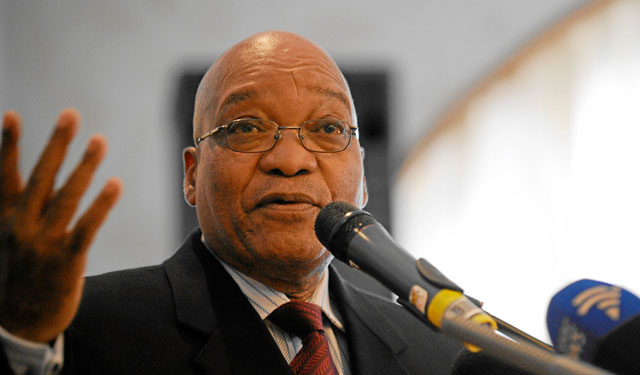
    President Jacob Zuma ... no Mandela
    President Jacob Zuma … no Mandela

    By contrast, the banned PAC enjoyed US support for only four years, then Chinese support on a small scale. It also won some support from a minority of black power activists abroad, some tiny Western Trotskyist circles, and only Libya and Iran.

    Exile is usually a harsh environment for political parties, few of whom can remain viable longer than a decade or two. The ANC, however, remained organisationally intact.

    By contrast, the PAC was torn asunder in exile by perpetual splits and schisms until it lost any organisational coherence. The Black Consciousness Movement of Azania in exile remained marginal in number.

    Democracy heralds a sea change

    Democracy resulted in a sea change in the ANC. Before its unbanning in 1990, no one could expect any personal gain from joining the ANC. To the contrary, members could only expect victimisation at work, harassment from the municipal authorities, and banning orders, house arrest, detention without trial, torture or assassination. As a result, only highly committed idealists joined the ANC.

    Today, the heroic epoch is over. Many idealists remain, but they sit alongside careerists, floor crossers and tenderpreneurs — businesspeople who enrich themselves through government tenders, often dubiously. In short, the ANC has become a normal political party. One consequence is that splits and factions are today less connected with policy ideals than with the system of patronage and clientelism.

    Mobilisation is usually aimed not at any policy, but at getting a patron elected who will try to divert tenders to political donors. This is at its bloodiest in municipal politics, where assassinations number in the dozens, especially in the KwaZulu-Natal province. The stakes are indeed high. A ward councillor is paid 10 times the average wage in a township.

    For example, policy divergence was an escalating symptom, rather than the cause, of the expulsion of Julius Malema from the ANC Youth League and his subsequent launch of the Economic Freedom Fighters. The mutual accusations of corruption between Zuma and the pre-expulsion Malema underscore the stark facts of their political patronage networks.

    The current media debate on the probability of Zuma not lasting out his term of office as ANC leader until 2017 and as South African president until 2019 is flawed by one methodological failing. South Africans and their media are prone to either canonise a politician as a saint, such as Nelson Mandela, or demonise him as a monster, as Zuma. Leadership counts big time, but such over-personalisation of politics fails to spot the system of patronage and clientelism.

    Removing Zuma and replacing him with another is unlikely to replace the spoils system of inappropriate cadre deployment, nor tenderpreneurship. Replacing Thabo Mbeki with Zuma did not end these problems. Zuma’s successor as president will be hard-pressed to face down those demanding payback.

    What now?

    So far, Zuma’s supporters have outvoted his rivals in the ANC, and often purged them from executive structures. One consequence could be larger numbers of abstentions from former ANC voters in the coming municipal elections.

    ANC membership numbers tend to peak during election campaigns (up to one million) and slump between elections. Whether this pattern will hold remains to be seen. The ANC nevertheless remains by far the largest political party in the country. There is not yet any sign of a seismic shift in this balance of power.

    On the other hand, there are flashing red lights that the ANC party bureaucracy has deteriorated to the level where it battles to perform even the simplest of everyday tasks, such as issuing membership cards. And there is growing anger at appointments driven by cronyism that lead to dysfunctional schools and sewage treatment plants.The Conversation

    • Keith Gottschalk is political scientist, University of the Western Cape
    • This article was originally published on The Conversation


    WhatsApp YouTube Follow on Google News Add as preferred source on Google
    Share. Facebook Twitter LinkedIn WhatsApp Telegram Email Copy Link
    Previous ArticleDiscovery has a world-beater on its hands
    Next Article Mounting calls for Zuma’s head

    Related Posts

    Cell C cleans up its balance sheet but faces tough trading reality

    Cell C cleans up its balance sheet but faces tough trading reality

    13 February 2026
    MVNO business shines in Cell C's first post-listing results - Jorges Mendes

    MVNO business shines in Cell C’s first post-listing results

    13 February 2026
    Ramaphosa presses ahead with Eskom break-up - Cyril Ramaphosa

    Ramaphosa presses ahead with Eskom break-up

    13 February 2026
    Company News
    Cell C delivers maiden results with growth momentum, financial flexibility - Jorges Mendes

    Cell C delivers maiden results with growth momentum, financial flexibility

    13 February 2026
    Start-up king joins Paratus Rwanda - Innocent Mutimura

    Start-up king joins Paratus Rwanda

    13 February 2026
    How NEC XON tackled identity risk for a major telco - Michael de Neuilly Rice

    How NEC XON tackled identity risk for a major telco

    11 February 2026
    Opinion
    A million reasons monopolies don't work - Duncan McLeod

    A million reasons monopolies don’t work

    10 February 2026
    Eskom unbundling U-turn threatens to undo hard-won electricity gains - Busi Mavuso

    Eskom unbundling U-turn threatens to undo hard-won electricity gains

    9 February 2026
    South Africa's skills advantage is being overlooked at home - Richard Firth

    South Africa’s skills advantage is being overlooked at home

    29 January 2026

    Subscribe to Updates

    Get the best South African technology news and analysis delivered to your e-mail inbox every morning.

    Latest Posts
    Cell C cleans up its balance sheet but faces tough trading reality

    Cell C cleans up its balance sheet but faces tough trading reality

    13 February 2026
    MVNO business shines in Cell C's first post-listing results - Jorges Mendes

    MVNO business shines in Cell C’s first post-listing results

    13 February 2026
    Ramaphosa presses ahead with Eskom break-up - Cyril Ramaphosa

    Ramaphosa presses ahead with Eskom break-up

    13 February 2026
    The key technology takeaways from Ramaphosa's 2026 Sona - Cyril Ramaphosa

    The key technology takeaways from Ramaphosa’s 2026 Sona

    13 February 2026
    © 2009 - 2026 NewsCentral Media
    • Cookie policy (ZA)
    • TechCentral – privacy and Popia

    Type above and press Enter to search. Press Esc to cancel.

    Manage consent

    TechCentral uses cookies to enhance its offerings. Consenting to these technologies allows us to serve you better. Not consenting or withdrawing consent may adversely affect certain features and functions of the website.

    Functional Always active
    The technical storage or access is strictly necessary for the legitimate purpose of enabling the use of a specific service explicitly requested by the subscriber or user, or for the sole purpose of carrying out the transmission of a communication over an electronic communications network.
    Preferences
    The technical storage or access is necessary for the legitimate purpose of storing preferences that are not requested by the subscriber or user.
    Statistics
    The technical storage or access that is used exclusively for statistical purposes. The technical storage or access that is used exclusively for anonymous statistical purposes. Without a subpoena, voluntary compliance on the part of your Internet Service Provider, or additional records from a third party, information stored or retrieved for this purpose alone cannot usually be used to identify you.
    Marketing
    The technical storage or access is required to create user profiles to send advertising, or to track the user on a website or across several websites for similar marketing purposes.
    • Manage options
    • Manage services
    • Manage {vendor_count} vendors
    • Read more about these purposes
    View preferences
    • {title}
    • {title}
    • {title}