Close Menu
TechCentralTechCentral

    Subscribe to the newsletter

    Get the best South African technology news and analysis delivered to your e-mail inbox every morning.

    Facebook X (Twitter) YouTube LinkedIn
    WhatsApp Facebook X (Twitter) LinkedIn YouTube
    TechCentralTechCentral
    • News
      Censorship-resistant internet from space - Spacecoin

      Censorship-resistant internet from space

      12 February 2026
      Chip shortage hits PCs as AI swallows the world's memory supply

      Chip shortage hits PCs as AI swallows the world’s memory supply

      12 February 2026
      Here comes the next wave of Chinese AI models

      Here comes the next wave of Chinese AI models

      12 February 2026
      Jumia aims for profit as it fends off Chinese rivals

      Jumia aims for profit as it fends off Chinese rivals

      12 February 2026
      Broadband Infraco in limbo

      Broadband Infraco in limbo

      11 February 2026
    • World
      Russia bans WhatsApp

      Russia bans WhatsApp

      12 February 2026
      EU regulators take aim at WhatsApp

      EU regulators take aim at WhatsApp

      9 February 2026
      Musk hits brakes on Mars mission

      Musk hits brakes on Mars mission

      9 February 2026
      Crypto firm accidentally sends R700-billion in bitcoin to its users

      Crypto firm accidentally sends R700-billion in bitcoin to its users

      8 February 2026
      AI won't replace software, says Nvidia CEO amid market rout - Jensen Huang

      AI won’t replace software, says Nvidia CEO amid market rout

      4 February 2026
    • In-depth
      How liberalisation is rewiring South Africa's power sector

      How liberalisation is rewiring South Africa’s power sector

      21 January 2026
      The top-performing South African tech shares of 2025

      The top-performing South African tech shares of 2025

      12 January 2026
      Digital authoritarianism grows as African states normalise internet blackouts

      Digital authoritarianism grows as African states normalise internet blackouts

      19 December 2025
      TechCentral's South African Newsmakers of 2025

      TechCentral’s South African Newsmakers of 2025

      18 December 2025
      Black Friday goes digital in South Africa as online spending surges to record high

      Black Friday goes digital in South Africa as online spending surges to record high

      4 December 2025
    • TCS
      Watts & Wheels S1E4: 'We drive an electric Uber'

      Watts & Wheels S1E4: ‘We drive an electric Uber’

      10 February 2026
      TCS+ | How Cloud On Demand is helping SA businesses succeed in the cloud - Xhenia Rhode, Dion Kalicharan

      TCS+ | Cloud On Demand and Consnet: inside a real-world AWS partner success story

      30 January 2026
      Watts & Wheels S1E4: 'We drive an electric Uber'

      Watts & Wheels S1E3: ‘BYD’s Corolla Cross challenger’

      30 January 2026
      Watts & Wheels S1E4: 'We drive an electric Uber'

      Watts & Wheels S1E2: ‘China attacks, BMW digs in, Toyota’s sublime supercar’

      23 January 2026

      TCS+ | Why cybersecurity is becoming a competitive advantage for SA businesses

      20 January 2026
    • Opinion
      South Africa's skills advantage is being overlooked at home - Richard Firth

      South Africa’s skills advantage is being overlooked at home

      29 January 2026
      Why Elon Musk's Starlink is a 'hard no' for me - Songezo Zibi

      Why Elon Musk’s Starlink is a ‘hard no’ for me

      26 January 2026
      South Africa's new fibre broadband battle - Duncan McLeod

      South Africa’s new fibre broadband battle

      20 January 2026
      AI moves from pilots to production in South African companies - Nazia Pillay SAP

      AI moves from pilots to production in South African companies

      20 January 2026
      South Africa's new fibre broadband battle - Duncan McLeod

      ANC’s attack on Solly Malatsi shows how BEE dogma trumps economic reality

      14 December 2025
    • Company Hubs
      • Africa Data Centres
      • AfriGIS
      • Altron Digital Business
      • Altron Document Solutions
      • Altron Group
      • Arctic Wolf
      • AvertITD
      • Braintree
      • CallMiner
      • CambriLearn
      • CYBER1 Solutions
      • Digicloud Africa
      • Digimune
      • Domains.co.za
      • ESET
      • Euphoria Telecom
      • Incredible Business
      • iONLINE
      • IQbusiness
      • Iris Network Systems
      • LSD Open
      • Mitel
      • NEC XON
      • Netstar
      • Network Platforms
      • Next DLP
      • Ovations
      • Paracon
      • Paratus
      • Q-KON
      • SevenC
      • SkyWire
      • Solid8 Technologies
      • Telit Cinterion
      • Tenable
      • Vertiv
      • Videri Digital
      • Vodacom Business
      • Wipro
      • Workday
      • XLink
    • Sections
      • AI and machine learning
      • Banking
      • Broadcasting and Media
      • Cloud services
      • Contact centres and CX
      • Cryptocurrencies
      • Education and skills
      • Electronics and hardware
      • Energy and sustainability
      • Enterprise software
      • Financial services
      • Information security
      • Internet and connectivity
      • Internet of Things
      • Investment
      • IT services
      • Lifestyle
      • Motoring
      • Public sector
      • Retail and e-commerce
      • Satellite communications
      • Science
      • SMEs and start-ups
      • Social media
      • Talent and leadership
      • Telecoms
    • Events
    • Advertise
    TechCentralTechCentral
    Home » Sections » Internet and connectivity » Censorship-resistant internet from space

    Censorship-resistant internet from space

    A decentralised satellite network that no entity controls could make it more difficult for authoritarian governments to impose complete internet blackouts.
    By Nkosinathi Ndlovu12 February 2026
    Twitter LinkedIn Facebook WhatsApp Email Telegram Copy Link
    News Alerts
    WhatsApp
    Censorship-resistant internet from space - Spacecoin
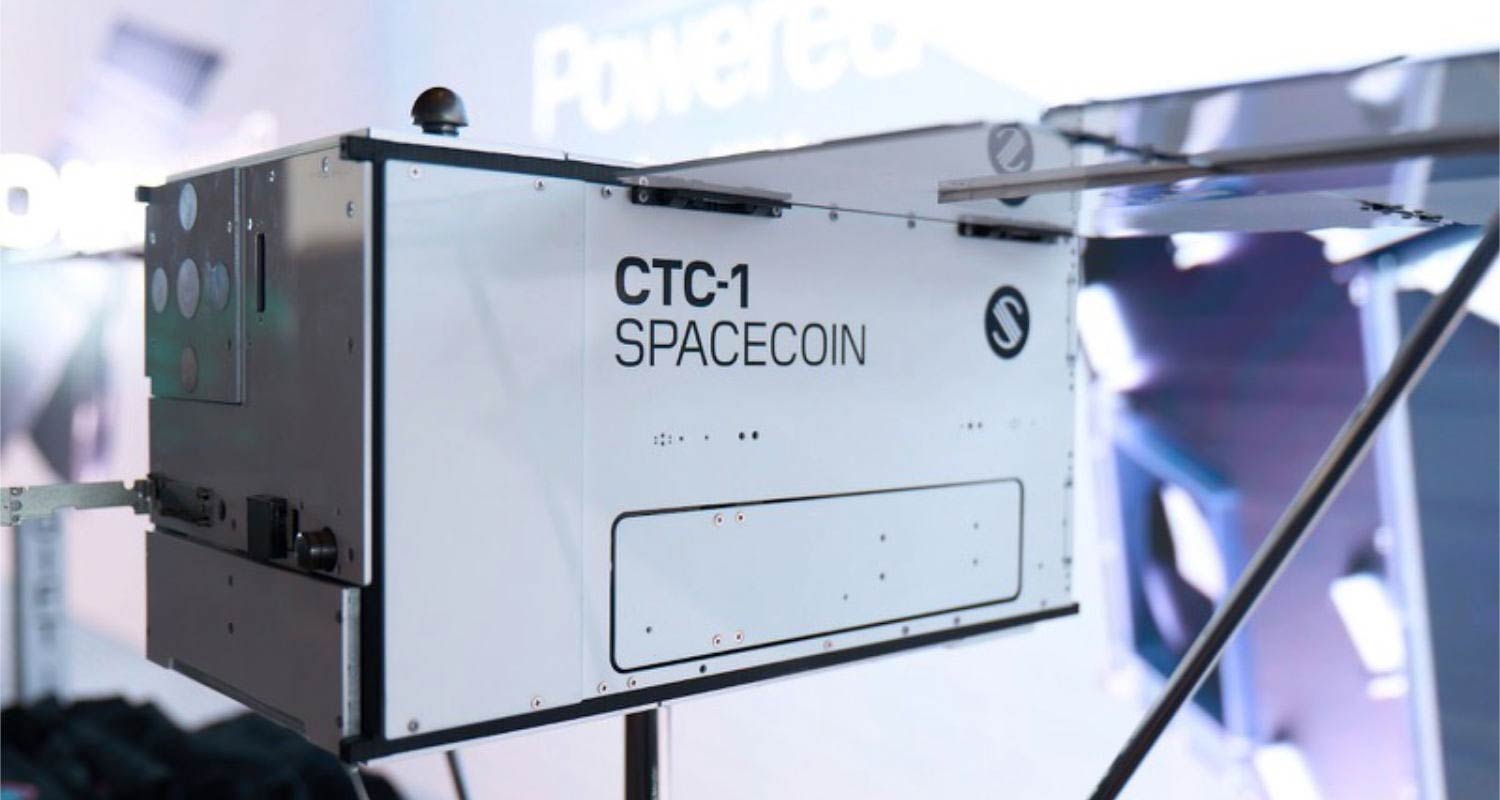
    Spacecoin’s CTC-1 nanosatellite

    Internet shutdowns have become a tool for subversion in times of unrest. So far in 2026, Iran and Uganda both enforced severe internet blackouts to stifle dissent. Iran’s near-total shutdown masked a violent crackdown on inflation protests, while Uganda blocked access during its general election.

    Now US outfit Spacecoin is working on a decentralised low-Earth orbit (LEO) satellite network that isn’t – and can’t – be controlled by a single entity and where user access cannot be blocked. Spacecoin recently signed an agreement with the Midnight Foundation aimed at building a blockchain-based, peer-to-peer messaging system on top of Spacecoin’s decentralised satellite network to ensure secure communications.

    “The collaboration will investigate how programmable, cryptographic privacy can be applied to messaging systems operating beyond traditional internet infrastructure, eliminating both content surveillance and metadata collection while reducing reliance on centralised networks that can be monitored, censored or shut down,” Spacecoin and Midnight Foundation said in a statement earlier this month.

    The Space token – the company’s own cryptocurrency – serves as the network’s economic engine

    Spacecoin is a decentralised physical infrastructure network that combines blockchain technology with a constellation of low-Earth orbit (LEO) nanosatellites. The Space token – the company’s own cryptocurrency – serves as the network’s economic engine, allowing users and internet service providers to purchase data for connectivity. Since parts of the network can be owned by different operators, excess capacity is sold to others in the network using Space tokens.

    Spacecoin was founded by Carnegie Mellon University alumnus Tae Oh. Oh founded Spacecoin parent company Gluwa in 2012, which also houses the cryptocurrency lending platform Creditcoin, founded in 2017.

    Decentralised satellite networks are based on the same cellphone towers in space concept fuelling the direct-to-mobile push by LEO satellite network operators such as SpaceX’s Starlink and Amazon Leo. A key difference is that Spacecoin plans to use a fleet of much smaller – and therefore cheaper – nanosatellites that can be built and deployed by any individual, government or corporation to add to the network.

    Direct to mobile

    Their use of direct-to-mobile technology also reduces the need for expensive ground stations. However, communities can come together and build local and regional ground stations to enhance network connectivity should they choose to.

    “Spacecoin’s network will operate with minimal reliance on ground stations through inter-satellite links, which allow our satellites to exchange data directly with each other in space,” said Spacecoin.

    In 2024, Spacecoin launched the CTC-0 nanosatellite to test its decentralised architecture. A second nanosatellite, CTC-1, was launched in November 2025. CTC-1 was built in collaboration with Near Space Launch and launched with Arrow Science and Technology.

    Read: Kuiper no more: Amazon Leo steps up to challenge Musk’s Starlink

    Jens Langenhorst, vice chairman of the Wireless Access Providers’ Association, said that while the technology shows a lot of promise, devices capable of receiving direct-to-device transmissions “may still be a long way away”.

    Even so, decentralised satellite networks hold the promise of being a boon where privacy is paramount. Populations going through periods of civil unrest could, in theory, also be shielded from forced internet shutdowns by governments wanting to subvert protest action. Access to decentralised networks is “permissionless”, meaning no single entity can restrict access to the network.

    Spacecoin founder Tae Oh
    Spacecoin founder Tae Oh

    These benefits are, however, counterbalanced by drawbacks like those seen in the cryptocurrency space where the same tools that allow for greater freedom and anonymous transactions are exploited by criminals.

    “How do you judge who is good and who is evil in a hidden network? Freedom requires perspective; protestors may urgently need to get their messages and videos to the world to hear their plight while their government may perceive it as an attack on their sovereignty, national security and maintaining social order. Neither is wrong from their own perspective,” said Langenhorst.

    Like any network, Spacecoin’s decentralised offering will have to acquire operating and spectrum licences before commencing operations in any jurisdiction. When asked by TechCentral if governments may be discouraged to grant these licences to decentralised network operators where control is limited, Spacecoin said its discussions with regulatory authorities centre on benefits such as enhanced network security and resilience that governments could use to their advantage.

    It provides a reliable communications backbone that ensures economic and social continuity during a crisis

    “We show governments that our network’s resilience is a powerful asset for them. Along with being censorship-resistant, a decentralised network is also resistant to disruptions from natural disasters, cyberattacks on critical infrastructure or technical glitches. It provides a robust and reliable communications backbone that ensures economic and social continuity during a crisis,” said Spacecoin.

    Spacecoin aims to target rural connectivity and plans to use internet-of-things technology to serve precision agriculture and maritime use cases. Commercial deployments are planned for later in 2026, with markets such as Kenya, Cambodia, Nigeria and Indonesia expected to be among the first to get access to the service.

    Read: Mupita: LEO satellites here to stay – but rules must keep up

    “The power of our decentralised, permissionless network is that any satellite operator meeting our technical standards can join and provide coverage. This fundamentally changes the deployment model from a monolithic, centrally owned constellation to a collaborative, open ecosystem. Our strategy is to expand region by region, validating performance in orbit, and allowing the network to grow organically as more operators join,” said Spacecoin.  – © 2026 NewsCentral Media

    Get breaking news from TechCentral on WhatsApp. Sign up here.



    Amazon Leo Midnight Foundation Spacecoin Starlink Tae Oh
    WhatsApp YouTube Follow on Google News Add as preferred source on Google
    Share. Facebook Twitter LinkedIn WhatsApp Telegram Email Copy Link
    Previous ArticleChip shortage hits PCs as AI swallows the world’s memory supply
    Next Article Russia bans WhatsApp

    Related Posts

    Musk hits brakes on Mars mission

    Musk hits brakes on Mars mission

    9 February 2026
    Starlink considers building its own phone - Elon Musk

    Starlink considers building its own phone

    5 February 2026
    Starlink updates privacy policy to allow consumer data to train AI

    Privacy alarm as SpaceX opens Starlink user data to AI models

    2 February 2026
    Company News
    How NEC XON tackled identity risk for a major telco - Michael de Neuilly Rice

    How NEC XON tackled identity risk for a major telco

    11 February 2026

    Why Acer is the strategic choice for South Africa’s educational future

    11 February 2026
    Fyndae is building Africa's human verification layer for community security and collaboration

    Fyndae wants to turn lost-item recovery into Africa’s trust infrastructure

    11 February 2026
    Opinion
    South Africa's skills advantage is being overlooked at home - Richard Firth

    South Africa’s skills advantage is being overlooked at home

    29 January 2026
    Why Elon Musk's Starlink is a 'hard no' for me - Songezo Zibi

    Why Elon Musk’s Starlink is a ‘hard no’ for me

    26 January 2026
    South Africa's new fibre broadband battle - Duncan McLeod

    South Africa’s new fibre broadband battle

    20 January 2026

    Subscribe to Updates

    Get the best South African technology news and analysis delivered to your e-mail inbox every morning.

    Latest Posts
    Russia bans WhatsApp

    Russia bans WhatsApp

    12 February 2026
    Censorship-resistant internet from space - Spacecoin

    Censorship-resistant internet from space

    12 February 2026
    Chip shortage hits PCs as AI swallows the world's memory supply

    Chip shortage hits PCs as AI swallows the world’s memory supply

    12 February 2026
    Here comes the next wave of Chinese AI models

    Here comes the next wave of Chinese AI models

    12 February 2026
    © 2009 - 2026 NewsCentral Media
    • Cookie policy (ZA)
    • TechCentral – privacy and Popia

    Type above and press Enter to search. Press Esc to cancel.

    Manage consent

    TechCentral uses cookies to enhance its offerings. Consenting to these technologies allows us to serve you better. Not consenting or withdrawing consent may adversely affect certain features and functions of the website.

    Functional Always active
    The technical storage or access is strictly necessary for the legitimate purpose of enabling the use of a specific service explicitly requested by the subscriber or user, or for the sole purpose of carrying out the transmission of a communication over an electronic communications network.
    Preferences
    The technical storage or access is necessary for the legitimate purpose of storing preferences that are not requested by the subscriber or user.
    Statistics
    The technical storage or access that is used exclusively for statistical purposes. The technical storage or access that is used exclusively for anonymous statistical purposes. Without a subpoena, voluntary compliance on the part of your Internet Service Provider, or additional records from a third party, information stored or retrieved for this purpose alone cannot usually be used to identify you.
    Marketing
    The technical storage or access is required to create user profiles to send advertising, or to track the user on a website or across several websites for similar marketing purposes.
    • Manage options
    • Manage services
    • Manage {vendor_count} vendors
    • Read more about these purposes
    View preferences
    • {title}
    • {title}
    • {title}