 Africa’s network operators need to make a New Year’s resolution that they will work to make their data cheaper for their users and improve the quality of their networks.
Data creates significant revenue challenges for Africa’s mobile operators, and they must be prepared to meet them head-on. There are five things that need to be done.
All operators, but mobile operators in particular, live off of a share of African users’ disposable income. At the top of the income pyramid, the richer of Africa’s middle classes have almost as much disposable income as their European or American counterparts. They look for both price and quality and are the first to seek out the operator providing quality of service.
At the bottom of the income pyramid, African mobile users have a much more limited and less guaranteed disposable income. If Karanja or Jane spend more on voice calls, they will spend less on something else. But also if they spend more on data services or SMS, they will spend less on voice calls. Price is the dominant factor in choosing an operator, but quality gets a look in if there is any choice.
Price is not simply what you pay for data — whether on a monthly or a metered basis — but also how long it lasts for you. One comment I keep hearing across African countries is that 4G/LTE “goes too fast”. What people mean is they get to use video for the first time and before they know it all their data’s gone.
The African workaround for this problem is to use fast new data services to download movies and TV series and swop these with other people on hard drives. This pricing disincentive makes no sense at all: data capacities and pricing need to allow users to feel entirely comfortable that they won’t run out of bandwidth. And this is both a pricing and a network assumption for a successful data future in Africa.
The burning question, then, is how this kind of cheaper data delivery can be achieved. Here are five things that could bring it about.
Shared Infrastructure
There have been a number of interesting operator consortia and third-party operators over the past three years, but the momentum seems to have faltered. Regulators have increasingly insisted that it should happen but have not always followed through.
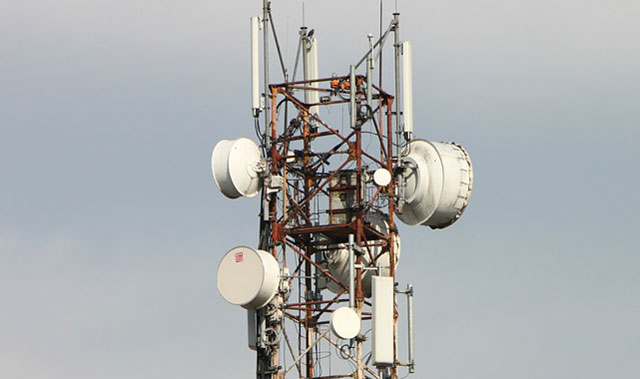
The sharing of masts through companies like Helios Towers, IHS and American Tower Corp seems largely like a passive takeover of existing resources: none of these companies are singing a song about how they might continue to improve operator network costs in the future.
Pragmatically, infrastructure sharing makes most sense for those players who are not number one in terms of market share. However, this gives considerable scope for other operators to discuss the shared operation of wholesale networks.
As a third-party operator, Liquid Africa has made huge strides in extending the reach of its networks. But aside from a few much smaller players, it stands alone. Wholesale networks offering commodity prices can make sense. But they have to be operated by people who understand they are in the business of attracting a growing volume, not simply rationing artificial shortage.
Government and donors still have a role to play, particularly in smaller countries where the argument for rolling out data networks is much less compelling. In some countries, the choice is still between having a government-owned incumbent telecoms operator as a large-scale employment creation scheme or actually forcing change so that data is delivered at utility prices. Sadly, too many African countries lack the vision to know how cheap data can transform their economies.
Accelerate LTE roll-out
At the moment, 4G/LTE looks like being the future of high-speed data delivery in Africa. If that’s the case, then everything needs to be done to bring it about as quickly as possible. There’s a business case for fixed broadband, but it won’t be for everyone.
Governments and regulators need to get on top of the digital transition in broadcasting in the next 12 months and start delivering the spectrum that will accelerate network efficiencies. Refarming existing spectrum will not produce this effect.
Network planners are looking at potential LTE roll-outs with a great deal of anxiety. They require far better provisioned data links than are currently available. They also know that the applications it encourages — watching video and taking part in conference calls — will soon ramp up data demand.
Early returns show that high-end consumers use far more data when it’s available. Imagine what that would be like if we didn’t ration by price, they say to themselves. This is the wrong attitude if the long-term aim is a future of data revenues. The primary objective must be to get the network ready for more users to use far more data.
Wider Wi-Fi coverage
Wi-Fi coverage is the other magic ingredient that will make LTE work well. It’s a cheap technology that’s been around for years and its customer devices are the cheapest on the market.
African countries have made enormous strides in rolling out Wi-Fi coverage, but the momentum has begun to stall. The Wi-Fi initiative from Google in Kenya has made a positive contribution but has not really been a game changer.
Wi-Fi hotspots are not by themselves particularly profitable, but where they exist, they nearly always drive data volumes and consumer use. Instead of seeing them as a series of islands, African cities need to view providing continuous Wi-Fi coverage as a strategic objective for delivering services. A whole range of public and private services can be delivered more effectively in this way: you might not have Internet at home but you should be able to find coverage nearby.

It’s frustrating when companies (particularly hotels) insist that different devices (laptops, tablets or smartphones) accessing the Wi-Fi network should be paid for separately. Cheap Mi-Fi devices (which will increasingly become available) will mean multiple users can access a mobile Wi-Fi hot-spot, in the car or in the home.
Electricity transmission to base stations
In a document submitted to the Nigerian regulator a few years back, MTN said that 12% of its operating expenditures were the cost of buying diesel. The total cost of delivering power to base stations is far higher.
It includes the obvious things like having to manage a huge fleet of tankers but also includes the less obvious costs of fuel fraud, which are significant. Indeed, one Nigerian operator complained that “area boys” were using cranes to steal the base station generators.
If African operators are to exert a downward pressure on costs, this has to be one area where they can make significant progress. No one underestimates the challenges it poses, but were the initial challenges of setting up many of those base stations any less daunting?
As with infrastructure, operators need to work together to address this issue, particularly if governments and regulators do not. The increasing pressure on operators over quality of service (often leading to relatively small fines on operators) will not be solved by protesting that government is partly to blame for things like not providing reliable power.
Operators need to be on the front-foot with proposals. A joint electricity distribution company between operators that can work together would be a good start. A favoured position (as national infrastructure) with the power generation companies would also be helpful.
In remoter places, they need to encourage small-scale power suppliers, where they become “anchor tenants”. Surplus power can be sold locally to others. This vision needs to go beyond simply offering free charging points at the base station fence. If there is electricity, data use will follow in time.
New business models
None of the above will happen if everyone involved looks at the future through the rear-view mirror. There will have to be new business models that help give birth to Africa’s data future.
Two examples will suffice. Example one: when it comes to selling LTE spectrum to operators, governments and regulators see big revenues. One senior civil servant I spoke to told me that he looked to European auction prices for LTE spectrum and saw plentiful revenues. Sadly, the larger the price operators pay for LTE spectrum, the more they will have to charge customers for providing this service. Mobile operators are not a goose that simply keeps laying golden eggs. The higher the price for this service, the less people will use it.
To be really transformative, governments and regulators should charge only an administrative fee for LTE spectrum but make it conditional on extensive coverage roll-out. This is unlikely to happen, though, as governments and regulators are addicted to taxes and licence fees. However, why not offer “administrative fee-only” spectrum for use in areas currently not covered or poorly covered?
Example two: satellite operators have lost a considerable amount of backhaul business since the arrival of terrestrial fibre networks. Prices for this kind of wholesale satellite bandwidth have come down, but not enough. Satellite bandwidth for remote base stations is still the largest cost of operating them. Satellite broadband in Africa remains priced as an elite product.
Medium earth orbit satellite operator 03B offers “almost fibre” satellite prices, but hobbles its business model with the need for an expensive base station to deliver the cheaper bandwidth.
Let’s go back to basics. When Sat-3 subsea fibre capacity was US$12 500 per megabit per second, the demand for it was far lower than it was for the same bandwidth priced in the low hundreds of dollars. Price elasticity must deliver larger volumes.
The cul de sac that satellite operators find themselves in is that the remote oil rigs or mines will pay top dollar for bandwidth, but the surrounding villages will only pay bottom dollar. Satellite operators need to get beyond warming rhetoric and experiment with offering low prices for remote areas to see what demand might be out there.
All of the above depends on operators understanding that the expensive North American-designed smartphone they hold in their hand will not be the same as the smartphone the majority of African users will be buying. Smartphones are already becoming commodity items at prices that can be afforded by almost all users. Every African user is a smartphone user should be the marketing approach.
- Russell Southwood is head of Balancing Act Africa