For years, retail strategy debates have asked whether online commerce will replace physical stores. Minesh Manga, executive for enterprise and retail at NEC XON, who has spent two decades working at the intersection of retail and technology, said that debate is increasingly outdated. The real shift under way is not the replacement of bricks-and-mortar retail, but its digitisation.
“The narrative used to be online versus bricks and mortar,” he said. “But what we’re seeing now is that stores are becoming digitally connected environments that enhance the customer experience rather than compete with it.”
This shift towards the connected store is emerging as one of the most important trends shaping retail globally.
From price tags to digital infrastructure
One of the most visible signs of this transformation is the rise of electronic shelf labels (ESLs) – digital price tags that connect products, inventory and pricing systems to retailers’ broader technology platforms. What began as a pricing automation tool has evolved into something far more strategic.
“Electronic labels are no longer just about changing prices,” said Manga. “They connect the product, the shelf and the customer in ways that allow retailers to deliver much richer information and services.”
Many modern ESL systems now incorporate technologies such as near-field communication, allowing customers to tap a label with their smartphone to access detailed product information, promotions or loyalty programmes. The technology is also becoming integral to retail logistics, especially as online ordering and rapid delivery services expand.
The rise of hybrid retail
Services like Checkers Sixty60 illustrate how quickly consumer behaviour has evolved. Rapid grocery delivery has become a major convenience driver, but it has not eliminated the need for physical stores. Instead, retailers are building hybrid operating models.
“Convenience items like groceries are increasingly ordered online,” Manga explained. “But when customers are buying appliances, clothing or electronics, they still want to go to a store, see the product, touch it, and talk to someone.”
This hybrid behaviour is consistent with global research. According to McKinsey & Company, more than 70% of retail purchases still involve a physical store at some point in the customer journey, even when the initial search begins online. In other words, the store is not disappearing – it is becoming a digitally enabled environment that complements online channels.

The operational revolution inside stores
Digitisation is not only changing the customer experience. It is also reshaping how retailers operate. Online fulfilment services require employees – often called “pickers” – to move quickly through stores locating products for delivery orders. Technologies such as digital shelf labels and location guidance systems can dramatically reduce the time required to find items.
“Speed and accuracy are everything in delivery fulfilment,” Manga said. “If pickers can locate products faster and avoid mistakes, the entire operation becomes more efficient.”
In some markets, retailers are going further by introducing “dark stores” – warehouses designed exclusively for online order fulfilment rather than customer browsing. These facilities, already common in parts of Europe, allow retailers to process orders faster while keeping traditional stores focused on customer experience.
Research from Deloitte suggests that retailers investing in digitally enabled fulfilment systems can reduce order processing times by up to 40%, a critical advantage in the increasingly competitive rapid-delivery market.
Why physical stores still matter
Despite the rise of e-commerce, many retailers remain committed to physical expansion. New shopping centres continue to be built in many markets, reflecting an enduring reality: stores still drive discovery, impulse purchases and cross-selling in ways that online platforms struggle to replicate.
“When someone goes into a store to buy bread and milk, they often leave with half a trolley,” Manga said. “That kind of spontaneous purchasing is far harder to replicate online.”
There is also a social dimension to in-store shopping that digital channels cannot fully replace. Physical retail spaces provide interaction, advice and community – experiences that remain highly valued by many consumers, such as retired people or home-based knowledge workers.
The next phase of retail innovation
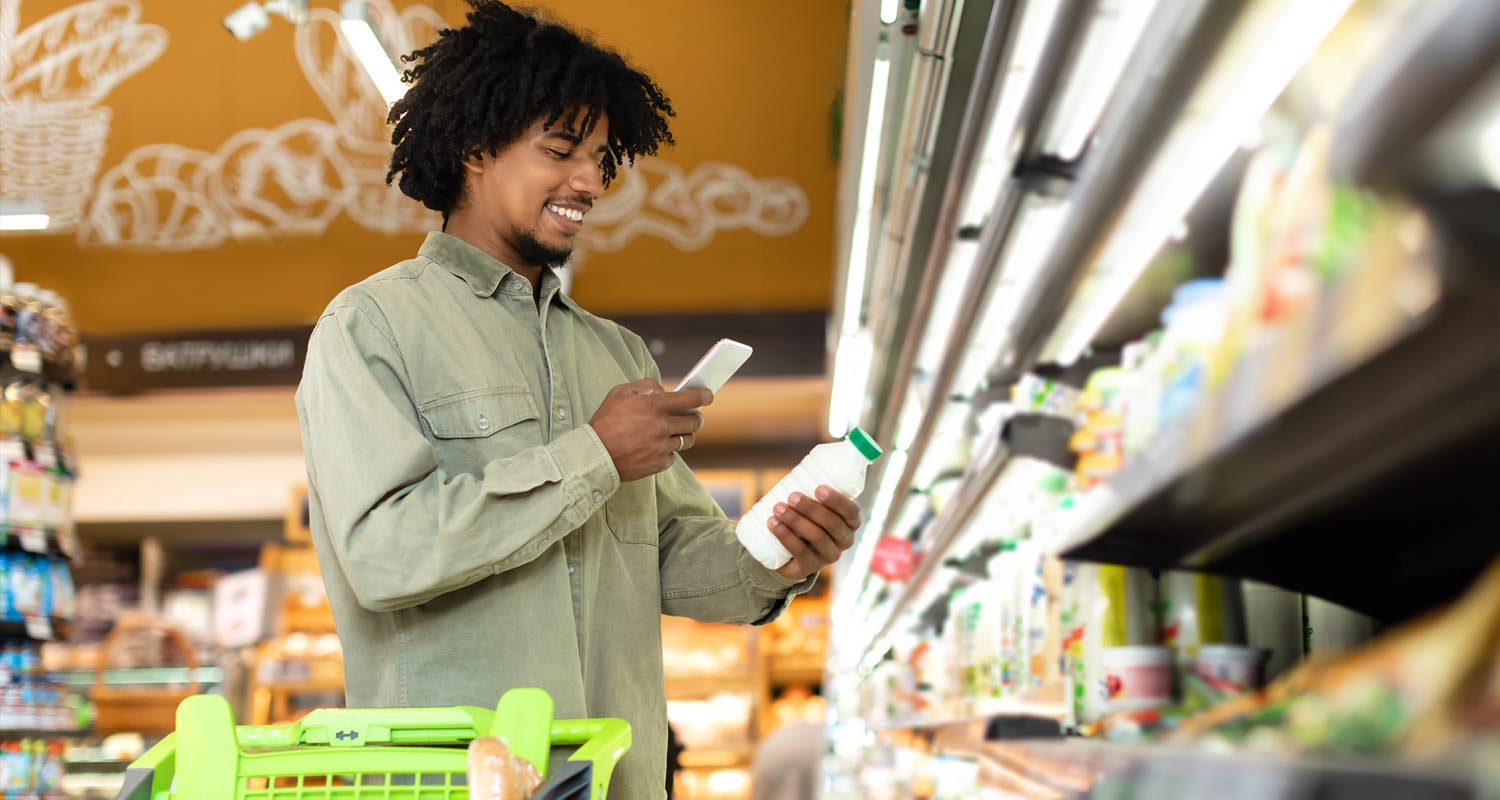
Looking ahead, the connected store is likely to evolve even further. Mobile self-scanning, digital loyalty integration and real-time inventory visibility are all expected to become standard features of modern retail environments. Customers may increasingly use their smartphones to scan products, receive personalised offers and pay without visiting traditional checkouts.
For retailers, the challenge will be integrating these technologies without losing the human elements that define great in-store experiences. “The goal isn’t to replace the store,” Manga said. “It’s to enhance it.”
In that sense, the future of retail is not digital or physical. It is both – seamlessly connected.
About NEC XON
NEC XON is a leading African integrator of ICT solutions and part of NEC, a Japanese global company. The holding company has operated in Africa since 1963 and delivers communications, energy, safety, security and digital solutions. It co-creates social value through innovation to help overcome serious societal challenges. The organisation operates in 54 African countries and has a footprint in 16 of them. Regional headquarters are located in South, East and West Africa. NEC XON is a level 1-certified broad-based black economic empowerment business. Discover more at www.nec.africa.
- Read more articles by NEC XON on TechCentral
- This promoted content was paid for by the party concerned