

Close Menu
TechCentralTechCentral

    Subscribe to the newsletter

    Get the best South African technology news and analysis delivered to your e-mail inbox every morning.

    Facebook X (Twitter) YouTube LinkedIn
    WhatsApp Facebook X (Twitter) LinkedIn YouTube
    TechCentralTechCentral
    • News
      Samsung's trifold gamble ends in retreat

      Samsung’s trifold gamble ends in retreat

      17 March 2026
      MTN's Iran problem: can't stay, can't leave

      MTN’s Iran problem: can’t stay, can’t leave

      17 March 2026
      SA banks race to scale AI and cloud as challenger threat intensifies

      SA banks race to scale AI and cloud as challenger threat intensifies

      17 March 2026
      AI won't kill SaaS - but it will reshape it, software CEOs say

      AI won’t kill SaaS – but it will reshape it, software CEOs say

      17 March 2026
      Nvidia targets $1-trillion in AI chip sales as inference demand surges - Jensen Huang

      Nvidia targets $1-trillion in AI chip sales as inference demand surges

      17 March 2026
    • World
      Peter Thiel's secretive Rome conference draws Church attention

      Peter Thiel’s secretive Rome conference draws Church attention

      16 March 2026
      Musk launches Macrohard in cheeky nod to Microsoft - Elon Musk

      Musk launches Macrohard in cheeky nod to Microsoft

      12 March 2026
      Europe is building an alternative to Microsoft Office

      Europe is building an alternative to Microsoft Office

      11 March 2026
      Microsoft bets on Anthropic as it loosens ties with OpenAI

      Microsoft bets on Anthropic as it loosens ties with OpenAI

      10 March 2026
      World hit by worst oil shock since the 1970s

      World hit by worst oil shock since the 1970s

      9 March 2026
    • In-depth
      The last generation of coders

      The last generation of coders

      18 February 2026
      Sentech is in dire straits

      Sentech is in dire straits

      10 February 2026
      How liberalisation is rewiring South Africa's power sector

      How liberalisation is rewiring South Africa’s power sector

      21 January 2026
      The top-performing South African tech shares of 2025

      The top-performing South African tech shares of 2025

      12 January 2026
      Digital authoritarianism grows as African states normalise internet blackouts

      Digital authoritarianism grows as African states normalise internet blackouts

      19 December 2025
    • TCS
      TCS+ | Vox Kiwi: a wireless solution promising a fibre-like experience - Theo van Zyl

      TCS+ | Vox Kiwi: a wireless solution promising a fibre-like experience

      13 March 2026
      TCS+ | Flipping the narrative on AI in the Global South - Josefin Rosén

      TCS+ | Flipping the narrative on AI in the Global South

      13 March 2026
      TCS | Sink or swim? Antony Makins on how AI is rewriting the rules of work

      TCS | Sink or swim? Antony Makins on how AI is rewriting the rules of work

      5 March 2026
      TCS+ | Bolt ups the ante on platform safety - Simo Kalajdzic

      TCS+ | Bolt ups the ante on platform safety

      4 March 2026
      Watts & Wheels S1E4: 'We drive an electric Uber'

      Watts & Wheels S1E4: ‘We drive an electric Uber’

      10 February 2026
    • Opinion
      South Africa's energy future hinges on getting wheeling right - Aishah Gire

      South Africa’s energy future hinges on getting wheeling right

      10 March 2026
      Hold the doom: the case for a South African comeback - Duncan McLeod

      Apple just dropped a bomb on the Windows world

      5 March 2026
      VC's centre of gravity is shifting - and South Africa is in the frame - Alison Collier

      VC’s centre of gravity is shifting – and South Africa is in the frame

      3 March 2026
      Hold the doom: the case for a South African comeback - Duncan McLeod

      Hold the doom: the case for a South African comeback

      26 February 2026
      The AI fraud crisis your bank is not ready for - Andries Maritz

      The AI fraud crisis your bank is not ready for

      18 February 2026
    • Company Hubs
      • 1Stream
      • Africa Data Centres
      • AfriGIS
      • Altron Digital Business
      • Altron Document Solutions
      • Altron Group
      • Arctic Wolf
      • AvertITD
      • Braintree
      • CallMiner
      • CambriLearn
      • CYBER1 Solutions
      • Digicloud Africa
      • Digimune
      • Domains.co.za
      • ESET
      • Euphoria Telecom
      • HOSTAFRICA
      • Incredible Business
      • iONLINE
      • IQbusiness
      • Iris Network Systems
      • LSD Open
      • Mitel
      • NEC XON
      • Netstar
      • Network Platforms
      • Next DLP
      • Ovations
      • Paracon
      • Paratus
      • Q-KON
      • SevenC
      • SkyWire
      • Solid8 Technologies
      • Telit Cinterion
      • Tenable
      • Vertiv
      • Videri Digital
      • Vodacom Business
      • Wipro
      • Workday
      • XLink
    • Sections
      • AI and machine learning
      • Banking
      • Broadcasting and Media
      • Cloud services
      • Contact centres and CX
      • Cryptocurrencies
      • Education and skills
      • Electronics and hardware
      • Energy and sustainability
      • Enterprise software
      • Financial services
      • HealthTech
      • Information security
      • Internet and connectivity
      • Internet of Things
      • Investment
      • IT services
      • Lifestyle
      • Motoring
      • Policy and regulation
      • Public sector
      • Retail and e-commerce
      • Satellite communications
      • Science
      • SMEs and start-ups
      • Social media
      • Talent and leadership
      • Telecoms
    • Events
    • Advertise
    TechCentralTechCentral
    Home » Sections » Motoring » Chinese electric cars are piling up at Europe’s ports

    Chinese electric cars are piling up at Europe’s ports

    Imported cars, many of which are Chinese EVs, are piling up at Europe's ports, with some spending up to 18 months there.
    By Tom Stacey1 May 2024
    Twitter LinkedIn Facebook WhatsApp Email Telegram Copy Link
    News Alerts
    WhatsApp

    China’s motoring industry has changed beyond recognition over the past decade, from producing basic Western clones to making cars that equal the world’s best. As the manufacturing powerhouse of the world, China is also producing them in huge volumes.

    However, Chinese cars are facing difficulties in finding buyers in Europe. Imported cars, many of which are Chinese electric vehicles, are piling up at European ports, with some spending up to 18 months in port car parks as manufacturers struggle to get them onto people’s driveways.

    Why is this, though? Chinese electric vehicles in particular are getting positive reviews. Having driven them myself, I can attest to them matching, or even exceeding, the well-known European brands in range, quality and technology.

    China’s automotive expansion programme draws parallels with the moves made by Japan in the 1960s and 1970s

    But entering an established market as a challenger is a complex operation. Chinese makers will have to contend with buyer wariness, a lack of brand image, trade protectionism and rapid outdatedness.

    China’s automotive expansion programme draws parallels with the moves made by Japan in the 1960s and 1970s. At that time, the products coming from Japan was commendable but lacked the finesse, design and longevity of their Western counterparts. Japanese cars were thought of as tinny, underpowered and susceptible to rusting, as well as looking very generic compared to stylish European designs.

    Memories of Japan’s involvement in World War 2 were also fresh in (particularly American) buyers’ minds, and they were slow to forgive a nation that launched the Pearl Harbour attacks. However, by constantly focusing on a reliable, relatively cheap and increasingly stylish product, Japan slowly turned this around to become the automotive powerhouse of the 1990s and 2000s.

    Rapidly advancing

    China is viewed with suspicion by many westerners, and its car makers are similarly hampered by their recent legacy of producing both endorsed and illegal clones of European cars. But with the lessons of the Japanese to learn from, Chinese cars are rapidly advancing to match and exceed existing alternatives.

    Strategic purchases of brands like Volvo, Lotus and MG have also given China existing brands that are respected and, more importantly, have some of the best engineering knowledge in the world.

    Yet, even after buying up Western brands, Chinese car makers have proven unable to buy loyalty from existing customers of brands like BMW, Porsche, Ferrari and Ford. For these buyers, the history of the brand in terms of known reliability and even things like motorsport success is something that Chinese makers, like the Japanese, will have to build up over time.

    Read: WeBuyCars makes R7.8-billion JSE debut

    It was Ford dealers who, in the 1960s, coined the phrase: “Win on Sunday, Sell on Monday”. The phrase is as an adage to attest the fact that if buyers see a car winning a race, they’ll be motivated to go out and buy one.

    Existing manufacturers also have a legacy of reliability that buyers have experienced for themselves, giving a huge brand loyalty benefit. Add to this a lack of an established dealer network outside of China and you see how Chinese makers struggle against the established competition.
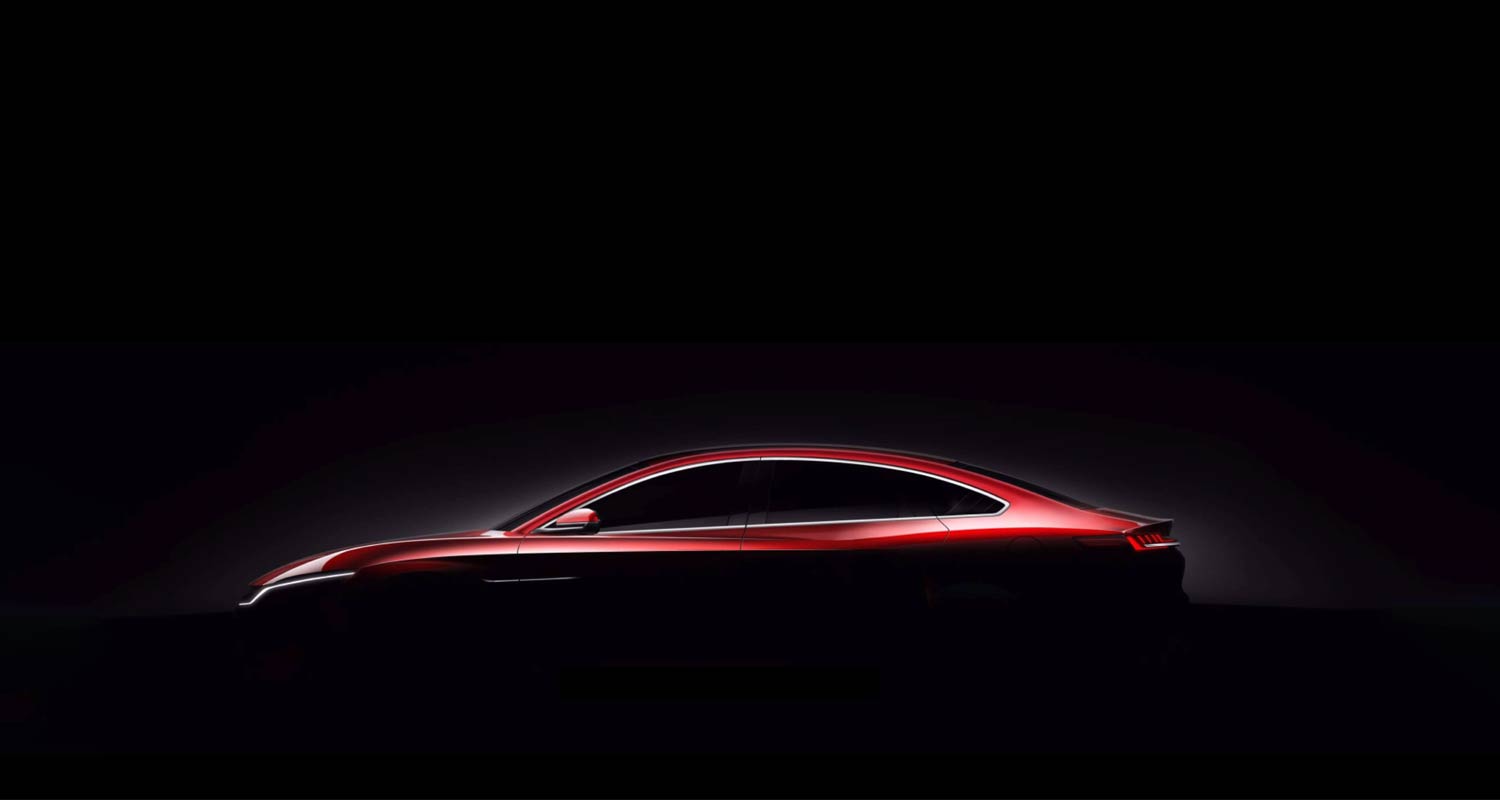
    China has a price advantage compared to Europe or the US. Economies of scale, excellent shipping links and cheap labour mean that Chinese cars are cheaper both to make and buy.

    However, in many countries they are subject to high import tariffs. The EU currently imposes a 10% import tariff on each car brought in. And in the US, car imports from China are subject to a 27.5% tariff.

    These tariffs may rise further. The EU is investigating whether its tariff is too low. If it concludes this later this year, higher duties will be applied retrospectively to imported cars.

    In the UK, the fleet market dwarfs the private market, and the situation is similar in Europe

    Cars, and specifically electric vehicles, are also in a phase of their development where they see rapid changes and updates. Traditionally, vehicle models would see a market life of between four and seven years, perhaps with small updates in trim, colour palette or feature availability.

    But Tesla has turned this on its head. The Tesla Model S, for example, has seen almost continuous product updates that make it barely recognisable in terms of hardware from a car released in 2012. Chinese car makers have taken note. They are bringing out new models around 30% faster than in most other nations.

    Tesla is supporting owners of older cars with upgrades, at extra expense, to bring them in line with the latest hardware. Without guaranteed software support like this, the rate at which Chinese car makers are bringing out new models could make buyers wary that the product they have bought will soon become outdated compared to buying a car on a more traditional update cycle.

    Road to success

    Many of these factors can be fixed. They also chime more with private buyers than business buyers, who are more concerned with cost. Chinese makers would be well-advised to push harder into this market.

    In the UK, the fleet market dwarfs the private market, and the situation is similar in Europe. Selling en masse to fleets and rental companies gets more cars on the road and allows more data about reliability to feed into the market.

    The road to succeeding in a new market such as the EU will be slow and bumpy. But it’s clear that China is laser focused on its global push. It remains to be seen whether this lack of buyers can be turned around.The Conversation

    • The author, Tom Stacey, is senior lecturer in operations and supply chain management, Anglia Ruskin University
    • This article is republished from The Conversation under a Creative Commons licence

    Read next: Job cuts at Tesla show it’s just another car company

    Follow TechCentral on Google News Add TechCentral as your preferred source on Google


    Chinese electric cars Tom Stacey
    WhatsApp YouTube
    Share. Facebook Twitter LinkedIn WhatsApp Telegram Email Copy Link
    Previous ArticleHow much South African firms pay ransomware gangs
    Next Article Binance founder Changpeng Zhao jailed for four months
    Company News
    SA's cybersecurity triple bind: more threats, less talent, tighter regulation - Vox

    SA’s cybersecurity triple bind: more threats, less talent, tighter regulation

    17 March 2026
    When CTEM, AI and a unified attack surface meet - RedRok, Solid8 Technologies

    When CTEM, AI and a unified attack surface meet

    17 March 2026
    Why finance's new KPI is decision speed

    Why finance’s new KPI is decision speed

    17 March 2026
    Opinion
    South Africa's energy future hinges on getting wheeling right - Aishah Gire

    South Africa’s energy future hinges on getting wheeling right

    10 March 2026
    Hold the doom: the case for a South African comeback - Duncan McLeod

    Apple just dropped a bomb on the Windows world

    5 March 2026
    VC's centre of gravity is shifting - and South Africa is in the frame - Alison Collier

    VC’s centre of gravity is shifting – and South Africa is in the frame

    3 March 2026

    Subscribe to Updates

    Get the best South African technology news and analysis delivered to your e-mail inbox every morning.

    Latest Posts
    Samsung's trifold gamble ends in retreat

    Samsung’s trifold gamble ends in retreat

    17 March 2026
    MTN's Iran problem: can't stay, can't leave

    MTN’s Iran problem: can’t stay, can’t leave

    17 March 2026
    SA's cybersecurity triple bind: more threats, less talent, tighter regulation - Vox

    SA’s cybersecurity triple bind: more threats, less talent, tighter regulation

    17 March 2026
    SA banks race to scale AI and cloud as challenger threat intensifies

    SA banks race to scale AI and cloud as challenger threat intensifies

    17 March 2026
    © 2009 - 2026 NewsCentral Media
    • Cookie policy (ZA)
    • TechCentral – privacy and Popia

    Type above and press Enter to search. Press Esc to cancel.

    Manage consent

    TechCentral uses cookies to enhance its offerings. Consenting to these technologies allows us to serve you better. Not consenting or withdrawing consent may adversely affect certain features and functions of the website.

    Functional Always active
    The technical storage or access is strictly necessary for the legitimate purpose of enabling the use of a specific service explicitly requested by the subscriber or user, or for the sole purpose of carrying out the transmission of a communication over an electronic communications network.
    Preferences
    The technical storage or access is necessary for the legitimate purpose of storing preferences that are not requested by the subscriber or user.
    Statistics
    The technical storage or access that is used exclusively for statistical purposes. The technical storage or access that is used exclusively for anonymous statistical purposes. Without a subpoena, voluntary compliance on the part of your Internet Service Provider, or additional records from a third party, information stored or retrieved for this purpose alone cannot usually be used to identify you.
    Marketing
    The technical storage or access is required to create user profiles to send advertising, or to track the user on a website or across several websites for similar marketing purposes.
    • Manage options
    • Manage services
    • Manage {vendor_count} vendors
    • Read more about these purposes
    View preferences
    • {title}
    • {title}
    • {title}