Close Menu
TechCentralTechCentral

    Subscribe to the newsletter

    Get the best South African technology news and analysis delivered to your e-mail inbox every morning.

    Facebook X (Twitter) YouTube LinkedIn
    WhatsApp Facebook X (Twitter) LinkedIn YouTube
    TechCentralTechCentral
    • News
      When the AI costs more than the coder

      When the AI costs more than the coder

      25 June 2026
      Datatec CEO restrikes R220-million share hedge - Jens Montanana

      Datatec CEO lifts hedge ceiling as shares surge

      25 June 2026
      Visa, FNB and RMB take aim at corporate cash - Lineshree Moodley

      Visa, FNB and RMB take aim at corporate cash

      24 June 2026
      OpenAI and Broadcom build a chip to rival Nvidia's Blackwell

      OpenAI and Broadcom build a chip to rival Nvidia’s Blackwell

      24 June 2026
      Absa's silence and the MVNO move no bank has made

      Absa’s silence and the banking MVNO move no one has tried

      24 June 2026
    • World

      SK Hynix ends Samsung’s 26-year reign at the top

      22 June 2026
      Google on the hook for what its AI tells users, court rules

      Google on the hook for what its AI tells users, court rules

      15 June 2026
      How Russians juggle VPNs to outwit the Kremlin

      How Russians juggle VPNs to outwit the Kremlin

      15 June 2026
      Amazon CEO flagged Anthropic AI risks to Washington - Andy Jassy

      Amazon CEO flagged Anthropic AI risks to Washington

      14 June 2026
      Trouble at Xbox

      Trouble at Xbox

      11 June 2026
    • In-depth
      AI boom sparks rally, frenzy and fear

      AI boom sparks rally, frenzy and fear

      11 June 2026
      Every plug-in hybrid on sale in South Africa, ranked by price - Lamborghini Temerario

      Every plug-in hybrid on sale in South Africa, ranked by price

      7 June 2026
      What Wi-Fi 8 will mean for wireless networks

      What Wi-Fi 8 will mean for wireless networks

      1 June 2026
      Alfa's electric rebel - Alfa Romeo Junior Elettrica Veloce

      Alfa’s electric rebel

      29 April 2026
      Africa switches on as Europe dims the lights

      Africa switches on as Europe dims the lights

      9 April 2026
    • TCS
      Watts & Wheels S1E6: 'A flawless Alfa and a bakkie that divides'

      Watts & Wheels S1E6: ‘A flawless Alfa and a bakkie that divides’

      17 June 2026
      Watts & Wheels S1E6: 'A flawless Alfa and a bakkie that divides'

      Watts & Wheels S1E5: ‘A Bentley of the bush and a car that swims’

      8 June 2026
      TCS | Charge's R1.8-billion bet on an off-grid EV future - Charge chairman Joubert Roux

      TCS | Charge’s R1.8-billion bet on an off-grid EV future

      18 May 2026
      TCS+ | The Up&Up Group on the hidden cost of AI - Jason Harrison

      TCS+ | The Up&Up Group on the hidden cost of AI

      13 May 2026
      Michael Rossouw

      TCS+ | The retirement decision most South Africans get wrong

      6 May 2026
    • Opinion
      The pivot South Africa's MVNOs cannot afford to miss

      The pivot South Africa’s MVNOs cannot afford to miss

      23 June 2026
      Brazil's online gambling crackdown is a lesson for South Africa

      Brazil’s online gambling crackdown is a lesson for South Africa

      22 June 2026
      Finish the job Mandela started - Farzam Ehsani

      Finish the job Mandela started

      18 June 2026
      The author, Fanie van Rooyen

      The US just showed it can switch off our AI

      17 June 2026
      The pivot South Africa's MVNOs cannot afford to miss

      The clock is ticking on South African banks’ biggest advantage

      9 June 2026
    • Company Hubs
      • 1Stream
      • Africa Data Centres
      • AfriGIS
      • Altron Digital Business
      • Altron Document Solutions
      • Altron Group
      • Arctic Wolf
      • Ascent Technology
      • AvertITD
      • BBD
      • Braintree
      • CallMiner
      • CambriLearn
      • CM Telecom
      • Contactable
      • CYBER1 Solutions
      • Digicloud Africa
      • Digimune
      • Domains.co.za
      • ESET
      • Euphoria Telecom
      • HOSTAFRICA
      • Incredible Business
      • iONLINE
      • IQbusiness
      • Iris Network Systems
      • Kaspersky
      • LSD Open
      • Mitel
      • NEC XON
      • Netstar
      • Network Platforms
      • Next DLP
      • Ovations
      • Paracon
      • Paratus
      • Q-KON
      • SevenC
      • SkyWire
      • Solid8 Technologies
      • Telit Cinterion
      • Telviva
      • Tenable
      • Vertiv
      • Videri Digital
      • Vodacom Business
      • Wipro
      • Workday
      • XLink
    • Sections
      • AI and machine learning
      • Banking
      • Broadcasting and Media
      • Cloud services
      • Contact centres and CX
      • Cryptocurrencies
      • Education and skills
      • Electronics and hardware
      • Energy and sustainability
      • Enterprise software
      • Financial services
      • HealthTech
      • Information security
      • Internet and connectivity
      • Internet of Things
      • Investment
      • IT services
      • Lifestyle
      • Motoring
      • Policy and regulation
      • Public sector
      • Retail and e-commerce
      • Satellite communications
      • Science
      • SMEs and start-ups
      • Social media
      • Talent and leadership
      • Telecoms
    • Events
    • Advertise
    TechCentralTechCentral
    Home » In-depth » Consumers score in Eskom LED giveaway

    Consumers score in Eskom LED giveaway

    By Editor26 November 2012
    Twitter LinkedIn Facebook WhatsApp Email Telegram Copy Link
    News Alerts
    WhatsApp
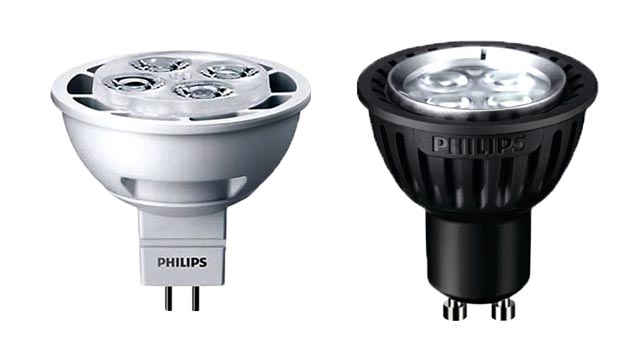
    Karebo Systems will supply 12V, left, and 220V LED downlighters free of charge

    Under ordinary circumstances, Wilmot Prusent only speaks about Eskom to complain. The electricity bill for his five-bedroom home in Summerset Estate, Midrand, has escalated to R2 500 in the average month. “All they ever do is raise our rates, raise our rates,” he grumbled.

    Recently, though, Eskom-funded contractors visited his home and replaced the halogen downlights in his ceiling with state-of-the-art light-emitting diode (LED) lamps that use a fraction of the electricity. The hi-tech lamps were worth more than R10 000, but Prusent did not have to pay a cent. “I’m absolutely elated,” he said. “At this time of year it’s a very nice Christmas present.”

    Eskom has begun replacing up to 40 halogen bulbs per household with LED bulbs that are worth close to R300 each. Eskom’s residential installation contractor, Karebo Systems, will have installed more than a million LED bulbs in South African homes by the end of 2012 and Eskom plans to extend the programme with more contractors from next year.

    “We want these out and into homes as soon as possible in view of the power constraints we have,” said Andrew Etzinger, senior GM of integrated demand management at Eskom.

    Bulb replacement is not an entirely new idea at Eskom or other utilities. The South African parastatal has distributed about 47m free compact fluorescent lamps. But fluorescent lamps were slow to catch on in the suburbs, where many houses have downlights built into their ceilings. The downlights — reflector lamps that typically use 50W each — were hampering Eskom’s efforts to control the spike in electricity consumption each evening.

    It was obvious to any observer of lighting technology that a solution would be found in the same LED bulbs that consumers first saw in the green or red glow of calculator displays about 40 years ago. LED bulbs are incredibly efficient, using as little as a tenth of the power that incandescent lights need and are far more durable. They have gradually become brighter, whiter and finally more affordable — but just barely.

    Readiness of consumers
    The efficient replacements for 35W halogen downlights typically cost between R200 and R300 at retail prices. Discount-brand LED bulbs selling for less than R100 are usually less bright. More powerful and expensive LED bulb replacements for 50W halogens are nearly impossible to find. Philips recently stopped stocking Makro with the LED bulbs that Karebo Systems installs because of what Lorato Maphiri, marketing and communications officer for Philips Lighting, calls “the readiness of consumers”.

    But for Eskom, LED bulbs are hitting the sweet spot. “We’ve followed this technology for the past five years,” said Etzinger, “and it’s just recently matured to a level of quality, price and performance where it makes sense to embark on a roll-out.”

    Eskom’s calculations are based on its reliance on peaking-supply turbines fuelled by diesel to handle the evening spike. This power costs Eskom about R2/50/kWh, about eight times more than the running costs of existing coal stations.

    Many foreign utilities that want to reduce their carbon footprint or stave off the construction of another power plant have offered rebates on LED bulbs to reduce their cost. A few have offered a small number of free LED bulbs to draw attention to the technology. But neither Etzinger nor Maury Wright, editor of the American publication LEDs Magazine, is aware of anything on the scale of Eskom’s free offer. The National Energy Regulator of South Africa allocated R5,4bn to Eskom over the past three years so the utility could control demand.
    For efficiency programmes aimed at the evening peak in consumption, the regulator stipulates that Eskom should spend no more than R5m for each megawatt saved, or R5/W. Etzinger said free LED bulbs fell well below that limit, whereas subsidies for solar hot water heaters were more costly.

    Consumers who do their sums carefully have begun buying LED bulbs on their own, especially for rooms where the lights are on for several hours a day. In addition to cutting bills, the expensive bulbs are made to last up to 25 years, saving on regular replacements. For the sake of his budget and the environment, Midrand resident Anthony Walley began phasing out his halogen downlights a few years ago, working room by room. He spent about R1 000 at each stage in the process.

    Boggles the mind
    So when Walley first heard that Eskom would install LED bulbs for free, he thought “there must be some catch”. Forty new bulbs later, Walley now tries to convince his friends and family to seize this gift while they can.

    “It boggles the mind because I’m a client — indirectly — of Eskom and now they’re paying me to use less of what they are selling me.”

    There are a few small catches to the free Eskom deal. Karebo Systems is contracted to replace only 50W halogens. Homeowners who have tried to cut their consumption by using 35W or 20W bulbs will find that the only way to participate is to swap them for new 50-watt halogens, only to see the new bulbs taken away for destruction.

    Dimmable LED bulbs are a more expensive technology, so Karebo charges R25, a fraction of the full value, for each LED bulb to be placed on a dimmer. However, certain dimmers work poorly with these bulbs and homeowners may have to shell out another R250 for Karebo to install a suitable dimmer.

    Most South African homes with halogen downlighters use 12V transformers, which add another layer of complication. Karebo offers pin-type, low-voltage LED bulbs made by Philips, but they have a few disadvantages over their 220V siblings.

    Their wattage is a bit higher — 7W versus 5,5W for the 220V, non-dimmable version — in addition to the small amount of power that the transformer uses. And the low-voltage bulbs have a somewhat shorter lifespan — 30 000 hours instead of 40 000 hours.

    Spike times
    Karebo Systems director Ravi Govender said that each of the LED bulbs his company installed was rated to last at least 10 times longer than an ordinary halogen lamp. “You’ll probably move out of your house before you have to change it.”

    Finally, a small percentage of transformers don’t work with the new technology. For all these reasons, Govender finds that his commercial customers, including Standard Bank and Sun International, have ditched their 12V transformers and retrofitted their downlights to take mains voltage LED bulbs.

    The free LED bulb offer is only one part of Eskom’s mass residential roll-out programme. Karebo also offers homeowners compact fluorescent lamps, low-flow shower heads to reduce hot water consumption and timers for pool pumps and geysers. The timers are preset to stay off during the six-to-eight morning and evening spike times.

    Etzinger hinted that Eskom might soon make the geyser timer mandatory for those who wish to enjoy the other freebies. He emphasised that geyser timers would work in the favour of consumers in the future, when electricity tariffs will be higher during peak hours.

    The benefits of LED bulbs should start to show from the first utility bill. On average, 19% of residential electricity is used for lighting. So if 40 downlights make up most of a home’s lighting, consumption charges could fall by at least a 10%. Simple maths suggests that if those 40 lights are used four hours a day, LED bulbs will save more than R200 a month.

    • Don Boroughs runs the Greener House website
    • Article first published in the Mail & Guardian. Visit the Mail & Guardian Online, the smart news source
    • See also: Eskom’s LED giveaway: more details emerge and Homeowners to score from Eskom largesse

    Follow TechCentral on Google News Add TechCentral as your preferred source on Google


    Andrew Etzinger Eskom Karebo Systems
    WhatsApp YouTube
    Share. Facebook Twitter LinkedIn WhatsApp Telegram Email Copy Link
    Previous ArticleMeet Telkom’s man of ‘testicular fortitude’
    Next Article E-tolls battle comes to a head

    Related Posts

    The real prize is a competitive electricity market

    The real prize is a competitive electricity market

    22 June 2026
    The projects leading Eskom's 32GW renewables charge

    The projects leading Eskom’s 32GW renewables charge

    11 June 2026
    Eskom Green to build 32GW of renewables by 2040 - Mteto Nyati - Mteto Nyati

    Eskom Green to build 32GW of renewables by 2040

    9 June 2026
    Company News
    The spaza is not informal - it is foundational - Lesaka Technologies Lincoln Mali

    The spaza is not informal – it is foundational

    24 June 2026
    A smarter way to buy or renew your Red Hat subscriptions - LSD Open

    A smarter way to buy or renew your Red Hat subscriptions

    22 June 2026
    Moving past the pilot: inside the CloudZA and AWS closed-door AI executive roundtable

    CloudZA and AWS chart the road from AI pilots to production

    19 June 2026
    Opinion
    The pivot South Africa's MVNOs cannot afford to miss

    The pivot South Africa’s MVNOs cannot afford to miss

    23 June 2026
    Brazil's online gambling crackdown is a lesson for South Africa

    Brazil’s online gambling crackdown is a lesson for South Africa

    22 June 2026
    Finish the job Mandela started - Farzam Ehsani

    Finish the job Mandela started

    18 June 2026

    Subscribe to Updates

    Get the best South African technology news and analysis delivered to your e-mail inbox every morning.

    Latest Posts
    When the AI costs more than the coder

    When the AI costs more than the coder

    25 June 2026
    Datatec CEO restrikes R220-million share hedge - Jens Montanana

    Datatec CEO lifts hedge ceiling as shares surge

    25 June 2026
    Visa, FNB and RMB take aim at corporate cash - Lineshree Moodley

    Visa, FNB and RMB take aim at corporate cash

    24 June 2026
    OpenAI and Broadcom build a chip to rival Nvidia's Blackwell

    OpenAI and Broadcom build a chip to rival Nvidia’s Blackwell

    24 June 2026
    © 2009 - 2026 NewsCentral Media
    • Cookie policy (ZA)
    • TechCentral – privacy and Popia

    Type above and press Enter to search. Press Esc to cancel.

    Manage consent

    TechCentral uses cookies to enhance its offerings. Consenting to these technologies allows us to serve you better. Not consenting or withdrawing consent may adversely affect certain features and functions of the website.

    Functional Always active
    The technical storage or access is strictly necessary for the legitimate purpose of enabling the use of a specific service explicitly requested by the subscriber or user, or for the sole purpose of carrying out the transmission of a communication over an electronic communications network.
    Preferences
    The technical storage or access is necessary for the legitimate purpose of storing preferences that are not requested by the subscriber or user.
    Statistics
    The technical storage or access that is used exclusively for statistical purposes. The technical storage or access that is used exclusively for anonymous statistical purposes. Without a subpoena, voluntary compliance on the part of your Internet Service Provider, or additional records from a third party, information stored or retrieved for this purpose alone cannot usually be used to identify you.
    Marketing
    The technical storage or access is required to create user profiles to send advertising, or to track the user on a website or across several websites for similar marketing purposes.
    • Manage options
    • Manage services
    • Manage {vendor_count} vendors
    • Read more about these purposes
    View preferences
    • {title}
    • {title}
    • {title}