
Close Menu
TechCentralTechCentral

    Subscribe to the newsletter

    Get the best South African technology news and analysis delivered to your e-mail inbox every morning.

    Facebook X (Twitter) YouTube LinkedIn
    WhatsApp Facebook X (Twitter) LinkedIn YouTube
    TechCentralTechCentral
    • News

      MTN’s Iranian dead end

      24 August 2026
      Frogfoot to expand township fibre roll-out after major fundraising - Abraham van der Merwe and Shane Chorley - Abraham van der Merwe and Shane Chorley - Abraham van der Merwe and Shane Chorley

      Frogfoot to expand township fibre roll-out after major fundraising round

      24 August 2026
      You still can't choose who sells you electricity in South Africa

      You still can’t choose who sells you electricity in South Africa

      24 August 2026
      MTN is spending less on the best network in South Africa - Ralph Mupita

      MTN is spending less on the best network in South Africa

      24 August 2026
      MTN is cutting airtime credit while its rivals lean on it

      MTN is cutting airtime credit while its rivals lean on it

      24 August 2026
    • World
      Russia building its own Starlink - and faster than expected - Vadym Skibitskyi

      Russia building its own Starlink – and faster than expected

      11 August 2026
      Meta AI will now tell parents if their teen is in crisis

      Meta AI will now tell parents if their teen is in crisis

      17 July 2026
      IBM shares crash 25% as AI upends software spending - Arvind Krishna

      IBM shares crash 25% as AI upends software spending

      15 July 2026
      Jony Ive's first OpenAI device: an AI smart speaker - Jony Ive and Sam Altman

      Jony Ive’s first OpenAI device: an AI smart speaker

      15 July 2026
      Stripe, Advent in talks to buy PayPal for $53-billion

      Stripe, Advent in talks to buy PayPal for $53-billion

      15 July 2026
    • In-depth
      Google DeepMind CEO Demis Hassabis. Image: John Sears

      The plan to stop AI from breaking the world

      16 July 2026
      The internet has a Strait of Hormuz problem

      The internet has a Strait of Hormuz problem

      15 July 2026
      AI boom sparks rally, frenzy and fear

      AI boom sparks rally, frenzy and fear

      11 June 2026
      Every plug-in hybrid on sale in South Africa, ranked by price - Lamborghini Temerario

      Every plug-in hybrid on sale in South Africa, ranked by price

      7 June 2026
      What Wi-Fi 8 will mean for wireless networks

      What Wi-Fi 8 will mean for wireless networks

      1 June 2026
    • TCS
      Watts & Wheels S1E8: 'Tesla lands in Africa, just not here'

      Watts & Wheels S1E8: ‘Tesla lands in Africa, just not here’

      24 August 2026
      Meet the CIO | Discovery's Derek Wilcocks on AI, guardrails and growth

      Meet the CIO | Derek Wilcocks on how AI personalised Vitality

      13 August 2026
      TCS | Money just became native to the internet - Steven Boykey Sidley

      TCS | Money just became native to the internet – Steven Boykey Sidley

      12 August 2026
      TCS+ | Specops' Darren James on continuous trust in an AI world

      TCS+ | Specops’ Darren James on continuous trust in an AI world

      7 August 2026
      TCS+ | How AI is turning hardware into a subscription service - Shane van der Merwe Merchant West

      TCS+ | How AI is turning hardware into a subscription service

      6 August 2026
    • Opinion
      The author, Jannie van Zyl

      Selling vapour is corporate suicide in slow motion

      16 July 2026
      Brazil's online gambling crackdown is a lesson for South Africa

      How Amazon outmanoeuvred Starlink in South Africa

      15 July 2026
      The Popia problem with agentic AI - Herman Haasbroek

      The Popia problem with agentic AI

      14 July 2026
      The author, Fanie van Rooyen

      South Africa can still catch the AI wave – here’s how

      7 July 2026
      The author, Fanie van Rooyen

      The AI utopia South Africa can’t afford

      1 July 2026
    • Company Hubs
      • 1Stream
      • Africa Data Centres
      • AfriGIS
      • Altron Digital Business
      • Altron Document Solutions
      • Altron Group
      • Arctic Wolf
      • Ascent Technology
      • AvertITD
      • BBD
      • Braintree
      • CallMiner
      • CambriLearn
      • CM Telecom
      • Contactable
      • CYBER1 Solutions
      • Digicloud Africa
      • Digimune
      • Domains.co.za
      • ESET
      • Euphoria Telecom
      • HOSTAFRICA
      • Incredible Business
      • iONLINE
      • IQbusiness
      • Iris Network Systems
      • Kaspersky
      • LSD Open
      • Mitel
      • NEC XON
      • Netstar
      • Network Platforms
      • Next DLP
      • Ovations
      • Paracon
      • Paratus
      • Q-KON
      • SevenC
      • SkyWire
      • Solid8 Technologies
      • Telit Cinterion
      • Telviva
      • Tenable
      • Vertiv
      • Videri Digital
      • Vodacom Business
      • Vox
      • Wipro
      • Workday
      • XLink
    • Sections
      • AI and machine learning
      • Banking
      • Broadcasting and Media
      • Cloud services
      • Contact centres and CX
      • Cryptocurrencies
      • Education and skills
      • Electronics and hardware
      • Energy and sustainability
      • Enterprise software
      • Financial services
      • HealthTech
      • Information security
      • Internet and connectivity
      • Internet of Things
      • Investment
      • IT services
      • Lifestyle
      • Policy and regulation
      • Public sector
      • Retail and e-commerce
      • Satellite communications
      • Science
      • SMEs and start-ups
      • Social media
      • Talent and leadership
      • Telecoms
      • Watts & Wheels
    • Events
    • Advertise
    TechCentralTechCentral
    Home » Sections » Watts & Wheels » Elon Musk is becoming like Henry Ford – and that’s not a good thing

    Elon Musk is becoming like Henry Ford – and that’s not a good thing

    By Stephen Mihm17 May 2022
    Twitter LinkedIn Facebook WhatsApp Email Telegram Copy Link
    News Alerts
    WhatsApp
    Elon Musk

    As Elon Musk tries to add the social media giant Twitter to his expanding empire, he’s seeming a bit busy. When he’s not starting and buying complex companies, he’s sounding off about free speech, cryptocurrency, artificial intelligence and, well, just about everything.

    The electric-car magnate is developing an eerie resemblance to another automotive visionary: Henry Ford. That’s not meant as a compliment. If Musk keeps courting celebrity and pursuing side ventures, the risk is that Tesla, the company that made him a household name, will fall from its premier position just as Ford Motor Company did in the 1920s.

    Henry Ford famously parlayed visionary ideas about assembly-line manufacturing into unimaginable wealth and global fame. His headline-grabbing initiatives — paying his workers the princely sum of US$5/day, for example — made him an American folk hero, someone whose quest for market share and profit nonetheless held out the promise of a better life for all.

    As Ford’s business ventures made him a celebrity in the years after 1910, he underwent a metamorphosis

    This adulation drove a transformation in Ford’s personality. Like Musk, Ford was originally a shy, awkward man. But as his business ventures made him a celebrity in the years after 1910, he underwent a metamorphosis that foreshadowed Musk’s own transformation from tongue-tied savant to global guru.

    Samuel Marquis, a friend of Ford’s, once recounted how the car maker “suddenly faced about, hired a publicity agent [and] jumped into the front page of every newspaper in the country”. Ford’s new philosophy, Marquis noted, boiled down to a belief that “it is a good thing to keep people talking about him, no matter what they say”.

    There was plenty to say. In the 1920s, Ford’s ambitions attracted jaw-dropping awe. In a typical side project launched in 1921, Ford proposed to lease the government-owned Wilson Dam on the Tennessee River. A longstanding proponent of hydroelectric power, Ford hoped to turn a large swath of dirt-poor Alabama known as Muscle Shoals into a hydro-powered industrial metropolis the size of Detroit.

    ‘Sage of Dearborn’

    He proposed to underwrite the business with a new kind of techno-currency: the “energy dollar”, which would be backed by electricity generated by the river. By the time the plan fell apart, Ford was contemplating another modest project: a run for the US presidency.

    His wife nixed that idea. But the “Sage of Dearborn,” as Ford became known, started plenty of other ventures. He moved into the manufacture of airplanes and launched the US’s first commercial airline in 1925. He started educational initiatives, including the Henry Ford Trade School.

    He also started a sprawling historical museum in his hometown of Dearborn, Michigan. By the time it finally opened in the Great Depression, Ford had sunk today’s equivalent of $1-billion into what was little more than a warehouse bulging with things that reminded Ford of his childhood.

    Other ventures weren’t so wholesome. He purchased a failing newspaper known as the Dearborn Independent, pumping money into it and turning it into a large-circulation national paper distributed through his dealerships. It featured columns that ghostwriters churned out under Ford’s name.

    It also published a horrific series of anti-Semitic screeds later published as “The International Jew”. The addled conspiracy theories that appeared there attracted the admiration of Adolf Hitler.
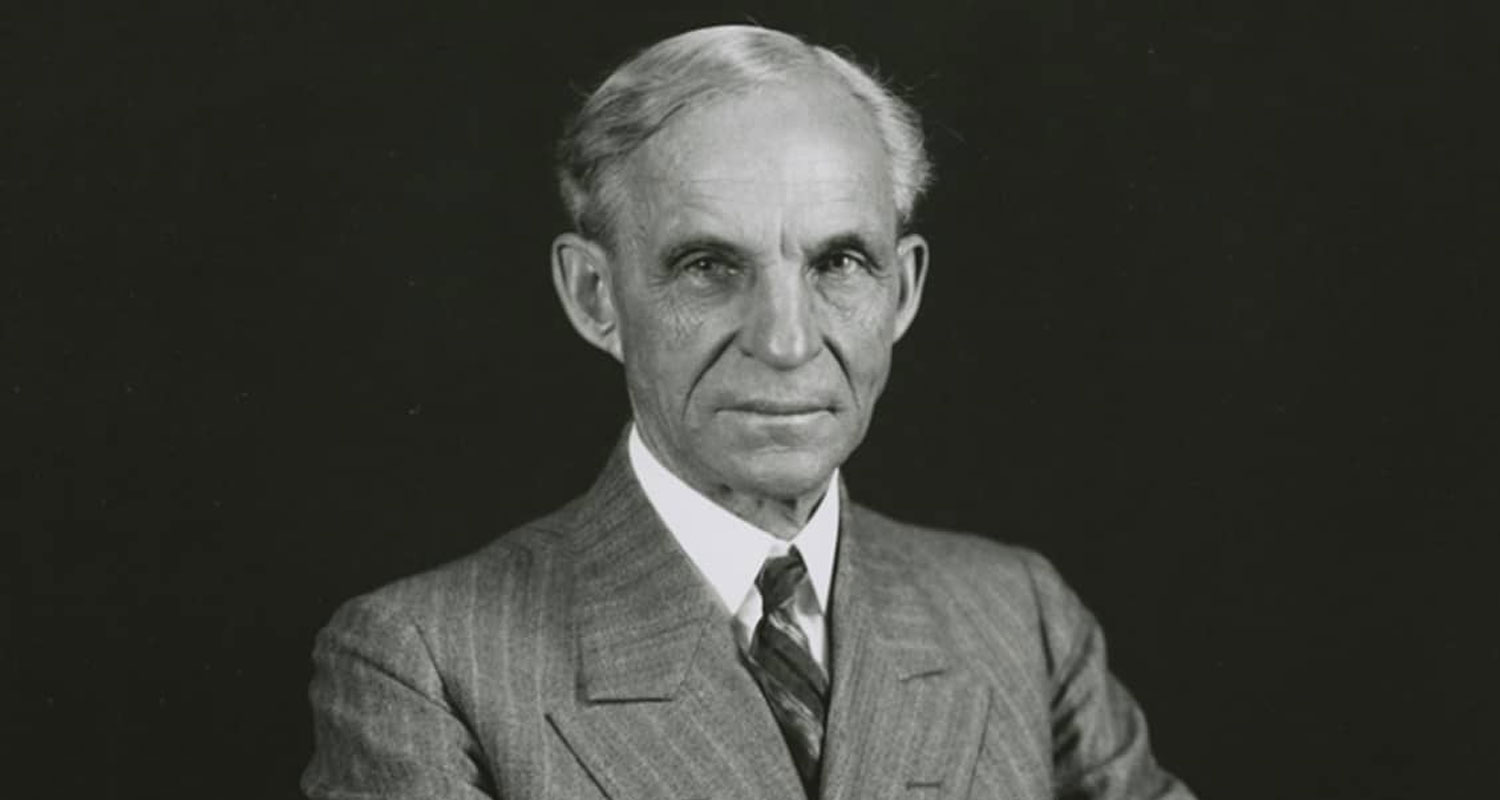
    Henry Ford

    Lost in all the celebrity and controversy was Ford’s iconic company. As he became increasingly distracted – and ever more convinced of his own infallibility – Ford drove away many of his most capable lieutenants and engineers, replacing them with sycophants. He even sidelined his own son, Edsel, who correctly anticipated many of the challenges facing the company.

    Ford had become someone who “would rather be a maker of public opinion than the manufacturer of a million vehicles a year”, Marquis observed.

    Ford’s dethroning began with the arrival of Alfred P Sloan, an engineer trained at the Massachusetts Institute of Technology who by 1923 had gradually assumed control of a motley assortment of car companies known as General Motors.

    Sloan was ruthless and calculating, using financial statistics to cut costs and foster efficiency. The language he used to describe everything, one management theorist later observed, was as “cold as the steel he caused to be bent to form cars: economising, utility, facts, objectivity, systems, rationality, maximising — that is the stuff of his vocabulary”. He looked the part, too.

    Sloan had no interest in being a public figure. He simply wished to usurp Ford. He began by bringing order to his own corporate empire, segmenting the market into different brands. Instead of Ford’s singular Model T, General Motors had a “car for every purse and purpose”, as one advertisement put it. Sloan gave the executives in charge of different divisions – Chevrolet, Buick, Cadillac and so forth – enough latitude to run their own ships, but otherwise centralised management.

    Though Henry Ford tried to stage a comeback with the Model A, it was too late: General Motors widened its lead during the Great Depression

    The differences multiplied from there. In the 1920s, Ford pursued a strategy of vertical integration, buying mines and forests to give him a steady supply of raw materials. (Musk has embarked on similar ventures.) Sloan, by contrast, opted for a more flexible reliance on suppliers that freed up capital to pursue the investments behind the strategy of market segmentation and planned obsolescence.

    While Ford spent a fortune building Fordlandia, a bizarre utopian city in the Brazilian rainforest designed to oversee rubber production in an area bigger than the US state of Connecticut, Sloan focused on building affordable and stylish cars. And while Ford kept expecting buyers to pay cash, Sloan pioneered consumer financing.

    In 1929, General Motors became the world’s biggest car manufacturer. Though Henry Ford tried to stage a comeback with the Model A, it was too late: General Motors widened its lead during the Great Depression. Only when Ford’s grandson took over at the end of World War 2 and hired top managers did the company’s fortunes turn around.

    In the case of Tesla, history is breathing down Musk’s neck. The automaker best positioned to overtake Tesla as the premier manufacturer of electric vehicles could be the Ford Motor Company, which is gearing up to beat Musk at his own game.

    Today’s Ford executives don’t have tens of millions of Twitter followers. They’re not household names. They don’t have grand plans to transform the world or launch new ventures.

    In other words, they’re not at all like Henry Ford. And that spells trouble for Ford’s modern-day incarnation, Elon Musk.  — (c) 2022 Bloomberg LP

    Follow TechCentral on Google News Add TechCentral as your preferred source on Google


    Elon Musk Ford General Motors Henry Ford Tesla
    WhatsApp YouTube
    Share. Facebook Twitter LinkedIn WhatsApp Telegram Email Copy Link
    Previous ArticleWhatsApp Premium: new subscription plan in development
    Next Article Everything PC S01E02 – ‘AMD: Ryzen from the dead – part 2’

    Related Posts

    Watts & Wheels S1E8: 'Tesla lands in Africa, just not here'

    Watts & Wheels S1E8: ‘Tesla lands in Africa, just not here’

    24 August 2026
    Cell C in talks with Starlink and Amazon Leo

    Cell C in talks with Starlink and Amazon Leo

    23 August 2026
    Starlink direct-to-mobile network launched in key Sadc country

    Starlink direct-to-mobile network launched in key Sadc country

    17 August 2026
    Company News
    From data cabling to leading Lenovo at Pinnacle ICT - Inge Middlemas

    From data cabling to leading Lenovo at Pinnacle ICT

    24 August 2026
    Smarter operations take centre stage at Electra Mining Africa 2026

    Smarter operations take centre stage at Electra Mining Africa 2026

    20 August 2026
    Fidelity turns to Sigfox to spot fires before they start

    Fidelity turns to Sigfox to spot fires before they start

    19 August 2026
    Opinion
    The author, Jannie van Zyl

    Selling vapour is corporate suicide in slow motion

    16 July 2026
    Brazil's online gambling crackdown is a lesson for South Africa

    How Amazon outmanoeuvred Starlink in South Africa

    15 July 2026
    The Popia problem with agentic AI - Herman Haasbroek

    The Popia problem with agentic AI

    14 July 2026

    Subscribe to Updates

    Get the best South African technology news and analysis delivered to your e-mail inbox every morning.

    Latest Posts

    MTN’s Iranian dead end

    24 August 2026
    Frogfoot to expand township fibre roll-out after major fundraising - Abraham van der Merwe and Shane Chorley - Abraham van der Merwe and Shane Chorley - Abraham van der Merwe and Shane Chorley

    Frogfoot to expand township fibre roll-out after major fundraising round

    24 August 2026
    You still can't choose who sells you electricity in South Africa

    You still can’t choose who sells you electricity in South Africa

    24 August 2026
    MTN is spending less on the best network in South Africa - Ralph Mupita

    MTN is spending less on the best network in South Africa

    24 August 2026
    © 2009 - 2026 NewsCentral Media
    Built and maintained by Chronon
    • Cookie policy (ZA)
    • TechCentral – privacy and Popia

    Type above and press Enter to search. Press Esc to cancel.

    Manage consent

    TechCentral uses cookies to enhance its offerings. Consenting to these technologies allows us to serve you better. Not consenting or withdrawing consent may adversely affect certain features and functions of the website.

    Functional Always active
    The technical storage or access is strictly necessary for the legitimate purpose of enabling the use of a specific service explicitly requested by the subscriber or user, or for the sole purpose of carrying out the transmission of a communication over an electronic communications network.
    Preferences
    The technical storage or access is necessary for the legitimate purpose of storing preferences that are not requested by the subscriber or user.
    Statistics
    The technical storage or access that is used exclusively for statistical purposes. The technical storage or access that is used exclusively for anonymous statistical purposes. Without a subpoena, voluntary compliance on the part of your Internet Service Provider, or additional records from a third party, information stored or retrieved for this purpose alone cannot usually be used to identify you.
    Marketing
    The technical storage or access is required to create user profiles to send advertising, or to track the user on a website or across several websites for similar marketing purposes.
    • Manage options
    • Manage services
    • Manage {vendor_count} vendors
    • Read more about these purposes
    View preferences
    • {title}
    • {title}
    • {title}