Close Menu
TechCentralTechCentral

    Subscribe to the newsletter

    Get the best South African technology news and analysis delivered to your e-mail inbox every morning.

    Facebook X (Twitter) YouTube LinkedIn
    WhatsApp Facebook X (Twitter) LinkedIn YouTube
    TechCentralTechCentral
    • News
      MultiChoice scraps annual DStv price hikes for 2026 - David Mignot

      MultiChoice scraps annual DStv price hike

      20 February 2026
      What Gen Z really thinks about the tech world it inherited - Tinashe Mazodze

      What Gen Z really thinks about the tech world it inherited

      20 February 2026
      Showmax 'can't continue' in its current form

      Showmax ‘can’t continue’ in its current form

      20 February 2026
      Free Market Foundation slams treasury's proposed gambling tax

      Free Market Foundation slams treasury’s proposed gambling tax

      20 February 2026
      South Africa's dynamic spectrum breakthrough - Paul Colmer

      South Africa’s dynamic spectrum breakthrough

      20 February 2026
    • World
      Prominent Southern African journalist targeted with Predator spyware

      Prominent Southern African journalist targeted with Predator spyware

      18 February 2026
      More drama in Warner Bros tug of war

      More drama in Warner Bros tug of war

      17 February 2026
      Russia bans WhatsApp

      Russia bans WhatsApp

      12 February 2026
      EU regulators take aim at WhatsApp

      EU regulators take aim at WhatsApp

      9 February 2026
      Musk hits brakes on Mars mission

      Musk hits brakes on Mars mission

      9 February 2026
    • In-depth
      How liberalisation is rewiring South Africa's power sector

      How liberalisation is rewiring South Africa’s power sector

      21 January 2026
      The top-performing South African tech shares of 2025

      The top-performing South African tech shares of 2025

      12 January 2026
      Digital authoritarianism grows as African states normalise internet blackouts

      Digital authoritarianism grows as African states normalise internet blackouts

      19 December 2025
      TechCentral's South African Newsmakers of 2025

      TechCentral’s South African Newsmakers of 2025

      18 December 2025
      Black Friday goes digital in South Africa as online spending surges to record high

      Black Friday goes digital in South Africa as online spending surges to record high

      4 December 2025
    • TCS
      Watts & Wheels S1E4: 'We drive an electric Uber'

      Watts & Wheels S1E4: ‘We drive an electric Uber’

      10 February 2026
      TCS+ | How Cloud On Demand is helping SA businesses succeed in the cloud - Xhenia Rhode, Dion Kalicharan

      TCS+ | Cloud On Demand and Consnet: inside a real-world AWS partner success story

      30 January 2026
      Watts & Wheels S1E4: 'We drive an electric Uber'

      Watts & Wheels S1E3: ‘BYD’s Corolla Cross challenger’

      30 January 2026
      Watts & Wheels S1E4: 'We drive an electric Uber'

      Watts & Wheels S1E2: ‘China attacks, BMW digs in, Toyota’s sublime supercar’

      23 January 2026

      TCS+ | Why cybersecurity is becoming a competitive advantage for SA businesses

      20 January 2026
    • Opinion
      A million reasons monopolies don't work - Duncan McLeod

      A million reasons monopolies don’t work

      10 February 2026
      The author, Business Leadership South Africa CEO Busi Mavuso

      Eskom unbundling U-turn threatens to undo hard-won electricity gains

      9 February 2026
      South Africa's skills advantage is being overlooked at home - Richard Firth

      South Africa’s skills advantage is being overlooked at home

      29 January 2026
      Why Elon Musk's Starlink is a 'hard no' for me - Songezo Zibi

      Why Elon Musk’s Starlink is a ‘hard no’ for me

      26 January 2026
      A million reasons monopolies don't work - Duncan McLeod

      South Africa’s new fibre broadband battle

      20 January 2026
    • Company Hubs
      • Africa Data Centres
      • AfriGIS
      • Altron Digital Business
      • Altron Document Solutions
      • Altron Group
      • Arctic Wolf
      • AvertITD
      • Braintree
      • CallMiner
      • CambriLearn
      • CYBER1 Solutions
      • Digicloud Africa
      • Digimune
      • Domains.co.za
      • ESET
      • Euphoria Telecom
      • Incredible Business
      • iONLINE
      • IQbusiness
      • Iris Network Systems
      • LSD Open
      • Mitel
      • NEC XON
      • Netstar
      • Network Platforms
      • Next DLP
      • Ovations
      • Paracon
      • Paratus
      • Q-KON
      • SevenC
      • SkyWire
      • Solid8 Technologies
      • Telit Cinterion
      • Tenable
      • Vertiv
      • Videri Digital
      • Vodacom Business
      • Wipro
      • Workday
      • XLink
    • Sections
      • AI and machine learning
      • Banking
      • Broadcasting and Media
      • Cloud services
      • Contact centres and CX
      • Cryptocurrencies
      • Education and skills
      • Electronics and hardware
      • Energy and sustainability
      • Enterprise software
      • Financial services
      • Information security
      • Internet and connectivity
      • Internet of Things
      • Investment
      • IT services
      • Lifestyle
      • Motoring
      • Public sector
      • Retail and e-commerce
      • Satellite communications
      • Science
      • SMEs and start-ups
      • Social media
      • Talent and leadership
      • Telecoms
    • Events
    • Advertise
    TechCentralTechCentral
    Home » In-depth » Is Eskom the victim of hybrid warfare?

    Is Eskom the victim of hybrid warfare?

    By The Conversation10 December 2021
    Twitter LinkedIn Facebook WhatsApp Email Telegram Copy Link
    News Alerts
    WhatsApp
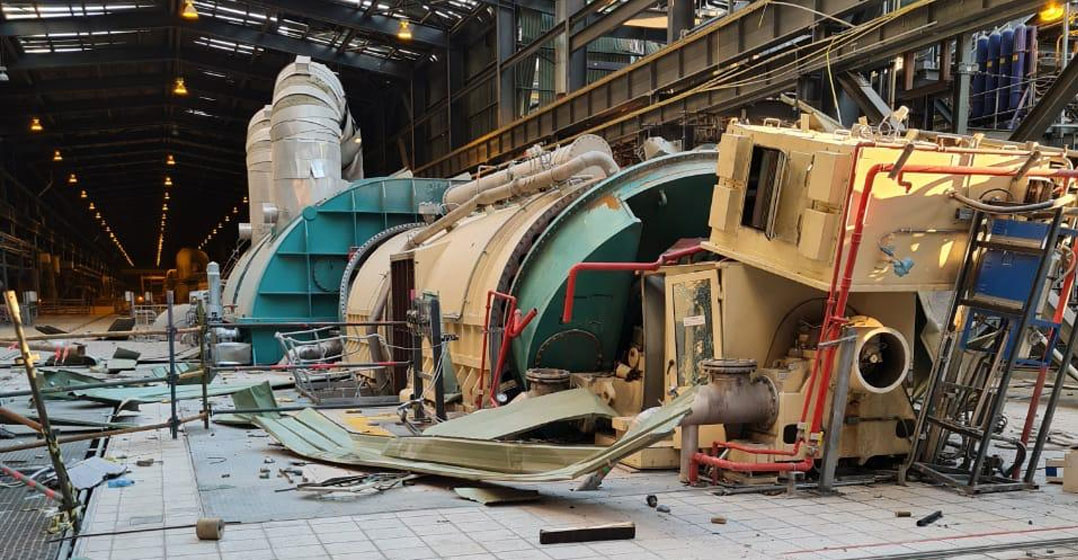
    Destruction at the scene of an explosion at the Medupi power station earlier this year

    Hybrid warfare is gaining traction globally as the preferred option for conducting malicious statecraft in the grey zone between peace and war. There is a growing international trend in attacking a nation’s specific vulnerabilities, including the national power grid and its critical infrastructure.

    The term hybrid warfare was coined by William Nemeth in 2002. He described it as warfare “where a wide range of overt and covert military, paramilitary and civilian measures are employed in a highly integrated design. The adversary tries to influence influential policymakers and key decision makers by combining kinetic operations with subversive effort. The aggressor often resorts to clandestine actions, to avoid attribution and retribution.”

    This kind of warfare is also associated with grey zones – in other words actions that fall just short of war.

    Hybrid threats are commonly associated with terrorism, organised crime and militants within society

    A hybrid attack and by implication a hybrid threat, is “an emerging, but ill-defined notion in conflict studies. It refers to the use of unconventional methods as part of a multi-domain warfighting approach. These methods aim to disrupt and disable an opponent’s actions without engaging in open hostilities.”

    Hybrid threats are also commonly associated with terrorism, organised crime and militants within society.

    We have been involved in defence and security studies for many years and one of us has been researching the new security challenges of the 21st century such as hybrid warfare and the use of lawfare.

    Hybrid attacks on national power generation’s critical infrastructure are a known strategy. This raises questions about recent incidents in South Africa during which the country’s electricity infrastructure was allegedly sabotaged. The target was Eskom.

    An ever-growing portfolio of academic opinion is being published about this phenomenon and its specific linkages to Russia and China.

    Cyberterrorists

    At the end of 2015 and 2016, the Ukrainian power grid fell victim to a directed Russian hybrid attack. German power infrastructure was also attacked during 2018 and 2020 by Russian cyberterrorists.

    The North Atlantic Treaty Alliance (Nato) has accused Russsia of using hybrid warfare to achieve a number of objectives. These include undermining pro-Western governments, dividing and weakening the Nato alliance, or advancing its own economic interests.

    More passive applications have also been identified. For example, the installation of equipment that could be used as a backdoor entry into a country’s energy system.

    Last year, the US government seized a Chinese electricity transformer that was to be installed in Colorado. The fear of the then US administration was that it might be used to compromise the country’s power grid. This led to an US executive order blocking the installation of foreign manufactured and supplied systems and components on the US power grid.

    The case of Eskom

    In mid-November, there were incidents at two strategic power stations in South Africa that raised alarm bells.

    In the first, an electricity tower that powered the coal conveyor belt at the Lethabo facility collapsed. This came shortly after an extension cord was dropped on a transformer at the Matimba power station. Three power units were taken out of action, and contributed to a renewed bout of power cuts.

    Both incidents were investigated as possible attempts at sabotage. Shortly afterwards, Eskom CEO André de Ruyter issued a statement saying that there was evidence of sabotage at the Lethabo plant.

    In our view, these two incidents can be classified as hybrid threats – or more aptly, hybrid attacks. They highlight the continued hybrid threat to the South African power grid.
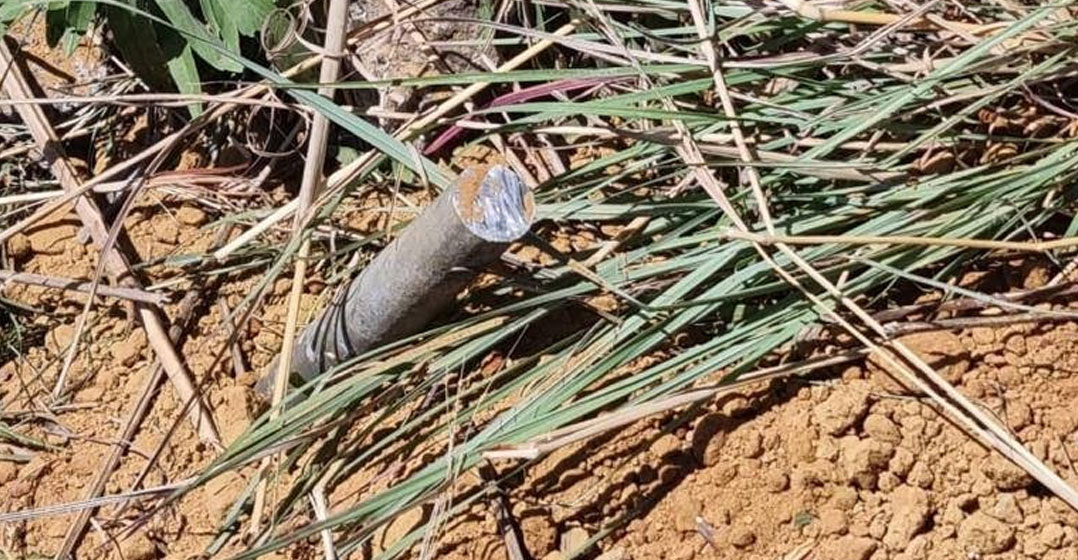
    This photo shows a stay – a type of support for an electricity pylon – that appeared to have been cut near Lethabo power station. It caused the pylon to topple over onto another power line that was a backup power supply to Lethabo’s overland coal conveyor. Photo – Supplied

    Our view is informed by narratives equating the mismanagement and corruption of the past decade as domestic terrorism or commercial terrorism. These use a combination of various tools within the trade of hybrid warfare.

    In addition, a recent report highlighted South African vulnerability to several types of terrorism-related risks, one of which is domestic terrorism. The report was on evaluation of anti-money laundering and counter-terrorist financing measures released by national treasury.

    Sabotage is an instrument from the counterinsurgency toolbox. In South Africa, it’s been used in the past to destabilise the status quo.

    The Lethabo and Matimba incidents point to acts of precision that affected the stability of the power grid.

    In addition, they cast further suspicion on the August 2021 explosion at the Medupi power station, South Africa’s latest and largest fossil fuel burning electricity plant.

    South Africa needs to take note of these events, learn from them, and categorise them correctly within the growing theory and practice of hybrid warfare

    These attacks can (and are) combined with other (hybrid) threats such as fraud and corruption within the tender processes for procurement programmes, crippling the maintenance and repair budget of Eskom.

    The cases of Eskom sabotage seem to be quite primitive, albeit effective. But there’s considerable scope for growth in sophistication and effectiveness once modern (off-the-shelf) technology and software capabilities are combined with the malicious intent inherent in political, bureaucratic, commercial and altruistic rivalry.

    The intended effects of hybrid threats and attacks on national power grids cover a number of potential possibilities:

    • Firstly, there is simply the aim to bring about a typical power outage. But this can be escalated to destabilise the entire power grid.
    • Secondly, the intention could be to undermine confidence in local municipalities, which in turn would affect support of political parties.
    • Thirdly, parties that have political or commercial interests may use them to sway opinions.

    So, who could be behind them?

    One considerable motive for a variety of actors in South Africa is its position as the eighth largest per capita emitter of greenhouse gases in the world. Eskom alone is emitting two-fifths of South Africa’s greenhouse gases.

    One potential originator of the attack could be eco activists who might want to destabilise the power grid. Attacks on the power utility could be used to bolster the growing national and international call for carbon free energy production.

    Another potential originator of the attack could be those pursuing the considerable commercial interests at stake in the growing renewable energy market in South Africa and internationally. For example, a country like China, which is the largest solar panels manufacturer, would benefit tremendously from a flourishing renewable energy market in South Africa following the destabilisation of Eskom.

    South Africa needs to take note of these events, learn from them, and categorise them correctly within the growing theory and practice of hybrid warfare.

    Such awareness will enable the country to formulate appropriate responses based on international practice in building resilience. It would also help the country avoid responses that could result in further destabilisation of the economy and society.The Conversation

    • Written by Sascha-Dominik (Dov) Bachmann, professor in law and co-convener of the National Security Hub (University of Canberra), University of Canberra, and Dries Putter, lecturer at the faculty of military science, Stellenbosch University
    • This article is republished from The Conversation under a Creative Commons licence
    Follow TechCentral on Google News Add TechCentral as your preferred source on Google


    Andre de Ruyter Eskom
    WhatsApp YouTube
    Share. Facebook Twitter LinkedIn WhatsApp Telegram Email Copy Link
    Previous ArticleE-tolls compliance falls to lowest level ever
    Next Article How Sars is using machine learning and big data to nail tax offenders

    Related Posts

    Not enough: Eskom unions spurn above-inflation wage offer

    Not enough: Eskom unions spurn above-inflation wage offer

    17 February 2026
    Blu Label lands energy trading licence from Nersa - Mark Levy

    Blu Label lands electricity trading licence from Nersa

    17 February 2026
    Nersa blunder triggers sharper electricity tariff increases

    Nersa blunder triggers sharper electricity tariff increases

    9 February 2026
    Company News
    Service is everyone's problem now - and that's exactly why the Atlassian Service Collection matters

    Service is everyone’s problem now – why the Atlassian Service Collection matters

    20 February 2026
    Customers have new expectations. Is your CX ready? 1Stream

    Customers have new expectations. Is your CX ready?

    19 February 2026
    South Africa's cybersecurity challenge is not a tool problem - Nicholas Applewhite, Trinexia South Africa

    South Africa’s cybersecurity challenge is not a tool problem

    19 February 2026
    Opinion
    A million reasons monopolies don't work - Duncan McLeod

    A million reasons monopolies don’t work

    10 February 2026
    The author, Business Leadership South Africa CEO Busi Mavuso

    Eskom unbundling U-turn threatens to undo hard-won electricity gains

    9 February 2026
    South Africa's skills advantage is being overlooked at home - Richard Firth

    South Africa’s skills advantage is being overlooked at home

    29 January 2026

    Subscribe to Updates

    Get the best South African technology news and analysis delivered to your e-mail inbox every morning.

    Latest Posts
    MultiChoice scraps annual DStv price hikes for 2026 - David Mignot

    MultiChoice scraps annual DStv price hike

    20 February 2026
    What Gen Z really thinks about the tech world it inherited - Tinashe Mazodze

    What Gen Z really thinks about the tech world it inherited

    20 February 2026
    Showmax 'can't continue' in its current form

    Showmax ‘can’t continue’ in its current form

    20 February 2026
    Free Market Foundation slams treasury's proposed gambling tax

    Free Market Foundation slams treasury’s proposed gambling tax

    20 February 2026
    © 2009 - 2026 NewsCentral Media
    • Cookie policy (ZA)
    • TechCentral – privacy and Popia

    Type above and press Enter to search. Press Esc to cancel.

    Manage consent

    TechCentral uses cookies to enhance its offerings. Consenting to these technologies allows us to serve you better. Not consenting or withdrawing consent may adversely affect certain features and functions of the website.

    Functional Always active
    The technical storage or access is strictly necessary for the legitimate purpose of enabling the use of a specific service explicitly requested by the subscriber or user, or for the sole purpose of carrying out the transmission of a communication over an electronic communications network.
    Preferences
    The technical storage or access is necessary for the legitimate purpose of storing preferences that are not requested by the subscriber or user.
    Statistics
    The technical storage or access that is used exclusively for statistical purposes. The technical storage or access that is used exclusively for anonymous statistical purposes. Without a subpoena, voluntary compliance on the part of your Internet Service Provider, or additional records from a third party, information stored or retrieved for this purpose alone cannot usually be used to identify you.
    Marketing
    The technical storage or access is required to create user profiles to send advertising, or to track the user on a website or across several websites for similar marketing purposes.
    • Manage options
    • Manage services
    • Manage {vendor_count} vendors
    • Read more about these purposes
    View preferences
    • {title}
    • {title}
    • {title}