Close Menu
TechCentralTechCentral

    Subscribe to the newsletter

    Get the best South African technology news and analysis delivered to your e-mail inbox every morning.

    Facebook X (Twitter) YouTube LinkedIn
    WhatsApp Facebook X (Twitter) LinkedIn YouTube
    TechCentralTechCentral
    • News
      South Africa's midday power glut is a hidden risk for wheeling deals

      South Africa’s midday power glut is a hidden risk for wheeling deals

      15 October 2026
      Why South Africa is turning its back on 'screwdriver' car plants - Parks Tau

      Why South Africa is turning its back on ‘screwdriver’ car plants

      15 October 2026
      Nonkqubela Thathakahle Jordan-Dyani

      Why cybersecurity is now a national security issue for South Africa

      15 October 2026
      Armoured cars and cyber cover: the new executive perks in South Africa

      Armoured cars and cyber cover: the new executive perks in South Africa

      15 October 2026
      Your car's ADAS may be seeing skew

      Your car’s ADAS may be seeing skew

      15 October 2026
    • World
      AI is now holding up the world economy, says IMF

      AI is now propping up the world economy, says IMF

      12 October 2026
      SpaceX takes aim at US wireless carriers with spectrum acquisition

      Starlink is coming for your mobile operator

      9 October 2026
      The AI PC is finally here. It's just very expensive - Jensen Huang, Satya Nadella

      The AI PC is finally here. It’s just very expensive

      8 October 2026
      The memory crunch is making Samsung fabulously rich

      The memory crunch is making Samsung fabulously rich

      8 October 2026
      SpaceX to borrow $40-billion to buy Nvidia chips

      SpaceX to borrow $40-billion to buy Nvidia chips

      7 October 2026
    • In-depth

      10 days that changed the course of AI

      21 September 2026
      Meta to the AI industry: slow down without us - Mark Zuckerberg

      Meta to the AI industry: slow down without us

      16 September 2026
      Google DeepMind CEO Demis Hassabis. Image: John Sears

      The plan to stop AI from breaking the world

      16 July 2026
      The internet has a Strait of Hormuz problem

      The internet has a Strait of Hormuz problem

      15 July 2026
      AI boom sparks rally, frenzy and fear

      AI boom sparks rally, frenzy and fear

      11 June 2026
    • TCS
      W&W | LDV's Gerhard Moolman on electric bakkies, fleet orders and 'school fees'

      W&W | LDV’s Gerhard Moolman on electric bakkies and fleets

      9 October 2026
      TCS | Frogfoot sees bigger fibre deals coming - TechCentral Show guests Abraham van der Merwe and Shane Chorley

      TCS | Frogfoot sees bigger fibre deals coming

      8 October 2026
      Meet the CIO | Vodacom's Mohamed Sami on the agentic future

      Meet the CIO | Vodacom’s Mohamed Sami on the agentic future

      5 October 2026
      Lexi Novitske, general partner at Norrsken22, on the TechCentral Show

      TCS | Norrsken22’s Lexi Novitske on how China is winning African tech

      1 October 2026
      TCS | Dominic White and Adam Ely on AI agents going rogue

      TCS | Dominic White and Adam Ely on AI agents going rogue

      29 September 2026
    • Opinion
      When a machine can choose, who does it become? Fanie van Rooyen

      When a machine can choose, who does it become?

      9 October 2026
      Let South Africans jailbreak their way to digital sovereignty - Dirk de Vos

      Let South Africans jailbreak their way to digital sovereignty

      5 October 2026
      South Africa's next energy crisis is in the accounts department - Craig Holmes

      South Africa’s next energy crisis is in the accounts department

      29 September 2026
      The steam engine lesson AI doomsayers keep missing - Sam Clarke

      The steam engine lesson AI doomsayers keep missing

      28 September 2026
      Let South Africans jailbreak their way to digital sovereignty - Dirk de Vos

      Regulating AI: apply the laws we have first

      21 September 2026
    • Company News
      • 1Stream
      • Africa Data Centres
      • AfriGIS
      • Altron Digital Business
      • Altron Document Solutions
      • Altron Group
      • Arctic Wolf
      • Ascent Technology
      • AvertITD
      • BBD
      • Braintree
      • CallMiner
      • CambriLearn
      • CM.com
      • Contactable
      • CYBER1 Solutions
      • Digicloud Africa
      • Digimune
      • Domains.co.za
      • ESET
      • Euphoria Telecom
      • HOSTAFRICA
      • Incredible Business
      • iONLINE
      • IQbusiness
      • Iris Network Systems
      • Kaspersky
      • LSD Open
      • Mitel
      • NEC XON
      • Netstar
      • Network Platforms
      • Next DLP
      • Ovations
      • Paracon
      • Paratus
      • Publishared
      • Q-KON
      • SevenC
      • SkyWire
      • Solid8 Technologies
      • Telit Cinterion
      • Telviva
      • Tenable
      • Vertiv
      • Videri Digital
      • Vodacom Business
      • Vox
      • Wipro
      • Workday
      • XLink
    • Sections
      • AI and machine learning
      • Banking
      • Broadcasting and Media
      • Cloud services
      • Contact centres and CX
      • Cryptocurrencies
      • Education and skills
      • Electronics and hardware
      • Energy and sustainability
      • Enterprise software
      • Financial services
      • HealthTech
      • Information security
      • Internet and connectivity
      • Internet of Things
      • Investment
      • IT services
      • Lifestyle
      • Policy and regulation
      • Public sector
      • Retail and e-commerce
      • Satellite communications
      • Science
      • SMEs and start-ups
      • Social media
      • Talent and leadership
      • Telecoms
      • Watts & Wheels
    • Events
    • Advertise
    TechCentralTechCentral
    Home » Sections » Telecoms » Facebook eyes ‘next billion’ with 2Africa cable, fibre robots

    Facebook eyes ‘next billion’ with 2Africa cable, fibre robots

    By Duncan McLeod7 October 2021
    Twitter LinkedIn Facebook WhatsApp Email Telegram Copy Link
    Get breaking news on WhatsApp

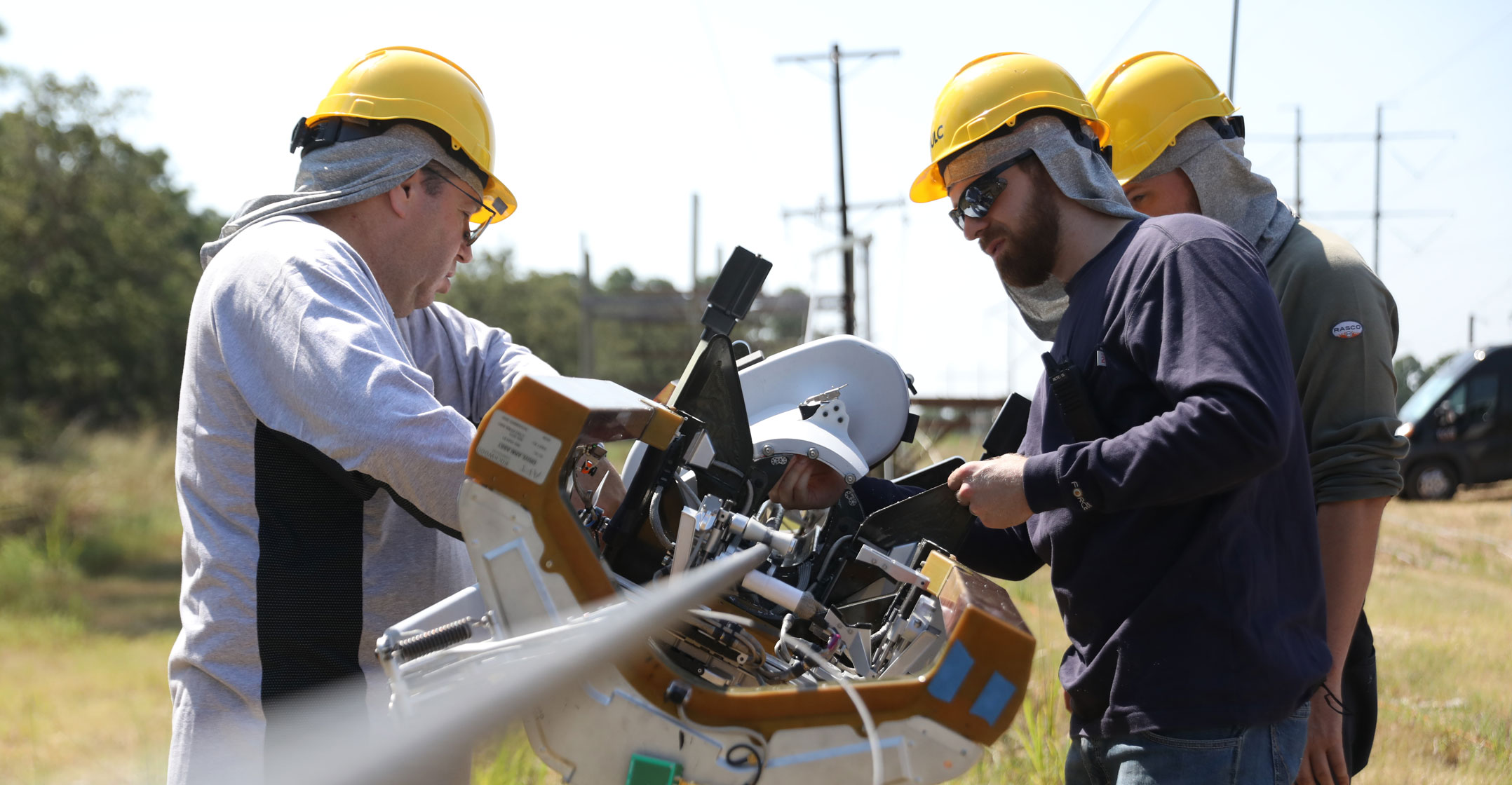
    Engineers with the Bombyx fibre-deployment robot

    Facebook is upping its efforts to connect the next billion people to the Internet – many of whom live in Africa – with new investments in subsea cables, robotics and wireless last-mile technologies.

    The initiatives include the 2Africa submarine cable system, which, when completed in about 18 months’ time, will be longest such system in the world at more than 45 000km. 2Africa is being built in partnership with telecommunications operators, including South Africa’s MTN Group and Vodacom Group parent Vodafone Group, and will encircle Africa and provide connectivity to India and Pakistan through the Arabian Gulf. Three landing stations will be built in South Africa, with the Eastern Cape set to get its first-ever landing station.

    2Africa will connect to countries that together have about three billion people, Facebook said recently.

    Portions of the 2Africa project will use a new aluminium conductor system, replacing traditional copper conductors, which makes such a massive cable more economical to build. It’s also investing in repeater buoys to keep the system powered.

    Engineers are working on buoys that can deliver power to the repeaters from the middle of the ocean

    “Engineers are working on buoys that can deliver power to the repeaters from the middle of the ocean,” the company said. “We’re exploring more sustainable ways to do this, harnessing a combination of wave-energy convertors and solar panels.”

    Facebook has at the same time provided details about a last-mile wireless networking technology called Terragraph, designed to use high-band frequencies to deliver fast last-mile Internet services in remote regions and emerging markets from fibre nodes. Facebook licenses the Terragraph technology for free to original equipment manufacturers. It has already been deployed in rural Alaska and elsewhere.

    “Terragraph uses transmitters on street fixtures and rooftops to create a distributed network for high-speed reliable connectivity in homes and businesses. Terragraph is faster to deploy than trenched fibre because it builds on existing fibre points of presence and extends the capacity wirelessly, through nodes mounted on existing street fixtures such as lamp posts and traffic lights,” Facebook explained in a statement.

    Bombyx, the fibre robot

    Another initiative from Facebook is a robot, called Bombyx, that can be used to deploy fibre cables more cost-effectively along power lines, with no need to switch off the electricity while they’re being deployed. Facebook hopes the technology will drive down the cost of deployment while making it quicker and easier to roll out networks in underserviced areas around the world.

    Bombyx, Facebook said, can climb medium-voltage power lines and install fibre onto them. “We are making Bombyx fully autonomous, using machine vision sensors to help it better navigate around obstacles.”

    Current methods of deploying fibre are labour intensive and costly, it said. “In most of the world, medium-voltage power lines pass down almost every street. If we could find a way to add fibre to those power lines, we would have a solution that could be applied globally.”

    We have shed 4.5kg from the weight of the robot and compressed the time it takes for Bombyx to cross a power line from 17 minutes to under four minutes

    “Our solution is Bombyx, an aerial fibre deployment robot that makes it faster and cheaper to deploy fibre. Latin for silkworm, Bombyx is our attempt to make the single biggest drop in the cost of terrestrial fibre deployment by combining innovations in the fields of robotics and fibre-optic cable design to increase the amount of terrestrial fibre on land — without the expense of trenching to lay fibre underground.

    “Since starting work on Bombyx, we have shed 4.5kg from the weight of the robot, compressed the time it takes for Bombyx to cross a power line from 17 minutes to under four minutes, and improved the stabilisation mechanism to ensure that the robot stays upright on the power line,” Facebook said in the statement.

    “We are also now working on getting the robot from operating semi-autonomously to fully autonomously when going over an obstacle. As we move to full autonomy, technicians will be able to simply load Bombyx onto the line and then allow the robot to plot a course past obstacles and navigate itself along the line.”
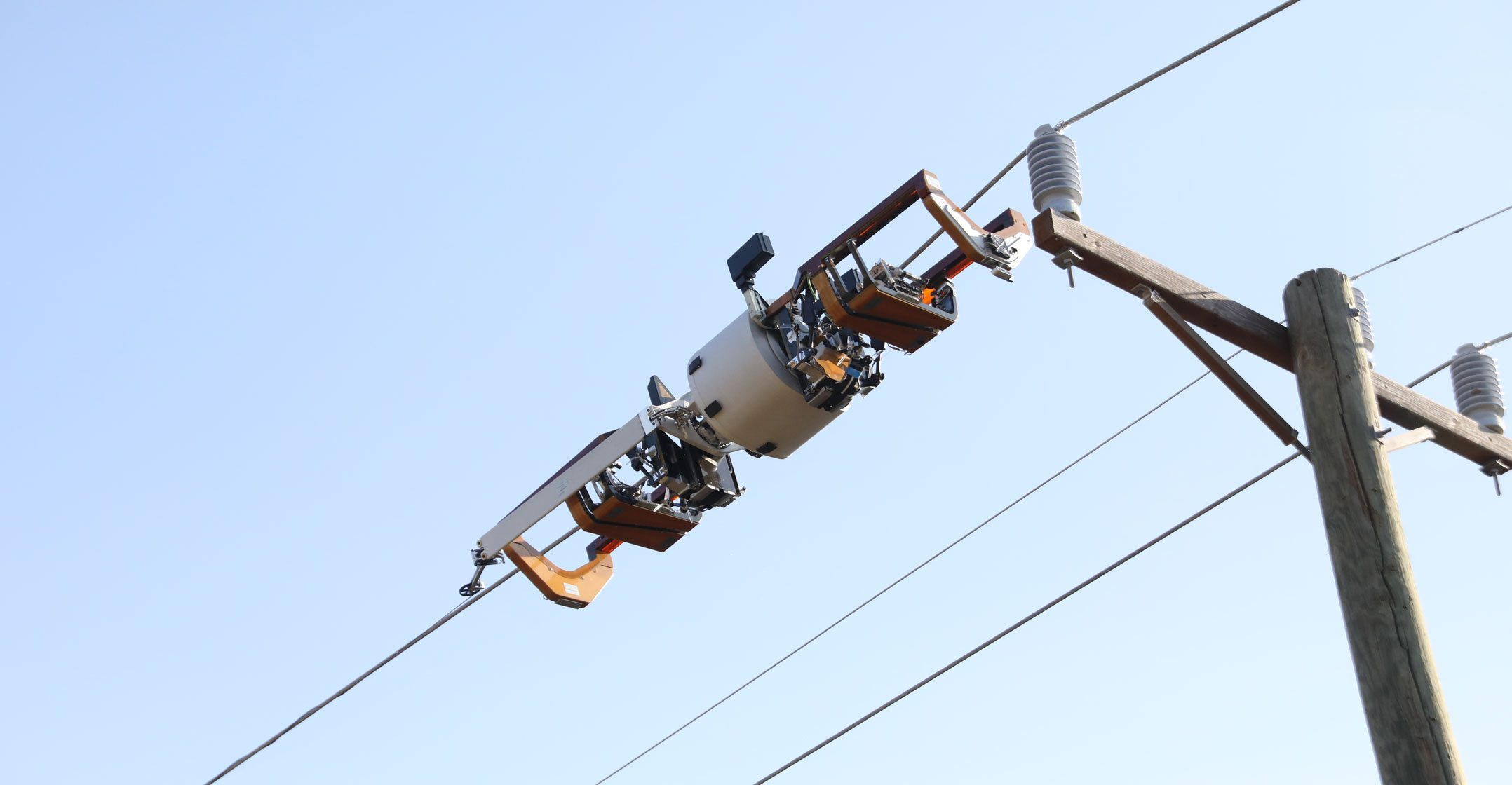
    Bombyx in action

    “Our work on Bombyx was inspired by helical fibre-optic wrapping techniques pioneered in the 1980s, but those methods interrupted power supply to customers in installation areas. We realised that to install fibre without cutting off homes and businesses, we would also need this wrapping machine to cross obstacles in its route without human assistance.

    “First, however, we had to address some pressing fibre cable design challenges. For instance, when you wrap fibre around a power line, you need to carry the full span of fibre you intend to deploy. A kilometre of normal aerial fibre weighs 113kg, and even the special cable used in the older helical wrap systems weighed 36kg. Combined with a robot to deploy the fibre, it would be too heavy for power lines, which are typically very thin and can only support so much weight. Medium-voltage conductors also get really hot, so we needed a fibre cable that could withstand potential stretching and melting.”

    Balancing act

    “To address these design challenges, we employed a few strategies. First, we used Kevlar braiding to make the cable strong, while remaining small and flexible. Next, we addressed the size and weight challenge by reducing the fibre count from 96 to 24. Thanks to newer technologies, a single fibre can serve up to a thousand homes, so 24 fibres would be able to serve all the homes and businesses into which each power line feeder passes. Finally, we worked with top material suppliers to develop a jacket for the fibre so it could survive the high temperatures found on power lines and the arcing damage in high voltage.

    “Designing a robot to crawl along power lines and to clear obstacles was our next big task. Bombyx uses advanced motion techniques to balance itself and to flip over as it moves over obstacles and wraps fibre around power lines.

    “Each robot will eventually be capable of installing over a kilometre of fibre and passing dozens of intervening obstacles autonomously in about an hour and a half. While it is still early days, engineers are optimistic about its potential impact,” Facebook said. — © 2021 NewsCentral Media


    Add TechCentral as a preferred source on GoogleFollow TechCentral on Google NewsGet breaking news on WhatsApp


    2Africa 2Africa cable Bombyx Facebook Facebook Bombyx Facebook Terragraph MTN Terragraph
    WhatsApp YouTube
    Share. Facebook Twitter LinkedIn WhatsApp Telegram Email Copy Link
    Previous ArticleThe struggle to get electric cars onto South Africa’s roads
    Next Article SA networking distributor CFS wins global award from Corning

    Related Posts

    MTN hits 10Gbit/s wireless speeds in South African 5G-Advanced trial

    MTN hits 10Gbit/s wireless speeds in South African 5G-Advanced trial

    13 October 2026
    Shoprite takes on the banking apps with airtime on Sixty60

    Shoprite takes on the banking apps with airtime on Sixty60

    9 October 2026
    DNI's R500-million bet on Mission Mobile is mostly debt - Timothy Strike

    Behind DNI’s R500-million bet on Mission Mobile

    5 October 2026
    Company News
    Paratus Zambia delivers Starlink to thousands of children in Family Legacy schools

    Paratus Zambia delivers Starlink to thousands of children in Family Legacy schools

    15 October 2026
    Data sovereignty in South Africa is not an address - Ascent Technology, Johan Lamberts

    Data sovereignty in South Africa is not an address

    15 October 2026
    AI is only as good as your asset data

    AI is only as good as your asset data

    14 October 2026
    Opinion
    When a machine can choose, who does it become? Fanie van Rooyen

    When a machine can choose, who does it become?

    9 October 2026
    Let South Africans jailbreak their way to digital sovereignty - Dirk de Vos

    Let South Africans jailbreak their way to digital sovereignty

    5 October 2026
    South Africa's next energy crisis is in the accounts department - Craig Holmes

    South Africa’s next energy crisis is in the accounts department

    29 September 2026

    Subscribe to Updates

    Get the best South African technology news and analysis delivered to your e-mail inbox every morning.

    Latest Posts
    South Africa's midday power glut is a hidden risk for wheeling deals

    South Africa’s midday power glut is a hidden risk for wheeling deals

    15 October 2026
    Why South Africa is turning its back on 'screwdriver' car plants - Parks Tau

    Why South Africa is turning its back on ‘screwdriver’ car plants

    15 October 2026
    Nonkqubela Thathakahle Jordan-Dyani

    Why cybersecurity is now a national security issue for South Africa

    15 October 2026
    Armoured cars and cyber cover: the new executive perks in South Africa

    Armoured cars and cyber cover: the new executive perks in South Africa

    15 October 2026
    © 2009 - 2026 NewsCentral Media
    Built and maintained by Chronon
    • Cookie policy (ZA)
    • TechCentral – privacy and Popia

    Type above and press Enter to search. Press Esc to cancel.

    Manage consent

    TechCentral uses cookies to enhance its offerings. Consenting to these technologies allows us to serve you better. Not consenting or withdrawing consent may adversely affect certain features and functions of the website.

    Functional Always active
    The technical storage or access is strictly necessary for the legitimate purpose of enabling the use of a specific service explicitly requested by the subscriber or user, or for the sole purpose of carrying out the transmission of a communication over an electronic communications network.
    Preferences
    The technical storage or access is necessary for the legitimate purpose of storing preferences that are not requested by the subscriber or user.
    Statistics
    The technical storage or access that is used exclusively for statistical purposes. The technical storage or access that is used exclusively for anonymous statistical purposes. Without a subpoena, voluntary compliance on the part of your Internet Service Provider, or additional records from a third party, information stored or retrieved for this purpose alone cannot usually be used to identify you.
    Marketing
    The technical storage or access is required to create user profiles to send advertising, or to track the user on a website or across several websites for similar marketing purposes.
    • Manage options
    • Manage services
    • Manage {vendor_count} vendors
    • Read more about these purposes
    View preferences
    • {title}
    • {title}
    • {title}
    🇿🇦 Sign up to the TechCentral newsletter