
Close Menu
TechCentralTechCentral

    Subscribe to the newsletter

    Get the best South African technology news and analysis delivered to your e-mail inbox every morning.

    Facebook X (Twitter) YouTube LinkedIn
    WhatsApp Facebook X (Twitter) LinkedIn YouTube
    TechCentralTechCentral
    • News
      From foldgate to the iPhone Duo: the strange history of folding phones

      From foldgate to the iPhone Duo: the strange history of folding phones

      10 September 2026
      Meet the CIO | Shoprite's Chris Shortt on what a supermarket becomes

      Meet the CIO | Shoprite’s Chris Shortt on what a supermarket becomes

      9 September 2026
      How much Apple's iPhone Duo will cost in South Africa

      How much Apple’s iPhone Duo will cost in South Africa

      9 September 2026
      Coalition leads public revolt against treasury's crypto draft

      Coalition leads public revolt against treasury’s crypto draft

      9 September 2026
      Reserve Bank says its approach to stablecoins is still unsettled

      Reserve Bank says its approach to stablecoins is not settled

      9 September 2026
    • World
      'This is not circular': Jensen Huang defends $3.5-billion MediaTek deal

      ‘This is not circular’: Jensen Huang defends $3.5-billion MediaTek deal

      2 September 2026
      AI-generated music banned from Australian charts

      AI-generated music banned from Australian charts

      26 August 2026
      Traders brace for a R4.5-trillion swing in Nvidia's value

      Traders brace for a R4.5-trillion swing in Nvidia’s value

      25 August 2026
      Russia building its own Starlink - and faster than expected - Vadym Skibitskyi

      Russia building its own Starlink – and faster than expected

      11 August 2026
      Meta AI will now tell parents if their teen is in crisis

      Meta AI will now tell parents if their teen is in crisis

      17 July 2026
    • In-depth
      Google DeepMind CEO Demis Hassabis. Image: John Sears

      The plan to stop AI from breaking the world

      16 July 2026
      The internet has a Strait of Hormuz problem

      The internet has a Strait of Hormuz problem

      15 July 2026
      AI boom sparks rally, frenzy and fear

      AI boom sparks rally, frenzy and fear

      11 June 2026
      Every plug-in hybrid on sale in South Africa, ranked by price - Lamborghini Temerario

      Every plug-in hybrid on sale in South Africa, ranked by price

      7 June 2026
      What Wi-Fi 8 will mean for wireless networks

      What Wi-Fi 8 will mean for wireless networks

      1 June 2026
    • TCS
      Rubicon's EV charging network is profitable - and growing fast - Watts & Wheels

      Rubicon’s EV charging network is profitable – and growing fast

      8 September 2026
      Winstone Jordaan on building a national EV charging network

      Winstone Jordaan on building a national EV charging network

      2 September 2026
      Watts & Wheels S1E8: 'Tesla lands in Africa, just not here'

      Watts & Wheels S1E8: ‘Tesla lands in Africa, just not here’

      24 August 2026
      TCS | Herotel CEO Van Zyl Botha on beating Starlink to South Africa

      TCS | Herotel CEO Van Zyl Botha on beating Starlink to South Africa

      14 August 2026
      Meet the CIO | Discovery's Derek Wilcocks on AI, guardrails and growth

      Meet the CIO | Derek Wilcocks on how AI personalised Vitality

      13 August 2026
    • Opinion
      The fragile joint in the Capitec machine - Pambos Soteriades

      The R197-billion market the banks can’t reach

      25 August 2026
      South African tech's compounding debt problem - Jannie van Zyl

      Management consulting as we know it is over

      21 August 2026
      South African tech's compounding debt problem - Jannie van Zyl

      The most dangerous customer is the quiet one

      10 August 2026
      South African tech's compounding debt problem - Jannie van Zyl

      South African tech’s compounding debt problem

      29 July 2026
      The fragile joint in the Capitec machine - Pambos Soteriades

      Best network, worst vibes: the puzzle of SA telecoms

      20 July 2026
    • Company Hubs
      • 1Stream
      • Africa Data Centres
      • AfriGIS
      • Altron Digital Business
      • Altron Document Solutions
      • Altron Group
      • Arctic Wolf
      • Ascent Technology
      • AvertITD
      • BBD
      • Braintree
      • CallMiner
      • CambriLearn
      • CM.com
      • Contactable
      • CYBER1 Solutions
      • Digicloud Africa
      • Digimune
      • Domains.co.za
      • ESET
      • Euphoria Telecom
      • HOSTAFRICA
      • Incredible Business
      • iONLINE
      • IQbusiness
      • Iris Network Systems
      • Kaspersky
      • LSD Open
      • Mitel
      • NEC XON
      • Netstar
      • Network Platforms
      • Next DLP
      • Ovations
      • Paracon
      • Paratus
      • Q-KON
      • SevenC
      • SkyWire
      • Solid8 Technologies
      • Telit Cinterion
      • Telviva
      • Tenable
      • Vertiv
      • Videri Digital
      • Vodacom Business
      • Vox
      • Wipro
      • Workday
      • XLink
    • Sections
      • AI and machine learning
      • Banking
      • Broadcasting and Media
      • Cloud services
      • Contact centres and CX
      • Cryptocurrencies
      • Education and skills
      • Electronics and hardware
      • Energy and sustainability
      • Enterprise software
      • Financial services
      • HealthTech
      • Information security
      • Internet and connectivity
      • Internet of Things
      • Investment
      • IT services
      • Lifestyle
      • Policy and regulation
      • Public sector
      • Retail and e-commerce
      • Satellite communications
      • Science
      • SMEs and start-ups
      • Social media
      • Talent and leadership
      • Telecoms
      • Watts & Wheels
    • Events
    • Advertise
    TechCentralTechCentral
    Home » Sections » Electronics and hardware » From foldgate to the iPhone Duo: the strange history of folding phones

    From foldgate to the iPhone Duo: the strange history of folding phones

    From Royole's FlexPai to tri-folds: how the folding phone idea finally reached Apple's hands.
    By Agency Staff10 September 2026
    Twitter LinkedIn Facebook WhatsApp Email Telegram Copy Link
    Get breaking news on WhatsApp

    From foldgate to the iPhone Duo: the strange history of folding phones
    Very late to the party … Apple’s newly announced iPhone Duo

    The first iPhone in 2007 mainstreamed touch-screen technology, years after it was developed. Now Apple is betting its maiden foldable phone can do the same for a format stuck in a niche despite years of efforts from Samsung and Huawei.

    The $1 999 foldable iPhone Duo, unveiled at Apple’s Cupertino headquarters on Wednesday, marks one of the biggest changes to the flagship device that brings in around half of the company’s revenue and has made it a global technology giant.

    Despite attracting attention with their large screen size, foldable phones have only secured a single-digit percentage share of the overall global smartphone market due to trade-offs — including inferior cameras, a shorter battery life and an awkward crease at the screen centre once the handsets are unfolded.

    Chinese display maker Royole is credited with shipping the first such device in 2018

    But analysts have said Apple, known for grabbing the second-mover advantage by learning from rivals’ mistakes, will likely benefit from supply-chain and technological advances that have made foldables more durable and less prone to creasing.

    Samsung’s latest Galaxy Z Fold8 device, for instance, features a design that has significantly reduced the crease, thanks to years of investment in the technology.

    Here’s a brief timeline of foldables ahead of Apple’s event:

    Early struggles (2018-2021):

    Foldable phone concepts have been around for decades, but Chinese display maker Royole is credited with shipping the first such device in 2018. Its FlexPai phone, with a 7.8-inch outward-folding screen, was widely panned for clunky software and crude plastic hinges.

    Months later, Samsung raised fresh fears about reliability and pricing with the US$2 000 Galaxy Fold, the category’s first mass-market product. Reviewers, including YouTuber Marques Brownlee, reported broken screens, with some peeling a protective layer that resembled a screen protector but wasn’t in a debacle dubbed “foldgate”. Samsung delayed the launch and retrieved all sample devices.

    The period also saw competing visions over the best shape for a foldable. The Galaxy Fold targeted customers with its inward-folding screen that expanded into a small tablet, while Motorola revived its iconic Razr in late 2019 with a clamshell design that folded a normal-size phone in half.

    Huawei’s Mate X, also released in 2019, folded outward and wrapped a single screen around the outside of the device, while Microsoft in 2020 skipped a flexible screen and joined two separate displays with a hinge in its Surface Duo. The Windows maker has since discontinued the device.
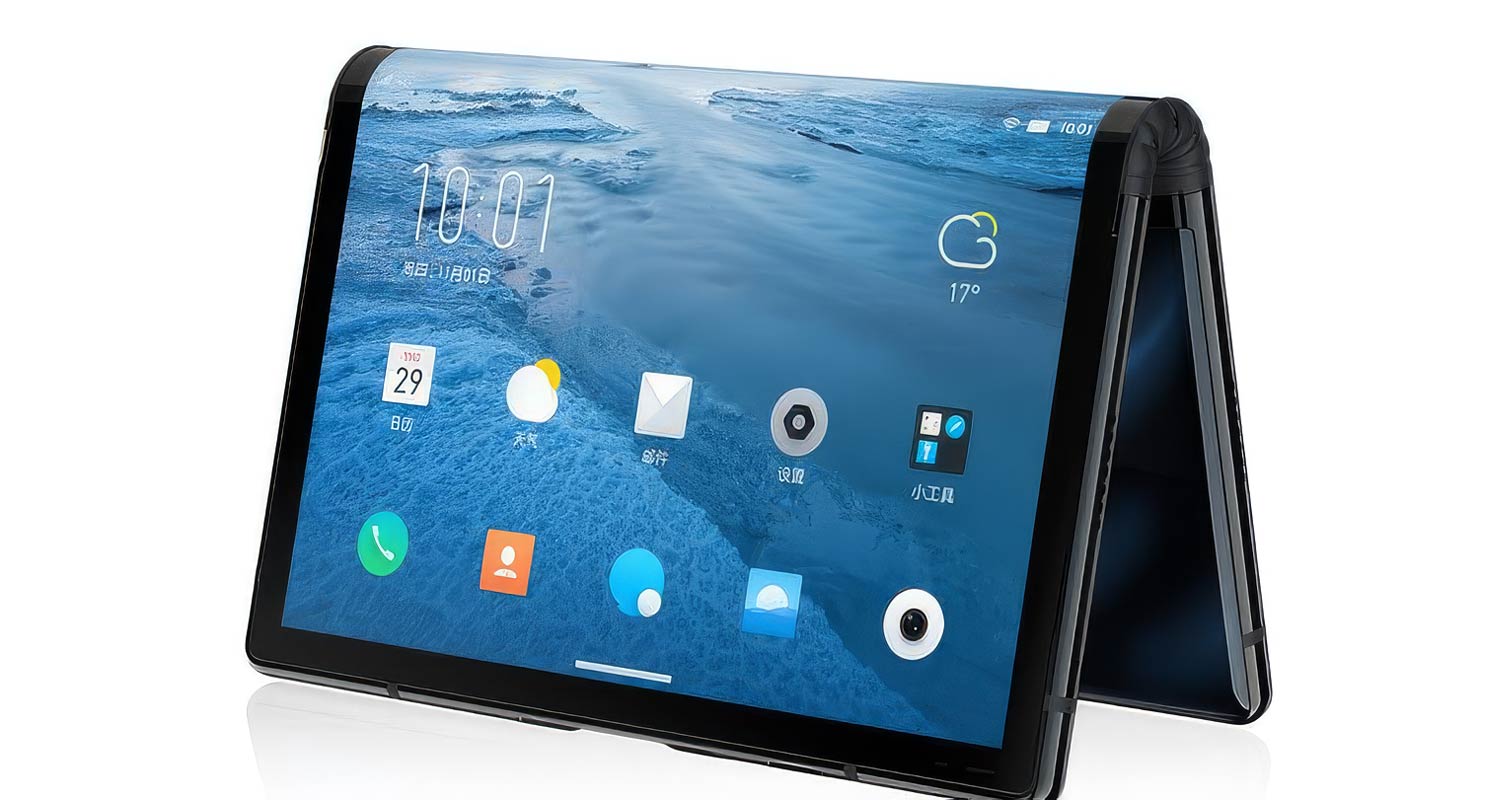
    Royole is credited with shipping the first folding phone, the FlexPai, in 2018. It was widely panned for clunky software and crude plastic hinges
    Royole is credited with shipping the first folding phone, the FlexPai, in 2018. It was widely panned for clunky software and crude plastic hinges

    Slow march into the mainstream (2022-2026):

    Google entered the market in 2023 with its $1 799 Pixel Fold, a passport-shaped device whose wider, shorter screen opened closer to a mini tablet. Meanwhile, Samsung and its Chinese rivals delivered steady improvements to foldables until the next big leap arrived in 2024 with tri-folds.

    Huawei launched the first such device in September that year at $2 800, which could fold three ways like an accordion and became an instant best-seller. Samsung launched its own multi-folding smartphone in December 2025.

    Today, Samsung leads the global foldable phone market with a share of about 40%, followed by Huawei with a 30% share, according to research firm Counterpoint.

    The passport shape, meanwhile, has become a dividing line.

    Google abandoned the design after 2023 while Samsung used it for one of its latest devices. Apple is expected to adopt the shape as it is geared more towards video and other media consumption rather than a taller, book-style phone built for productivity.

    Samsung's latest foldable, the Galaxy Z Fold8
    Samsung’s latest foldable, the Galaxy Z Fold8

    The passport shape’s wider proportions sit closer to the native aspect ratio of most video, shrinking the black bars that frame footage on taller, book-style devices.

    Analysts expect Apple’s entry into the category will accelerate its growth, with IDC estimating that foldable phone shipments would increase nearly 30% this year, outperforming an estimated decline of nearly 1.4% in non-foldable smartphones.

    “Apple’s entry will surely increase competition at the premium end. However, foldables are still a very small part of the overall smartphone market, so there is room for the category to grow well beyond current volumes,” said Tarun Pathak, research director at Counterpoint.  — Aditya Soni, (c) 2026 Reuters

    Add TechCentral as a preferred source on GoogleFollow TechCentral on Google NewsGet breaking news on WhatsApp


    Apple Counterpoint Research Google Huawei IDC iPhone Microsoft Motorola Royole Samsung
    WhatsApp YouTube
    Share. Facebook Twitter LinkedIn WhatsApp Telegram Email Copy Link
    Previous ArticleMeet the CIO | Shoprite’s Chris Shortt on what a supermarket becomes

    Related Posts

    How much Apple's iPhone Duo will cost in South Africa

    How much Apple’s iPhone Duo will cost in South Africa

    9 September 2026
    Shoprite's CTO is thinking of a future where new recruits arrive with their own AI agents - Chris Shortt

    Shoprite’s CTO is thinking of a future where new recruits arrive with their own AI agents

    8 September 2026
    The world map is messing with your head

    The world map is messing with your head

    8 September 2026
    Company News
    Can an online school produce a scientist? CambriLearn has an independent answer

    Can an online school produce a scientist? CambriLearn has an independent answer

    9 September 2026
    The ASUS ExpertCenter Pro ET900N from Altron Arrow

    A petaflop on a desk – rethinking AI infrastructure for South Africa

    9 September 2026
    How dual-source technology is changing laser engraving

    How dual-source technology is changing laser engraving

    8 September 2026
    Opinion
    The fragile joint in the Capitec machine - Pambos Soteriades

    The R197-billion market the banks can’t reach

    25 August 2026
    South African tech's compounding debt problem - Jannie van Zyl

    Management consulting as we know it is over

    21 August 2026
    South African tech's compounding debt problem - Jannie van Zyl

    The most dangerous customer is the quiet one

    10 August 2026

    Subscribe to Updates

    Get the best South African technology news and analysis delivered to your e-mail inbox every morning.

    Latest Posts
    From foldgate to the iPhone Duo: the strange history of folding phones

    From foldgate to the iPhone Duo: the strange history of folding phones

    10 September 2026
    Meet the CIO | Shoprite's Chris Shortt on what a supermarket becomes

    Meet the CIO | Shoprite’s Chris Shortt on what a supermarket becomes

    9 September 2026
    How much Apple's iPhone Duo will cost in South Africa

    How much Apple’s iPhone Duo will cost in South Africa

    9 September 2026
    Coalition leads public revolt against treasury's crypto draft

    Coalition leads public revolt against treasury’s crypto draft

    9 September 2026
    © 2009 - 2026 NewsCentral Media
    Built and maintained by Chronon
    • Cookie policy (ZA)
    • TechCentral – privacy and Popia

    Type above and press Enter to search. Press Esc to cancel.

    Manage consent

    TechCentral uses cookies to enhance its offerings. Consenting to these technologies allows us to serve you better. Not consenting or withdrawing consent may adversely affect certain features and functions of the website.

    Functional Always active
    The technical storage or access is strictly necessary for the legitimate purpose of enabling the use of a specific service explicitly requested by the subscriber or user, or for the sole purpose of carrying out the transmission of a communication over an electronic communications network.
    Preferences
    The technical storage or access is necessary for the legitimate purpose of storing preferences that are not requested by the subscriber or user.
    Statistics
    The technical storage or access that is used exclusively for statistical purposes. The technical storage or access that is used exclusively for anonymous statistical purposes. Without a subpoena, voluntary compliance on the part of your Internet Service Provider, or additional records from a third party, information stored or retrieved for this purpose alone cannot usually be used to identify you.
    Marketing
    The technical storage or access is required to create user profiles to send advertising, or to track the user on a website or across several websites for similar marketing purposes.
    • Manage options
    • Manage services
    • Manage {vendor_count} vendors
    • Read more about these purposes
    View preferences
    • {title}
    • {title}
    • {title}