
Close Menu
TechCentralTechCentral

    Subscribe to the newsletter

    Get the best South African technology news and analysis delivered to your e-mail inbox every morning.

    Facebook X (Twitter) YouTube LinkedIn
    WhatsApp Facebook X (Twitter) LinkedIn YouTube
    TechCentralTechCentral
    • News
      ICT is becoming the centre of gravity at Reunert - Anthonie de Beer and Rob Godlonton

      ICT is becoming the centre of gravity at Reunert

      6 August 2026
      Why Discovery is going slow on AI coding agents - Derek Wilcocks

      Why Discovery is going slow on AI coding agents

      6 August 2026
      Google's Gemini leadership team has left the building - Demis Hassabis

      Google’s Gemini leadership team has left the building

      6 August 2026
      SpaceX shares keep sliding - Elon Musk

      SpaceX shares keep sliding

      6 August 2026
      Solly Malatsi stakes South Africa's AI future on staying neutral

      Solly Malatsi stakes South Africa’s AI future on staying neutral

      5 August 2026
    • World
      Meta AI will now tell parents if their teen is in crisis

      Meta AI will now tell parents if their teen is in crisis

      17 July 2026
      IBM shares crash 25% as AI upends software spending - Arvind Krishna

      IBM shares crash 25% as AI upends software spending

      15 July 2026
      Jony Ive's first OpenAI device: an AI smart speaker - Jony Ive and Sam Altman

      Jony Ive’s first OpenAI device: an AI smart speaker

      15 July 2026
      Stripe, Advent in talks to buy PayPal for $53-billion

      Stripe, Advent in talks to buy PayPal for $53-billion

      15 July 2026
      Memory crisis sends smartphone market into steep decline

      Memory crisis sends smartphone market into steep decline

      13 July 2026
    • In-depth
      The plan to stop AI from breaking the world - Google DeepMind CEO Demis Hassabis. Image: John Sears

      The plan to stop AI from breaking the world

      16 July 2026
      The internet has a Strait of Hormuz problem

      The internet has a Strait of Hormuz problem

      15 July 2026
      AI boom sparks rally, frenzy and fear

      AI boom sparks rally, frenzy and fear

      11 June 2026
      Every plug-in hybrid on sale in South Africa, ranked by price - Lamborghini Temerario

      Every plug-in hybrid on sale in South Africa, ranked by price

      7 June 2026
      What Wi-Fi 8 will mean for wireless networks

      What Wi-Fi 8 will mean for wireless networks

      1 June 2026
    • TCS
      TCS+ | How AI is turning hardware into a subscription service - Shane van der Merwe Merchant West

      TCS+ | How AI is turning hardware into a subscription service

      6 August 2026
      TCS+ | Why South African workers must become supervisors of digital labour - Accelera Digital Group Cliff de Wit

      TCS+ | Why South African workers must become supervisors of digital labour

      31 July 2026
      TCS | Rapid deployment rules can't work without municipalities: ACT - Nomvuyiso Batyi

      TCS | Icasa’s rules skip the real bottleneck: ACT

      30 July 2026
      TCS+ | iStore Business on why Apple makes sense for SMEs - Sudesh Pillay and Tamia Nontsikelelo

      TCS+ | iStore Business on why Apple makes sense for SMEs

      30 July 2026
      TCS+ | A smarter approach to cloud for South African businesses - Joel Chacko and Jonathan Oaker

      TCS+ | A smarter approach to cloud for South African businesses

      28 July 2026
    • Opinion
      The author, Jannie van Zyl

      Selling vapour is corporate suicide in slow motion

      16 July 2026
      Brazil's online gambling crackdown is a lesson for South Africa

      How Amazon outmanoeuvred Starlink in South Africa

      15 July 2026
      The Popia problem with agentic AI - Herman Haasbroek

      The Popia problem with agentic AI

      14 July 2026
      The author, Fanie van Rooyen

      South Africa can still catch the AI wave – here’s how

      7 July 2026
      The author, Fanie van Rooyen

      The AI utopia South Africa can’t afford

      1 July 2026
    • Company Hubs
      • 1Stream
      • Africa Data Centres
      • AfriGIS
      • Altron Digital Business
      • Altron Document Solutions
      • Altron Group
      • Arctic Wolf
      • Ascent Technology
      • AvertITD
      • BBD
      • Braintree
      • CallMiner
      • CambriLearn
      • CM Telecom
      • Contactable
      • CYBER1 Solutions
      • Digicloud Africa
      • Digimune
      • Domains.co.za
      • ESET
      • Euphoria Telecom
      • HOSTAFRICA
      • Incredible Business
      • iONLINE
      • IQbusiness
      • Iris Network Systems
      • Kaspersky
      • LSD Open
      • Mitel
      • NEC XON
      • Netstar
      • Network Platforms
      • Next DLP
      • Ovations
      • Paracon
      • Paratus
      • Q-KON
      • SevenC
      • SkyWire
      • Solid8 Technologies
      • Telit Cinterion
      • Telviva
      • Tenable
      • Vertiv
      • Videri Digital
      • Vodacom Business
      • Vox
      • Wipro
      • Workday
      • XLink
    • Sections
      • AI and machine learning
      • Banking
      • Broadcasting and Media
      • Cloud services
      • Contact centres and CX
      • Cryptocurrencies
      • Education and skills
      • Electronics and hardware
      • Energy and sustainability
      • Enterprise software
      • Financial services
      • HealthTech
      • Information security
      • Internet and connectivity
      • Internet of Things
      • Investment
      • IT services
      • Lifestyle
      • Policy and regulation
      • Public sector
      • Retail and e-commerce
      • Satellite communications
      • Science
      • SMEs and start-ups
      • Social media
      • Talent and leadership
      • Telecoms
      • Watts & Wheels
    • Events
    • Advertise
    TechCentralTechCentral
    Home » Opinion » Alistair Fairweather » Forget the watch, it’s Apple Pay that’s big

    Forget the watch, it’s Apple Pay that’s big

    By Alistair Fairweather15 September 2014
    Twitter LinkedIn Facebook WhatsApp Email Telegram Copy Link
    News Alerts
    WhatsApp

    Alistair-Fairweather-180-profileWhen Apple revealed its latest products to the adoring faithful last Tuesday, most people were focused on the gadgets. The new iPhone (it’s bigger) and the Apple Watch (it’s not just a rumour). But the potential game changer is really Apple Pay.

    Sure, the bigger (and much bigger) iPhone is going to sell like hotcakes. And, yes, the Apple Watch (don’t dare call it the iWatch) is an important step for taking wearable computing mainstream. But both of these are yet more devices — something Apple is great at, but nothing particularly new.

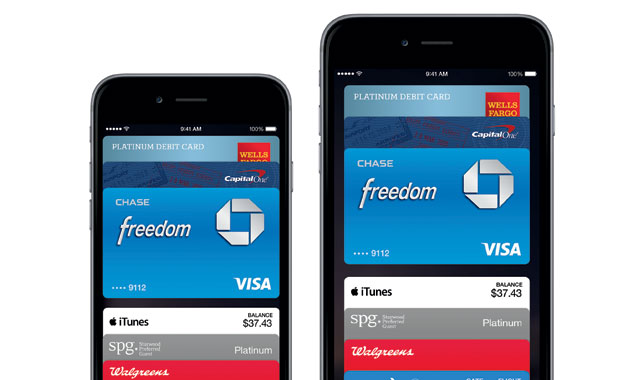
    Apple Pay, on the other hand, is a service, and one with global potential. It allows iPhone owners to pay for purchases in physical shops without swiping (or even carrying) credit cards. They simply “swipe” their phone at the till, touch the built-in fingerprint sensor on their phone and voila, payment done.

    Apple Pay uses a combination of near-field communication (NFC) to connect to point-of-sale devices and Apple’s patented fingerprint reader (Touch ID) to authenticate payments. There are no signatures or Pin codes. No one else can use your phone to make a payment, short of cutting off one of your fingers. Carrying around a severed limb might attract unwanted attention at the department store.

    Analysts have been anticipating a device-based payment system from Apple for years. The company has hundreds of millions of customers around the world. Because of the success of its iTunes and App Store services, it has active credit card details for a huge percentage of that customer base. Allowing people to pay using their phones was a natural progression.

    The technology Apple chose for its payment system, while clever and well crafted, is not particularly surprising. The business model is. Instead of trying to cut banks and credit card companies out of the loop, Apple has worked closely with them to integrate with their existing networks.

    As is often the case with Apple, it has negotiated something previously unthinkable: banks will pay it a small cut of each purchase, around 0,15%/transaction. Credit card companies and end users will pay nothing extra. This has not been officially confirmed by Apple, but the terms are quickly leaking out of the payments industry which is clearly thrilled by the new possibilities.

    This strategy may prove a canny one. By positioning itself as a payment conduit rather than a payment provider, Apple does not antagonise or disrupt existing networks and companies. It can nestle into the existing ecosystem and scoop off value by making it quicker and more secure for its primary customers — iPhone owners — to pay for things.

    Apple’s strategy no doubt came as a huge relief to large financial players who are increasingly nervous of being cut out of the market completely by a Silicon Valley upstart or a crypto currency like BitCoin. Apple has the cash and the raw power to build its own system from scratch, so cooperation was never a foregone conclusion.

    The launch of Apple Pay also comes at an opportune moment in the American market. Plagued for decades by rampant credit card fraud, banks and payment networks are finally pushing to replace old-fashioned swipe cards with the encrypted chip-and-Pin or EMV cards that are standard in most other countries.
    Apple-Pay-640

    Apple Pay is an opportunity to leapfrog that transition. The system is not only quicker and more convenient for customers than chip-and-Pin systems, it is also safer. It uses the same encryption methods as EMV cards (so it is compatible with them), but fingerprint authentication adds hugely to overall security. Vendors will still need to upgrade to EMV-capable till points, but cards will soon be optional.

    As with all of Apple’s services, Apple Pay is not about generating huge profits. Apple’s focus is still on making beautiful devices, and that will not change any time soon. What Apple Pay does is make it even harder to switch to a Samsung or a Nokia. Once you’ve stopped using credit cards, you’re never going to want to start using them again.

    That said, Apple has a hit and miss record with services. iTunes and the App Store have proved big winners. iCloud and several abortive attempts at social networking have not. The world of point-of-sale payments is famously complex, arcane and full of hostile vested interests. Already, Walmart and Best Buy, two of the US’s largest chain stores, are refusing to play ball with Apple.

    It is not even the first giant tech company to try this. Google has made several attempts to coax physical stores into integrating its Google Wallet and Google Checkout services, and has only met with failure. If a company with the smarts and ambition of Google has struggled, it’s not going to be plain sailing for Apple either.

    Whether or not Apple Pay succeeds, it will help to change an industry in dire need of an upgrade. We have been carrying around square pieces of dumb, magnetised plastic since the 1970s. It’s time our payment methods entered the 21st century.

    • Alistair Fairweather is chief technology officer for integrated advertising agency Machine
    • This column was first published in the Mail & Guardian Online, the smart news source

    Follow TechCentral on Google News Add TechCentral as your preferred source on Google


    Alistair Fairweather Apple iPhone 6 Apple Pay Apple Watch Apple. Google iPhone 6
    WhatsApp YouTube
    Share. Facebook Twitter LinkedIn WhatsApp Telegram Email Copy Link
    Previous ArticleJSE offline after ‘network issue’
    Next Article MWeb debuts uncapped satellite broadband

    Related Posts

    Consumer demand driving a shift in online payments

    Shoppers forcing merchants to adopt new digital payment methods

    15 January 2026
    Major security alert for iPhone users

    Apple halts plan for iPhone hardware subscription service

    19 December 2024

    Apple caves to pressure, will open payment chip to third parties

    15 August 2024
    Company News
    What a cloud review reveals about how a company actually runs - LSD Open

    What a cloud review reveals about how a company actually runs

    6 August 2026
    Manufacturing from a garage is now a realistic business plan - MaxLaser

    Manufacturing from a garage is now a realistic business plan

    6 August 2026
    South Africa agrees on a shared language for location - AfriGIS

    South Africa agrees on a shared language for location

    5 August 2026
    Opinion
    The author, Jannie van Zyl

    Selling vapour is corporate suicide in slow motion

    16 July 2026
    Brazil's online gambling crackdown is a lesson for South Africa

    How Amazon outmanoeuvred Starlink in South Africa

    15 July 2026
    The Popia problem with agentic AI - Herman Haasbroek

    The Popia problem with agentic AI

    14 July 2026

    Subscribe to Updates

    Get the best South African technology news and analysis delivered to your e-mail inbox every morning.

    Latest Posts
    ICT is becoming the centre of gravity at Reunert - Anthonie de Beer and Rob Godlonton

    ICT is becoming the centre of gravity at Reunert

    6 August 2026
    Why Discovery is going slow on AI coding agents - Derek Wilcocks

    Why Discovery is going slow on AI coding agents

    6 August 2026
    Google's Gemini leadership team has left the building - Demis Hassabis

    Google’s Gemini leadership team has left the building

    6 August 2026
    SpaceX shares keep sliding - Elon Musk

    SpaceX shares keep sliding

    6 August 2026
    © 2009 - 2026 NewsCentral Media
    Built and maintained by Chronon
    • Cookie policy (ZA)
    • TechCentral – privacy and Popia

    Type above and press Enter to search. Press Esc to cancel.

    Manage consent

    TechCentral uses cookies to enhance its offerings. Consenting to these technologies allows us to serve you better. Not consenting or withdrawing consent may adversely affect certain features and functions of the website.

    Functional Always active
    The technical storage or access is strictly necessary for the legitimate purpose of enabling the use of a specific service explicitly requested by the subscriber or user, or for the sole purpose of carrying out the transmission of a communication over an electronic communications network.
    Preferences
    The technical storage or access is necessary for the legitimate purpose of storing preferences that are not requested by the subscriber or user.
    Statistics
    The technical storage or access that is used exclusively for statistical purposes. The technical storage or access that is used exclusively for anonymous statistical purposes. Without a subpoena, voluntary compliance on the part of your Internet Service Provider, or additional records from a third party, information stored or retrieved for this purpose alone cannot usually be used to identify you.
    Marketing
    The technical storage or access is required to create user profiles to send advertising, or to track the user on a website or across several websites for similar marketing purposes.
    • Manage options
    • Manage services
    • Manage {vendor_count} vendors
    • Read more about these purposes
    View preferences
    • {title}
    • {title}
    • {title}