Close Menu
TechCentralTechCentral

    Subscribe to the newsletter

    Get the best South African technology news and analysis delivered to your e-mail inbox every morning.

    Facebook X (Twitter) YouTube LinkedIn
    WhatsApp Facebook X (Twitter) LinkedIn YouTube
    TechCentralTechCentral
    • News
      Censorship-resistant internet from space - Spacecoin

      Censorship-resistant internet from space

      12 February 2026
      Chip shortage hits PCs as AI swallows the world's memory supply

      Chip shortage hits PCs as AI swallows the world’s memory supply

      12 February 2026
      Here comes the next wave of Chinese AI models

      Here comes the next wave of Chinese AI models

      12 February 2026
      Jumia aims for profit as it fends off Chinese rivals

      Jumia aims for profit as it fends off Chinese rivals

      12 February 2026
      Broadband Infraco in limbo

      Broadband Infraco in limbo

      11 February 2026
    • World
      EU regulators take aim at WhatsApp

      EU regulators take aim at WhatsApp

      9 February 2026
      Musk hits brakes on Mars mission

      Musk hits brakes on Mars mission

      9 February 2026
      Crypto firm accidentally sends R700-billion in bitcoin to its users

      Crypto firm accidentally sends R700-billion in bitcoin to its users

      8 February 2026
      AI won't replace software, says Nvidia CEO amid market rout - Jensen Huang

      AI won’t replace software, says Nvidia CEO amid market rout

      4 February 2026
      Apple acquires audio AI start-up Q.ai

      Apple acquires audio AI start-up Q.ai

      30 January 2026
    • In-depth
      How liberalisation is rewiring South Africa's power sector

      How liberalisation is rewiring South Africa’s power sector

      21 January 2026
      The top-performing South African tech shares of 2025

      The top-performing South African tech shares of 2025

      12 January 2026
      Digital authoritarianism grows as African states normalise internet blackouts

      Digital authoritarianism grows as African states normalise internet blackouts

      19 December 2025
      TechCentral's South African Newsmakers of 2025

      TechCentral’s South African Newsmakers of 2025

      18 December 2025
      Black Friday goes digital in South Africa as online spending surges to record high

      Black Friday goes digital in South Africa as online spending surges to record high

      4 December 2025
    • TCS
      Watts & Wheels S1E4: 'We drive an electric Uber'

      Watts & Wheels S1E4: ‘We drive an electric Uber’

      10 February 2026
      TCS+ | How Cloud On Demand is helping SA businesses succeed in the cloud - Xhenia Rhode, Dion Kalicharan

      TCS+ | Cloud On Demand and Consnet: inside a real-world AWS partner success story

      30 January 2026
      Watts & Wheels S1E4: 'We drive an electric Uber'

      Watts & Wheels S1E3: ‘BYD’s Corolla Cross challenger’

      30 January 2026
      Watts & Wheels S1E4: 'We drive an electric Uber'

      Watts & Wheels S1E2: ‘China attacks, BMW digs in, Toyota’s sublime supercar’

      23 January 2026

      TCS+ | Why cybersecurity is becoming a competitive advantage for SA businesses

      20 January 2026
    • Opinion
      South Africa's skills advantage is being overlooked at home - Richard Firth

      South Africa’s skills advantage is being overlooked at home

      29 January 2026
      Why Elon Musk's Starlink is a 'hard no' for me - Songezo Zibi

      Why Elon Musk’s Starlink is a ‘hard no’ for me

      26 January 2026
      South Africa's new fibre broadband battle - Duncan McLeod

      South Africa’s new fibre broadband battle

      20 January 2026
      AI moves from pilots to production in South African companies - Nazia Pillay SAP

      AI moves from pilots to production in South African companies

      20 January 2026
      South Africa's new fibre broadband battle - Duncan McLeod

      ANC’s attack on Solly Malatsi shows how BEE dogma trumps economic reality

      14 December 2025
    • Company Hubs
      • Africa Data Centres
      • AfriGIS
      • Altron Digital Business
      • Altron Document Solutions
      • Altron Group
      • Arctic Wolf
      • AvertITD
      • Braintree
      • CallMiner
      • CambriLearn
      • CYBER1 Solutions
      • Digicloud Africa
      • Digimune
      • Domains.co.za
      • ESET
      • Euphoria Telecom
      • Incredible Business
      • iONLINE
      • IQbusiness
      • Iris Network Systems
      • LSD Open
      • Mitel
      • NEC XON
      • Netstar
      • Network Platforms
      • Next DLP
      • Ovations
      • Paracon
      • Paratus
      • Q-KON
      • SevenC
      • SkyWire
      • Solid8 Technologies
      • Telit Cinterion
      • Tenable
      • Vertiv
      • Videri Digital
      • Vodacom Business
      • Wipro
      • Workday
      • XLink
    • Sections
      • AI and machine learning
      • Banking
      • Broadcasting and Media
      • Cloud services
      • Contact centres and CX
      • Cryptocurrencies
      • Education and skills
      • Electronics and hardware
      • Energy and sustainability
      • Enterprise software
      • Financial services
      • Information security
      • Internet and connectivity
      • Internet of Things
      • Investment
      • IT services
      • Lifestyle
      • Motoring
      • Public sector
      • Retail and e-commerce
      • Satellite communications
      • Science
      • SMEs and start-ups
      • Social media
      • Talent and leadership
      • Telecoms
    • Events
    • Advertise
    TechCentralTechCentral
    Home » Opinion » Russell Southwood » Going where others fear to tread

    Going where others fear to tread

    By Russell Southwood30 June 2014
    Twitter LinkedIn Facebook WhatsApp Email Telegram Copy Link
    News Alerts
    WhatsApp

    Russell-Southwood-180In the main, Africa’s universal service agencies have not covered themselves in glory. Although money has been collected from operators, it has largely sat in the bank gathering interest.

    Even in countries such as Kenya, which have expended large amounts of energy and resources on putting in place broadband infrastructure, roll-out to citizens not in the addressable market is missing. Kenya is only now about to launch a universal service agency.

    Even where they have been operational, universal service agencies have lacked the clout to make things happen quickly. One agency at the Intel universal service summit, held in Cape Town last week, said it had difficulty co-ordinating its efforts with the rural electrification body. Without electricity and roads, the cost of remote roll-out is so much higher.

    But there are a handful of such agencies in Africa that have gone about their task with energy and are spending their annual budgets effectively. Two of these are Lesotho and Ghana.

    Lesotho’s agency gets its income from a 1% levy on operators and a minimum 25% of the revenues that its parent body — the Lesotho Communications Authority — raises. It spends 100% of the US$1,1-$1,2m it raises in this way. Started in 2009, its programme of work has thus far focused on mobile network coverage expansion, setting up an Internet exchange point and the registry for the national .ls domain.

    Since 2009, it has rolled out 20 base stations in remote rural areas where neither of the two existing mobile operators wanted to go. These projects have benefited at least 63 400 people in some 320 villages in the rural areas of the country. In 2013/2014, its 61 projects benefitted 5 476 people.

    These are mountainous places without roads or electricity. So, to facilitate the process, the agency spends between 20%-25% of its budget on road and electricity infrastructure. The latter is mainly solar panels but it prefers grid connections — solar panels are all too often stolen.

    About 80% of these base stations are now operationally profitable. Some are better than others. The programme is mainly voice, but some have 3G connections, says Nthabiseng Pule, executive secretary of Lesotho’s universal service agency.

    It has profiled more villages for coverage and anticipates that some of these will also be profitable on an operational basis.

    In 2013/2014, the agency added an emphasis on broadband Internet and has 13 projects to connect schools in a project carried out with the International Telecommunication Union costing $855 000. The project was done in partnership with the two mobile operators.

    “The fund faced the challenge of there being a higher demand for services in unserved areas than there were funds for projects,” says Pule. As a result, six projects for mobile network expansion had to be deferred to 2014/2015”.

    Ghana’s universal service agency, the Ghana Investment Fund for Electronic Communications (Gifec), was established in 2004 but did not get its legal framework until 2008 when the Communications Act was introduced. It collects 1% of net revenues from telecoms operators, giving it $67/year to spend. It has four programme areas: cyber labs, basic telephony access, ICT for livelihoods and an ICT awareness programme.

    There are 10 projects under these programmes. The cyber labs include city information centres, 440 schools, 30 libraries and, interestingly, 12 prisons — with the service aimed at inmates.

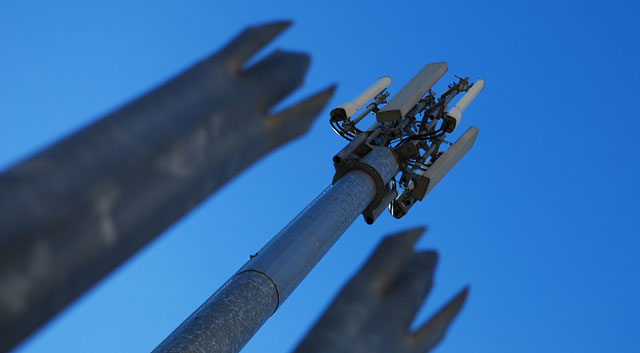
    The basic telephone programme rolls out mobile voice coverage to remote areas. It uses three independent service providers — K-Net, Mer Telecom and Rom Telecom — and the base stations put in place can be used by all operators. There are almost 40 base stations in the remote areas of Western Ghana and Volta. They provide both voice and data, the latter being a free service. Only two of the 20 are not making money on an operational basis after the capital subsidy.
    cell-tower-640

    Gifec is debating its next long-term plan and discussion is focused on the idea of setting up an independent rural network that can be used to connect all areas of this kind as well as outsourcing. “As most mobile companies are selling their towers, we may have to look for a tower company to arrange it,” says Gifec business development manager Philip Prempeh.

    The challenge of satellite costs (which are typically 60% of a remote base station’s operational expenditure) are being considered: “These base stations can only be done by satellite. We want the regulator to give an undertaking on quality of service. Satellite costs are coming down and are now about half of the original quotes we had.”

    Two things stand out from these examples. Firstly, agencies need to tackle the roads and electrification aspects of the project. Secondly, many of the mobile phone coverage projects sit in the area between addressable markets and non-market areas. Many are profitable after the capital expenditure has been written off through subsidy.

    The challenge for governments and regulators in many African countries is to get in place an effective body to address these universal service issues. And perhaps the time has come to absolve the mobile operators of their original licence obligations to go to these areas and to allow independent operators (as in Ghana) to do the infrastructure provision.

    • Russell Southwood is head of Balancing Act Africa



    Gifec Lesotho Communications Authority Nthabiseng Pule Philip Prempeh Russell Southwood
    WhatsApp YouTube Follow on Google News Add as preferred source on Google
    Share. Facebook Twitter LinkedIn WhatsApp Telegram Email Copy Link
    Previous ArticleIndustry consolidation gathers pace
    Next Article Sony’s Xperia Z2 Tablet reviewed

    Related Posts

    Starlink launches in Lesotho amid US tariff threat

    Ructions in Lesotho over licensing of Starlink

    17 April 2025
    Airtel to roll out Starlink direct-to-cell across Africa

    Lesotho, under US tariff pressure, grants licence to Starlink

    15 April 2025
    Rocky road to licensing for Starlink in Lesotho

    Rocky road to licensing for Starlink in Lesotho

    11 March 2025
    Company News
    How NEC XON tackled identity risk for a major telco - Michael de Neuilly Rice

    How NEC XON tackled identity risk for a major telco

    11 February 2026

    Why Acer is the strategic choice for South Africa’s educational future

    11 February 2026
    Fyndae is building Africa's human verification layer for community security and collaboration

    Fyndae wants to turn lost-item recovery into Africa’s trust infrastructure

    11 February 2026
    Opinion
    South Africa's skills advantage is being overlooked at home - Richard Firth

    South Africa’s skills advantage is being overlooked at home

    29 January 2026
    Why Elon Musk's Starlink is a 'hard no' for me - Songezo Zibi

    Why Elon Musk’s Starlink is a ‘hard no’ for me

    26 January 2026
    South Africa's new fibre broadband battle - Duncan McLeod

    South Africa’s new fibre broadband battle

    20 January 2026

    Subscribe to Updates

    Get the best South African technology news and analysis delivered to your e-mail inbox every morning.

    Latest Posts
    Censorship-resistant internet from space - Spacecoin

    Censorship-resistant internet from space

    12 February 2026
    Chip shortage hits PCs as AI swallows the world's memory supply

    Chip shortage hits PCs as AI swallows the world’s memory supply

    12 February 2026
    Here comes the next wave of Chinese AI models

    Here comes the next wave of Chinese AI models

    12 February 2026
    Jumia aims for profit as it fends off Chinese rivals

    Jumia aims for profit as it fends off Chinese rivals

    12 February 2026
    © 2009 - 2026 NewsCentral Media
    • Cookie policy (ZA)
    • TechCentral – privacy and Popia

    Type above and press Enter to search. Press Esc to cancel.

    Manage consent

    TechCentral uses cookies to enhance its offerings. Consenting to these technologies allows us to serve you better. Not consenting or withdrawing consent may adversely affect certain features and functions of the website.

    Functional Always active
    The technical storage or access is strictly necessary for the legitimate purpose of enabling the use of a specific service explicitly requested by the subscriber or user, or for the sole purpose of carrying out the transmission of a communication over an electronic communications network.
    Preferences
    The technical storage or access is necessary for the legitimate purpose of storing preferences that are not requested by the subscriber or user.
    Statistics
    The technical storage or access that is used exclusively for statistical purposes. The technical storage or access that is used exclusively for anonymous statistical purposes. Without a subpoena, voluntary compliance on the part of your Internet Service Provider, or additional records from a third party, information stored or retrieved for this purpose alone cannot usually be used to identify you.
    Marketing
    The technical storage or access is required to create user profiles to send advertising, or to track the user on a website or across several websites for similar marketing purposes.
    • Manage options
    • Manage services
    • Manage {vendor_count} vendors
    • Read more about these purposes
    View preferences
    • {title}
    • {title}
    • {title}