Close Menu
TechCentralTechCentral

    Subscribe to the newsletter

    Get the best South African technology news and analysis delivered to your e-mail inbox every morning.

    Facebook X (Twitter) YouTube LinkedIn
    WhatsApp Facebook X (Twitter) LinkedIn YouTube
    TechCentralTechCentral
    • News
      Cabinet hands the Post Office a board, but not a bailout

      Cabinet hands the Post Office a board, but not a bailout

      5 June 2026
      In South Africa, the bundle is the new battleground

      In South Africa, the bundle is the new battleground

      5 June 2026
      Bash powers TFG online sales as group profit tumbles

      Bash powers TFG online sales as group profit tumbles

      5 June 2026
      Surplus groceries, straight from the browser - Still Good co-founders Lorenzo Parisi and Nabeel Gool

      Surplus groceries, straight from the browser

      5 June 2026
      What happens when AI no longer needs us to improve

      What happens when AI no longer needs us to improve

      5 June 2026
    • World
      Meta takes on OpenAI and Anthropic in enterprise AI

      Meta takes on OpenAI and Anthropic in enterprise AI

      4 June 2026
      AI demand sparks 'chipflation' warning

      AI demand sparks ‘chipflation’ warning

      4 June 2026
      Astronomers discover exoplanets with magnetic fields

      Strange winds reveal magnetic fields on distant ‘hot Jupiters’

      2 June 2026
      AI giant Anthropic files for landmark US listing

      AI giant Anthropic files for landmark US listing

      1 June 2026
      Dell guns for MacBook Neo with low-cost laptop

      Dell guns for MacBook Neo with low-cost laptop

      1 June 2026
    • In-depth
      What Wi-Fi 8 will mean for wireless networks

      What Wi-Fi 8 will mean for wireless networks

      1 June 2026
      Alfa's electric rebel - Alfa Romeo Junior Elettrica Veloce

      Alfa’s electric rebel

      29 April 2026
      Africa switches on as Europe dims the lights

      Africa switches on as Europe dims the lights

      9 April 2026
      The biggest untapped EV market on Earth is hiding in plain sight

      The biggest untapped EV market on Earth is hiding in plain sight

      1 April 2026
      AI, cybersecurity power standout year for Datatec - Jens Montanana

      The R16-billion tech giant hiding in plain sight

      26 March 2026
    • TCS
      TCS | Charge's R1.8-billion bet on an off-grid EV future - Charge chairman Joubert Roux

      TCS | Charge’s R1.8-billion bet on an off-grid EV future

      18 May 2026
      TCS+ | The Up&Up Group on the hidden cost of AI - Jason Harrison

      TCS+ | The Up&Up Group on the hidden cost of AI

      13 May 2026
      Michael Rossouw

      TCS+ | The retirement decision most South Africans get wrong

      6 May 2026
      TCS | The Cape Town start-up listening for TB with AI - Braden van Breda

      TCS | The Cape Town start-up listening for TB with AI

      4 May 2026

      TCS+ | ‘The ISP for ISPs’: Vox’s shift to wholesale aggregator

      20 April 2026
    • Opinion

      Clashing judgments leave South Africa’s crypto law unsettled

      2 June 2026
      The author, Pambos Soteriades

      The trap inside South Africa’s banking MVNO boom

      1 June 2026
      The hidden cost of social media age bans is everyone's privacy - Petrus Potgieter

      The hidden cost of social media age bans is everyone’s privacy

      29 May 2026
      Treasury's crypto crackdown is a betrayal of Mandela's promise - Duncan McLeod

      Treasury’s crypto crackdown is a betrayal of Mandela’s promise

      22 May 2026
      South Africa is sleepwalking into another AI policy failure - Celeste Labuschagne

      South Africa is sleepwalking into another AI policy failure

      20 May 2026
    • Company Hubs
      • 1Stream
      • Africa Data Centres
      • AfriGIS
      • Altron Digital Business
      • Altron Document Solutions
      • Altron Group
      • Arctic Wolf
      • Ascent Technology
      • AvertITD
      • BBD
      • Braintree
      • CallMiner
      • CambriLearn
      • CM Telecom
      • Contactable
      • CYBER1 Solutions
      • Digicloud Africa
      • Digimune
      • Domains.co.za
      • ESET
      • Euphoria Telecom
      • HOSTAFRICA
      • Incredible Business
      • iONLINE
      • IQbusiness
      • Iris Network Systems
      • Kaspersky
      • LSD Open
      • Mitel
      • NEC XON
      • Netstar
      • Network Platforms
      • Next DLP
      • Ovations
      • Paracon
      • Paratus
      • Q-KON
      • SevenC
      • SkyWire
      • Solid8 Technologies
      • Telit Cinterion
      • Telviva
      • Tenable
      • Vertiv
      • Videri Digital
      • Vodacom Business
      • Wipro
      • Workday
      • XLink
    • Sections
      • AI and machine learning
      • Banking
      • Broadcasting and Media
      • Cloud services
      • Contact centres and CX
      • Cryptocurrencies
      • Education and skills
      • Electronics and hardware
      • Energy and sustainability
      • Enterprise software
      • Financial services
      • HealthTech
      • Information security
      • Internet and connectivity
      • Internet of Things
      • Investment
      • IT services
      • Lifestyle
      • Motoring
      • Policy and regulation
      • Public sector
      • Retail and e-commerce
      • Satellite communications
      • Science
      • SMEs and start-ups
      • Social media
      • Talent and leadership
      • Telecoms
    • Events
    • Advertise
    TechCentralTechCentral
    Home » Sections » Broadcasting and Media » Google and Facebook lose a battle to win the war

    Google and Facebook lose a battle to win the war

    By Agency Staff18 February 2021
    Twitter LinkedIn Facebook WhatsApp Email Telegram Copy Link
    News Alerts
    WhatsApp

    When prospectors made what was the biggest oil discovery in history at Texas’s Spindletop well in 1901, the world’s premier oil monopolist was absent from the scene. Standard Oil, a decade away from being split up in an antitrust suit, was content to sit back and let smaller local rivals establish themselves.

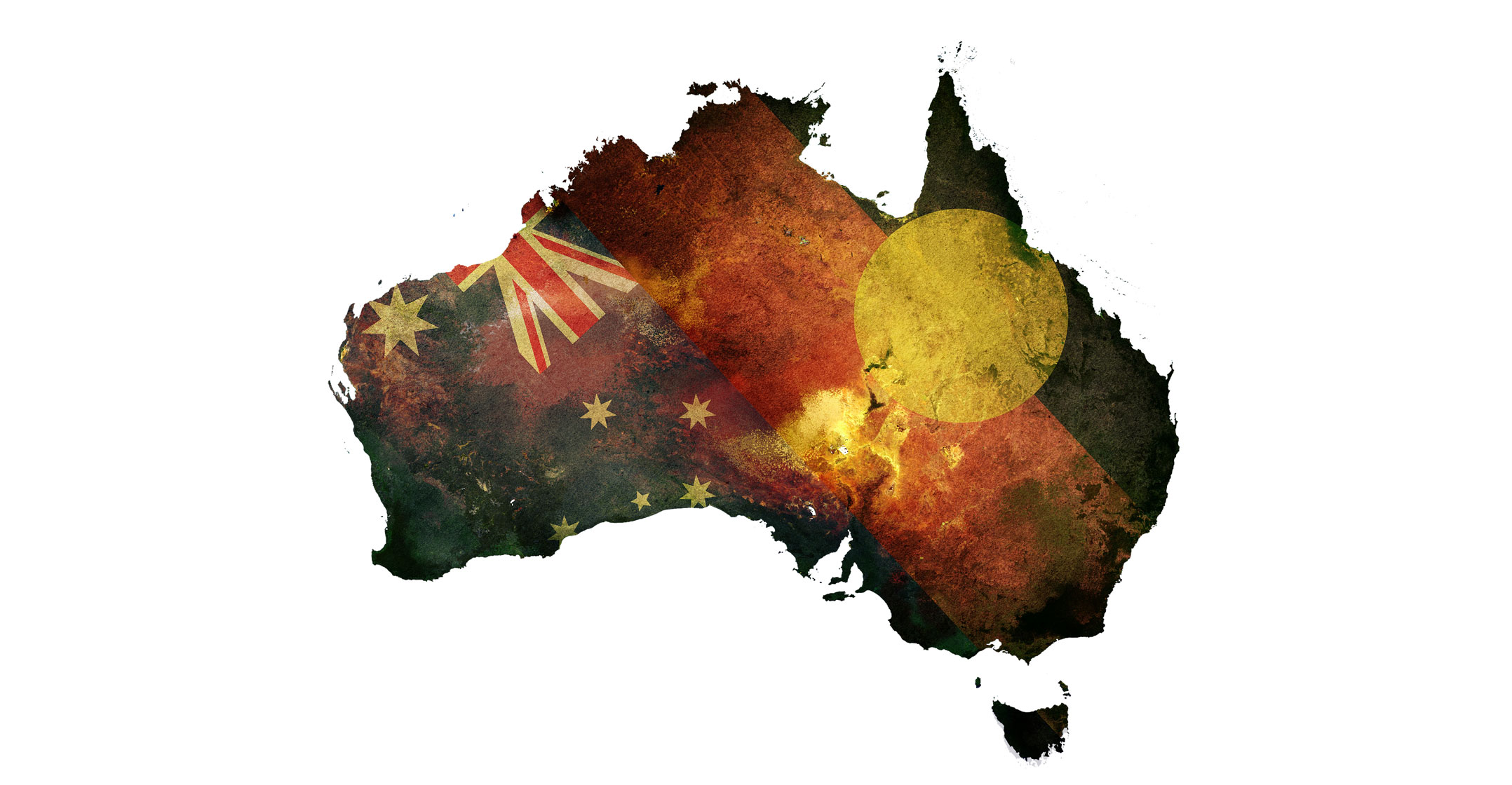
    That’s a good analogy for the deals Google is striking with News Corp and Australian newspaper publishers, ahead of planned legislation there to enhance the news business’s bargaining power in negotiating with online platforms. Facebook is taking a more extreme approach, announcing on Thursday that it would quit distributing news from Australian publishers, and to Facebook news feeds in the country, altogether.

    John D Rockefeller didn’t much care who produced America’s oil, as long as he had a stranglehold on piping it, refining it and distributing it. Google is little different. By granting a boon to publishers, erstwhile rivals in the online advertising industry, it’s hoping to keep its hands on a far richer prize — scarcely challenged control and distribution of the world’s online information. Facebook, by refusing to compromise, is working toward the same end.

    Eventually, it took the supreme court to break John D Rockefeller’s empire. The digital platforms are hoping that they’ll be able to avoid a similar fate

    Still, the unconfirmed figures in the range of A$30-million mentioned in news reports are small beer compared to Australia’s roughly A$10-billion digital advertising market. Next to Google parent Alphabet and Facebook’s $183-billion and $86-billion in respective annual revenues, they barely register.

    The core of what the country’s antitrust regulator had sought from Google and Facebook was a levelling of the playing field. Google and Facebook are not just competitors with the news business in the market for digital advertising. They’re also crucial distributors who direct much of the traffic on which publishers’ ad revenues are based.

    ‘Monopoly gatekeeper’

    That’s no different from other countries around the world, and indeed other industries beyond news. Google is, in the words of a US department of justice antitrust suit filed last October, “a monopoly gatekeeper for the Internet”. The European Union has levied some €8.3-billion of fines against the company since 2017 for anticompetitive practices.

    The real motherlode for these businesses is their ability to act as intermediaries for a digital advertising market that’s increasingly swallowing the world’s marketing budgets, hoovering up data on every side of the millisecond auctions that deliver eyeballs to online ads. That’s a black box that media buyers like Johnson & Johnson and L’Oreal, as well as media owners like News Corp and the New York Times Co, would love to get some insight into — and Australia’s proposed legislation offered a precedent for how it could happen.

    Under the rules, publishers would be allowed to negotiate as a group with digital platforms rather than individually, much as franchisees are allowed to locally in their dealings with global fast-food and convenience store chains. If the two sides are unable to come to an agreement on the revenue split, they’d have to submit blind final offers to an independent arbitration panel which would pick whichever looked more reasonable. The way to win those negotiations is to be open and honest about how much the business is worth to you.

    It’s striking that the threat of such a setup was so profound that Facebook has pulled out of news in Australia completely. Google, after threatening to do the same and shut off its local search engine for good measure, has opted to divide and conquer by striking deals with publishers one by one. In return for the small coin that an Australian news organisation would require to keep its head above water, those deals will hope to ensure that Google never has to get into a serious negotiation with an equally matched opponent, or establish a benchmark for what online content is worth.

    This might seem like a little local bother in a small, faraway country — but the willingness of the digital platforms to wheel out the big guns in defence of their position should be a clue to their ambitions and vulnerabilities worldwide.

    By sacrificing a chess piece in Texas, Standard Oil was able to hold onto its monopoly in the bit of the oil industry that really mattered for a decade. By giving up the fight over Australian news, Google and Facebook are able to focus their efforts on maintaining their monopolistic positions in the far larger markets for online information, and data about everyone who uses the web. Eventually, it took the supreme court to break John D Rockefeller’s empire. The digital platforms are hoping that they’ll be able to avoid a similar fate.  — By David Fickling, (c) 2021 Bloomberg LP

    Follow TechCentral on Google News Add TechCentral as your preferred source on Google


    Facebook Google top
    WhatsApp YouTube
    Share. Facebook Twitter LinkedIn WhatsApp Telegram Email Copy Link
    Previous ArticleFacebook Australia standoff sows chaos
    Next Article ‘Deeply wrong’: Facebook allegedly inflated ad metrics

    Related Posts

    Zila Tech rewires Kenyan schools with Google - Digicloud Africa Google

    Zila Tech rewires Kenyan schools with Google

    1 June 2026
    Google launches the biggest reinvention of search in 25 years

    Google launches the biggest reinvention of search in 25 years

    20 May 2026
    The lesson Seacom learnt from its massive 2024 outage - Richard Schumacher

    The lessons Seacom learnt from its massive 2024 outage

    14 May 2026
    Company News
    The real hurdle for South Africa's AI voicebots isn't the AI - 1Stream

    The real hurdle for South Africa’s AI voicebots isn’t the AI

    5 June 2026
    The real cloud challenge isn't adoption – it's doing it well

    The real cloud challenge isn’t adoption – it’s doing it well

    5 June 2026
    Payments Live returns to Johannesburg for 2nd edition

    Payments Live returns to Johannesburg for 2nd edition

    4 June 2026
    Opinion

    Clashing judgments leave South Africa’s crypto law unsettled

    2 June 2026
    The author, Pambos Soteriades

    The trap inside South Africa’s banking MVNO boom

    1 June 2026
    The hidden cost of social media age bans is everyone's privacy - Petrus Potgieter

    The hidden cost of social media age bans is everyone’s privacy

    29 May 2026

    Subscribe to Updates

    Get the best South African technology news and analysis delivered to your e-mail inbox every morning.

    Latest Posts
    Cabinet hands the Post Office a board, but not a bailout

    Cabinet hands the Post Office a board, but not a bailout

    5 June 2026
    In South Africa, the bundle is the new battleground

    In South Africa, the bundle is the new battleground

    5 June 2026
    Bash powers TFG online sales as group profit tumbles

    Bash powers TFG online sales as group profit tumbles

    5 June 2026
    Surplus groceries, straight from the browser - Still Good co-founders Lorenzo Parisi and Nabeel Gool

    Surplus groceries, straight from the browser

    5 June 2026
    © 2009 - 2026 NewsCentral Media
    • Cookie policy (ZA)
    • TechCentral – privacy and Popia

    Type above and press Enter to search. Press Esc to cancel.

    Manage consent

    TechCentral uses cookies to enhance its offerings. Consenting to these technologies allows us to serve you better. Not consenting or withdrawing consent may adversely affect certain features and functions of the website.

    Functional Always active
    The technical storage or access is strictly necessary for the legitimate purpose of enabling the use of a specific service explicitly requested by the subscriber or user, or for the sole purpose of carrying out the transmission of a communication over an electronic communications network.
    Preferences
    The technical storage or access is necessary for the legitimate purpose of storing preferences that are not requested by the subscriber or user.
    Statistics
    The technical storage or access that is used exclusively for statistical purposes. The technical storage or access that is used exclusively for anonymous statistical purposes. Without a subpoena, voluntary compliance on the part of your Internet Service Provider, or additional records from a third party, information stored or retrieved for this purpose alone cannot usually be used to identify you.
    Marketing
    The technical storage or access is required to create user profiles to send advertising, or to track the user on a website or across several websites for similar marketing purposes.
    • Manage options
    • Manage services
    • Manage {vendor_count} vendors
    • Read more about these purposes
    View preferences
    • {title}
    • {title}
    • {title}