Close Menu
TechCentralTechCentral

    Subscribe to the newsletter

    Get the best South African technology news and analysis delivered to your e-mail inbox every morning.

    Facebook X (Twitter) YouTube LinkedIn
    WhatsApp Facebook X (Twitter) LinkedIn YouTube
    TechCentralTechCentral
    • News
      Nedbank hires MTN's former tech chief as group CIO - Nikos Angelopoulos

      Nedbank hires MTN’s former tech chief as group CIO

      31 July 2026
      Eskom's diesel bill falls 86% as breakdowns hit eight-year low

      Eskom’s diesel bill falls 86% as breakdowns hit eight-year low

      31 July 2026
      Ramaphosa signs off on taking the grid away from Eskom

      Ramaphosa signs off on taking the grid away from Eskom

      31 July 2026
      Microsoft just had the biggest day in stock market history

      Microsoft just had the biggest day in stock market history

      31 July 2026
      MTN Nigeria's growth engine stalled in second quarter - Karl Toriola

      MTN Nigeria’s growth engine stalled in second quarter

      31 July 2026
    • World
      Meta AI will now tell parents if their teen is in crisis

      Meta AI will now tell parents if their teen is in crisis

      17 July 2026
      IBM shares crash 25% as AI upends software spending - Arvind Krishna

      IBM shares crash 25% as AI upends software spending

      15 July 2026
      Jony Ive's first OpenAI device: an AI smart speaker - Jony Ive and Sam Altman

      Jony Ive’s first OpenAI device: an AI smart speaker

      15 July 2026
      Stripe, Advent in talks to buy PayPal for $53-billion

      Stripe, Advent in talks to buy PayPal for $53-billion

      15 July 2026
      Memory crisis sends smartphone market into steep decline

      Memory crisis sends smartphone market into steep decline

      13 July 2026
    • In-depth
      The plan to stop AI from breaking the world - Google DeepMind CEO Demis Hassabis. Image: John Sears

      The plan to stop AI from breaking the world

      16 July 2026
      The internet has a Strait of Hormuz problem

      The internet has a Strait of Hormuz problem

      15 July 2026
      AI boom sparks rally, frenzy and fear

      AI boom sparks rally, frenzy and fear

      11 June 2026
      Every plug-in hybrid on sale in South Africa, ranked by price - Lamborghini Temerario

      Every plug-in hybrid on sale in South Africa, ranked by price

      7 June 2026
      What Wi-Fi 8 will mean for wireless networks

      What Wi-Fi 8 will mean for wireless networks

      1 June 2026
    • TCS
      TCS+ | Why South African workers must become supervisors of digital labour - Accelera Digital Group Cliff de Wit

      TCS+ | Why South African workers must become supervisors of digital labour

      31 July 2026
      TCS | Rapid deployment rules can't work without municipalities: ACT - Nomvuyiso Batyi

      TCS | Icasa’s rules skip the real bottleneck: ACT

      30 July 2026
      TCS+ | iStore Business on why Apple makes sense for SMEs - Sudesh Pillay and Tamia Nontsikelelo

      TCS+ | iStore Business on why Apple makes sense for SMEs

      30 July 2026
      TCS+ | A smarter approach to cloud for South African businesses - Joel Chacko and Jonathan Oaker

      TCS+ | A smarter approach to cloud for South African businesses

      28 July 2026
      TCS | How Optasia lends billions to people banks can't see - Salvador Anglada

      TCS | How Optasia lends billions to people banks can’t see

      23 July 2026
    • Opinion
      The author, Jannie van Zyl

      Selling vapour is corporate suicide in slow motion

      16 July 2026
      Brazil's online gambling crackdown is a lesson for South Africa

      How Amazon outmanoeuvred Starlink in South Africa

      15 July 2026
      The Popia problem with agentic AI - Herman Haasbroek

      The Popia problem with agentic AI

      14 July 2026
      The author, Fanie van Rooyen

      South Africa can still catch the AI wave – here’s how

      7 July 2026
      The author, Fanie van Rooyen

      The AI utopia South Africa can’t afford

      1 July 2026
    • Company Hubs
      • 1Stream
      • Africa Data Centres
      • AfriGIS
      • Altron Digital Business
      • Altron Document Solutions
      • Altron Group
      • Arctic Wolf
      • Ascent Technology
      • AvertITD
      • BBD
      • Braintree
      • CallMiner
      • CambriLearn
      • CM Telecom
      • Contactable
      • CYBER1 Solutions
      • Digicloud Africa
      • Digimune
      • Domains.co.za
      • ESET
      • Euphoria Telecom
      • HOSTAFRICA
      • Incredible Business
      • iONLINE
      • IQbusiness
      • Iris Network Systems
      • Kaspersky
      • LSD Open
      • Mitel
      • NEC XON
      • Netstar
      • Network Platforms
      • Next DLP
      • Ovations
      • Paracon
      • Paratus
      • Q-KON
      • SevenC
      • SkyWire
      • Solid8 Technologies
      • Telit Cinterion
      • Telviva
      • Tenable
      • Vertiv
      • Videri Digital
      • Vodacom Business
      • Vox
      • Wipro
      • Workday
      • XLink
    • Sections
      • AI and machine learning
      • Banking
      • Broadcasting and Media
      • Cloud services
      • Contact centres and CX
      • Cryptocurrencies
      • Education and skills
      • Electronics and hardware
      • Energy and sustainability
      • Enterprise software
      • Financial services
      • HealthTech
      • Information security
      • Internet and connectivity
      • Internet of Things
      • Investment
      • IT services
      • Lifestyle
      • Policy and regulation
      • Public sector
      • Retail and e-commerce
      • Satellite communications
      • Science
      • SMEs and start-ups
      • Social media
      • Talent and leadership
      • Telecoms
      • Watts & Wheels
    • Events
    • Advertise
    TechCentralTechCentral
    Home » Sections » AI and machine learning » Google says its AI is ready for business

    Google says its AI is ready for business

    Google has unveiled a host of updates to its artificial intelligence offerings for cloud computing customers.
    By Agency Staff10 April 2024
    Twitter LinkedIn Facebook WhatsApp Email Telegram Copy Link
    News Alerts
    WhatsApp
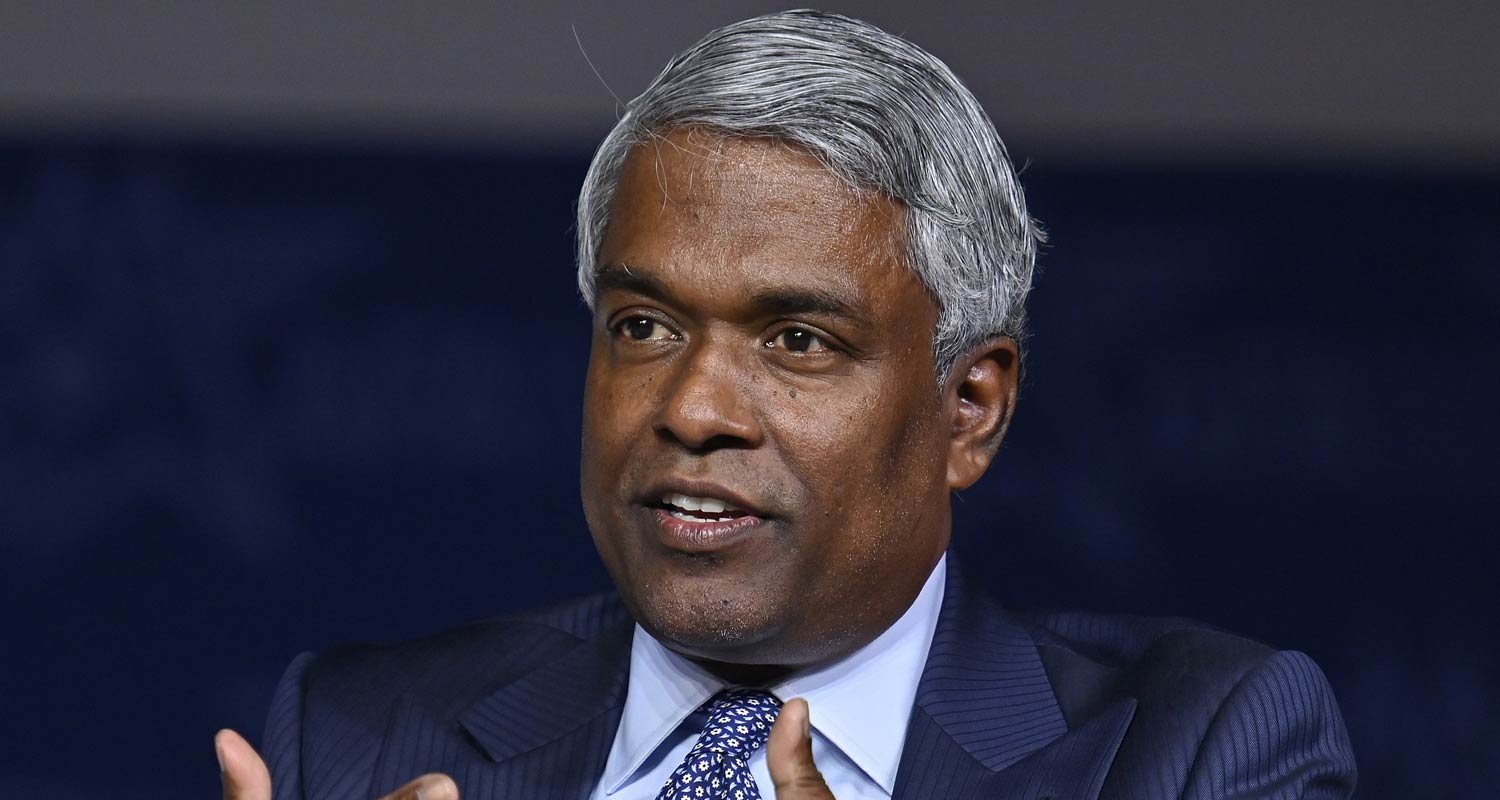
    Google Cloud CEO Thomas Kurian. Image: Eric Dietrich

    Google has unveiled a host of updates to its artificial intelligence offerings for cloud computing customers, emphasising that the technology is safe and ready for use in the corporate realm, despite recent stumbles in consumer-facing tools.

    At the company’s annual cloud computing conference in Las Vegas on Tuesday, Google Cloud CEO Thomas Kurian showed off how Google’s most powerful AI model, Gemini, can be used to create advertisements, ward off cybersecurity threats, and spin up short videos and podcasts.

    Corporate customers will be able to peg Gemini’s query responses to reliable sources of information, known as grounding. The company is rolling out the use of Google search results as a source for the AI model’s answers, thereby providing greater accuracy and freshness, Kurian said.

    Google’s chief rival in AI, the Microsoft-backed start-up OpenAI, is also courting corporate customers

    “Enterprises have been piloting with us a number of scenarios with generative AI; now they’re deploying them in production,” Kurian said in an interview ahead of the announcements. “The capabilities to do things like grounding, improving correctness of answers — all of those, step by step, people have got comfortable, they’re seeing value, and they’re deploying as a result.”

    Google, a unit of Alphabet, trails Amazon.com and Microsoft in cloud computing, but the market is one of the tech giant’s best bets for growth as its core search advertising business matures. Google reported the first full year of profitability at its cloud unit in 2023 and hopes to use its prowess in AI to close the gap with rivals. After OpenAI’s ChatGPT burst onto the scene in late 2022 and was quickly embraced by college students and the general public, Google and its cloud competitors see 2024 as the year the technology conquers the corporate world.

    The race among the tech powerhouses is on. Google’s chief rival in AI, the Microsoft-backed start-up OpenAI, is also courting corporate customers. OpenAI now has more than 600 000 people signed up to use ChatGPT Enterprise, up from around 150 000 in January, chief operating officer Brad Lightcap said last week.

    Consumer setbacks

    Google’s enterprise push follows some embarrassing setbacks in the consumer market. In February, its flagship AI product Gemini, which ingests enormous volumes of digital media to train software that predicts and generates content in response to a prompt or query, was roundly criticised after it spit out historically inaccurate images. CEO Sundar Pichai blasted the responses as “completely unacceptable”, and the Mountain View, California-based company stopped accepting prompts for people in its image generator while it works to address the concerns.

    Yet Kurian presented generative AI in the enterprise space as a very different story. Businesses can use Gemini to create images for advertising campaigns, but the pro tool comes with 19 different controls to help marketers ensure that the content is in keeping with their brand, Kurian said.

    Read: Microsoft reportedly planning $100-billion AI data centre, supercomputer

    Despite the fallout over the Gemini images, Google Cloud has continued to allow corporate customers to generate images of people using the enterprise version of the tool — and no customers have complained about the results, Kurian said.

    “We had zero, zero issues with the reported issues that people had on the consumer side with Gemini for Workspace,” he said. “There was not a single customer affected by it because we have capability in our enterprise platform for the company to control various elements of factuality, safety, model safety, responsibility.”
    Those controls will now be augmented by the ability for corporate clients to ground Gemini’s responses in Google search. When this feature is enabled, the AI model will produce citations for every sentence of its outputs, based on its retrieval of information from Google search results. In a demonstration on Friday, hours after an earthquake struck New Jersey, a Google employee showed how the default version of the model stated that there had been no recent earthquakes in the area; the version of the model grounded in Google search results correctly gave the magnitude of the temblor and said there had been no major reports of damage.

    Corporate clients can also ground the model’s responses in their company’s data, or even a specific portion of an employee manual — in contrast to the consumer version of Gemini, which is more a one-size-fits-all tool.

    Google Cloud’s app developer platform, called Vertex AI, is adding new features underpinned by Gemini 1.5 Pro, which Google has said has the “longest context window” of any large-scale AI model. Gemini 1.5 Pro can process up to a million “tokens” — essentially, words or pieces of words — at a time, according to the company, including audio. That means developers can ask the AI model for responses based on hundreds, or potentially thousands, of images, videos, documents and audio files.

    Google was keen to point out how it works with AI start-ups, which it sees as a key source of cloud business

    In a demonstration, a Google Vertex AI product leader showed how Gemini 1.5 Pro works with Google Workspace. Cloud customers can upload marketing images and other media to Google Drive and ask the AI model to create new content such as a slideshow or a podcast based on a brand’s style. Users can also ask the AI model for “live images”, a four-second moving image showing a particular product within a scene. For example, Nenshad Bardoliwalla, the Vertex AI product leader, generated an image of a yellow camping tent against the backdrop of a gently babbling stream. Google said the images generated by its Vertex AI platform would include digital watermarks to signal they were generated by AI.

    While last year Google touted how its AI tools could be used to complete everyday corporate tasks such as composing e-mail and marketing copy, this year the company extended their capabilities to include more behind-the-scenes work.

    The company also rolled out a series of Gemini applications for cybersecurity, which Google says will help clients analyse threats and address potential vulnerabilities. The features build on Google’s US$5.4-billion acquisition of cybersecurity firm Mandiant in 2022. Google’s AI-powered security features can help companies be more proactive about combating bad actors, said Eric Doerr, vice president of cloud security engineering. “What otherwise would be very manual research tasks” can be aided by AI, he said.

    Unicorns

    Google was keen to point out how it works with the burgeoning crop of AI start-ups, which it sees as a key source of cloud business. Many of the most prominent young AI companies were founded by former Google employees, and they make for desirable clients given the tremendous amount of computing power they require.

    Google Cloud has seen an increase in business from start-ups using its platform to build generative AI apps and services, Kurian said. More than 60% of generative AI start-ups that have raised funding are now paying for Google’s cloud computing services, Kurian said. Of those valued at more than $1-billion — colloquially referred to as “unicorns” — 90% are Google Cloud customers, up from 70% in August, he said. New clients include AssemblyAI, a company building AI models for transcription, and Writer, a start-up focused on custom generative AI apps like chatbots.

    Competition for such clients is fierce, and many of the start-ups use multiple cloud providers. Amazon said more than 5 000 generative AI startups were customers of its AWS platform as of September.
    Kurian said the product updates flowed from close collaboration between his cloud unit and Google DeepMind, the company’s premiere AI lab, led by Demis Hassabis. The lab was the product of the merger of two research groups last year, a move Google made to bring its full talent to bear in the intensifying AI race. Engineers from the cloud and research organisations work closely together — in some cases sitting side by side — to sharpen product focus, Kurian said.

    “That collaboration is up and down the organisation,” Kurian said. “We’ve got a super-close working relationship in the Bay Area, in London, in Seattle with the DeepMind team.”  — Julia Love and Davey Alba, (c) 2024 Bloomberg LP

    Get breaking news alerts from TechCentral on WhatsApp

    Follow TechCentral on Google News Add TechCentral as your preferred source on Google


    Google Google Cloud Microsoft OpenAI Thomas Kurian
    WhatsApp YouTube
    Share. Facebook Twitter LinkedIn WhatsApp Telegram Email Copy Link
    Previous ArticleSouth African outage highlights high-stakes cloud risks
    Next Article Reunert to merge IQbusiness, +OneX to form new digital integrator

    Related Posts

    Microsoft just had the biggest day in stock market history

    Microsoft just had the biggest day in stock market history

    31 July 2026
    Meta cash flow collapses as AI bill hits $145-billion - Mark Zuckerberg

    Meta cash flow collapses as AI bill hits $145-billion

    30 July 2026
    Africa's most popular phones have a tracking problem

    Africa’s most popular phones have a tracking problem

    24 July 2026
    Company News
    Domains.co.za launches self-hosted n8n VPS hosting

    Domains.co.za launches self-hosted n8n VPS hosting

    31 July 2026
    Smarter.tech '26 shows why smarter technology begins with context - Obsidian Systems

    Context is the missing piece in enterprise AI: Obsidian

    31 July 2026
    Huawei launches 12 intelligent transport solutions in South Africa - Sam Tang

    Huawei launches 12 intelligent transport solutions in South Africa

    30 July 2026
    Opinion
    The author, Jannie van Zyl

    Selling vapour is corporate suicide in slow motion

    16 July 2026
    Brazil's online gambling crackdown is a lesson for South Africa

    How Amazon outmanoeuvred Starlink in South Africa

    15 July 2026
    The Popia problem with agentic AI - Herman Haasbroek

    The Popia problem with agentic AI

    14 July 2026

    Subscribe to Updates

    Get the best South African technology news and analysis delivered to your e-mail inbox every morning.

    Latest Posts
    Nedbank hires MTN's former tech chief as group CIO - Nikos Angelopoulos

    Nedbank hires MTN’s former tech chief as group CIO

    31 July 2026
    Eskom's diesel bill falls 86% as breakdowns hit eight-year low

    Eskom’s diesel bill falls 86% as breakdowns hit eight-year low

    31 July 2026
    Ramaphosa signs off on taking the grid away from Eskom

    Ramaphosa signs off on taking the grid away from Eskom

    31 July 2026
    TCS+ | Why South African workers must become supervisors of digital labour - Accelera Digital Group Cliff de Wit

    TCS+ | Why South African workers must become supervisors of digital labour

    31 July 2026
    © 2009 - 2026 NewsCentral Media
    Built and maintained by Chronon
    • Cookie policy (ZA)
    • TechCentral – privacy and Popia

    Type above and press Enter to search. Press Esc to cancel.

    Manage consent

    TechCentral uses cookies to enhance its offerings. Consenting to these technologies allows us to serve you better. Not consenting or withdrawing consent may adversely affect certain features and functions of the website.

    Functional Always active
    The technical storage or access is strictly necessary for the legitimate purpose of enabling the use of a specific service explicitly requested by the subscriber or user, or for the sole purpose of carrying out the transmission of a communication over an electronic communications network.
    Preferences
    The technical storage or access is necessary for the legitimate purpose of storing preferences that are not requested by the subscriber or user.
    Statistics
    The technical storage or access that is used exclusively for statistical purposes. The technical storage or access that is used exclusively for anonymous statistical purposes. Without a subpoena, voluntary compliance on the part of your Internet Service Provider, or additional records from a third party, information stored or retrieved for this purpose alone cannot usually be used to identify you.
    Marketing
    The technical storage or access is required to create user profiles to send advertising, or to track the user on a website or across several websites for similar marketing purposes.
    • Manage options
    • Manage services
    • Manage {vendor_count} vendors
    • Read more about these purposes
    View preferences
    • {title}
    • {title}
    • {title}