Close Menu
TechCentralTechCentral

    Subscribe to the newsletter

    Get the best South African technology news and analysis delivered to your e-mail inbox every morning.

    Facebook X (Twitter) YouTube LinkedIn
    WhatsApp Facebook X (Twitter) LinkedIn YouTube
    TechCentralTechCentral
    • News
      South Africa's 3G networks could go dark within two years - Dejan Kastelic

      South Africa’s 3G networks could go dark within two years

      28 October 2026
      Vodacom books R23-billion Safaricom gain as court fight rages

      Vodacom books R23-billion Safaricom gain as court fight rages

      28 October 2026
      Canal+ takes a knife to DStv prices

      Canal+ takes a knife to DStv prices

      28 October 2026
      South Africa risks return to money-laundering grey list - Busi Mavuso

      South Africa risks return to money-laundering grey list

      28 October 2026
      The hidden cost of owning a folding phone

      The hidden cost of owning a folding phone

      28 October 2026
    • World
      Anthropic's IPO stands alone

      Anthropic’s IPO stands alone

      23 October 2026
      PHP flaws trigger global scramble as hackers pounce

      PHP flaws trigger global scramble as hackers pounce

      22 October 2026
      OpenAI turns the tables on Apple in trade secrets fight

      OpenAI turns the tables on Apple in trade secrets fight

      15 October 2026
      Google's Gemini 4 Argon is finally here

      Google’s Gemini 4 Argon is finally here

      14 October 2026
      Apple's new HomeView smart home hub

      Apple takes another shot at the smart home

      13 October 2026
    • In-depth
      Why investors are souring on Netflix

      Why investors are souring on Netflix

      22 October 2026

      10 days that changed the course of AI

      21 September 2026
      Meta to the AI industry: slow down without us - Mark Zuckerberg

      Meta to the AI industry: slow down without us

      16 September 2026
      Google DeepMind CEO Demis Hassabis. Image: John Sears

      The plan to stop AI from breaking the world

      16 July 2026
      The internet has a Strait of Hormuz problem

      The internet has a Strait of Hormuz problem

      15 July 2026
    • TCS
      TCS+ | Vox on AI, data rules and omnichannel communication for SMEs

      TCS+ | Vox on AI, data rules and omnichannel communication for SMEs

      26 October 2026
      TCS | The Cape Town firm quietly connecting Eskom, Pep and 6 000 ATMs - Réan van Niekerk, Metacom

      TCS | The Cape Town firm quietly connecting Eskom, Pep and 6 000 ATMs

      23 October 2026
      TCS+ | Boards are underestimating the cost of a cyberattack, says Arctic Wolf - Jason Oehley and Andre Den Hond

      TCS+ | Boards are underestimating the cost of a cyberattack, says Arctic Wolf

      22 October 2026
      W&W | LDV's Gerhard Moolman on electric bakkies, fleet orders and 'school fees'

      W&W | LDV’s Gerhard Moolman on electric bakkies and fleets

      9 October 2026
      TCS | Frogfoot sees bigger fibre deals coming - TechCentral Show guests Abraham van der Merwe and Shane Chorley

      TCS | Frogfoot sees bigger fibre deals coming

      8 October 2026
    • Opinion
      AI's boardroom honeymoon is over - Gary Stocks

      AI’s boardroom honeymoon is over

      22 October 2026
      Before South Africa licenses Starlink, it should look at Ukraine - Duncan McLeod

      Before South Africa licenses Starlink, it should look at Ukraine

      21 October 2026
      Nonkqubela Thathakahle Jordan-Dyani

      Why cybersecurity is now a national security issue for South Africa

      15 October 2026
      When a machine can choose, who does it become? Fanie van Rooyen

      When a machine can choose, who does it become?

      9 October 2026
      Let South Africans jailbreak their way to digital sovereignty - Dirk de Vos

      Let South Africans jailbreak their way to digital sovereignty

      5 October 2026
    • Company News
      • 1Stream
      • Africa Data Centres
      • AfriGIS
      • Altron Digital Business
      • Altron Document Solutions
      • Altron Group
      • Arctic Wolf
      • Ascent Technology
      • AvertITD
      • BBD
      • Braintree
      • CallMiner
      • CambriLearn
      • CM.com
      • Contactable
      • CYBER1 Solutions
      • Digicloud Africa
      • Digimune
      • Domains.co.za
      • ESET
      • Euphoria Telecom
      • HOSTAFRICA
      • Incredible Business
      • iONLINE
      • IQbusiness
      • Iris Network Systems
      • Kaspersky
      • LSD Open
      • Mitel
      • NEC XON
      • Netstar
      • Network Platforms
      • Next DLP
      • Ovations
      • Paracon
      • Paratus
      • Publishared
      • Q-KON
      • SevenC
      • SkyWire
      • Solid8 Technologies
      • Telit Cinterion
      • Telviva
      • Tenable
      • Vertiv
      • Videri Digital
      • Vodacom Business
      • Vox
      • Wipro
      • Workday
      • XLink
    • Sections
      • AI and machine learning
      • Banking
      • Broadcasting and media
      • Cloud services
      • Contact centres and CX
      • Cryptocurrencies
      • Education and skills
      • Electronics and hardware
      • Energy and sustainability
      • Enterprise software
      • Fintech and payments
      • HealthTech
      • Information security
      • Internet and connectivity
      • Internet of things
      • Investment
      • IT services
      • Lifestyle
      • Policy and regulation
      • Public sector
      • Retail and e-commerce
      • Satellite communications
      • Science
      • SMEs and start-ups
      • Social media
      • Talent and leadership
      • Telecoms
      • Watts & Wheels
    • Events
    • Advertise
    TechCentralTechCentral
    Home » In-depth » Gov’t won’t be reckless with telecoms sector: Nkuna

    Gov’t won’t be reckless with telecoms sector: Nkuna

    By Duncan McLeod12 December 2017
    Twitter LinkedIn Facebook WhatsApp Email Telegram Copy Link
    Get breaking news on WhatsApp

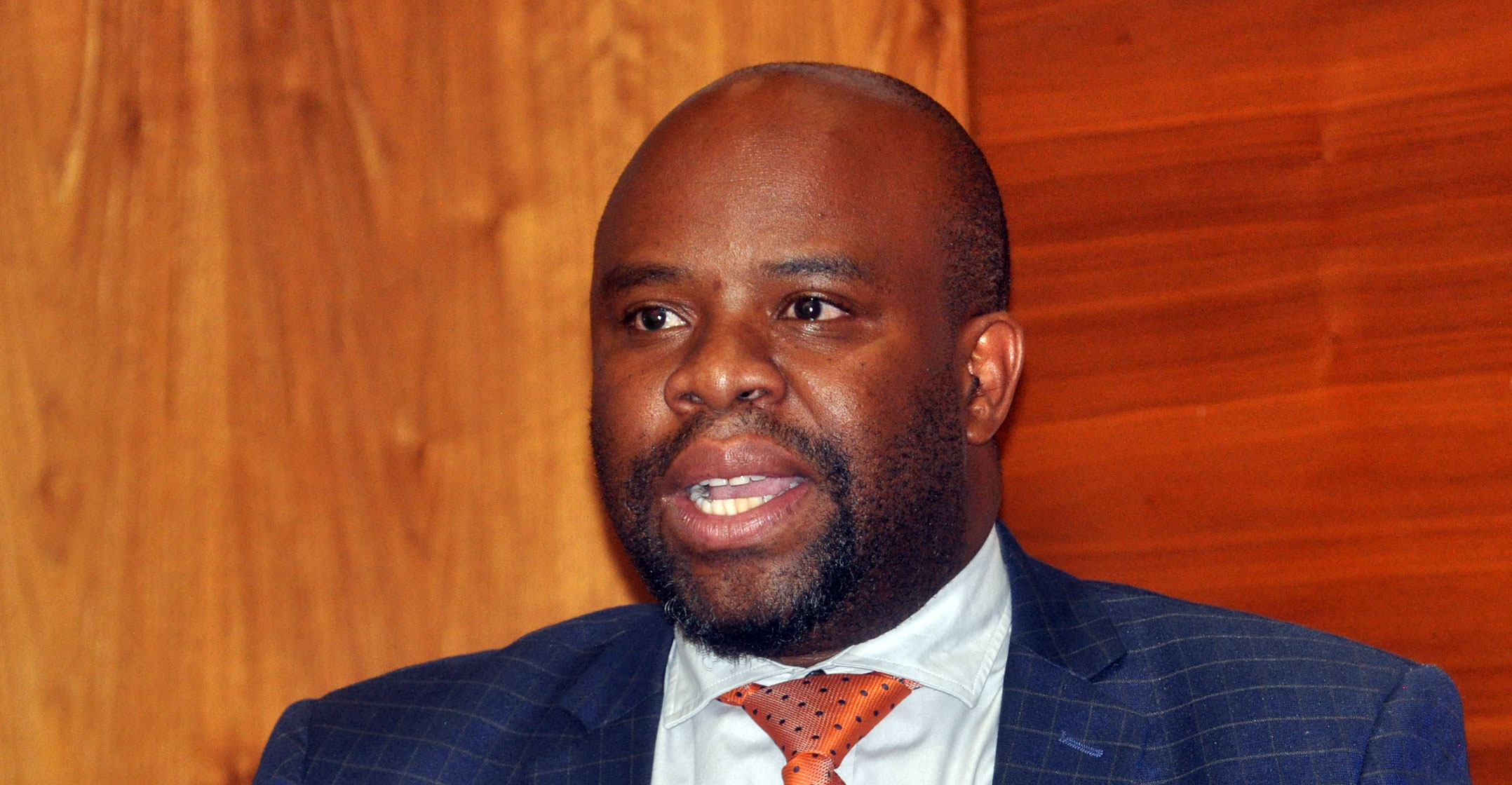
    Telecoms & postal services director-general Robert Nkuna

    Telecommunications & postal services director-general Robert Nkuna said on Tuesday that government does not want to destroy South Africa’s big telecoms operators, despite strong objections to draft legislation that the companies have warned will undermine investment and harm the industry.

    Speaking at a media conference in Sandton on Tuesday on government’s controversial Electronic Communications Amendment Bill, Nkuna reiterated government’s plan to create a single wholesale open-access network, or Woan, but denied it was attempting to hurt the two big operators, MTN and Vodacom, which together invest about R20bn/year in network infrastructure.

    “We are well meaning in what we are doing,” Nkuna said. “If this industry is to expand and grow and facilitate growth in other sectors, we need some changes. Is the department expecting new companies of the scale of MTN and Vodacom? Maybe not. But our view is, with this intervention, we can have medium-tier companies emerging. These companies will be independent of whoever is providing network and spectrum access.”

    Any notion that … the department is trying to destroy the existing companies … that is not our intention

    Nkuna used Tuesday’s event to try to reassure the industry that government will not be “reckless” in its interventions. “Any notion that … the department is trying to destroy the existing companies … that is not our intention.”

    Government has been heavily criticised by Vodacom and MTN, which have said the draft legislation fails to deal with their urgent requirement for access to new spectrum.

    MTN South Africa CEO Godfrey Motsa said last month that the risks associated with the bill are “extensive and significant”. The proposed legislation, which seeks to introduce far-reaching changes to the governance of the sector, will discourage investment, he said.

    “A slowdown in capital investment in our mobile networks will degrade the service and quality of the networks,” Motsa said. “This will have serious and unintended consequences, including the hindering of economic growth with a negative impact on job creation.”

    Hybrid model

    Motsa urged government to adopt the “hybrid model” proposed by the big operators, which he said was produced following a year of “active collaboration between both the ministry and the industry”.

    “The new bill deviates substantially from that proposal.”

    One of the most contentious aspects of the white paper is the proposal to create the Woan, from which other telecoms licensees will be expected to buy capacity. The Free Market Foundation has warned that this network will, in effect, create an infrastructure monopoly in South Africa.

    MTN South Africa CEO Godfrey Motsa

    The Free Market Foundation blasted the amendment bill, saying it “ignores months of behind-closed-doors negotiations” between the top-six mobile network operators and the government. It warned that government is effectively creating a new monopoly in the sector, threatening investment and upending an industry that has delivered communication services to most South Africans.

    Foundation executive director Leon Louw said three key issues of concern in the 2016 white paper remain in the amendment bill. There’s the plan to implement a “monopoly network” in the form of the Woan; a clause that requires mobile operators to return previously allocated spectrum “in which they have invested billions” of rand; and a requirement for mobile operators to provide access to their network infrastructure to competitors at cost-based pricing.

    We always engage in such a way that we ensure industry we can never be reckless in the decisions we take as a government

    But Nkuna on Tuesday defended the bill, saying the Woan will help create greater service-based competition. He said the members of the Internet Service Providers’ Association – Ispa represents many of the country’s ISPs – have long struggled to compete without access to spectrum and that the Woan will give them the means to take on the big network incumbents.

    “We can never be reckless in the decisions we take as a government,” Nkuna said. “On the whole, we are trying to drive South Africa into a digital society and knowledge economy. That’s the endgame.”

    He said the bill is meant to speed up the deployment of electronic communications facilities by the private sector. He emphasised that government will not be a shareholder in the Woan.

    “The industry will have to sit down and design this network however they want to do it. The emphasis is on sharing the scarce resources (spectrum) at our disposal.”

    Spectrum scarcity

    He said every country is grappling with how to deal with spectrum scarcity. “In South Africa, we have decided we are going ahead with this arrangement. Is there interest from industry? Yes and no. Some feel indifferent to this approach; there are others who are saying a big ‘yes’.”

    Nkuna promised that hearings will be held on 1 and 2 February 2018 at which all industry role players will be able to interact with government in a public setting “to explain what it is they are raising”. These hearings will deal with areas of concern to the industry, he said. Government has given interested parties until 31 January 2018 to provide written representations of the amendment bill (extending an earlier deadline of 17 December 2017).

    Telecoms department chief director Alf Wiltz said government will find ways to incentivise the Woan to ensure its success. This might include reduced or even zero spectrum fees and funding from underserviced area agency Usaasa. “We need to move away from spectrum that is assigned exclusively to the few incumbents and more to a situation where spectrum is shared,” Wiltz said.

    Telecoms department chief director Alf Wiltz

    Nkuna said it remains government’s intention to allocate some spectrum on an exclusive-use basis to operators, but only after the Woan has received what it requires to build a national network. Also, when commercial operators receive that spectrum, they may not use it until the Woan is operational.

    Details of how much spectrum will be made available on an exclusive-use basis will only be published after the legislative amendment process has run its course. The detail about how much spectrum will be made available beyond the Woan will be contained in policy directions issued by the minister.

    What we are envisaging is a new licensing dispensation, post 2027/2028, on what will be the best way of using this scarce resource

    Another big worry for the industry is that existing spectrum assignments might be returned when licences expire in about 10 years’ time. The operators have invested tens of billions of rand on their 2G, 3G and 4G networks using these spectrum assignments, and any move to return this spectrum is likely to be the subject of a court challenge.

    “…We need to figure out what happens when the expiry date arrives, what are we going to do?” Nkuna said. “Because (the operators) have been issued with this spectrum, (do they) just continue (using it), irrespective? What we are envisaging is a new licensing dispensation, post 2027/2028, on what will be the best way of using this scarce resource. We will need to do a study well in advance, by the regulator, to say at the expiry of the (spectrum) licences, what then happens?”

    Nkuna said he wants to conclude the legislative process “without delay”, but emphasised that government “still wants to consult sufficiently”.

    “We want to conclude the process by the end of the financial year (31 March 2018).”  — © 2017 NewsCentral Media

    Add TechCentral as a preferred source on GoogleFollow TechCentral on Google NewsGet breaking news on WhatsApp


    Alf Wiltz Free Market Foundation Godfrey Motsa Icasa Leon Louw Mabuse Nkuna MTN Robert Nkuna top Vodacom
    WhatsApp YouTube
    Share. Facebook Twitter LinkedIn WhatsApp Telegram Email Copy Link
    Previous ArticleSA government still keen on net neutrality rules
    Next Article Zuma handed massive defeat on state capture probe

    Related Posts

    South Africa's 3G networks could go dark within two years - Dejan Kastelic

    South Africa’s 3G networks could go dark within two years

    28 October 2026
    Vodacom books R23-billion Safaricom gain as court fight rages

    Vodacom books R23-billion Safaricom gain as court fight rages

    28 October 2026

    Former Icasa chairman Paris Mashile has died

    26 October 2026
    Company News

    The key to AI search visibility is human attention: media agency Connect

    28 October 2026
    Why customers still feel unheard when automation works exactly as designed - CallMiner

    Why customers still feel unheard when automation works exactly as designed

    28 October 2026
    Telviva earns ISO/IEC 27001:2022 certification for information security - Antony Russell

    Telviva earns ISO/IEC 27001:2022 certification for information security

    27 October 2026
    Opinion
    AI's boardroom honeymoon is over - Gary Stocks

    AI’s boardroom honeymoon is over

    22 October 2026
    Before South Africa licenses Starlink, it should look at Ukraine - Duncan McLeod

    Before South Africa licenses Starlink, it should look at Ukraine

    21 October 2026
    Nonkqubela Thathakahle Jordan-Dyani

    Why cybersecurity is now a national security issue for South Africa

    15 October 2026

    Subscribe to Updates

    Get the best South African technology news and analysis delivered to your e-mail inbox every morning.

    Latest Posts
    South Africa's 3G networks could go dark within two years - Dejan Kastelic

    South Africa’s 3G networks could go dark within two years

    28 October 2026
    Vodacom books R23-billion Safaricom gain as court fight rages

    Vodacom books R23-billion Safaricom gain as court fight rages

    28 October 2026
    Canal+ takes a knife to DStv prices

    Canal+ takes a knife to DStv prices

    28 October 2026
    South Africa risks return to money-laundering grey list - Busi Mavuso

    South Africa risks return to money-laundering grey list

    28 October 2026
    © 2009 - 2026 NewsCentral Media
    Built and maintained by Chronon
    • Cookie policy (ZA)
    • TechCentral – privacy and Popia

    Type above and press Enter to search. Press Esc to cancel.

    Manage consent

    TechCentral uses cookies to enhance its offerings. Consenting to these technologies allows us to serve you better. Not consenting or withdrawing consent may adversely affect certain features and functions of the website.

    Functional Always active
    The technical storage or access is strictly necessary for the legitimate purpose of enabling the use of a specific service explicitly requested by the subscriber or user, or for the sole purpose of carrying out the transmission of a communication over an electronic communications network.
    Preferences
    The technical storage or access is necessary for the legitimate purpose of storing preferences that are not requested by the subscriber or user.
    Statistics
    The technical storage or access that is used exclusively for statistical purposes. The technical storage or access that is used exclusively for anonymous statistical purposes. Without a subpoena, voluntary compliance on the part of your Internet Service Provider, or additional records from a third party, information stored or retrieved for this purpose alone cannot usually be used to identify you.
    Marketing
    The technical storage or access is required to create user profiles to send advertising, or to track the user on a website or across several websites for similar marketing purposes.
    • Manage options
    • Manage services
    • Manage {vendor_count} vendors
    • Read more about these purposes
    View preferences
    • {title}
    • {title}
    • {title}
    🇿🇦 Sign up to the TechCentral newsletter