Close Menu
TechCentralTechCentral

    Subscribe to the newsletter

    Get the best South African technology news and analysis delivered to your e-mail inbox every morning.

    Facebook X (Twitter) YouTube LinkedIn
    WhatsApp Facebook X (Twitter) LinkedIn YouTube
    TechCentralTechCentral
    • News
      South Africa's new fibre broadband battle

      South Africa’s new fibre broadband battle

      20 January 2026
      South Africa needs a national 'quantum defence strategy'

      South Africa needs a national ‘quantum defence strategy’

      20 January 2026
      Chinese brands tighten grip on South Africa's used car market

      Chinese brands tighten grip on South Africa’s used car market

      20 January 2026
      Severe geomagnetic storm hits Earth, Sansa confirms

      Severe geomagnetic storm hits Earth, Sansa confirms

      20 January 2026
      Icasa to target Sentech with tougher broadcast pricing rules

      Icasa to target Sentech with tougher broadcast pricing rules

      19 January 2026
    • World
      Taiwan, US strike strategic AI and chip supply-chain pact - TSMC

      Taiwan, US strike strategic AI and chip supply-chain pact

      20 January 2026
      Oracle sued as bondholders allege AI debt plans were hidden - Larry Ellison

      Oracle sued as bondholders allege AI debt plans were hidden

      15 January 2026
      Activists call for X, Grok to removed from app stores - Elon Musk

      Activists call for X, Grok to removed from app stores

      14 January 2026
      Uganda shuts down internet ahead of pivotal election

      Uganda shuts down internet ahead of pivotal election

      14 January 2026
      Taiwan seeks arrest of OnePlus CEO - Pete Lau

      Taiwan seeks arrest of OnePlus CEO

      14 January 2026
    • In-depth
      Digital authoritarianism grows as African states normalise internet blackouts

      Digital authoritarianism grows as African states normalise internet blackouts

      19 December 2025
      TechCentral's South African Newsmakers of 2025

      TechCentral’s South African Newsmakers of 2025

      18 December 2025
      Black Friday goes digital in South Africa as online spending surges to record high

      Black Friday goes digital in South Africa as online spending surges to record high

      4 December 2025
      DStv dodges channel blackout in last-minute deal with Warner Bros

      Canal+ plays hardball – and DStv viewers feel the pain

      3 December 2025
      Jensen Huang Nvidia

      So, will China really win the AI race?

      14 November 2025
    • TCS

      TCS+ | Why cybersecurity is becoming a competitive advantage for SA businesses

      20 January 2026
      TCS+ | Africa's digital transformation - unlocking AI through cloud and culture - Cliff de Wit Accelera Digital Group

      TCS+ | Cloud without culture won’t deliver AI: Accelera’s Cliff de Wit

      12 December 2025
      TCS+ | How Cloud on Demand helps partners thrive in the AWS ecosystem - Odwa Ndyaluvane and Xenia Rhode

      TCS+ | How Cloud On Demand helps partners thrive in the AWS ecosystem

      4 December 2025
      TCS | MTN Group CEO Ralph Mupita on competition, AI and the future of mobile

      TCS | Ralph Mupita on competition, AI and the future of mobile

      28 November 2025
      TCS | Dominic Cull on fixing South Africa's ICT policy bottlenecks

      TCS | Dominic Cull on fixing South Africa’s ICT policy bottlenecks

      21 November 2025
    • Opinion
      AI moves from pilots to production in South African companies - Nazia Pillay SAP

      AI moves from pilots to production in South African companies

      20 January 2026
      ANC's attack on Solly Malatsi shows how BEE dogma trumps economic reality - Duncan McLeod

      ANC’s attack on Solly Malatsi shows how BEE dogma trumps economic reality

      14 December 2025
      Netflix, Warner Bros deal raises fresh headaches for MultiChoice - Duncan McLeod

      Netflix, Warner Bros deal raises fresh headaches for MultiChoice

      5 December 2025
      BIN scans, DDoS and the next cybercrime wave hitting South Africa's banks - Entersekt Gerhard Oosthuizen

      BIN scans, DDoS and the next cybercrime wave hitting South Africa’s banks

      3 December 2025
      ANC's attack on Solly Malatsi shows how BEE dogma trumps economic reality - Duncan McLeod

      Your data, your hardware: the DIY AI revolution is coming

      20 November 2025
    • Company Hubs
      • Africa Data Centres
      • AfriGIS
      • Altron Digital Business
      • Altron Document Solutions
      • Altron Group
      • Arctic Wolf
      • AvertITD
      • Braintree
      • CallMiner
      • CambriLearn
      • CYBER1 Solutions
      • Digicloud Africa
      • Digimune
      • Domains.co.za
      • ESET
      • Euphoria Telecom
      • Incredible Business
      • iONLINE
      • IQbusiness
      • Iris Network Systems
      • LSD Open
      • NEC XON
      • Netstar
      • Network Platforms
      • Next DLP
      • Ovations
      • Paracon
      • Paratus
      • Q-KON
      • SevenC
      • SkyWire
      • Solid8 Technologies
      • Telit Cinterion
      • Tenable
      • Vertiv
      • Videri Digital
      • Vodacom Business
      • Wipro
      • Workday
      • XLink
    • Sections
      • AI and machine learning
      • Banking
      • Broadcasting and Media
      • Cloud services
      • Contact centres and CX
      • Cryptocurrencies
      • Education and skills
      • Electronics and hardware
      • Energy and sustainability
      • Enterprise software
      • Financial services
      • Information security
      • Internet and connectivity
      • Internet of Things
      • Investment
      • IT services
      • Lifestyle
      • Motoring
      • Public sector
      • Retail and e-commerce
      • Satellite communications
      • Science
      • SMEs and start-ups
      • Social media
      • Talent and leadership
      • Telecoms
    • Events
    • Advertise
    TechCentralTechCentral
    Home » In-depth » Hanekom’s plans for science & technology

    Hanekom’s plans for science & technology

    By Editor2 November 2012
    Twitter LinkedIn Facebook WhatsApp Email Telegram Copy Link
    News Alerts
    WhatsApp
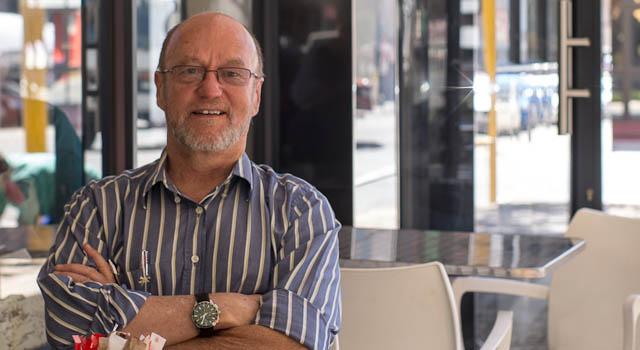
    Derek Hanekom

    Derek Hanekom has taken over the department of science & technology after eight years as its deputy. The Mail & Guardian sat down with him for a cappuccino.

    Where does your interest in science come from?
    I found my school years easy, but I wasn’t a model pupil, for sure, and never did my homework. I gravitated towards the humanities and started with law, but dropped out and decided to travel instead.

    When I came back I started farming with my wife and we learnt everything from doing research and reading… It’s built into my being interested in things. My move to minister of agriculture & land affairs was a natural one and it was then that I started reading about scientific discovery for pleasure. Bill Bryson’s A Short History of Nearly Everything was a critical book. I loved it and, lo and behold, I was appointed to science & technology.

    I’m not a scientist, but I need to know about the various disciplines and the only way you learn is by reading.

    Why fund science and technology?
    The best answers and solutions to some of the everyday problems people face come through science. Take, for instance, HIV, where we have learnt how it works and we are working on a vaccine.

    We don’t get immediate results. We won’t build a house, but we can give advice on how to build a better house. We offer advice through the research we do. The best way is to demonstrate.

    Do other departments listen?
    The big problem is this all-or-nothing debate. On average, people are going to be waiting years for a house and this approach means people are going to be dissatisfied.

    But we can improve the quality of life, for far more people far faster, by doing innovative things in informal settlements. Temporary solutions can improve lives. The human settlements department is listening to this and adjusting policies to make more sustainable houses.

    The challenges are multiple in the field of water. Apart from infrastructure management, the big challenge is getting to that last eight or 10% of people. We’re piloting something in the Eastern Cape, where it is difficult to get water to people. The thing is to make sure that, at least, when people collect water it’s clean. They can collect water from rain­water tanks and those tanks are clean.

    At the Human Sciences Research Council fabulous work was done to understand the whys — why are people hungry? Is the education system working? These social scientists give us information that allows for policy to be adjusted. It’s up to me to understand this work and advocate it to the relevant makers of policy. As a minister I’m in a better position to persuade people to go into rural areas and do some of the basics and give innovative solutions to these households.

    How big do you want the ­department to get?
    What we need is a bigger budget. Public spending will have to increase to meet our research and development targets — not that I’m lobbying through the media; we don’t do that! But we will need to increase public funding and encourage greater private-sector investment, with mechanisms such as the tax incentive. This won’t go towards a bigger department — we are a small department — but for more centres of excellence at universities.

    We want to do research that will help to resolve our society’s challenges. So we help other ministers … which you can see in the recent discovery of two antibodies that can fight the HI virus. We funded the research, but the minister of health was the most prominent at the announcement.

    What initiatives belong solely to the department?
    We have very few areas that are exclusively our own domain, such as astronomy and the Square Kilometre Array (SKA) radio telescope. On palaeontology there are other departments that are legislated to look after it — cultural and environmental affairs — but it’s accepted as being ours. Elsewhere, we are merely creating a framework that will produce  more and better technology to find solutions to our problems.

    How viable is the SKA, given the economic woes in donor countries?
    I don’t think phase one of the SKA will be a big challenge. It’s the 3 000 dishes that will be a challenge. We certainly are not going to be funding that. We will be expected to put in a premium and make sure the infrastructure is there, but the bulk of the funding will come from overseas. It is exactly like it has happened with other telescopes, except that this is on a scale the world has never seen. We have to get the world excited. People are already lining up years in advance to use the MeerKAT radio telescope. Once you get the world’s scientists excited, the money tends to follow.

    How do you make science sexy?
    I go out as much as I can and encourage the expansion of existing programmes, such as the Eskom Expo for Young Scientists, and smaller initiatives that reward pupils for their initiative and innovative thinking.

    There’s a lot more happening than when we were at school. I think we have a different kind of education. People are more confident and are doing more creative things at schools all over the country. Something like an SKA excites people, so you follow it up with a major human capital funding programme. Mark Shuttleworth excited young people, and that’s the sort of thing we need.

    What is your role in the ­education system?
    To some extent we are at the mercy of our education and we try to help there. But we are not going to be running 27 000 schools.

    We have a pilot programme in collaboration with the department of basic education, which uses technology to enhance rural schooling. It’s using a range of ideas, such as cheap tablet devices. Ultimately, the department wants to move away from textbooks and into the 21st century. It’s doable, but it’s not easily doable. We can move in that direction and we can assist them. We’re trying a lot of things to improve the quality of teaching in rural schools and we are studying their effect.

    If we want the maths and science students to be well prepared for university, we have to intervene. Most intervention won’t come from us but some will, such as students getting bursaries through the national research foundation. Our role at school level is very limited. All we can do is guide them on how they can do things better to enhance learning.

    We don’t have a clash with higher education and we do a lot of work with them. I have to have good relationships with my peers.

    What do you want your legacy to be?
    To develop a good base for the fundamentals so we get good scientific work in our country. And seizing things that come along, such as the SKA. We would not have got it if [former minister Naledi] Pandor had, in that last period, not been a powerful champion of it. I would like to see a whole science community that is acknowledged and supported and will do excellent work to make a difference. This will make our economy more competitive and find solutions to socioeconomic problems. By the end of my term in 18 months, I’d like the MeerKAT to really be under construction and we should be very confident that, through bringing in partners, the SKA is not in jeopardy.

    Is this your last job?
    I don’t think I’d go back to farming and I have never really been in the private sector. I think it would have to be some kind of public-sector work. I’d have to decide for myself whether I’d want to go back to parliament, and in that event I may or may not be appointed to something. If I don’t go back, all I would be is in semi-retirement. I wouldn’t be doing nothing.  — (c) 2012 Mail & Guardian


    • Visit the Mail & Guardian Online, the smart news source
    • This Q&A has been shortened from the original
    • See also: Derek Hanekom, iMinister


    Derek Hanekom MeerKAT Naledi Pandor SKA Square Kilometre Array
    WhatsApp YouTube Follow on Google News Add as preferred source on Google
    Share. Facebook Twitter LinkedIn WhatsApp Telegram Email Copy Link
    Previous ArticleSA mobiles leap ahead in broadband
    Next Article Hands off our spectrum, says e.tv

    Related Posts

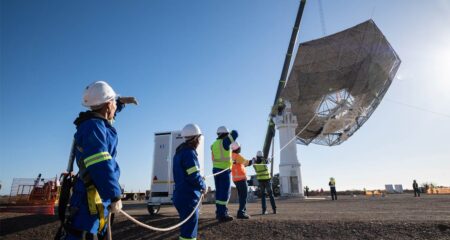
    South Africa's giant SKA telescope clears major technical hurdle

    South Africa’s giant SKA telescope clears major technical hurdle

    8 January 2026
    SA scientists want Musk’s Starlink out of their space

    SA scientists want Musk’s Starlink out of their space

    2 June 2025
    South Africa's MeerKAT used to discover giant galaxy

    South Africa’s MeerKAT in ‘extraordinary’ discovery

    27 January 2025
    Company News
    How Norton is protecting digital lives in a hostile online world - Avert ITD Avert IT Distribution

    How Norton is protecting digital lives in a hostile online world

    20 January 2026
    Beyond the hype: trust is the first step to generative AI ROI

    Beyond the hype: trust is the first step to generative AI ROI

    19 January 2026
    New Planet Energy and Span Africa launch landmark solar project

    New Planet Energy and Span Africa launch landmark solar project

    19 January 2026
    Opinion
    AI moves from pilots to production in South African companies - Nazia Pillay SAP

    AI moves from pilots to production in South African companies

    20 January 2026
    ANC's attack on Solly Malatsi shows how BEE dogma trumps economic reality - Duncan McLeod

    ANC’s attack on Solly Malatsi shows how BEE dogma trumps economic reality

    14 December 2025
    Netflix, Warner Bros deal raises fresh headaches for MultiChoice - Duncan McLeod

    Netflix, Warner Bros deal raises fresh headaches for MultiChoice

    5 December 2025

    Subscribe to Updates

    Get the best South African technology news and analysis delivered to your e-mail inbox every morning.

    Latest Posts
    South Africa's new fibre broadband battle

    South Africa’s new fibre broadband battle

    20 January 2026
    South Africa needs a national 'quantum defence strategy'

    South Africa needs a national ‘quantum defence strategy’

    20 January 2026
    AI moves from pilots to production in South African companies - Nazia Pillay SAP

    AI moves from pilots to production in South African companies

    20 January 2026
    Taiwan, US strike strategic AI and chip supply-chain pact - TSMC

    Taiwan, US strike strategic AI and chip supply-chain pact

    20 January 2026
    © 2009 - 2026 NewsCentral Media
    • Cookie policy (ZA)
    • TechCentral – privacy and Popia

    Type above and press Enter to search. Press Esc to cancel.

    Manage consent

    TechCentral uses cookies to enhance its offerings. Consenting to these technologies allows us to serve you better. Not consenting or withdrawing consent may adversely affect certain features and functions of the website.

    Functional Always active
    The technical storage or access is strictly necessary for the legitimate purpose of enabling the use of a specific service explicitly requested by the subscriber or user, or for the sole purpose of carrying out the transmission of a communication over an electronic communications network.
    Preferences
    The technical storage or access is necessary for the legitimate purpose of storing preferences that are not requested by the subscriber or user.
    Statistics
    The technical storage or access that is used exclusively for statistical purposes. The technical storage or access that is used exclusively for anonymous statistical purposes. Without a subpoena, voluntary compliance on the part of your Internet Service Provider, or additional records from a third party, information stored or retrieved for this purpose alone cannot usually be used to identify you.
    Marketing
    The technical storage or access is required to create user profiles to send advertising, or to track the user on a website or across several websites for similar marketing purposes.
    • Manage options
    • Manage services
    • Manage {vendor_count} vendors
    • Read more about these purposes
    View preferences
    • {title}
    • {title}
    • {title}