Close Menu
TechCentralTechCentral

    Subscribe to the newsletter

    Get the best South African technology news and analysis delivered to your e-mail inbox every morning.

    Facebook X (Twitter) YouTube LinkedIn
    WhatsApp Facebook X (Twitter) LinkedIn YouTube
    TechCentralTechCentral
    • News
      How liberalisation is rewiring South Africa's power sector

      How liberalisation is rewiring South Africa’s power sector

      21 January 2026
      South African digital radio trial is about to go live - Aldred Dreyer

      South African digital radio trial is about to go live

      21 January 2026
      Major change to telco licensing rules in Europe - Henna Virkkunen

      Major change to telco licensing rules in Europe

      21 January 2026
      An inflection point for crypto in South Africa - Hannes Wessels Binance

      An inflection point for crypto in South Africa

      21 January 2026
      No risk of load shedding after Koeberg output scaled back

      No risk of load shedding after Koeberg output scaled back

      21 January 2026
    • World
      Taiwan, US strike strategic AI and chip supply-chain pact - TSMC

      Taiwan, US strike strategic AI and chip supply-chain pact

      20 January 2026
      Wikipedia moves to monetise AI giants' reliance on its content

      Wikipedia moves to monetise AI giants’ reliance on its content

      15 January 2026
      Visa moves to plug stablecoins into the global payments system

      Visa moves to plug stablecoins into the global payments system

      15 January 2026
      Oracle sued as bondholders allege AI debt plans were hidden - Larry Ellison

      Oracle sued as bondholders allege AI debt plans were hidden

      15 January 2026
      Activists call for X, Grok to removed from app stores - Elon Musk

      Activists call for X, Grok to removed from app stores

      14 January 2026
    • In-depth
      The top-performing South African tech shares of 2025

      The top-performing South African tech shares of 2025

      12 January 2026
      Digital authoritarianism grows as African states normalise internet blackouts

      Digital authoritarianism grows as African states normalise internet blackouts

      19 December 2025
      TechCentral's South African Newsmakers of 2025

      TechCentral’s South African Newsmakers of 2025

      18 December 2025
      Black Friday goes digital in South Africa as online spending surges to record high

      Black Friday goes digital in South Africa as online spending surges to record high

      4 December 2025
      DStv dodges channel blackout in last-minute deal with Warner Bros

      Canal+ plays hardball – and DStv viewers feel the pain

      3 December 2025
    • TCS

      TCS+ | Why cybersecurity is becoming a competitive advantage for SA businesses

      20 January 2026
      TCS+ | Africa's digital transformation - unlocking AI through cloud and culture - Cliff de Wit Accelera Digital Group

      TCS+ | Cloud without culture won’t deliver AI: Accelera’s Cliff de Wit

      12 December 2025
      TCS+ | How Cloud on Demand helps partners thrive in the AWS ecosystem - Odwa Ndyaluvane and Xenia Rhode

      TCS+ | How Cloud On Demand helps partners thrive in the AWS ecosystem

      4 December 2025
      TCS | MTN Group CEO Ralph Mupita on competition, AI and the future of mobile

      TCS | Ralph Mupita on competition, AI and the future of mobile

      28 November 2025
      TCS | Dominic Cull on fixing South Africa's ICT policy bottlenecks

      TCS | Dominic Cull on fixing South Africa’s ICT policy bottlenecks

      21 November 2025
    • Opinion
      AI moves from pilots to production in South African companies - Nazia Pillay SAP

      AI moves from pilots to production in South African companies

      20 January 2026
      ANC's attack on Solly Malatsi shows how BEE dogma trumps economic reality - Duncan McLeod

      ANC’s attack on Solly Malatsi shows how BEE dogma trumps economic reality

      14 December 2025
      Netflix, Warner Bros deal raises fresh headaches for MultiChoice - Duncan McLeod

      Netflix, Warner Bros deal raises fresh headaches for MultiChoice

      5 December 2025
      BIN scans, DDoS and the next cybercrime wave hitting South Africa's banks - Entersekt Gerhard Oosthuizen

      BIN scans, DDoS and the next cybercrime wave hitting South Africa’s banks

      3 December 2025
      ANC's attack on Solly Malatsi shows how BEE dogma trumps economic reality - Duncan McLeod

      Your data, your hardware: the DIY AI revolution is coming

      20 November 2025
    • Company Hubs
      • Africa Data Centres
      • AfriGIS
      • Altron Digital Business
      • Altron Document Solutions
      • Altron Group
      • Arctic Wolf
      • AvertITD
      • Braintree
      • CallMiner
      • CambriLearn
      • CYBER1 Solutions
      • Digicloud Africa
      • Digimune
      • Domains.co.za
      • ESET
      • Euphoria Telecom
      • Incredible Business
      • iONLINE
      • IQbusiness
      • Iris Network Systems
      • LSD Open
      • NEC XON
      • Netstar
      • Network Platforms
      • Next DLP
      • Ovations
      • Paracon
      • Paratus
      • Q-KON
      • SevenC
      • SkyWire
      • Solid8 Technologies
      • Telit Cinterion
      • Tenable
      • Vertiv
      • Videri Digital
      • Vodacom Business
      • Wipro
      • Workday
      • XLink
    • Sections
      • AI and machine learning
      • Banking
      • Broadcasting and Media
      • Cloud services
      • Contact centres and CX
      • Cryptocurrencies
      • Education and skills
      • Electronics and hardware
      • Energy and sustainability
      • Enterprise software
      • Financial services
      • Information security
      • Internet and connectivity
      • Internet of Things
      • Investment
      • IT services
      • Lifestyle
      • Motoring
      • Public sector
      • Retail and e-commerce
      • Satellite communications
      • Science
      • SMEs and start-ups
      • Social media
      • Talent and leadership
      • Telecoms
    • Events
    • Advertise
    TechCentralTechCentral
    Home » Sections » Electronics and hardware » Honey, I shrunk the chips – inside TSMC’s 2nm breakthrough
    Honey, I shrunk the chips - TSMC
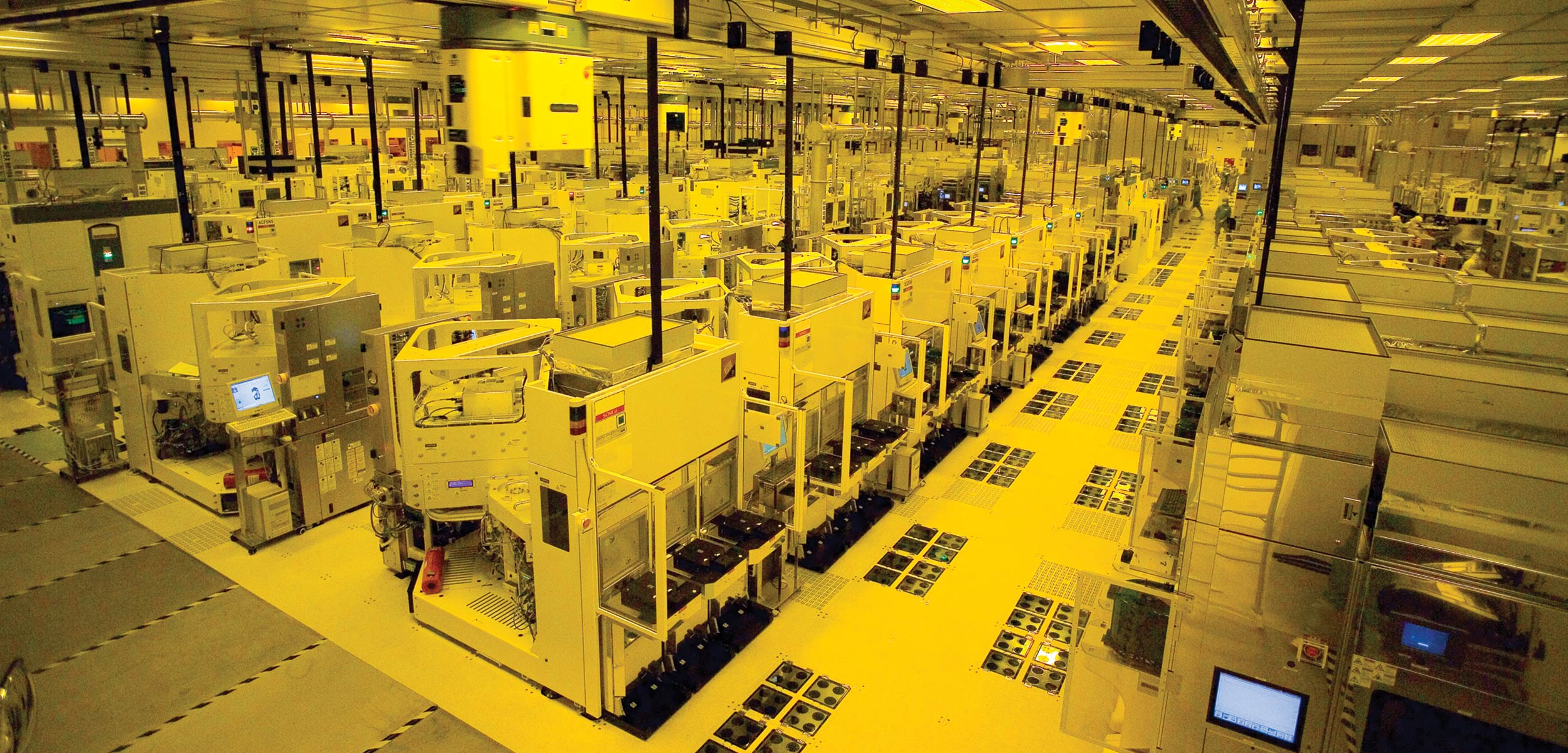
    Inside a TSMC fab

    Honey, I shrunk the chips – inside TSMC’s 2nm breakthrough

    By The Conversation6 April 2025

    Last week, Taiwanese manufacturer TSMC introduced the world’s most advanced microchip: the 2 nanometre chip. Mass production is expected for the second half of the year, and TSMC promises it will represent a major step forward in performance and efficiency – potentially reshaping the technological landscape.

    Microchips are the foundation of modern technology, found in nearly all electronic devices, from electric toothbrushes and smartphones to laptops and household appliances. They are made by layering and etching materials like silicon to create microscopic circuits containing billions of transistors.

    These transistors are effectively tiny switches, managing the flow of electricity and allowing computers to work. In general, the more transistors a chip contains, the faster and more powerful it becomes.

    Taiwan’s microchip industry is closely tied into its security. It is sometimes referred to as the ‘silicon shield’

    The microchip industry consistently endeavours to pack more transistors into a smaller area, leading to faster, more powerful and energy efficient devices.

    Compared to the previous most advanced chip, which use a 3nm process, TSMC’s 2nm technology should deliver notable benefits. These include a 10-15% boost in computing speed at the same power level or a 20-30% reduction in power usage at the same speed.

    Additionally, transistor density in 2nm chips is increased by about 15%, over and above the 3nm technology. This should enable devices to operate faster, consume less energy and manage more complex tasks efficiently.

    Taiwan’s microchip industry is closely tied into its security. It is sometimes referred to as the “silicon shield”, because its widespread economic importance incentivises the US and allies to defend Taiwan against the possibility of Chinese invasion.

    Foundry services

    TSMC recently struck a US$100-billion deal to build five new US factories. However, there is uncertainty over whether the 2nm chips can be manufactured outside Taiwan, as some officials are concerned that could undermine the island’s security.

    Established in 1987, TSMC, which stands for Taiwan Semiconductor Manufacturing Company, manufactures chips for other companies. Taiwan accounts for 60% of the global “foundry” market (the outsourcing of semiconductor manufacturing) and the vast majority of that comes from TSMC alone.

    TSMC’s super-advanced microchips are used by other companies in a wide range of devices. It manufactures Apple’s A-series processors used in iPhones, it produces Nvidia’s graphics processing units used for machine learning and AI applications. It also makes AMD’s Ryzen and Epyc processors, and it produces Qualcomm’s Snapdragon processors, used in Samsung, Xiaomi, OnePlus and Google phones.

    Read: New Intel CEO plots overhaul of manufacturing and AI operations

    In 2020, TSMC moved to 5nm FinFET technology that played a crucial role in smartphone and high-performance computing development.

    Two years later, it launched a 3nm miniaturisation process based on even smaller microchips. This further enhanced performance and power efficiency. Apple’s current A-series processor, for example, is based on this technology.
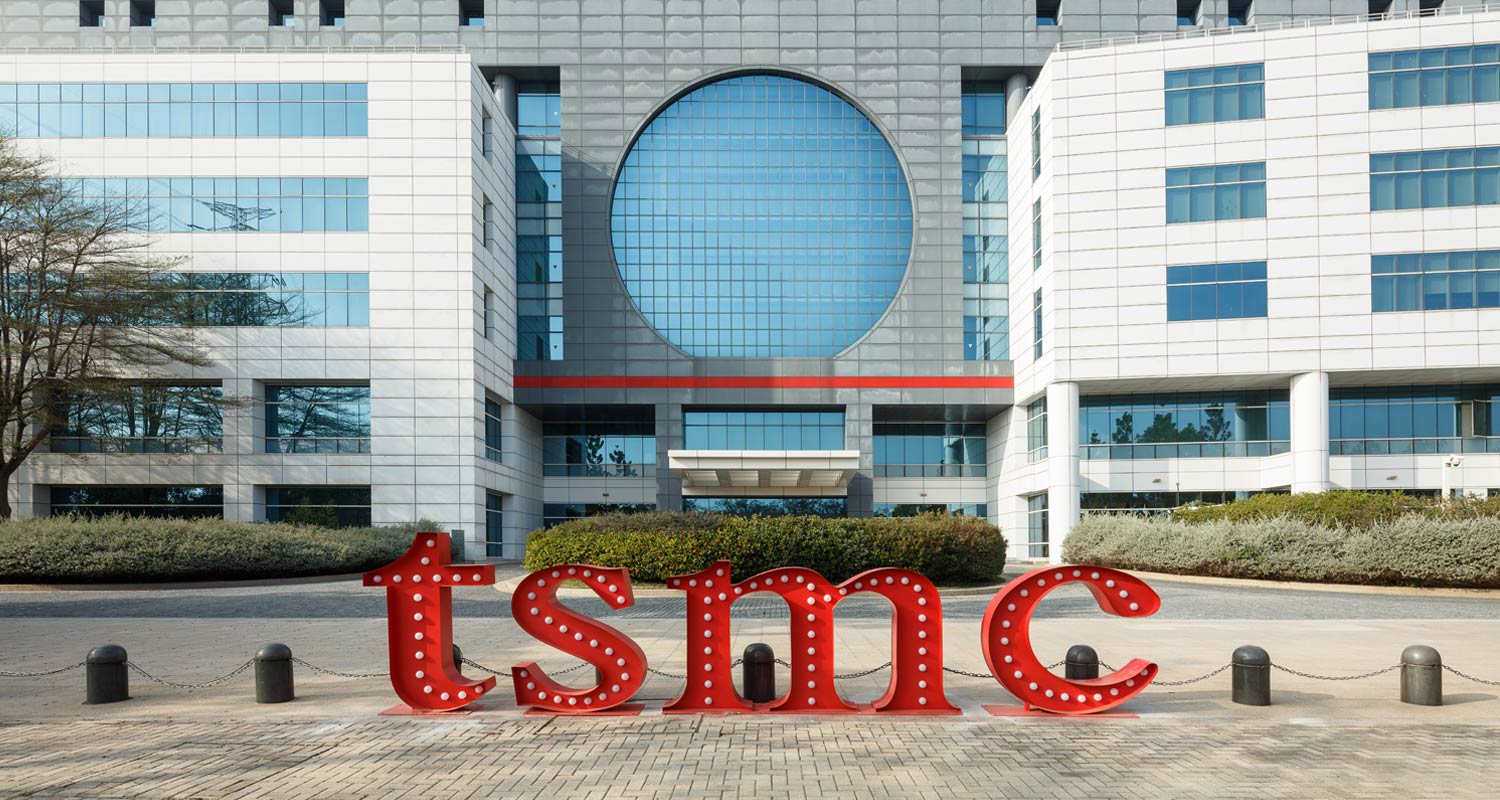
    Outside one of TSMC's dozens of fabs, or fabrication plants, in Taiwan
    Outside one of TSMC’s dozens of fabs, or fabrication facilities, in Taiwan. Image: TSMC

    Smartphones, laptops and tablets with 2nm chips could benefit from better performance and longer battery life. This will lead to smaller, lighter devices without sacrificing power.

    The efficiency and speed of 2nm chips have the potential to enhance AI-based applications such as voice assistants, real-time language translation and autonomous computer systems (those designed to work with minimal to no human input). Data centres could experience reduced energy consumption and improved processing capabilities, contributing to environmental sustainability goals.

    Autonomous vehicles and robotics could benefit from the increased processing speed and reliability of the new chips, making these technologies safer and more practical for widespread adoption.

    Producing 2nm chips requires cutting-edge techniques like extreme ultraviolet lithography

    This all sounds really promising, but while 2nm chips represent a technological milestone, they also pose challenges. The first one is related to the manufacturing complexity.

    Producing 2nm chips requires cutting-edge techniques like extreme ultraviolet (EUV) lithography. This complex and expensive process increases production costs and demands extremely high precision.

    Another big issue is heat. Even with relatively lower consumption, as transistors shrink and densities increase, managing heat dissipation becomes a critical challenge.

    Overheating can impact chip performance and durability. In addition, at such a small scale, traditional materials like silicon may reach their performance limits, requiring the exploration of different materials.

    New era

    That said, the enhanced computational power, energy efficiency and miniaturisation enabled by these chips could be a gateway to a new era of consumer and industrial computing. Smaller chips could lead to breakthroughs in tomorrow’s technology, creating devices that are not only powerful but also discreet and more environmentally friendly.The Conversation

    • The author, Domenico Vicinanza, is associate professor of intelligent systems and data science, Anglia Ruskin University
    • This article is republished from The Conversation under a Creative Commons licence. Read the original article


    Don’t miss:

    New Intel CEO tells clients: ‘Be brutally honest with us’ 


    Apple Samsung TSMC
    WhatsApp YouTube Follow on Google News Add as preferred source on Google
    Share. Facebook Twitter LinkedIn WhatsApp Telegram Email Copy Link
    Previous ArticleMicrosoft turns 50
    Next Article Home affairs, Sars ink digital pact

    Related Posts

    Taiwan, US strike strategic AI and chip supply-chain pact - TSMC

    Taiwan, US strike strategic AI and chip supply-chain pact

    20 January 2026
    Alphabet tops $4-trillion valuation

    Alphabet tops $4-trillion valuation

    13 January 2026
    Apple tops global smartphone rankings in 2025

    Apple tops global smartphone rankings in 2025

    12 January 2026
    Company News
    The tech transformation of sports betting

    The tech transformation of sports betting

    21 January 2026
    How Norton is protecting digital lives in a hostile online world - Avert ITD Avert IT Distribution

    How Norton is protecting digital lives in a hostile online world

    20 January 2026
    Beyond the hype: trust is the first step to generative AI ROI

    Beyond the hype: trust is the first step to generative AI ROI

    19 January 2026
    Opinion
    AI moves from pilots to production in South African companies - Nazia Pillay SAP

    AI moves from pilots to production in South African companies

    20 January 2026
    ANC's attack on Solly Malatsi shows how BEE dogma trumps economic reality - Duncan McLeod

    ANC’s attack on Solly Malatsi shows how BEE dogma trumps economic reality

    14 December 2025
    Netflix, Warner Bros deal raises fresh headaches for MultiChoice - Duncan McLeod

    Netflix, Warner Bros deal raises fresh headaches for MultiChoice

    5 December 2025

    Subscribe to Updates

    Get the best South African technology news and analysis delivered to your e-mail inbox every morning.

    Latest Posts
    How liberalisation is rewiring South Africa's power sector

    How liberalisation is rewiring South Africa’s power sector

    21 January 2026
    South African digital radio trial is about to go live - Aldred Dreyer

    South African digital radio trial is about to go live

    21 January 2026
    Major change to telco licensing rules in Europe - Henna Virkkunen

    Major change to telco licensing rules in Europe

    21 January 2026
    An inflection point for crypto in South Africa - Hannes Wessels Binance

    An inflection point for crypto in South Africa

    21 January 2026
    © 2009 - 2026 NewsCentral Media
    • Cookie policy (ZA)
    • TechCentral – privacy and Popia

    Type above and press Enter to search. Press Esc to cancel.

    Manage consent

    TechCentral uses cookies to enhance its offerings. Consenting to these technologies allows us to serve you better. Not consenting or withdrawing consent may adversely affect certain features and functions of the website.

    Functional Always active
    The technical storage or access is strictly necessary for the legitimate purpose of enabling the use of a specific service explicitly requested by the subscriber or user, or for the sole purpose of carrying out the transmission of a communication over an electronic communications network.
    Preferences
    The technical storage or access is necessary for the legitimate purpose of storing preferences that are not requested by the subscriber or user.
    Statistics
    The technical storage or access that is used exclusively for statistical purposes. The technical storage or access that is used exclusively for anonymous statistical purposes. Without a subpoena, voluntary compliance on the part of your Internet Service Provider, or additional records from a third party, information stored or retrieved for this purpose alone cannot usually be used to identify you.
    Marketing
    The technical storage or access is required to create user profiles to send advertising, or to track the user on a website or across several websites for similar marketing purposes.
    • Manage options
    • Manage services
    • Manage {vendor_count} vendors
    • Read more about these purposes
    View preferences
    • {title}
    • {title}
    • {title}