Close Menu
TechCentralTechCentral

    Subscribe to the newsletter

    Get the best South African technology news and analysis delivered to your e-mail inbox every morning.

    Facebook X (Twitter) YouTube LinkedIn
    WhatsApp Facebook X (Twitter) LinkedIn YouTube
    TechCentralTechCentral
    • News
      Netflix, Warner Bros talks raise fresh headaches for MultiChoice

      Netflix, Warner Bros talks raise fresh headaches for MultiChoice

      5 December 2025
      Big Microsoft 365 price increases coming next year

      Big Microsoft price increases coming next year

      5 December 2025
      Vodacom to take control of Safaricom in R36-billion deal - Shameel Joosub

      Vodacom to take control of Safaricom in R36-billion deal

      4 December 2025
      Black Friday goes digital in South Africa as online spending surges to record high

      Black Friday goes digital in South Africa as online spending surges to record high

      4 December 2025
      BYD takes direct aim at Toyota with launch of sub-R500 000 Sealion 5 PHEV

      BYD takes direct aim at Toyota with launch of sub-R500 000 Sealion 5 PHEV

      4 December 2025
    • World
      Amazon and Google launch multi-cloud service for faster connectivity

      Amazon and Google launch multi-cloud service for faster connectivity

      1 December 2025
      Google makes final court plea to stop US breakup

      Google makes final court plea to stop US breakup

      21 November 2025
      Bezos unveils monster rocket: New Glenn 9x4 set to dwarf Saturn V

      Bezos unveils monster rocket: New Glenn 9×4 set to dwarf Saturn V

      21 November 2025
      Tech shares turbocharged by Nvidia's stellar earnings

      Tech shares turbocharged by stellar Nvidia earnings

      20 November 2025
      Config file blamed for Cloudflare meltdown that disrupted the web

      Config file blamed for Cloudflare meltdown that disrupted the web

      19 November 2025
    • In-depth
      Jensen Huang Nvidia

      So, will China really win the AI race?

      14 November 2025
      Valve's Linux console takes aim at Microsoft's gaming empire

      Valve’s Linux console takes aim at Microsoft’s gaming empire

      13 November 2025
      iOCO's extraordinary comeback plan - Rhys Summerton

      iOCO’s extraordinary comeback plan

      28 October 2025
      Why smart glasses keep failing - no, it's not the tech - Mark Zuckerberg

      Why smart glasses keep failing – it’s not the tech

      19 October 2025
      BYD to blanket South Africa with megawatt-scale EV charging network - Stella Li

      BYD to blanket South Africa with megawatt-scale EV charging network

      16 October 2025
    • TCS
      TCS+ | How Cloud on Demand helps partners thrive in the AWS ecosystem - Odwa Ndyaluvane and Xenia Rhode

      TCS+ | How Cloud On Demand helps partners thrive in the AWS ecosystem

      4 December 2025
      TCS | MTN Group CEO Ralph Mupita on competition, AI and the future of mobile

      TCS | Ralph Mupita on competition, AI and the future of mobile

      28 November 2025
      TCS | Dominic Cull on fixing South Africa's ICT policy bottlenecks

      TCS | Dominic Cull on fixing South Africa’s ICT policy bottlenecks

      21 November 2025
      TCS | BMW CEO Peter van Binsbergen on the future of South Africa's automotive industry

      TCS | BMW CEO Peter van Binsbergen on the future of South Africa’s automotive industry

      6 November 2025
      TCS | Why Altron is building an AI factory - Bongani Andy Mabaso

      TCS | Why Altron is building an AI factory in Johannesburg

      28 October 2025
    • Opinion
      Your data, your hardware: the DIY AI revolution is coming - Duncan McLeod

      Your data, your hardware: the DIY AI revolution is coming

      20 November 2025
      Zero Carbon Charge founder Joubert Roux

      The energy revolution South Africa can’t afford to miss

      20 November 2025
      It's time for a new approach to government IT spend in South Africa - Richard Firth

      It’s time for a new approach to government IT spend in South Africa

      19 November 2025
      How South Africa's broken Rica system fuels murder and mayhem - Farhad Khan

      How South Africa’s broken Rica system fuels murder and mayhem

      10 November 2025
      South Africa's AI data centre boom risks overloading a fragile grid - Paul Colmer

      South Africa’s AI data centre boom risks overloading a fragile grid

      30 October 2025
    • Company Hubs
      • Africa Data Centres
      • AfriGIS
      • Altron Digital Business
      • Altron Document Solutions
      • Altron Group
      • Arctic Wolf
      • AvertITD
      • Braintree
      • CallMiner
      • CambriLearn
      • CYBER1 Solutions
      • Digicloud Africa
      • Digimune
      • Domains.co.za
      • ESET
      • Euphoria Telecom
      • Incredible Business
      • iONLINE
      • IQbusiness
      • Iris Network Systems
      • LSD Open
      • NEC XON
      • Netstar
      • Network Platforms
      • Next DLP
      • Ovations
      • Paracon
      • Paratus
      • Q-KON
      • SevenC
      • SkyWire
      • Solid8 Technologies
      • Telit Cinterion
      • Tenable
      • Vertiv
      • Videri Digital
      • Vodacom Business
      • Wipro
      • Workday
      • XLink
    • Sections
      • AI and machine learning
      • Banking
      • Broadcasting and Media
      • Cloud services
      • Contact centres and CX
      • Cryptocurrencies
      • Education and skills
      • Electronics and hardware
      • Energy and sustainability
      • Enterprise software
      • Financial services
      • Information security
      • Internet and connectivity
      • Internet of Things
      • Investment
      • IT services
      • Lifestyle
      • Motoring
      • Public sector
      • Retail and e-commerce
      • Satellite communications
      • Science
      • SMEs and start-ups
      • Social media
      • Talent and leadership
      • Telecoms
    • Events
    • Advertise
    TechCentralTechCentral
    Home » Opinion » Steve Song » How Africa can reap the dividend

    How Africa can reap the dividend

    By Steve Song7 February 2013
    Twitter LinkedIn Facebook WhatsApp Email Telegram Copy Link
    News Alerts
    WhatsApp
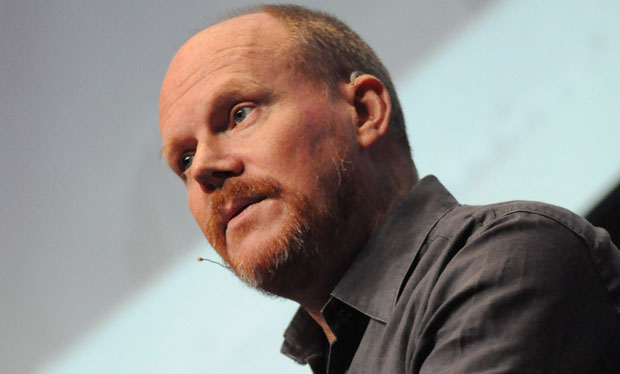
    Steve Song
    Steve Song

    Digital divide, digital dividend, digital yadi-yadah. You would be forgiven if the term “digital dividend” didn’t immediately resonate with you given the proliferation of all things “digital” in recent years. A quick reminder then.

    The digital dividend refers to the spectrum that is freed up in the conversion from analogue television broadcasting to digital broadcasting, a change that has largely already taken place in the industrialised world and is slowly gathering pace in Africa.  This involves deploying digital transmitters to replace the analogue ones and either new digital televisions or digital set-top boxes for existing televisions.

    But the fact that more channels may become available or that you can receive television channels optionally in high-definition is less exciting to me than what can be done with the spectrum that is freed up. How much spectrum is being freed up?  There is over 400MHz of television spectrum.

    Digital broadcasting uses a fraction of the spectrum that analogue broadcasting does and, in Africa, there are few enough analogue terrestrial television channels per country to begin with. What is more, it turns out that television spectrum exists within a particularly attractive range of these frequencies.

    What makes a frequency attractive is propagation, or the ability of a radio wave to go through obstacles. The lower you go down the spectrum, the longer the radio waves and the less they are inclined to bounce off solid objects. That means that you can cover a larger area with a single transmitter and that means that the cost of building a communication network drops significantly.

    There are trade-offs, however. Longer waves carry less information, so you can’t pack as much data into the same channel, but that is a very reasonable trade-off when it comes to planning rural networks where the cost of network deployment may be a bigger issue than ensuring  greater than 20Mbit/s download speeds.

    Current television spectrum allocation
    Current television spectrum allocation

    So, the digital dividend spectrum is extremely appealing from an infrastructure cost-of-ownership perspective. It is unfortunate, then, that most of the debate around it has largely been held within the broadcasting community. I’m not saying digital broadcasting isn’t important, but the digital dividend is an extremely valuable resource that needs to be considered holistically in terms of its national strategic value.

    At the World Radio Congress (WRC-12) last year, there was confirmation of 790-862MHz (popularly known as the 800MHz band) as a global IMT (mobile) band. There was also a move by some African countries to have the 694-790MHz band (popularly known as the 700MHz band) made available in Region 1 (Africa and Europe) on an accelerated basis, probably because there are lots of CDMA players already in the 800MHz band.

    The 700MHz band is likely to be confirmed as an IMT band for Region 1 at the WRC in 2015. That’s good news for mobile operators, except that the release of the 700MHz and 800MHz bands is being treated as contingent on the completion of digital migration. Given the delays that have plagued the migration on the continent, this seems like a dangerous strategy. Why can’t one or both of these two new IMT bands be cleared for use while migration is going on in the lower end of the television spectrum? At the very least, preparatory work for release of this spectrum ought to be going on now.

    But the situation is worse than just a disconnect between the broadcaster and mobile operators. There is also the prospect of missing out on an alternative access technology that could make a real difference for rural access. Television white-spaces technology has the potential to create a vibrant rural access industry in Africa.

    What a future allocation of spectrum might look like
    What a future allocation of spectrum might look like

    Television white spaces refers to the guard bands left between analogue television broadcast channels in order to prevent interference. TV white-spaces technology is capable of serendipitously reusing that empty spectrum without interfering with existing television broadcasts. The initial vision was that through spectrum sensing, the devices would automatically use whatever empty spectrum was available, as a secondary user. That means if a television signal suddenly turns on in a frequency being used by a TV white-spaces device, it would automatically cease using that frequency and find another empty frequency to use.

    The broadcast and wireless microphone industry in the US were not satisfied with this solution and the concept of a geo-located authentication database was introduced whereby TV white-spaces devices would need to authenticate against a spectrum database to see what spectrum was available for use in the area it was being used.

    Very low-power TV white-spaces devices are still allowed to use just spectrum sensing. In general, TV white-spaces regulation in the US has been the victim of massive lobbying and the result is some extremely hamstrung regulation.

    The UK has largely followed the US regulations, with one significant improvement. The power output level of the devices is not fixed but can be dictated by the settings in the authentication database. This means that higher power-output levels could be assigned in sparsely populated rural areas versus areas where there are many other spectrum users.

    What is exciting about this technology?

    • No spectrum licence, or a very nominal one, is required. This means new opportunities for small entrepreneurs to provide alternative access.
    • Great propagation. A typical TV white-spaces link can go 8-10km without any effort and is not obstructed by trees, buildings, etc.
    • Innovation. Wi-Fi has gone from a niche spectrum for experiments to an industry that is expected to be worth over US$6bn in 2015.
    • About 70% of smartphone data traffic in the rich world goes over Wi-Fi. This is what open spectrum offers. TV white spaces has the potential to be another such industry because of the low barrier to entry.
    • No spectrum refarming is required. Because TV white-paces technology is designed for secondary use of spectrum, there is no need to move the primary spectrum holder. This is a quick and easy win. Conflicts can be easily resolved by the regulator thanks to the authentication database.

    TV white spaces are finally gaining traction, however. Google is sponsoring pilots in South Africa and in Kenya, and Microsoft is supporting a pilot in partnership with the Kenyan government and a satellite operator there.

    Those are good signs, but, in general, the discussion of the digital dividend has been trapped in bureaucratic silos. There needs to be a broader acknowledgement of the strategic value of the dividend and a strategy that addresses it holistically.

    • Steve Song is founder of Village Telco
    • This piece was originally published on Song’s blog, Many Possibilities


    Google Microsoft Steve Song
    Subscribe to TechCentral Subscribe to TechCentral
    Share. Facebook Twitter LinkedIn WhatsApp Telegram Email Copy Link
    Previous ArticleLook & Listen shutters Web store
    Next Article Mystery surrounds BIS plans

    Related Posts

    Big Microsoft 365 price increases coming next year

    Big Microsoft price increases coming next year

    5 December 2025
    What South Africans searched for most in 2025

    What South Africans searched for most in 2025, according to Google

    4 December 2025
    Unlock smarter computing with your surface Copilot+ PC

    Unlock smarter computing with your Surface Copilot+ PC

    4 December 2025
    Company News
    Beat the summer heat with Samsung's WindFree air conditioners

    Beat the summer heat with Samsung’s WindFree air conditioners

    5 December 2025
    AI is not a technology problem - iqbusiness

    AI is not a technology problem – iqbusiness

    5 December 2025
    Telcos are sitting on a data gold mine - but few know what do with it - Phillip du Plessis

    Telcos are sitting on a data gold mine – but few know what do with it

    4 December 2025
    Opinion
    Your data, your hardware: the DIY AI revolution is coming - Duncan McLeod

    Your data, your hardware: the DIY AI revolution is coming

    20 November 2025
    Zero Carbon Charge founder Joubert Roux

    The energy revolution South Africa can’t afford to miss

    20 November 2025
    It's time for a new approach to government IT spend in South Africa - Richard Firth

    It’s time for a new approach to government IT spend in South Africa

    19 November 2025

    Subscribe to Updates

    Get the best South African technology news and analysis delivered to your e-mail inbox every morning.

    Latest Posts
    Beat the summer heat with Samsung's WindFree air conditioners

    Beat the summer heat with Samsung’s WindFree air conditioners

    5 December 2025
    Netflix, Warner Bros talks raise fresh headaches for MultiChoice

    Netflix, Warner Bros talks raise fresh headaches for MultiChoice

    5 December 2025
    Big Microsoft 365 price increases coming next year

    Big Microsoft price increases coming next year

    5 December 2025
    AI is not a technology problem - iqbusiness

    AI is not a technology problem – iqbusiness

    5 December 2025
    © 2009 - 2025 NewsCentral Media
    • Cookie policy (ZA)
    • TechCentral – privacy and Popia

    Type above and press Enter to search. Press Esc to cancel.

    Manage consent

    TechCentral uses cookies to enhance its offerings. Consenting to these technologies allows us to serve you better. Not consenting or withdrawing consent may adversely affect certain features and functions of the website.

    Functional Always active
    The technical storage or access is strictly necessary for the legitimate purpose of enabling the use of a specific service explicitly requested by the subscriber or user, or for the sole purpose of carrying out the transmission of a communication over an electronic communications network.
    Preferences
    The technical storage or access is necessary for the legitimate purpose of storing preferences that are not requested by the subscriber or user.
    Statistics
    The technical storage or access that is used exclusively for statistical purposes. The technical storage or access that is used exclusively for anonymous statistical purposes. Without a subpoena, voluntary compliance on the part of your Internet Service Provider, or additional records from a third party, information stored or retrieved for this purpose alone cannot usually be used to identify you.
    Marketing
    The technical storage or access is required to create user profiles to send advertising, or to track the user on a website or across several websites for similar marketing purposes.
    • Manage options
    • Manage services
    • Manage {vendor_count} vendors
    • Read more about these purposes
    View preferences
    • {title}
    • {title}
    • {title}