

Close Menu
TechCentralTechCentral

    Subscribe to the newsletter

    Get the best South African technology news and analysis delivered to your e-mail inbox every morning.

    Facebook X (Twitter) YouTube LinkedIn
    WhatsApp Facebook X (Twitter) LinkedIn YouTube
    TechCentralTechCentral
    • News
      Microsoft's winning formula is starting to fray - Satya Nadella

      Microsoft’s winning formula is starting to fray

      2 February 2026
      Crypto has gone mainstream - will South African regulators catch up in 2026? - Marius Reitz

      Crypto has gone mainstream – will South African regulators catch up in 2026?

      2 February 2026
      Sixty60 smashes 100 million orders

      Shoprite keeps Sixty60 momentum as group sales rise 7.2%

      2 February 2026
      iOCO deploys R9.6-million in fresh share buybacks

      iOCO deploys R9.6-million in fresh share buybacks

      2 February 2026
      South Africa must defend its car industry - before it's too late

      South Africa must defend its car industry – before it’s too late

      2 February 2026
    • World
      Apple acquires audio AI start-up Q.ai

      Apple acquires audio AI start-up Q.ai

      30 January 2026
      SpaceX IPO may be largest in history

      SpaceX IPO may be largest in history

      28 January 2026
      Nvidia throws AI at the weather

      Nvidia throws AI at weather forecasting

      27 January 2026
      Debate erupts over value of in-flight Wi-Fi

      Debate erupts over value of in-flight Wi-Fi

      26 January 2026
      Intel takes another hit - Intel CEO Lip-Bu Tan. Laure Andrillon/Reuters

      Intel takes another hit

      23 January 2026
    • In-depth
      How liberalisation is rewiring South Africa's power sector

      How liberalisation is rewiring South Africa’s power sector

      21 January 2026
      The top-performing South African tech shares of 2025

      The top-performing South African tech shares of 2025

      12 January 2026
      Digital authoritarianism grows as African states normalise internet blackouts

      Digital authoritarianism grows as African states normalise internet blackouts

      19 December 2025
      TechCentral's South African Newsmakers of 2025

      TechCentral’s South African Newsmakers of 2025

      18 December 2025
      Black Friday goes digital in South Africa as online spending surges to record high

      Black Friday goes digital in South Africa as online spending surges to record high

      4 December 2025
    • TCS
      TCS+ | How Cloud On Demand is helping SA businesses succeed in the cloud - Xhenia Rhode, Dion Kalicharan

      TCS+ | Cloud On Demand and Consnet: inside a real-world AWS partner success story

      30 January 2026
      Watts & Wheels S1E3: 'BYD's Corolla Cross challenger'

      Watts & Wheels S1E3: ‘BYD’s Corolla Cross challenger’

      30 January 2026
      Watts & Wheels S1E3: 'BYD's Corolla Cross challenger'

      Watts & Wheels S1E2: ‘China attacks, BMW digs in, Toyota’s sublime supercar’

      23 January 2026

      TCS+ | Why cybersecurity is becoming a competitive advantage for SA businesses

      20 January 2026
      Watts & Wheels S1E3: 'BYD's Corolla Cross challenger'

      Watts & Wheels: S1E1 – ‘William, Prince of Wheels’

      8 January 2026
    • Opinion
      South Africa's skills advantage is being overlooked at home - Richard Firth

      South Africa’s skills advantage is being overlooked at home

      29 January 2026
      Why Elon Musk's Starlink is a 'hard no' for me - Songezo Zibi

      Why Elon Musk’s Starlink is a ‘hard no’ for me

      26 January 2026
      South Africa's new fibre broadband battle - Duncan McLeod

      South Africa’s new fibre broadband battle

      20 January 2026
      AI moves from pilots to production in South African companies - Nazia Pillay SAP

      AI moves from pilots to production in South African companies

      20 January 2026
      South Africa's new fibre broadband battle - Duncan McLeod

      ANC’s attack on Solly Malatsi shows how BEE dogma trumps economic reality

      14 December 2025
    • Company Hubs
      • Africa Data Centres
      • AfriGIS
      • Altron Digital Business
      • Altron Document Solutions
      • Altron Group
      • Arctic Wolf
      • AvertITD
      • Braintree
      • CallMiner
      • CambriLearn
      • CYBER1 Solutions
      • Digicloud Africa
      • Digimune
      • Domains.co.za
      • ESET
      • Euphoria Telecom
      • Incredible Business
      • iONLINE
      • IQbusiness
      • Iris Network Systems
      • LSD Open
      • NEC XON
      • Netstar
      • Network Platforms
      • Next DLP
      • Ovations
      • Paracon
      • Paratus
      • Q-KON
      • SevenC
      • SkyWire
      • Solid8 Technologies
      • Telit Cinterion
      • Tenable
      • Vertiv
      • Videri Digital
      • Vodacom Business
      • Wipro
      • Workday
      • XLink
    • Sections
      • AI and machine learning
      • Banking
      • Broadcasting and Media
      • Cloud services
      • Contact centres and CX
      • Cryptocurrencies
      • Education and skills
      • Electronics and hardware
      • Energy and sustainability
      • Enterprise software
      • Financial services
      • Information security
      • Internet and connectivity
      • Internet of Things
      • Investment
      • IT services
      • Lifestyle
      • Motoring
      • Public sector
      • Retail and e-commerce
      • Satellite communications
      • Science
      • SMEs and start-ups
      • Social media
      • Talent and leadership
      • Telecoms
    • Events
    • Advertise
    TechCentralTechCentral
    Home » Sections » Social media » How Facebook fought fake news – about Facebook

    How Facebook fought fake news – about Facebook

    By Agency Staff8 July 2019
    Twitter LinkedIn Facebook WhatsApp Email Telegram Copy Link
    News Alerts
    WhatsApp
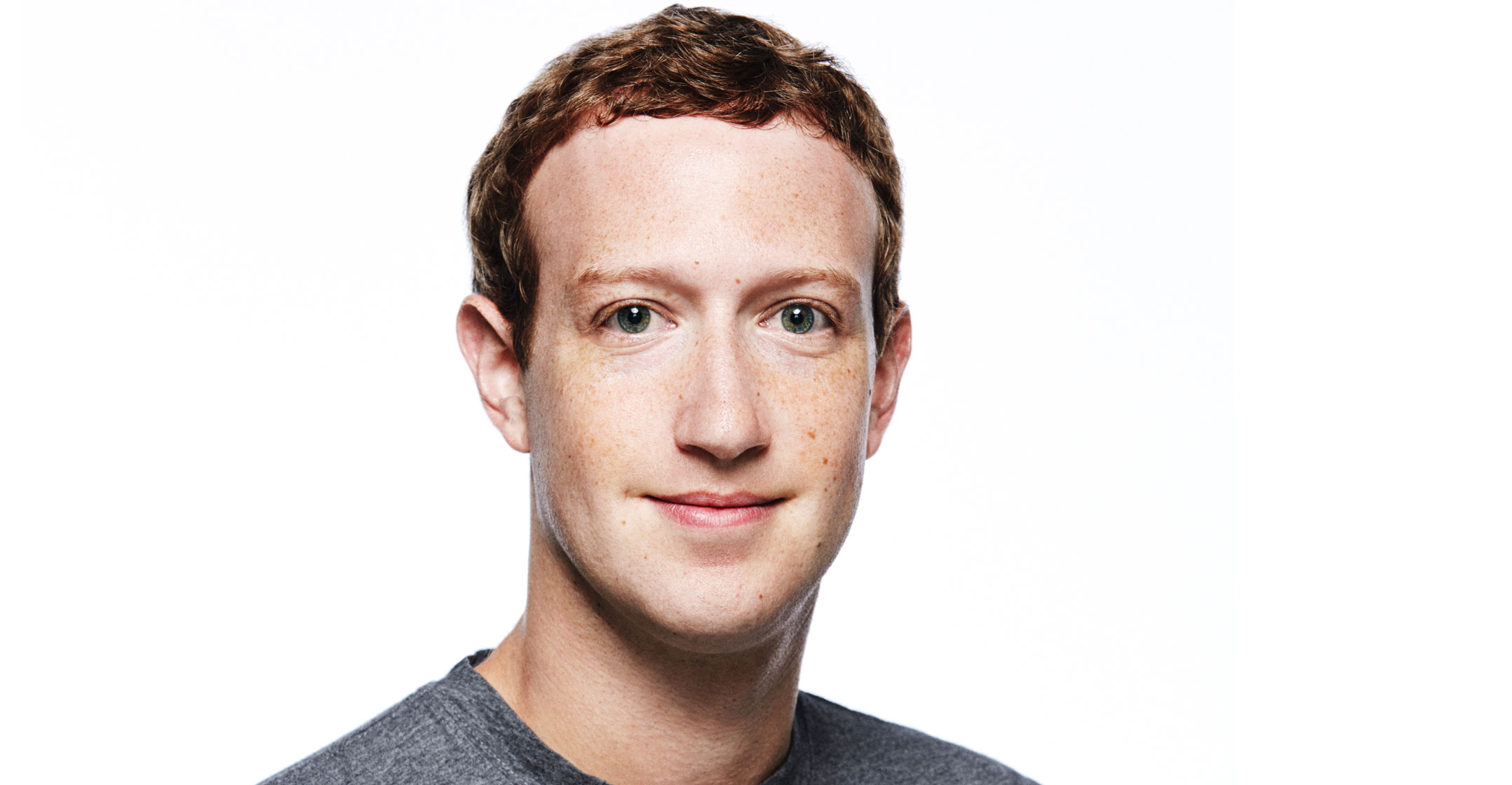
    Mark Zuckerberg

    A month before the 2016 US presidential election, a rumour spread on Facebook. People were sharing a viral gimmick familiar to e-mail spammers: copy and paste this message to all your friends, or Facebook will share your private information. The hoax took off, particularly in pockets of the US and the Philippines.

    Inside Facebook’s Menlo Park, California headquarters, a small group of staffers watched this rumour gain traction using a special software program they called Stormchaser. The tool was designed to track hoaxes and “memes” — silly, often untrue Internet missives — about Facebook on the social network and other company-owned services including WhatsApp.

    Since 2016, Facebook employees have used Stormchaser to track many viral posts, including a popular conspiracy that the company listens to users through their phone’s microphone, according to three former employees. Other topics ranged from bitter protests (the #deleteFB movement) to ludicrous jokes (that Facebook CEO Mark Zuckerberg is an alien), according to one former employee. In some cases, like the copy-and-paste hoax, the social network took active steps to snuff them out. Staff prepared messages debunking assertions about Facebook, then ran them in front of users who shared the content, according to documents viewed by Bloomberg News and four people familiar with the matter. They asked not to be identified discussing private initiatives.

    It is worth noting how perceptions of Bill Gates have greatly evolved over the past 40 years. Establishing reputation takes time

    Many companies monitor social media to learn what customers are saying about them. But Facebook’s position is unique. It owns the platform it’s watching, an advantage that may help Facebook track and reach users more effectively than other firms. And Facebook has been saddled with so many real problems recently that sometimes misinformation can stick.

    Stormchaser is just one of multiple tools Facebook has deployed to manage its reputation, which has taken a dramatic hit thanks to its role in spreading Russian misinformation during the US election and numerous privacy scandals. The company employs hundreds of public relations officials and spent US$13-million on government lobbying in 2018. Zuckerberg and Facebook chief operating officer Sheryl Sandberg have become so intertwined with the company’s image that Facebook routinely collects public survey data to understand how the general public views them — data that shapes what the executives say and do publicly.

    ‘Night’s Watch’

    These internal efforts, which haven’t been previously reported, also included a program dubbed Night’s Watch, after HBO’s Game of Thrones, that let staff monitor how news coverage of Facebook spread on the social network and apps such as WhatsApp. Messages and content on WhatsApp are encrypted, but Facebook could get a sense of what went viral on that app by looking at how some people mentioned information from WhatsApp when they posted to Facebook.

    It was with Stormchaser, though, where Facebook went on offence. In the Philippines, Facebook put an alert atop users’ news feeds informing them that the “copy and paste” meme was not true. In the US, Facebook promoted a post from one of the company’s official Pages debunking the meme. These counter-programming messages, run by Facebook’s product marketing division, were called “quick promotions” and were, like most things at Facebook, measured intensely. In one internal message, a staffer told colleagues that a QP in the Philippines was reaching users at a “slow rate”, hitting only 20 000 of a targeted audience of 750 000. In another message, a Facebook employee discussed a proposal to target US users with a QP saying the company was focused on fake news and explaining how to report such misinformation.

    Sheryl Sandberg

    According to a former staffer who worked with Stormchaser, the initiative showed how the company prioritised projects refuting fake news about Facebook over other forms of misinformation spreading on the social network. The company now hires outside fact-checking groups to try to correct false content on its service, although results have been spotty. Still, other former employees described Stormchaser as a necessary effort to inform users and clarify information, something that most companies do.

    A Facebook spokeswoman said the messages countering hoaxes were only sent a handful of times, including in the Philippines. In another instance in 2015, messages were sent to clear up a rumour that Facebook would start charging users. The next year, data from Stormchaser was used to send people in India and Brazil more information about a plan for WhatsApp to share account information with its parent company, Facebook. The spokeswoman disputed the idea that Stormchaser was similar to combating misinformation more broadly, a massive challenge for Facebook since 2016.

    Facebook stopped using Stormchaser to respond to memes in mid-2018, but did not specify why. The technology still exists, though

    “We didn’t use this internal tool to fight false news because that wasn’t what it was built for, and it wouldn’t have worked,” the spokeswoman wrote in an e-mail. “The tool was built with simple technology that helped us detect posts about Facebook based on keywords, so we could consider whether to respond to product confusion on our own platform. Comparing the two is a false equivalence.”

    Facebook stopped using Stormchaser to respond to memes in mid-2018, she added, but did not specify why. The technology still exists, though.

    The company continues to use polls to measure how its top leaders are perceived. These surveys of public perception operate much like political campaigns, according to people familiar with the process. The data, which was collected quarterly at one point following the 2016 election, is used to determine where Zuckerberg and Sandberg have goodwill with Facebook’s users, and where they need improvement.

    Rival CEOs

    In one presentation summarising data on Zuckerberg from June 2017, the CEO was rated on personality attributes, including terms like “mature”, “honest” and “passionate”. He scored highest on “innovative”, and lowest on “shares my values”. Zuckerberg was also charted against rival CEOs. Another slide showed a grid measuring “favourability” and “familiarity”, with Zuckerberg nestled among names like Oprah Winfrey, Anderson Cooper and Jimmy Fallon in the “well-known, well liked” quadrant. The chart showed that Zuckerberg was less likeable than Pope Francis, but slightly more familiar. Sandberg was in the “not well-known, well liked” column.

    Other slides detailed reactions to Zuckerberg’s commencement address at Harvard University in May 2017. The speech was rated more “inspiring” than his F8 conference keynote talk earlier that year, in part because of “the inclusion of his own experiences”.

    The internal slides provide a rare glimpse at Facebook’s internal priorities and what the company’s communications and marketing teams think about top executives. Former Facebook chief marketing officer Gary Briggs instituted the surveys after joining the company in late 2013. His theory was that Zuckerberg’s reputation influenced Facebook’s, and vice versa.
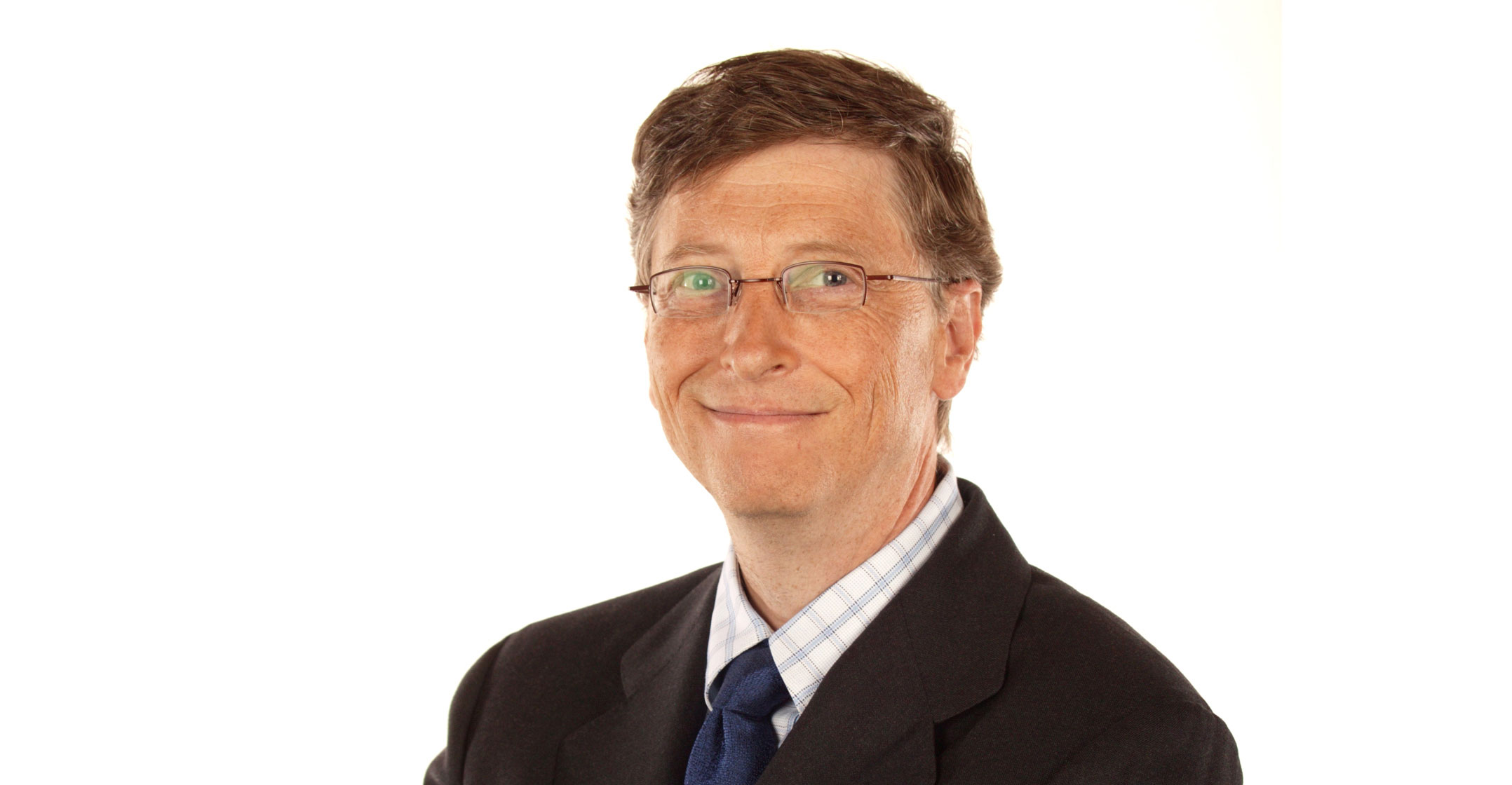
    Bill Gates

    “Mark was sceptical, but I had a hunch that focusing on his reputation would improve Facebook’s as well,” Briggs said in a statement provided by Facebook. “My team did this research with the goal of convincing him and improving both. In the end, Mark chose not to focus on this much.”

    That didn’t mean the research was ignored. A slide toward the end of the June 2017 presentation outlined where Zuckerberg should focus his attention moving forward. It asked the question “why does it matter?” before providing its own answer: “These reputational territories will help inform everything from key messages, speaking opportunities, who to appear with, focus of posts, goals, etc.”

    The idea that he was a former innovator, and not a current innovator, wasn’t just a knock on Zuckerberg himself – it was a knock on Facebook

    When Facebook employees presented the findings to Zuckerberg in his glass conference room known as the Aquarium, he took particular issue with a slide that focused on innovation, according to a person familiar with the presentation. Zuckerberg’s face appeared on a slide next to a photo of Microsoft co-founder Bill Gates under the label “Historic Innovation”. Below that was a description: “Once pushed the limit/boundaries to develop something new.” To the right, Tesla’s Elon Musk and Amazon.com’s Jeff Bezos were under a different label: “Current Innovation.” The descriptor below their pictures read, “Continuing to push the envelope.”

    Zuckerberg was incredulous, according to this person. The idea that he was a former innovator, and not a current innovator, wasn’t just a knock on Zuckerberg himself — it was a knock on Facebook, which relies on its reputation for creativity to recruit software coders and sustain company morale. The data was presented to Zuckerberg a year after the company unveiled Building 8, its secretive hardware lab focused on moonshots, and just weeks after Facebook executives went on stage at its annual developer conference to talk about tech that could transfer a person’s thoughts into text on a screen. By the northern hemisphere summer of 2017, Facebook had copied some of the best features of Snapchat, a messaging and photo app that competes with Facebook’s Instagram.

    Bill Gates

    Gates was the most frequent benchmark for Zuckerberg in the slide presentation. In the “favourability” and “familiarity” slide, Gates was listed as the most “well-known, well liked” person on the grid. Another slide showed the gap between Zuckerberg and Gates when it came to character traits like “humble”, “trustworthy” and “charitable”.

    Zuckerberg and Gates are close friends, and Zuckerberg thinks of Gates as a mentor — though that’s not necessarily why the Microsoft co-founder is the most frequently mentioned executive in the presentation. Instead, those familiar with the effort believe Gates is the only real comparable to Zuckerberg at this stage in his career: a well-known tech founder who came out of a period of great scrutiny — Gates had his own battles with regulators in the past — to become a marquee philanthropist. That arc was outlined on one of the slides.

    “It is worth noting how perceptions of Bill Gates have greatly evolved over the past 40 years,” the slide reads. “Establishing reputation takes time.”  — Reported by Mark Bergen and Kurt Wagner, with assistance from Sarah Frier, (c) 2019 Bloomberg LP



    Facebook top
    WhatsApp YouTube Follow on Google News Add as preferred source on Google
    Share. Facebook Twitter LinkedIn WhatsApp Telegram Email Copy Link
    Previous ArticleWall Street is turning bearish on Apple
    Next Article Spotify Lite launched in South Africa

    Related Posts

    Australia has banned kids from social media. Should South Africa follow suit?

    Australia has banned kids from social media. Should South Africa follow suit?

    11 December 2025
    Australia fires starting gun on global social media reform

    Australia fires starting gun on global social media reform

    10 December 2025
    Mark Zuckerberg

    Why smart glasses keep failing – it’s not the tech

    19 October 2025
    Company News
    Breaking silos with SAS: Agile insurance in an uncertain world

    Breaking silos with SAS: agile insurance in an uncertain world

    2 February 2026
    Stellar year expected for Digicloud Africa and its reseller partners - Gregory MacLennan

    Stellar year expected for Digicloud Africa and its reseller partners

    2 February 2026
    Huawei turns 25 in South Africa, celebrates with major device discounts

    Huawei turns 25 in South Africa, celebrates with major device discounts

    30 January 2026
    Opinion
    South Africa's skills advantage is being overlooked at home - Richard Firth

    South Africa’s skills advantage is being overlooked at home

    29 January 2026
    Why Elon Musk's Starlink is a 'hard no' for me - Songezo Zibi

    Why Elon Musk’s Starlink is a ‘hard no’ for me

    26 January 2026
    South Africa's new fibre broadband battle - Duncan McLeod

    South Africa’s new fibre broadband battle

    20 January 2026

    Subscribe to Updates

    Get the best South African technology news and analysis delivered to your e-mail inbox every morning.

    Latest Posts
    Microsoft's winning formula is starting to fray - Satya Nadella

    Microsoft’s winning formula is starting to fray

    2 February 2026
    Crypto has gone mainstream - will South African regulators catch up in 2026? - Marius Reitz

    Crypto has gone mainstream – will South African regulators catch up in 2026?

    2 February 2026
    Sixty60 smashes 100 million orders

    Shoprite keeps Sixty60 momentum as group sales rise 7.2%

    2 February 2026
    Breaking silos with SAS: Agile insurance in an uncertain world

    Breaking silos with SAS: agile insurance in an uncertain world

    2 February 2026
    © 2009 - 2026 NewsCentral Media
    • Cookie policy (ZA)
    • TechCentral – privacy and Popia

    Type above and press Enter to search. Press Esc to cancel.

    Manage consent

    TechCentral uses cookies to enhance its offerings. Consenting to these technologies allows us to serve you better. Not consenting or withdrawing consent may adversely affect certain features and functions of the website.

    Functional Always active
    The technical storage or access is strictly necessary for the legitimate purpose of enabling the use of a specific service explicitly requested by the subscriber or user, or for the sole purpose of carrying out the transmission of a communication over an electronic communications network.
    Preferences
    The technical storage or access is necessary for the legitimate purpose of storing preferences that are not requested by the subscriber or user.
    Statistics
    The technical storage or access that is used exclusively for statistical purposes. The technical storage or access that is used exclusively for anonymous statistical purposes. Without a subpoena, voluntary compliance on the part of your Internet Service Provider, or additional records from a third party, information stored or retrieved for this purpose alone cannot usually be used to identify you.
    Marketing
    The technical storage or access is required to create user profiles to send advertising, or to track the user on a website or across several websites for similar marketing purposes.
    • Manage options
    • Manage services
    • Manage {vendor_count} vendors
    • Read more about these purposes
    View preferences
    • {title}
    • {title}
    • {title}