Close Menu
TechCentralTechCentral

    Subscribe to the newsletter

    Get the best South African technology news and analysis delivered to your e-mail inbox every morning.

    Facebook X (Twitter) YouTube LinkedIn
    WhatsApp Facebook X (Twitter) LinkedIn YouTube
    TechCentralTechCentral
    • News
      China nets a falling rocket in reusability race with SpaceX

      China nets a falling rocket in reusability race with SpaceX

      10 July 2026
      Battlefield tech could save lives on South Africa's roads - Dithoto Modungwa

      Battlefield tech could save lives on South Africa’s roads

      10 July 2026
      Customers prefer ChatGPT to your company's AI chatbot

      Customers prefer ChatGPT to your company’s AI chatbot

      10 July 2026
      South Africans warm to AI doing their shopping: DHL

      South Africans warm to AI doing their shopping: DHL

      10 July 2026
      OpenAI debuts ChatGPT Work - and GPT-5.6 - in enterprise push

      OpenAI debuts ChatGPT Work – and GPT-5.6 – in enterprise push

      10 July 2026
    • World
      Swingeing jobs cuts at Microsoft's Xbox unit

      Swingeing jobs cuts at Microsoft’s Xbox unit

      6 July 2026

      SK Hynix ends Samsung’s 26-year reign at the top

      22 June 2026
      Google on the hook for what its AI tells users, court rules

      Google on the hook for what its AI tells users, court rules

      15 June 2026
      How Russians juggle VPNs to outwit the Kremlin

      How Russians juggle VPNs to outwit the Kremlin

      15 June 2026
      Amazon CEO flagged Anthropic AI risks to Washington - Andy Jassy

      Amazon CEO flagged Anthropic AI risks to Washington

      14 June 2026
    • In-depth
      AI boom sparks rally, frenzy and fear

      AI boom sparks rally, frenzy and fear

      11 June 2026
      Every plug-in hybrid on sale in South Africa, ranked by price - Lamborghini Temerario

      Every plug-in hybrid on sale in South Africa, ranked by price

      7 June 2026
      What Wi-Fi 8 will mean for wireless networks

      What Wi-Fi 8 will mean for wireless networks

      1 June 2026
      Alfa's electric rebel - Alfa Romeo Junior Elettrica Veloce

      Alfa’s electric rebel

      29 April 2026
      Africa switches on as Europe dims the lights

      Africa switches on as Europe dims the lights

      9 April 2026
    • TCS
      Watts & Wheels S1E7: 'Ferrari's EV breaks the internet'

      Watts & Wheels S1E7: ‘Ferrari’s EV breaks the internet’

      8 July 2026
      TCS+ | How Tracker is turning vehicle data into business strategy - Silvia Schollenberger

      TCS+ | How Tracker is turning vehicle data into business strategy

      1 July 2026
      TCS+ | IBM Bob: an AI-powered 'development partner' for the enterprise - David Spurway

      TCS+ | IBM Bob: an AI-powered development partner for the enterprise

      30 June 2026
      Watts & Wheels S1E6: 'A flawless Alfa and a bakkie that divides'

      Watts & Wheels S1E6: ‘A flawless Alfa and a bakkie that divides’

      17 June 2026
      Watts & Wheels S1E6: 'A flawless Alfa and a bakkie that divides'

      Watts & Wheels S1E5: ‘A Bentley of the bush and a car that swims’

      8 June 2026
    • Opinion
      The author, Fanie van Rooyen

      South Africa can still catch the AI wave – here’s how

      7 July 2026
      The author, Fanie van Rooyen

      The AI utopia South Africa can’t afford

      1 July 2026
      The author, Jannie van Zyl

      South Africa’s broadband future is being decided in orbit, not in Pretoria

      30 June 2026
      The author, Pambos Soteriades

      The pivot South Africa’s MVNOs cannot afford to miss

      23 June 2026
      Brazil's online gambling crackdown is a lesson for South Africa

      Brazil’s online gambling crackdown is a lesson for South Africa

      22 June 2026
    • Company Hubs
      • 1Stream
      • Africa Data Centres
      • AfriGIS
      • Altron Digital Business
      • Altron Document Solutions
      • Altron Group
      • Arctic Wolf
      • Ascent Technology
      • AvertITD
      • BBD
      • Braintree
      • CallMiner
      • CambriLearn
      • CM Telecom
      • Contactable
      • CYBER1 Solutions
      • Digicloud Africa
      • Digimune
      • Domains.co.za
      • ESET
      • Euphoria Telecom
      • HOSTAFRICA
      • Incredible Business
      • iONLINE
      • IQbusiness
      • Iris Network Systems
      • Kaspersky
      • LSD Open
      • Mitel
      • NEC XON
      • Netstar
      • Network Platforms
      • Next DLP
      • Ovations
      • Paracon
      • Paratus
      • Q-KON
      • SevenC
      • SkyWire
      • Solid8 Technologies
      • Telit Cinterion
      • Telviva
      • Tenable
      • Vertiv
      • Videri Digital
      • Vodacom Business
      • Wipro
      • Workday
      • XLink
    • Sections
      • AI and machine learning
      • Banking
      • Broadcasting and Media
      • Cloud services
      • Contact centres and CX
      • Cryptocurrencies
      • Education and skills
      • Electronics and hardware
      • Energy and sustainability
      • Enterprise software
      • Financial services
      • HealthTech
      • Information security
      • Internet and connectivity
      • Internet of Things
      • Investment
      • IT services
      • Lifestyle
      • Policy and regulation
      • Public sector
      • Retail and e-commerce
      • Satellite communications
      • Science
      • SMEs and start-ups
      • Social media
      • Talent and leadership
      • Telecoms
      • Watts & Wheels
    • Events
    • Advertise
    TechCentralTechCentral
    Home » Sections » Broadcasting and Media » How Hollywood predicted the future

    How Hollywood predicted the future

    Filmmakers have long been the architects of imagined worlds where technology pushes the boundaries of possibility.
    By Tadek Szutowicz5 April 2024
    Twitter LinkedIn Facebook WhatsApp Email Telegram Copy Link
    News Alerts
    WhatsApp
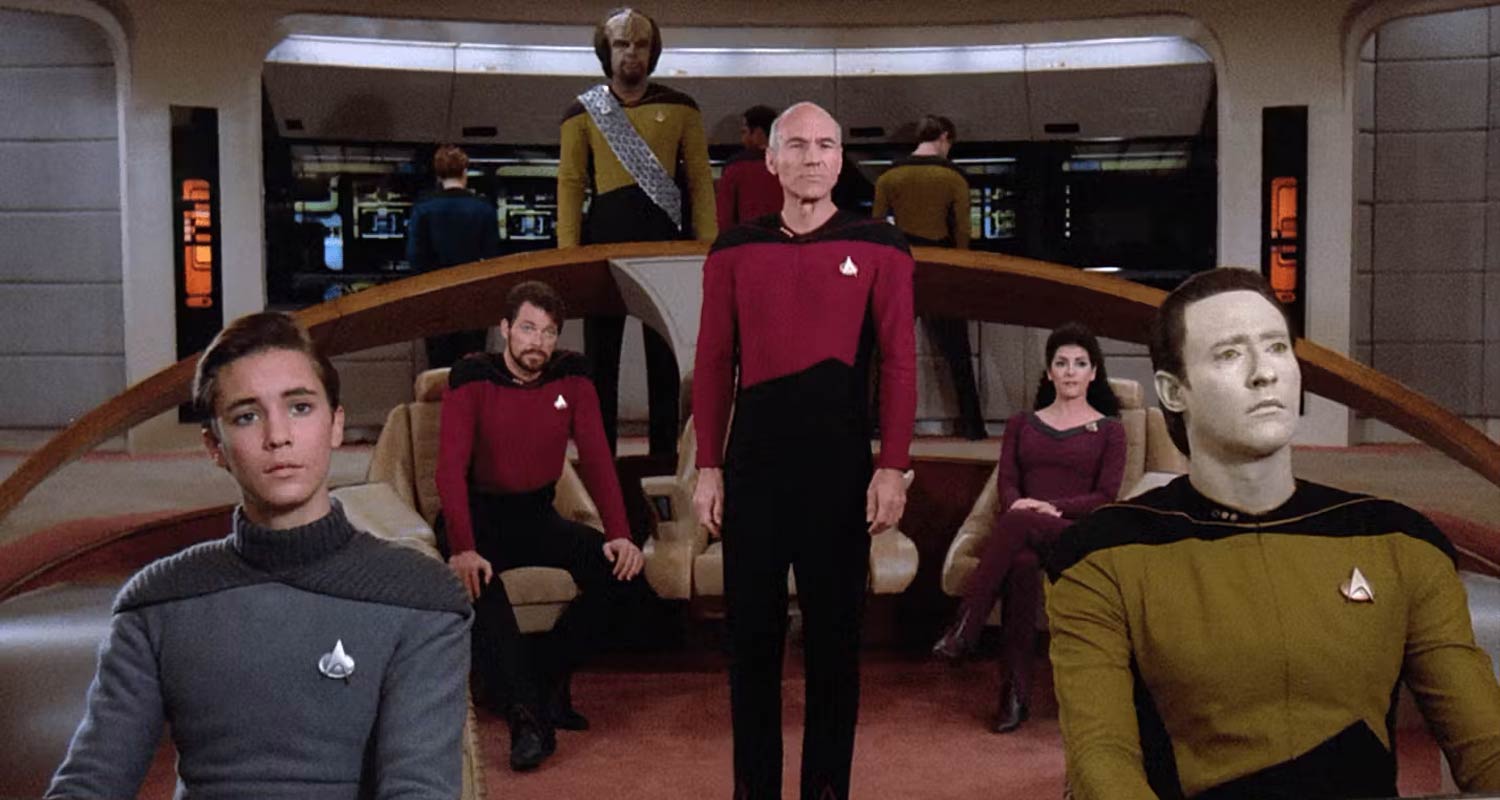
    A scene from Star Trek: The Next Generation, which began its broadcast run in 1987

    In the realm of science-fiction, filmmakers and writers have long been the architects of imagined worlds where technology pushes the boundaries of possibility.

    From holographic displays to self-driving cars, these visionary ideas have not only entertained audiences but also, ironically, influenced real-world innovation.

    TechCentral explored how various technologies predicted in movies and TV series have transitioned from fiction to reality, shaping the way we live, work and interact with the world around us.

    Video calls: Back in 1968, 2001: A Space Odyssey depicted astronauts communicating with their families via video calls, a concept that seemed revolutionary at the time but which has since become a ubiquitous feature of modern communication platforms. Similarly, Star Trek (1966) showcased futuristic communication devices that resembled today’s smartphones and videoconferencing tools, proving that sometimes reality does catch up to science-fiction.

    Tablet computers: The handheld devices used by characters in Star Trek: The Next Generation (1987-1994) bear a striking resemblance to modern tablets, foreshadowing the era of portable touch-screen computing that we currently inhabit. These devices, once considered purely futuristic, are now integral tools for work, entertainment and communication.
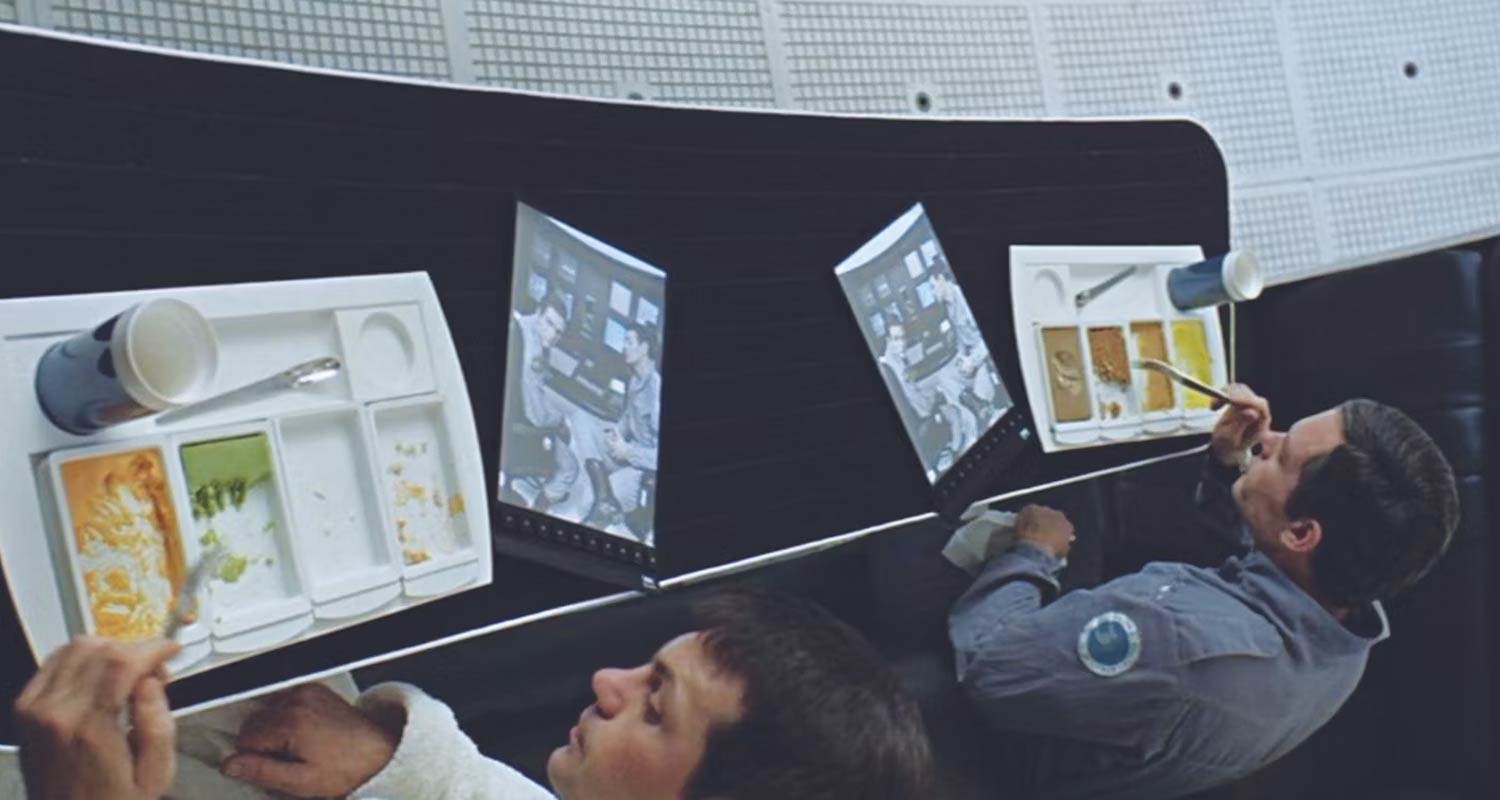
    Tablet computers in 2001: A Space Odyssey, from 1968

    Virtual reality: Movies like The Matrix (1999) and TRON (1982) introduced audiences to the concept of immersive virtual reality long before VR technology became commercially available. While we’re still in the early stages of exploring VR’s full potential, advancements in gaming, education and even therapy demonstrate its growing influence on various aspects of our lives.

    Self-driving cars: The idea of cars navigating without human intervention seemed like pure fantasy when depicted in movies such as Total Recall (1990) and Minority Report (2002). However, with ongoing research and development by companies such as Tesla and Waymo, self-driving technology is steadily moving from the realm of fiction to reality, promising safer and more efficient transportation systems.

    Voice-controlled assistants: HAL 9000 from 2001: A Space Odyssey (1968) may have been a malevolent AI, but the concept of a sentient computer responding to voice commands laid the groundwork for virtual assistants like Siri and Alexa. These voice-controlled systems have revolutionised how we interact with technology, from setting reminders to controlling smart-home devices.

    Artificial intelligence: Films such as Blade Runner (1982) and Ex Machina (2014) have long explored the ethical and existential implications of advanced AI. While we’re still far from creating sentient androids like those depicted in these movies, developments in machine learning and robotics continue to blur the line between science-fiction and reality.

    A scene from Minority Report, a movie released in 2002

    3D printing: Although 3D printing had been conceptualised earlier, its mainstream attention owes much to its portrayal in shows and movies like Star Trek: The Next Generation (1987-1994) and Iron Man (2008). Today, 3D printing technology is used in various industries, from manufacturing to health care, offering new possibilities in prototyping, customisation and even organ transplantation.

    Augmented reality: The gesture-based interfaces featured in Minority Report (2002) may have seemed far-fetched at the time, but they bear a striking resemblance to modern augmented reality technologies like Microsoft HoloLens. These innovations are reshaping how we interact with digital information, blurring the boundaries between the physical and virtual worlds.

    Biometric security: Many sci-fi works have depicted futuristic security systems that use biometric data for authentication, from fingerprint scanners to retinal scans. Today biometric authentication is a common feature in smartphones, laptops and even airports, offering enhanced security and convenience.

    Holographic displays: From Star Wars (1977) to Iron Man (2008), holographic displays have captivated audiences with their futuristic allure. While practical implementations are still limited, ongoing research and development hold the promise of bringing holographic technology into everyday life, changing the way how we visualise and interact with information.

    Total Recall, from 1990

    Space travel: Numerous movies and TV series have depicted advanced space travel technologies, from faster-than-light travel to interstellar colonisation. While we’re still far from achieving these lofty goals, initiatives by organisations like SpaceX and Nasa are bringing us closer to realising humanity’s dreams of exploring the cosmos.

    Brain-computer interfaces: Films like The Matrix (1999) and Avatar (2009) have explored the concept of direct connections between the human brain and computers. While we’re only scratching the surface of this technology, advancements in prosthetics and neurotechnology offer glimpses of a future where minds and machines are seamlessly integrated.

    Nanotechnology: Several sci-fi works have imagined advanced nanotechnology capable of medical treatments, self-replication and material manipulation. While we’re still in the early stages of harnessing the full potential of nanotechnology, ongoing research holds the promise of breakthroughs in fields ranging from medicine to materials science.  — (c) 2024 NewsCentral Media

    Get breaking news alerts from TechCentral on WhatsApp

    Follow TechCentral on Google News Add TechCentral as your preferred source on Google


    Hollywood
    WhatsApp YouTube
    Share. Facebook Twitter LinkedIn WhatsApp Telegram Email Copy Link
    Previous ArticleCrypto price prediction: rally may have run out of steam
    Next Article Massive SA grid battery project gets ‘preferred status’

    Related Posts

    SA film industry to get funding boost and digital overhaul after outcry

    Google, Meta cosy up to Hollywood for AI video

    24 May 2024
    Company News
    Rain supercharges 5G with Huawei

    Rain supercharges 5G with Huawei

    10 July 2026
    Africa's data centres: AI, edge computing and new energy demands - Vertiv OADC Open Access Data Centres

    Africa’s data centres: AI, edge computing and new energy demands

    9 July 2026
    The best way to automate customer engagement using AI and WhatsApp - CM.com

    The best way to automate customer engagement using AI and WhatsApp

    9 July 2026
    Opinion
    The author, Fanie van Rooyen

    South Africa can still catch the AI wave – here’s how

    7 July 2026
    The author, Fanie van Rooyen

    The AI utopia South Africa can’t afford

    1 July 2026
    The author, Jannie van Zyl

    South Africa’s broadband future is being decided in orbit, not in Pretoria

    30 June 2026

    Subscribe to Updates

    Get the best South African technology news and analysis delivered to your e-mail inbox every morning.

    Latest Posts
    China nets a falling rocket in reusability race with SpaceX

    China nets a falling rocket in reusability race with SpaceX

    10 July 2026
    Battlefield tech could save lives on South Africa's roads - Dithoto Modungwa

    Battlefield tech could save lives on South Africa’s roads

    10 July 2026
    Customers prefer ChatGPT to your company's AI chatbot

    Customers prefer ChatGPT to your company’s AI chatbot

    10 July 2026
    Rain supercharges 5G with Huawei

    Rain supercharges 5G with Huawei

    10 July 2026
    © 2009 - 2026 NewsCentral Media
    Built and maintained by Chronon
    • Cookie policy (ZA)
    • TechCentral – privacy and Popia

    Type above and press Enter to search. Press Esc to cancel.

    Manage consent

    TechCentral uses cookies to enhance its offerings. Consenting to these technologies allows us to serve you better. Not consenting or withdrawing consent may adversely affect certain features and functions of the website.

    Functional Always active
    The technical storage or access is strictly necessary for the legitimate purpose of enabling the use of a specific service explicitly requested by the subscriber or user, or for the sole purpose of carrying out the transmission of a communication over an electronic communications network.
    Preferences
    The technical storage or access is necessary for the legitimate purpose of storing preferences that are not requested by the subscriber or user.
    Statistics
    The technical storage or access that is used exclusively for statistical purposes. The technical storage or access that is used exclusively for anonymous statistical purposes. Without a subpoena, voluntary compliance on the part of your Internet Service Provider, or additional records from a third party, information stored or retrieved for this purpose alone cannot usually be used to identify you.
    Marketing
    The technical storage or access is required to create user profiles to send advertising, or to track the user on a website or across several websites for similar marketing purposes.
    • Manage options
    • Manage services
    • Manage {vendor_count} vendors
    • Read more about these purposes
    View preferences
    • {title}
    • {title}
    • {title}