
Close Menu
TechCentralTechCentral

    Subscribe to the newsletter

    Get the best South African technology news and analysis delivered to your e-mail inbox every morning.

    Facebook X (Twitter) YouTube LinkedIn
    WhatsApp Facebook X (Twitter) LinkedIn YouTube
    TechCentralTechCentral
    • News
      Vuyani Jarana: Mobile coverage masks a deeper broadband failure

      Vuyani Jarana: Mobile coverage masks a deeper broadband failure

      30 January 2026
      SABC Plus to flight Microsoft AI training videos

      SABC Plus to flight Microsoft AI training videos

      30 January 2026
      Fibre ducts

      Fibre industry consolidation in KZN

      30 January 2026
      Watts & Wheels S1E3: 'BYD's Corolla Cross challenger'

      Watts & Wheels S1E3: ‘BYD’s Corolla Cross challenger’

      30 January 2026
      What ordinary South Africans really think of AI

      What ordinary South Africans really think of AI

      30 January 2026
    • World
      Apple acquires audio AI start-up Q.ai

      Apple acquires audio AI start-up Q.ai

      30 January 2026
      SpaceX IPO may be largest in history

      SpaceX IPO may be largest in history

      28 January 2026
      Nvidia throws AI at the weather

      Nvidia throws AI at weather forecasting

      27 January 2026
      Debate erupts over value of in-flight Wi-Fi

      Debate erupts over value of in-flight Wi-Fi

      26 January 2026
      Intel takes another hit - Intel CEO Lip-Bu Tan. Laure Andrillon/Reuters

      Intel takes another hit

      23 January 2026
    • In-depth
      How liberalisation is rewiring South Africa's power sector

      How liberalisation is rewiring South Africa’s power sector

      21 January 2026
      The top-performing South African tech shares of 2025

      The top-performing South African tech shares of 2025

      12 January 2026
      Digital authoritarianism grows as African states normalise internet blackouts

      Digital authoritarianism grows as African states normalise internet blackouts

      19 December 2025
      TechCentral's South African Newsmakers of 2025

      TechCentral’s South African Newsmakers of 2025

      18 December 2025
      Black Friday goes digital in South Africa as online spending surges to record high

      Black Friday goes digital in South Africa as online spending surges to record high

      4 December 2025
    • TCS
      TCS+ | How Cloud On Demand is helping SA businesses succeed in the cloud - Xhenia Rhode, Dion Kalicharan

      TCS+ | Cloud On Demand and Consnet: inside a real-world AWS partner success story

      30 January 2026
      Watts & Wheels S1E3: 'BYD's Corolla Cross challenger'

      Watts & Wheels S1E2: ‘China attacks, BMW digs in, Toyota’s sublime supercar’

      23 January 2026

      TCS+ | Why cybersecurity is becoming a competitive advantage for SA businesses

      20 January 2026
      Watts & Wheels S1E3: 'BYD's Corolla Cross challenger'

      Watts & Wheels: S1E1 – ‘William, Prince of Wheels’

      8 January 2026
      TCS+ | Africa's digital transformation - unlocking AI through cloud and culture - Cliff de Wit Accelera Digital Group

      TCS+ | Cloud without culture won’t deliver AI: Accelera’s Cliff de Wit

      12 December 2025
    • Opinion
      South Africa's skills advantage is being overlooked at home - Richard Firth

      South Africa’s skills advantage is being overlooked at home

      29 January 2026
      Why Elon Musk's Starlink is a 'hard no' for me - Songezo Zibi

      Why Elon Musk’s Starlink is a ‘hard no’ for me

      26 January 2026
      South Africa's new fibre broadband battle - Duncan McLeod

      South Africa’s new fibre broadband battle

      20 January 2026
      AI moves from pilots to production in South African companies - Nazia Pillay SAP

      AI moves from pilots to production in South African companies

      20 January 2026
      South Africa's new fibre broadband battle - Duncan McLeod

      ANC’s attack on Solly Malatsi shows how BEE dogma trumps economic reality

      14 December 2025
    • Company Hubs
      • Africa Data Centres
      • AfriGIS
      • Altron Digital Business
      • Altron Document Solutions
      • Altron Group
      • Arctic Wolf
      • AvertITD
      • Braintree
      • CallMiner
      • CambriLearn
      • CYBER1 Solutions
      • Digicloud Africa
      • Digimune
      • Domains.co.za
      • ESET
      • Euphoria Telecom
      • Incredible Business
      • iONLINE
      • IQbusiness
      • Iris Network Systems
      • LSD Open
      • NEC XON
      • Netstar
      • Network Platforms
      • Next DLP
      • Ovations
      • Paracon
      • Paratus
      • Q-KON
      • SevenC
      • SkyWire
      • Solid8 Technologies
      • Telit Cinterion
      • Tenable
      • Vertiv
      • Videri Digital
      • Vodacom Business
      • Wipro
      • Workday
      • XLink
    • Sections
      • AI and machine learning
      • Banking
      • Broadcasting and Media
      • Cloud services
      • Contact centres and CX
      • Cryptocurrencies
      • Education and skills
      • Electronics and hardware
      • Energy and sustainability
      • Enterprise software
      • Financial services
      • Information security
      • Internet and connectivity
      • Internet of Things
      • Investment
      • IT services
      • Lifestyle
      • Motoring
      • Public sector
      • Retail and e-commerce
      • Satellite communications
      • Science
      • SMEs and start-ups
      • Social media
      • Talent and leadership
      • Telecoms
    • Events
    • Advertise
    TechCentralTechCentral
    Home » In-depth » How SA can get by on less power

    How SA can get by on less power

    By The Conversation12 July 2015
    Twitter LinkedIn Facebook WhatsApp Email Telegram Copy Link
    News Alerts
    WhatsApp

    eskom-640

    South Africa’s energy sector has faced a crisis since 2008, marked by power cuts, high tariffs and a general inability to match supply and demand. This has led to a dismal picture being painted about the future of the country’s energy supply and its impact on economic growth.

    It is imperative that a solution is found to the current difficult situation. This is because energy plays a vital role in the growth and development of a country.

    A priority for policymakers since the end of apartheid 1994 has been to provide energy to everyone. Since this target has nearly been achieved, the attention is shifting to the intensity of electricity use in South Africa.
    There are three key areas that can lead South Africa towards greater energy efficiency, as well as reductions in carbon emissions. These are:

    • Technological innovations for energy efficiency
    • Promoting structural changes in the economy
    • Changing the energy supply mix

    All these can be combined in national energy policies and strategies, but they differ in two points: the time horizon of the results and the risk of outcomes.

    The introduction of technological innovations that can achieve higher energy efficiency levels depends heavily on the availability and cost of the innovations. It also depends on the receptiveness in sectors where they will be adopted.

    Changing South Africa’s energy supply mix won’t be easy because of the abundance of coal. In addition, and possibly more importantly, the state-owned power utility Eskom’s fleet of power stations runs mostly on coal.

    Equally, the sectors which drive the economy are energy intensive. They are also important sources of employment, investment and income. Historically, the country primarily promoted mega industries that use a lot of energy and are capital-intensive. Until 2008-2009, South Africa’s comparatively low industrial electricity tariffs attracted significant investments in traditionally energy-intensive sectors such as mining and manufacturing.

    These industries are inflexible and slow to change. For example, once a major investment has been made in the construction of a smelter, opportunities to change to more energy-efficient technology or production process are limited.

    The government appreciates the need to reduce the energy intensity of the economy over the long term. This year’s budget made specific mention of the need to promote growth in tradeable and services sectors that consume less electricity per unit of output.

    But it will take more to bring about any meaningful change. To achieve the shift in the economy without affecting output and production, economic and industrial policies should be combined with efforts from energy policymakers.

    It would be helpful to adjust the incentives and tariffs that attract energy-intensive investments. Incentives should be directed to low-emission and low-intensity sectors. By lowering the cost of energy, input costs would come down and South African exports could achieve greater competitiveness.

    Admittedly, the trade-off and eventual balance is difficult and requires financial and political support from various stakeholders. Of critical importance is the co-ordination of various policies. A concerted effort should be made by all government departments involved with South Africa’s economic sectors. This can only be achieved by all-inclusive debate and design over time.
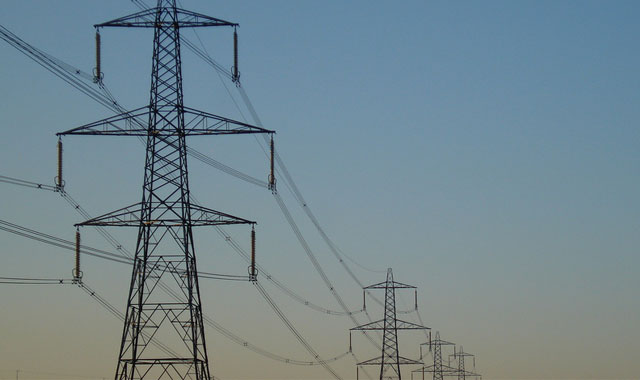
    Eskom-640-2

    The transition from a resource-based economy to a knowledge, service and quality of human capital based economy requires information, education and research and development. Any new strategy therefore needs to include investment in research activities that will show the way to innovative solutions. Areas to be explored could include structural changes in the economy as well as more efficient ways to consume energy.

    In this transition, South Africa should also investigate alternative fuels that will make even the high energy intensive sector’s consumption cleaner and more environmental friendly. For this, a properly planned, organised, managed and monitored market for renewable energies needs to be put in place. This needs to be combined with a comprehensive policy to provide consumers with alternatives to “dirty” fossil fuel-based energy.

    Finally, how else can this transition be promoted? There is one thing that all sectors, industries and firms are interested in — economic gain and profits. Instead of penalising intensive users, which happens with a carbon tax, an alternative would be to incentivise them. This could be done by introducing a reward programme, such as an emissions trading system, or, even more suitable to South Africa, an energy-intensity trading scheme.

    By trading credits of energy-intensive use, the sectoral users would aim to reduce their energy consumption as well as trade their credits for additional profits.

    South Africa is a unique case with a number of inherited socioeconomic challenges and difficulties. But its energy policymakers have started aiming at more fundamental changes rather than the recent short-term solutions.

    Structural economic changes and an effort to shift the economy to sectors with lower energy consumption and a smaller footprint will certainly take more time, and even more funding, to bear positive results. But the impact will be more permanent and sustainable.The Conversation

    • Roula Inglesi-Lotz is associate professor of economics at the University of Pretoria
    • This article was originally published on The Conversation


    WhatsApp YouTube Follow on Google News Add as preferred source on Google
    Share. Facebook Twitter LinkedIn WhatsApp Telegram Email Copy Link
    Previous ArticleRegulators reach accord on consumer complaints
    Next Article Disconnecting in the age of distraction

    Related Posts

    Vuyani Jarana: Mobile coverage masks a deeper broadband failure

    Vuyani Jarana: Mobile coverage masks a deeper broadband failure

    30 January 2026
    TCS+ | How Cloud On Demand is helping SA businesses succeed in the cloud - Xhenia Rhode, Dion Kalicharan

    TCS+ | Cloud On Demand and Consnet: inside a real-world AWS partner success story

    30 January 2026
    Huawei turns 25 in South Africa, celebrates with major device discounts

    Huawei turns 25 in South Africa, celebrates with major device discounts

    30 January 2026
    Company News
    Huawei turns 25 in South Africa, celebrates with major device discounts

    Huawei turns 25 in South Africa, celebrates with major device discounts

    30 January 2026
    Phishing has not disappeared, but it has grown up - KnowBe4

    Phishing has not disappeared, but it has grown up

    30 January 2026
    Smartphone affordability: South Africa's new economic divide - PayJoy

    Smartphone affordability: South Africa’s new economic divide

    29 January 2026
    Opinion
    South Africa's skills advantage is being overlooked at home - Richard Firth

    South Africa’s skills advantage is being overlooked at home

    29 January 2026
    Why Elon Musk's Starlink is a 'hard no' for me - Songezo Zibi

    Why Elon Musk’s Starlink is a ‘hard no’ for me

    26 January 2026
    South Africa's new fibre broadband battle - Duncan McLeod

    South Africa’s new fibre broadband battle

    20 January 2026

    Subscribe to Updates

    Get the best South African technology news and analysis delivered to your e-mail inbox every morning.

    Latest Posts
    Vuyani Jarana: Mobile coverage masks a deeper broadband failure

    Vuyani Jarana: Mobile coverage masks a deeper broadband failure

    30 January 2026
    TCS+ | How Cloud On Demand is helping SA businesses succeed in the cloud - Xhenia Rhode, Dion Kalicharan

    TCS+ | Cloud On Demand and Consnet: inside a real-world AWS partner success story

    30 January 2026
    Huawei turns 25 in South Africa, celebrates with major device discounts

    Huawei turns 25 in South Africa, celebrates with major device discounts

    30 January 2026
    SABC Plus to flight Microsoft AI training videos

    SABC Plus to flight Microsoft AI training videos

    30 January 2026
    © 2009 - 2026 NewsCentral Media
    • Cookie policy (ZA)
    • TechCentral – privacy and Popia

    Type above and press Enter to search. Press Esc to cancel.

    Manage consent

    TechCentral uses cookies to enhance its offerings. Consenting to these technologies allows us to serve you better. Not consenting or withdrawing consent may adversely affect certain features and functions of the website.

    Functional Always active
    The technical storage or access is strictly necessary for the legitimate purpose of enabling the use of a specific service explicitly requested by the subscriber or user, or for the sole purpose of carrying out the transmission of a communication over an electronic communications network.
    Preferences
    The technical storage or access is necessary for the legitimate purpose of storing preferences that are not requested by the subscriber or user.
    Statistics
    The technical storage or access that is used exclusively for statistical purposes. The technical storage or access that is used exclusively for anonymous statistical purposes. Without a subpoena, voluntary compliance on the part of your Internet Service Provider, or additional records from a third party, information stored or retrieved for this purpose alone cannot usually be used to identify you.
    Marketing
    The technical storage or access is required to create user profiles to send advertising, or to track the user on a website or across several websites for similar marketing purposes.
    • Manage options
    • Manage services
    • Manage {vendor_count} vendors
    • Read more about these purposes
    View preferences
    • {title}
    • {title}
    • {title}