Close Menu
TechCentralTechCentral

    Subscribe to the newsletter

    Get the best South African technology news and analysis delivered to your e-mail inbox every morning.

    Facebook X (Twitter) YouTube LinkedIn
    WhatsApp Facebook X (Twitter) LinkedIn YouTube
    TechCentralTechCentral
    • News
      DStv's new owner to reveal its game plan - Canal+

      DStv’s new owner to reveal its game plan

      9 March 2026
      Capitec, home affairs launch self-service smart ID machines

      Capitec, home affairs launch self-service smart ID machines

      9 March 2026
      Rand under severe pressure

      Rand under severe pressure

      9 March 2026
      Payments start-up NjiaPay in R35-million seed funding round - Jonatan Allback

      Payments start-up NjiaPay in R35-million seed funding round

      9 March 2026
      South Africa secures World Bank backing for grid overhaul

      South Africa secures World Bank backing for grid overhaul

      9 March 2026
    • World
      OpenAI secures $840-billion valuation in latest funding round

      OpenAI secures $840-billion valuation in latest funding round

      1 March 2026

      Stripe mulling bid for PayPal: report

      25 February 2026
      Xbox chief Phil Spencer retires from Microsoft

      Xbox chief Phil Spencer retires from Microsoft

      22 February 2026
      Prominent Southern African journalist targeted with Predator spyware

      Prominent Southern African journalist targeted with Predator spyware

      18 February 2026
      More drama in Warner Bros tug of war

      More drama in Warner Bros tug of war

      17 February 2026
    • In-depth
      The last generation of coders

      The last generation of coders

      18 February 2026
      Sentech is in dire straits

      Sentech is in dire straits

      10 February 2026
      How liberalisation is rewiring South Africa's power sector

      How liberalisation is rewiring South Africa’s power sector

      21 January 2026
      The top-performing South African tech shares of 2025

      The top-performing South African tech shares of 2025

      12 January 2026
      Digital authoritarianism grows as African states normalise internet blackouts

      Digital authoritarianism grows as African states normalise internet blackouts

      19 December 2025
    • TCS
      TCS+ | Bolt ups the ante on platform safety - Simo Kalajdzic

      TCS+ | Bolt ups the ante on platform safety

      4 March 2026
      Watts & Wheels S1E4: 'We drive an electric Uber'

      Watts & Wheels S1E4: ‘We drive an electric Uber’

      10 February 2026
      TCS+ | How Cloud On Demand is helping SA businesses succeed in the cloud - Xhenia Rhode, Dion Kalicharan

      TCS+ | Cloud On Demand and Consnet: inside a real-world AWS partner success story

      30 January 2026
      Watts & Wheels S1E4: 'We drive an electric Uber'

      Watts & Wheels S1E3: ‘BYD’s Corolla Cross challenger’

      30 January 2026
      Watts & Wheels S1E4: 'We drive an electric Uber'

      Watts & Wheels S1E2: ‘China attacks, BMW digs in, Toyota’s sublime supercar’

      23 January 2026
    • Opinion
      The AI fraud crisis your bank is not ready for - Andries Maritz

      The AI fraud crisis your bank is not ready for

      18 February 2026
      A million reasons monopolies don't work - Duncan McLeod

      A million reasons monopolies don’t work

      10 February 2026
      The author, Business Leadership South Africa CEO Busi Mavuso

      Eskom unbundling U-turn threatens to undo hard-won electricity gains

      9 February 2026
      South Africa's skills advantage is being overlooked at home - Richard Firth

      South Africa’s skills advantage is being overlooked at home

      29 January 2026
      Why Elon Musk's Starlink is a 'hard no' for me - Songezo Zibi

      Why Elon Musk’s Starlink is a ‘hard no’ for me

      26 January 2026
    • Company Hubs
      • 1Stream
      • Africa Data Centres
      • AfriGIS
      • Altron Digital Business
      • Altron Document Solutions
      • Altron Group
      • Arctic Wolf
      • AvertITD
      • Braintree
      • CallMiner
      • CambriLearn
      • CYBER1 Solutions
      • Digicloud Africa
      • Digimune
      • Domains.co.za
      • ESET
      • Euphoria Telecom
      • Incredible Business
      • iONLINE
      • IQbusiness
      • Iris Network Systems
      • LSD Open
      • Mitel
      • NEC XON
      • Netstar
      • Network Platforms
      • Next DLP
      • Ovations
      • Paracon
      • Paratus
      • Q-KON
      • SevenC
      • SkyWire
      • Solid8 Technologies
      • Telit Cinterion
      • Tenable
      • Vertiv
      • Videri Digital
      • Vodacom Business
      • Wipro
      • Workday
      • XLink
    • Sections
      • AI and machine learning
      • Banking
      • Broadcasting and Media
      • Cloud services
      • Contact centres and CX
      • Cryptocurrencies
      • Education and skills
      • Electronics and hardware
      • Energy and sustainability
      • Enterprise software
      • Financial services
      • HealthTech
      • Information security
      • Internet and connectivity
      • Internet of Things
      • Investment
      • IT services
      • Lifestyle
      • Motoring
      • Policy and regulation
      • Public sector
      • Retail and e-commerce
      • Satellite communications
      • Science
      • SMEs and start-ups
      • Social media
      • Talent and leadership
      • Telecoms
    • Events
    • Advertise
    TechCentralTechCentral
    Home » World » How Xi’s four pillars of regulation will reshape Big Tech in China

    How Xi’s four pillars of regulation will reshape Big Tech in China

    By Agency Staff27 July 2021
    Twitter LinkedIn Facebook WhatsApp Email Telegram Copy Link
    News Alerts
    WhatsApp
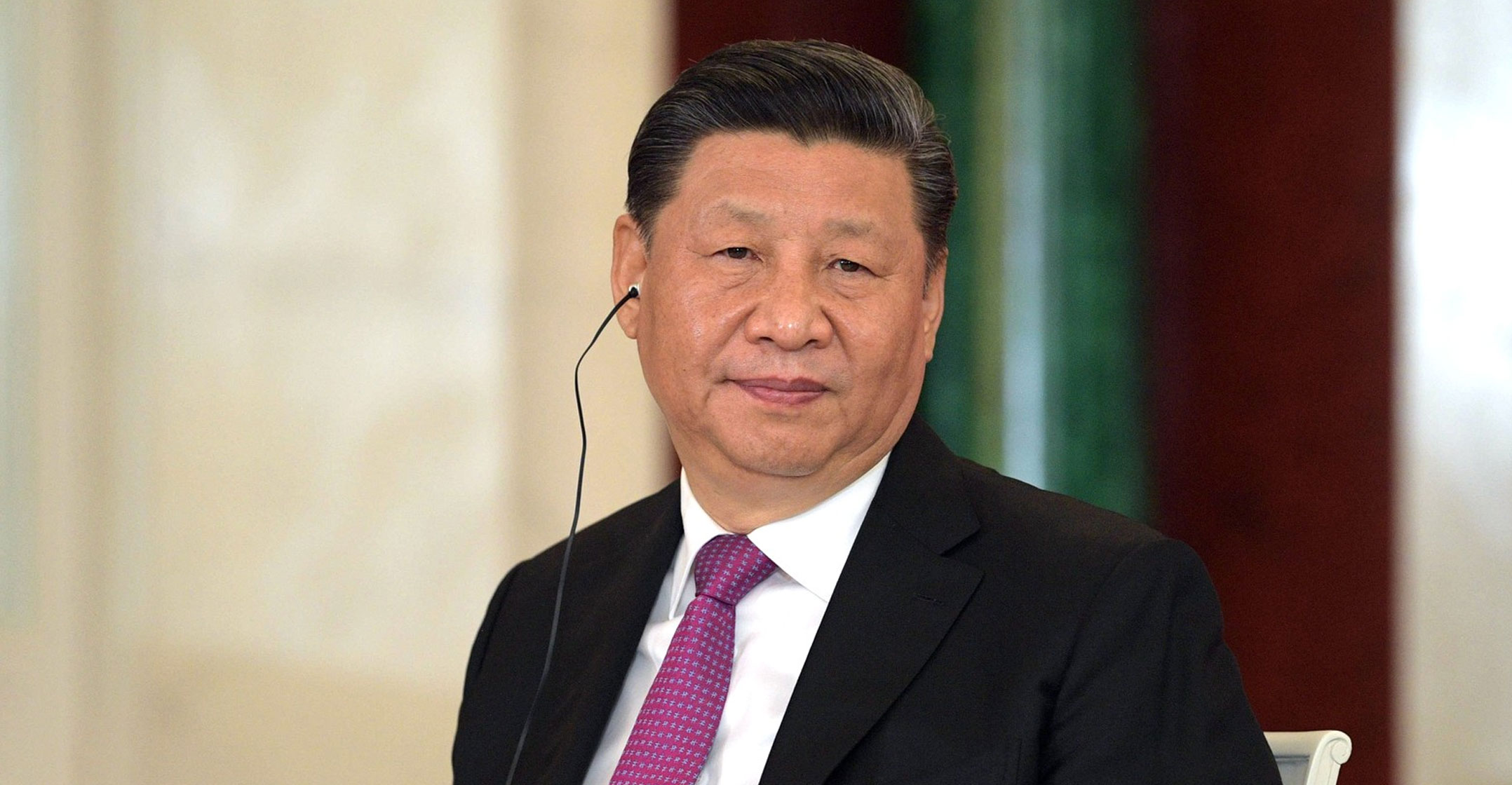
    Xi Jinping

    From the US to the European Union, governments are clearly uneasy with the pervasive power of Big Tech: The influence of their social media platforms on elections, the security of the vast amount of consumer data they store, and the exploitation of gig economy workers who don’t enjoy health insurance or receive overtime pay. In the US, congressional hearings have been conducted and antitrust lawsuits filed, but nothing substantial has come about. Judging by the Nasdaq 100 Stock Index, Big Tech in the West is still thriving.

    China’s political leadership perceives the same set of problems. But China is willing to go a lot further to rein in the clout of its tech giants.

    Look at what’s just happened to after-school tutoring providers be a good warning. In a sweeping overhaul, China is banning companies that teach the K-12 school curriculum from making any profit. On Friday, New Oriental Education & Technology Group, a blue-chip, tumbled 54% to close at US$2.93/share, or $5-billion market cap. The company’s net cash, adjusted for deferred revenue and refund liabilities, pegs this stock’s worth to $2.30, according to a Goldman Sachs Group estimate. Essentially, investors appear to be betting that New Oriental will be liquidated. Similarly, TAL Education Group closed down to $6/share, lower than the bank’s estimated net cash value of $6.70.

    Liquidation risk is real in Xi’s China. He wants a more equal, livable society, and any obstacles will be swept away

    While what happened to education stocks shocked the outside world, it was not exactly surprising inside China. Since last November, Beijing has been reining in Big Tech’s power, and foreign investors are just starting to come to grips with the seriousness of the bureaucracy.

    Broadly, Beijing is concerned about four pillars of stability: banking, antitrust regulation, data security and social equality. All of Beijing’s major interventions reflect these concerns: The last-minute scuttling of fintech giant Ant Group’s $34-billion listing last November because of its potential disruption of banking; Alibaba Group’s record $2.8-billion fine for monopolistic business in April; and the cybersecurity watchdog’s investigation into DiDi Global immediately after its $4.4-billion listing this month.

    Heart of the ban

    Social equality is at the heart of the ban of for-profit after-school tutors. Confronted with blanket advertising and fear mongering, anxious middle-class parents feel compelled to send their kids to mind-numbing cram schools, in some cases even before children get into kindergarten. No one wants her kids to be left behind just because her neighbours have invested more money into education.

    Gig economy workers’ rights are also at the heart of the government’s push for social equality. On Monday, the government posted notices that online food platforms must respect the rights of delivery staff and ensure that those workers earn at least the local minimum income. Food delivery giant Meituan dove 14%, its worst on record, wiping out about $30-billion of market value. DiDi, which depends on gig drivers, is also likely to take a hit.

    President Xi Jinping doesn’t care if stock investors, many of them foreigners, lose billions of dollars. He knows that China’s middle class will have his back. They like these regulatory crackdowns. The ministry of education’s for-profit tutoring ban is a crowd pleaser. In the Chinese society, a family’s wealth alone already gives its offspring a natural edge, but the middle class does not enjoy seeing that edge amplified through an army of tutors. Meanwhile, big cities’ consumers are sympathetic to gig economy workers, often migrants from rural areas, calling them endearingly “fast delivery little brothers”. And by regulating Ant like a bank, consumers are less likely to be sold risky financial products, too.

    Going forward, investors need to realise the four pillars are part of President Xi Jinping’s vision to ensure another hundred years for the ruling Communist Party, which just celebrated its centenary. In the past, Big Tech companies were evaluated in terms of sales, their total addressable market, or even monthly active users. Now investors need to factor in Big Government.

    For instance, DiDi doesn’t do much more than host a taxi-hailing app. That’s a service a smart city’s government can also provide. Or why should Ant Group be allowed to cross-sell its investments, insurance and consumer loan products, while banks are being asked to spin off their wealth management arms?

    In future, China’s big tech will be less exciting and unable to exploit consumer data to make more money. They might — gasp — just be turned into state-owned Big Banks, or Big Utilities. When that happens, China’s technology companies might have to be valued in terms of book or even net cash. Liquidation risk is real in Xi’s China. He wants a more equal, livable society, and any obstacles will be swept away.  — Reported by Shuli Ren, (c) 2021 Bloomberg LP

    Follow TechCentral on Google News Add TechCentral as your preferred source on Google


    Alibaba Didi Chuxing Meituan Tencent top Xi Jinping
    WhatsApp YouTube
    Share. Facebook Twitter LinkedIn WhatsApp Telegram Email Copy Link
    Previous ArticleZuckerberg wants Facebook to become a ‘metaverse company’
    Next Article Intel plots its comeback

    Related Posts

    Here comes the next wave of Chinese AI models

    Here comes the next wave of Chinese AI models

    12 February 2026
    China flaunts the future of war

    China flaunts the future of war

    11 September 2025
    M-Net pioneer Cobus Stofberg steps down from Naspers, Prosus boards

    M-Net pioneer Cobus Stofberg steps down from Naspers, Prosus boards

    20 August 2025
    Company News
    Global memory crunch threatens laptop value for business buyers - RentWorks Africa

    Global memory crunch threatens laptop value for business buyers

    9 March 2026
    'You'll want a piece of it': Citroën teases Basalt SUV Coupé

    ‘You’ll want a piece of it’: Citroën teases Basalt SUV Coupé

    6 March 2026
    From Linux chaos to AI precision: the maturation of LSD Open - Neil White

    From Linux chaos to AI precision: the maturation of LSD Open

    5 March 2026
    Opinion
    The AI fraud crisis your bank is not ready for - Andries Maritz

    The AI fraud crisis your bank is not ready for

    18 February 2026
    A million reasons monopolies don't work - Duncan McLeod

    A million reasons monopolies don’t work

    10 February 2026
    The author, Business Leadership South Africa CEO Busi Mavuso

    Eskom unbundling U-turn threatens to undo hard-won electricity gains

    9 February 2026

    Subscribe to Updates

    Get the best South African technology news and analysis delivered to your e-mail inbox every morning.

    Latest Posts
    DStv's new owner to reveal its game plan - Canal+

    DStv’s new owner to reveal its game plan

    9 March 2026
    Capitec, home affairs launch self-service smart ID machines

    Capitec, home affairs launch self-service smart ID machines

    9 March 2026
    Global memory crunch threatens laptop value for business buyers - RentWorks Africa

    Global memory crunch threatens laptop value for business buyers

    9 March 2026
    Rand under severe pressure

    Rand under severe pressure

    9 March 2026
    © 2009 - 2026 NewsCentral Media
    • Cookie policy (ZA)
    • TechCentral – privacy and Popia

    Type above and press Enter to search. Press Esc to cancel.

    Manage consent

    TechCentral uses cookies to enhance its offerings. Consenting to these technologies allows us to serve you better. Not consenting or withdrawing consent may adversely affect certain features and functions of the website.

    Functional Always active
    The technical storage or access is strictly necessary for the legitimate purpose of enabling the use of a specific service explicitly requested by the subscriber or user, or for the sole purpose of carrying out the transmission of a communication over an electronic communications network.
    Preferences
    The technical storage or access is necessary for the legitimate purpose of storing preferences that are not requested by the subscriber or user.
    Statistics
    The technical storage or access that is used exclusively for statistical purposes. The technical storage or access that is used exclusively for anonymous statistical purposes. Without a subpoena, voluntary compliance on the part of your Internet Service Provider, or additional records from a third party, information stored or retrieved for this purpose alone cannot usually be used to identify you.
    Marketing
    The technical storage or access is required to create user profiles to send advertising, or to track the user on a website or across several websites for similar marketing purposes.
    • Manage options
    • Manage services
    • Manage {vendor_count} vendors
    • Read more about these purposes
    View preferences
    • {title}
    • {title}
    • {title}