Close Menu
TechCentralTechCentral

    Subscribe to the newsletter

    Get the best South African technology news and analysis delivered to your e-mail inbox every morning.

    Facebook X (Twitter) YouTube LinkedIn
    WhatsApp Facebook X (Twitter) LinkedIn YouTube
    TechCentralTechCentral
    • News
      Vuyani Jarana: Mobile coverage masks a deeper broadband failure

      Vuyani Jarana: Mobile coverage masks a deeper broadband failure

      30 January 2026
      SABC Plus to flight Microsoft AI training videos

      SABC Plus to flight Microsoft AI training videos

      30 January 2026
      Fibre ducts

      Fibre industry consolidation in KZN

      30 January 2026
      Watts & Wheels S1E3: 'BYD's Corolla Cross challenger'

      Watts & Wheels S1E3: ‘BYD’s Corolla Cross challenger’

      30 January 2026
      What ordinary South Africans really think of AI

      What ordinary South Africans really think of AI

      30 January 2026
    • World
      Apple acquires audio AI start-up Q.ai

      Apple acquires audio AI start-up Q.ai

      30 January 2026
      SpaceX IPO may be largest in history

      SpaceX IPO may be largest in history

      28 January 2026
      Nvidia throws AI at the weather

      Nvidia throws AI at weather forecasting

      27 January 2026
      Debate erupts over value of in-flight Wi-Fi

      Debate erupts over value of in-flight Wi-Fi

      26 January 2026
      Intel takes another hit - Intel CEO Lip-Bu Tan. Laure Andrillon/Reuters

      Intel takes another hit

      23 January 2026
    • In-depth
      How liberalisation is rewiring South Africa's power sector

      How liberalisation is rewiring South Africa’s power sector

      21 January 2026
      The top-performing South African tech shares of 2025

      The top-performing South African tech shares of 2025

      12 January 2026
      Digital authoritarianism grows as African states normalise internet blackouts

      Digital authoritarianism grows as African states normalise internet blackouts

      19 December 2025
      TechCentral's South African Newsmakers of 2025

      TechCentral’s South African Newsmakers of 2025

      18 December 2025
      Black Friday goes digital in South Africa as online spending surges to record high

      Black Friday goes digital in South Africa as online spending surges to record high

      4 December 2025
    • TCS
      TCS+ | How Cloud On Demand is helping SA businesses succeed in the cloud - Xhenia Rhode, Dion Kalicharan

      TCS+ | Cloud On Demand and Consnet: inside a real-world AWS partner success story

      30 January 2026
      Watts & Wheels S1E3: 'BYD's Corolla Cross challenger'

      Watts & Wheels S1E2: ‘China attacks, BMW digs in, Toyota’s sublime supercar’

      23 January 2026

      TCS+ | Why cybersecurity is becoming a competitive advantage for SA businesses

      20 January 2026
      Watts & Wheels S1E3: 'BYD's Corolla Cross challenger'

      Watts & Wheels: S1E1 – ‘William, Prince of Wheels’

      8 January 2026
      TCS+ | Africa's digital transformation - unlocking AI through cloud and culture - Cliff de Wit Accelera Digital Group

      TCS+ | Cloud without culture won’t deliver AI: Accelera’s Cliff de Wit

      12 December 2025
    • Opinion
      South Africa's skills advantage is being overlooked at home - Richard Firth

      South Africa’s skills advantage is being overlooked at home

      29 January 2026
      Why Elon Musk's Starlink is a 'hard no' for me - Songezo Zibi

      Why Elon Musk’s Starlink is a ‘hard no’ for me

      26 January 2026
      South Africa's new fibre broadband battle - Duncan McLeod

      South Africa’s new fibre broadband battle

      20 January 2026
      AI moves from pilots to production in South African companies - Nazia Pillay SAP

      AI moves from pilots to production in South African companies

      20 January 2026
      South Africa's new fibre broadband battle - Duncan McLeod

      ANC’s attack on Solly Malatsi shows how BEE dogma trumps economic reality

      14 December 2025
    • Company Hubs
      • Africa Data Centres
      • AfriGIS
      • Altron Digital Business
      • Altron Document Solutions
      • Altron Group
      • Arctic Wolf
      • AvertITD
      • Braintree
      • CallMiner
      • CambriLearn
      • CYBER1 Solutions
      • Digicloud Africa
      • Digimune
      • Domains.co.za
      • ESET
      • Euphoria Telecom
      • Incredible Business
      • iONLINE
      • IQbusiness
      • Iris Network Systems
      • LSD Open
      • NEC XON
      • Netstar
      • Network Platforms
      • Next DLP
      • Ovations
      • Paracon
      • Paratus
      • Q-KON
      • SevenC
      • SkyWire
      • Solid8 Technologies
      • Telit Cinterion
      • Tenable
      • Vertiv
      • Videri Digital
      • Vodacom Business
      • Wipro
      • Workday
      • XLink
    • Sections
      • AI and machine learning
      • Banking
      • Broadcasting and Media
      • Cloud services
      • Contact centres and CX
      • Cryptocurrencies
      • Education and skills
      • Electronics and hardware
      • Energy and sustainability
      • Enterprise software
      • Financial services
      • Information security
      • Internet and connectivity
      • Internet of Things
      • Investment
      • IT services
      • Lifestyle
      • Motoring
      • Public sector
      • Retail and e-commerce
      • Satellite communications
      • Science
      • SMEs and start-ups
      • Social media
      • Talent and leadership
      • Telecoms
    • Events
    • Advertise
    TechCentralTechCentral
    Home » In-depth » Huawei clash shows deeper US-China battle for global influence

    Huawei clash shows deeper US-China battle for global influence

    By Agency Staff11 December 2018
    Twitter LinkedIn Facebook WhatsApp Email Telegram Copy Link
    News Alerts
    WhatsApp

    The Trump administration has insisted the arrest of a top Huawei executive has nothing to do with trade talks. In Beijing, it’s just the latest US move to contain China’s rise as a global power.

    Bail hearings proceeded this week after Meng Wanzhou, the chief financial officer of Huawei, was arrested in Canada on 1 December because of alleged violations of US sanctions against Iran. The case threatens to derail a trade truce struck the same day between Donald Trump and Xi Jinping.

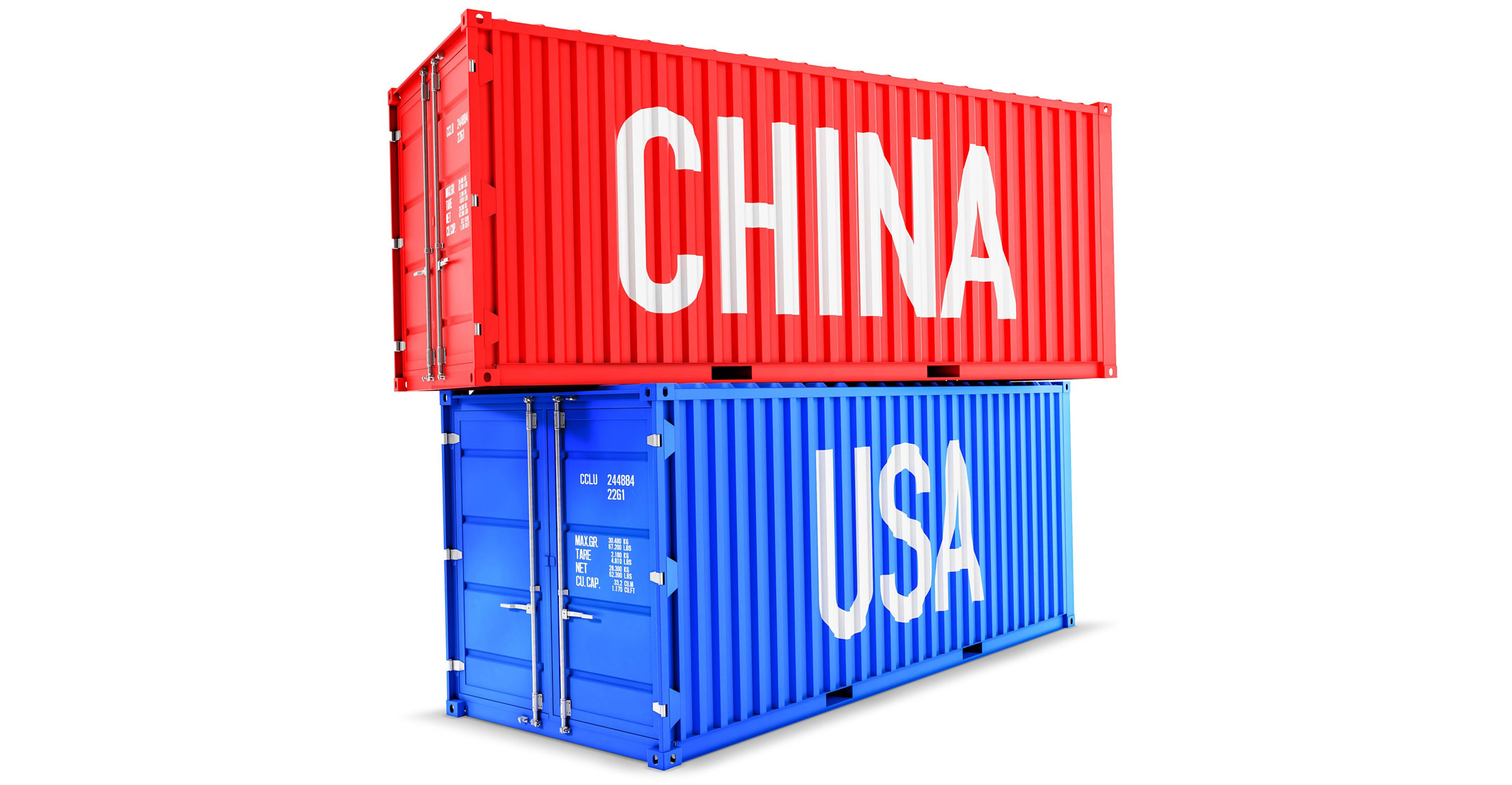
    Even if the two leaders manage to strike a broader deal, the arrest shows that the US-China conflict goes far beyond trade. The world’s biggest economies are now engaged in a battle for global influence that will ultimately determine whether the US remains the globe’s predominant superpower, or China rises as a viable counterweight.

    It is a desire to significantly cut ties with China because of that larger perception it presents a strategic risk

    “The sentiment in Washington now is not just a Trumpian mercantilism — the desire to bring back factory jobs to Wisconsin or wherever,” said Nick Bisley, a professor of international relations at La Trobe University in Melbourne who has written books on great-power politics. “It is a desire to significantly cut ties with China because of that larger perception it presents a strategic risk.”

    A bipartisan consensus has emerged in Washington that China’s entry into the World Trade Organisation hollowed out US manufacturing and allowed it to grow rich. That increased economic power is now at a point where it risks eroding key American military advantages around the globe.

    China insists it plays by the rules, and doesn’t challenge US dominance. Even so, three areas in particular worry American strategic planners: technology, the dollar and the ability to project military power overseas.

    Threat

    A year ago, the White House identified China’s growing technological prowess as a threat to US economic and military might. American companies have long argued that China forces them to transfer intellectual property and sometimes steals trade secrets — all of which Beijing denies.

    In justifying tariffs, Trump’s team has cited Beijing’s “Made in China 2025” strategy to become a global leader in state-of-the-art technologies from aerospace to robotics. So far, China has resisted those demands, arguing that doing so would crush its economic potential.

    Huawei in particular epitomises the threat. Earlier this year, Trump blocked Broadcom’s US$117-billion hostile takeover bid for Qualcomm over concerns that Huawei would end up dominating the market for computer chips and wireless technologies.
    The fear is that wireless carriers may be forced to turn to Huawei or other Chinese companies for 5G technology, potentially giving Beijing access to critical communications. Those concerns have prompted the US to ban Huawei’s products for government procurement, and Australia, Japan and New Zealand have reportedly followed.

    China has fought back, with foreign ministry spokesman Lu Kang saying this week that Huawei doesn’t “force any enterprise to install forced back doors”.

    “The competition is really focused in the areas where future strategic and economic dominance come from,” said Michael Shoebridge, director of the defence and strategy programme at the Australian Strategic Policy Institute. “The Huawei arrest is right in the middle of this because both America and China see their future global power as coming from the hi-tech sector.”

    The Huawei arrest is right in the middle of this because both America and China see their future global power as coming from the hi-tech sector

    The dominance of the dollar has allowed the US effectively to control the world’s financial system, underpinning its superpower status. Yet Trump’s increased use of sanctions to assert its foreign-policy goals has prompted a wide range of nations — from China to Russia to the European Union — to look for an alternative.

    The Trump administration added nearly a thousand entities and individuals to its sanctions list in its first year, almost 30% more than the Obama administration’s last year in office, according to law firm Gibson Dunn. The complete list now runs to more than 1 200 pages.

    Sanctions are a key tool for the US to subdue potential adversaries like North Korea, but they also can affect friends and allies. The EU, which objected to reimposing sanctions on Iran, this month unveiled plans to mitigate the so-called “ exorbitant privilege” of the dollar.

    ‘Systemic shift’

    During a visit to China last month, Russian Prime Minister Dmitry Medvedev said the two nations were looking at ways to boost the use of their currencies through allowing the use of China’s UnionPay credit card in Russia and Russia’s Mir card in China. “No one currency should dominate the market,” he said.

    “We are potentially at the beginning of a systemic shift that may take some time to play out,” said Gregory Chin, associate professor at York University in Toronto, and a political economy specialist. “The political will is building and coalescing.”

    Last year, Xi called his Belt and Road Initiative to finance infrastructure and development projects across the globe the “ project of the century”. Morgan Stanley says as much as $1.3-trillion may be lent out under the policy by 2027.
    Now, with a backlash growing across Asia from Malaysia to the Maldives, Xi is playing defence: last month he told the Asia-Pacific Economic Cooperation summit that it was “not a trap as some people have labelled it”.

    The US has grown increasingly concerned that poorer countries may become economically dependent on China. The Pentagon warned earlier this year that China could use ports around the globe to support naval deployments.

    Sri Lanka is a prime example of what could go wrong. It borrowed heavily to build a port on the Indian Ocean, couldn’t repay the loans and then gave China a 99-year lease for debt relief.

    US vice President Mike Pence attacked the Belt and Road at APEC shortly after Xi spoke, saying the US wouldn’t “drown our partners in a sea of debt”. He also outlined plans to finance $60-billion of infrastructure to support private investment.

    “For the US, the BRI is a direct challenge to its preeminence in the Asia-Pacific region and beyond,” said Brahma Chellaney, a professor of strategic studies at the New Delhi-based Centre for Policy Research. “They realised that countries that are looking to BRI need an alternative. That’s why they are developing a counter to it.”  — Reported by David Tweed and Enda Curran, (c) 2018 Bloomberg LP



    Donald Trump Huawei top Xi Jinping
    WhatsApp YouTube Follow on Google News Add as preferred source on Google
    Share. Facebook Twitter LinkedIn WhatsApp Telegram Email Copy Link
    Previous ArticleLiquid Telecom in R2.6-billion funding boost
    Next Article Bitcoin was a classic bubble. And it popped

    Related Posts

    Huawei turns 25 in South Africa, celebrates with major device discounts

    Huawei turns 25 in South Africa, celebrates with major device discounts

    30 January 2026
    Taiwan, US strike strategic AI and chip supply-chain pact - TSMC

    Taiwan, US strike strategic AI and chip supply-chain pact

    20 January 2026
    Nvidia's next AI chips are in full production - Jensen Huang

    Nvidia’s next AI chips are in full production

    6 January 2026
    Company News
    Huawei turns 25 in South Africa, celebrates with major device discounts

    Huawei turns 25 in South Africa, celebrates with major device discounts

    30 January 2026
    Phishing has not disappeared, but it has grown up - KnowBe4

    Phishing has not disappeared, but it has grown up

    30 January 2026
    Smartphone affordability: South Africa's new economic divide - PayJoy

    Smartphone affordability: South Africa’s new economic divide

    29 January 2026
    Opinion
    South Africa's skills advantage is being overlooked at home - Richard Firth

    South Africa’s skills advantage is being overlooked at home

    29 January 2026
    Why Elon Musk's Starlink is a 'hard no' for me - Songezo Zibi

    Why Elon Musk’s Starlink is a ‘hard no’ for me

    26 January 2026
    South Africa's new fibre broadband battle - Duncan McLeod

    South Africa’s new fibre broadband battle

    20 January 2026

    Subscribe to Updates

    Get the best South African technology news and analysis delivered to your e-mail inbox every morning.

    Latest Posts
    Vuyani Jarana: Mobile coverage masks a deeper broadband failure

    Vuyani Jarana: Mobile coverage masks a deeper broadband failure

    30 January 2026
    TCS+ | How Cloud On Demand is helping SA businesses succeed in the cloud - Xhenia Rhode, Dion Kalicharan

    TCS+ | Cloud On Demand and Consnet: inside a real-world AWS partner success story

    30 January 2026
    Huawei turns 25 in South Africa, celebrates with major device discounts

    Huawei turns 25 in South Africa, celebrates with major device discounts

    30 January 2026
    SABC Plus to flight Microsoft AI training videos

    SABC Plus to flight Microsoft AI training videos

    30 January 2026
    © 2009 - 2026 NewsCentral Media
    • Cookie policy (ZA)
    • TechCentral – privacy and Popia

    Type above and press Enter to search. Press Esc to cancel.

    Manage consent

    TechCentral uses cookies to enhance its offerings. Consenting to these technologies allows us to serve you better. Not consenting or withdrawing consent may adversely affect certain features and functions of the website.

    Functional Always active
    The technical storage or access is strictly necessary for the legitimate purpose of enabling the use of a specific service explicitly requested by the subscriber or user, or for the sole purpose of carrying out the transmission of a communication over an electronic communications network.
    Preferences
    The technical storage or access is necessary for the legitimate purpose of storing preferences that are not requested by the subscriber or user.
    Statistics
    The technical storage or access that is used exclusively for statistical purposes. The technical storage or access that is used exclusively for anonymous statistical purposes. Without a subpoena, voluntary compliance on the part of your Internet Service Provider, or additional records from a third party, information stored or retrieved for this purpose alone cannot usually be used to identify you.
    Marketing
    The technical storage or access is required to create user profiles to send advertising, or to track the user on a website or across several websites for similar marketing purposes.
    • Manage options
    • Manage services
    • Manage {vendor_count} vendors
    • Read more about these purposes
    View preferences
    • {title}
    • {title}
    • {title}