Close Menu
TechCentralTechCentral

    Subscribe to the newsletter

    Get the best South African technology news and analysis delivered to your e-mail inbox every morning.

    Facebook X (Twitter) YouTube LinkedIn
    WhatsApp Facebook X (Twitter) LinkedIn YouTube
    TechCentralTechCentral
    • News
      Netflix, Warner Bros talks raise fresh headaches for MultiChoice

      Netflix, Warner Bros talks raise fresh headaches for MultiChoice

      5 December 2025
      Big Microsoft 365 price increases coming next year

      Big Microsoft price increases coming next year

      5 December 2025
      Vodacom to take control of Safaricom in R36-billion deal - Shameel Joosub

      Vodacom to take control of Safaricom in R36-billion deal

      4 December 2025
      Black Friday goes digital in South Africa as online spending surges to record high

      Black Friday goes digital in South Africa as online spending surges to record high

      4 December 2025
      BYD takes direct aim at Toyota with launch of sub-R500 000 Sealion 5 PHEV

      BYD takes direct aim at Toyota with launch of sub-R500 000 Sealion 5 PHEV

      4 December 2025
    • World
      Amazon and Google launch multi-cloud service for faster connectivity

      Amazon and Google launch multi-cloud service for faster connectivity

      1 December 2025
      Google makes final court plea to stop US breakup

      Google makes final court plea to stop US breakup

      21 November 2025
      Bezos unveils monster rocket: New Glenn 9x4 set to dwarf Saturn V

      Bezos unveils monster rocket: New Glenn 9×4 set to dwarf Saturn V

      21 November 2025
      Tech shares turbocharged by Nvidia's stellar earnings

      Tech shares turbocharged by stellar Nvidia earnings

      20 November 2025
      Config file blamed for Cloudflare meltdown that disrupted the web

      Config file blamed for Cloudflare meltdown that disrupted the web

      19 November 2025
    • In-depth
      Jensen Huang Nvidia

      So, will China really win the AI race?

      14 November 2025
      Valve's Linux console takes aim at Microsoft's gaming empire

      Valve’s Linux console takes aim at Microsoft’s gaming empire

      13 November 2025
      iOCO's extraordinary comeback plan - Rhys Summerton

      iOCO’s extraordinary comeback plan

      28 October 2025
      Why smart glasses keep failing - no, it's not the tech - Mark Zuckerberg

      Why smart glasses keep failing – it’s not the tech

      19 October 2025
      BYD to blanket South Africa with megawatt-scale EV charging network - Stella Li

      BYD to blanket South Africa with megawatt-scale EV charging network

      16 October 2025
    • TCS
      TCS+ | How Cloud on Demand helps partners thrive in the AWS ecosystem - Odwa Ndyaluvane and Xenia Rhode

      TCS+ | How Cloud On Demand helps partners thrive in the AWS ecosystem

      4 December 2025
      TCS | MTN Group CEO Ralph Mupita on competition, AI and the future of mobile

      TCS | Ralph Mupita on competition, AI and the future of mobile

      28 November 2025
      TCS | Dominic Cull on fixing South Africa's ICT policy bottlenecks

      TCS | Dominic Cull on fixing South Africa’s ICT policy bottlenecks

      21 November 2025
      TCS | BMW CEO Peter van Binsbergen on the future of South Africa's automotive industry

      TCS | BMW CEO Peter van Binsbergen on the future of South Africa’s automotive industry

      6 November 2025
      TCS | Why Altron is building an AI factory - Bongani Andy Mabaso

      TCS | Why Altron is building an AI factory in Johannesburg

      28 October 2025
    • Opinion
      Your data, your hardware: the DIY AI revolution is coming - Duncan McLeod

      Your data, your hardware: the DIY AI revolution is coming

      20 November 2025
      Zero Carbon Charge founder Joubert Roux

      The energy revolution South Africa can’t afford to miss

      20 November 2025
      It's time for a new approach to government IT spend in South Africa - Richard Firth

      It’s time for a new approach to government IT spend in South Africa

      19 November 2025
      How South Africa's broken Rica system fuels murder and mayhem - Farhad Khan

      How South Africa’s broken Rica system fuels murder and mayhem

      10 November 2025
      South Africa's AI data centre boom risks overloading a fragile grid - Paul Colmer

      South Africa’s AI data centre boom risks overloading a fragile grid

      30 October 2025
    • Company Hubs
      • Africa Data Centres
      • AfriGIS
      • Altron Digital Business
      • Altron Document Solutions
      • Altron Group
      • Arctic Wolf
      • AvertITD
      • Braintree
      • CallMiner
      • CambriLearn
      • CYBER1 Solutions
      • Digicloud Africa
      • Digimune
      • Domains.co.za
      • ESET
      • Euphoria Telecom
      • Incredible Business
      • iONLINE
      • IQbusiness
      • Iris Network Systems
      • LSD Open
      • NEC XON
      • Netstar
      • Network Platforms
      • Next DLP
      • Ovations
      • Paracon
      • Paratus
      • Q-KON
      • SevenC
      • SkyWire
      • Solid8 Technologies
      • Telit Cinterion
      • Tenable
      • Vertiv
      • Videri Digital
      • Vodacom Business
      • Wipro
      • Workday
      • XLink
    • Sections
      • AI and machine learning
      • Banking
      • Broadcasting and Media
      • Cloud services
      • Contact centres and CX
      • Cryptocurrencies
      • Education and skills
      • Electronics and hardware
      • Energy and sustainability
      • Enterprise software
      • Financial services
      • Information security
      • Internet and connectivity
      • Internet of Things
      • Investment
      • IT services
      • Lifestyle
      • Motoring
      • Public sector
      • Retail and e-commerce
      • Satellite communications
      • Science
      • SMEs and start-ups
      • Social media
      • Talent and leadership
      • Telecoms
    • Events
    • Advertise
    TechCentralTechCentral
    Home » Science » Humanity could reach the stars within a generation

    Humanity could reach the stars within a generation

    By The Conversation14 April 2016
    Twitter LinkedIn Facebook WhatsApp Email Telegram Copy Link
    News Alerts
    WhatsApp

    alpha-centauri-640

    It takes a bold person to declare that interstellar travel is now within our grasp. Physicist Stephen Hawking has shown that he is just that, taking part in the Breakthrough Starshot initiative. The project has announced a US$100m research programme to investigate the technology of using light to propel spacecraft out of the solar system to explore neighbouring stars. For the first time in human history, interstellar travel is a realistic and achievable aspiration, and not just the playground of science fiction.

    So, what has changed that makes interstellar travel achievable? First of all, clear expectations. This is not about a great big spaceship with a colony of astronauts travelling for generations to settle a planet around a distant star. Neither is it about faster-than-light travel, tunnelling through wormholes to arrive at the other side of the universe in an instant of time. This is about technology that already exists, or nearly exists, being applied in new and exciting ways.

    The technology is that of solar sails combined with the ability to miniaturise instruments. The idea behind solar sails is that the light that streams from the sun can be used to propel an object. Gradually, as the object is moved, it accelerates and builds up speed, eventually reaching values that are a significant fraction of the speed of light. So far, tests have been made on sails that are many metres across, carrying payloads of kilograms in weight.

    And the technology works — both the European Space Agency and Nasa have developed systems that could be applied to spacecraft. To work efficiently, these sails need to be several metres across, just as a sail on a sea-going vessel needs to be a certain size to catch enough wind to push a ship forward.

    Miniaturisation of instruments has been a significant driver of space exploration ever since the launch of Sputnik, the first artificial satellite to orbit the Earth. The ideal instrument for a space mission has minimal mass and requires minimal power. These requirements led to the concept of CubeSat, a tiny satellite where a standard platform has been developed onto which different instruments could be fitted. The entire satellite can also be launched by a variety of different vehicles.

    We can all appreciate the rate at which equipment is getting ever smaller — a quick glance at a smartphone, with its powerful camera, ability to record and store gigabytes of sound and images shows where technology sits at the moment. There have been proposals to use a CubeSat to launch multiple tiny probes carrying instruments to the moon and to Mars. Breakthrough Starshot, though, will be a single microchip — a space chip that is a spaceship (and vice versa!).

    The concept is to have individual microchips each propelled by a solar sail. Given that the sail is likely to be much, much bigger than the vessel — the space chip is likely to be of the order of a centimetre long — there are practical as well as technological difficulties to overcome. But attaching the sail to the ship is probably one of the least serious potential problems.

    Interstellar threats

    Interplanetary and interstellar space are full of hazards for a tiny traveller. The two greatest hazards will be dust and radiation. Even though there have been great advances in production of thin but strong materials that would make appropriate solar sails, a dust grain travelling at speed could rip a sail apart. Also, microchips are very sensitive to high doses of radiation — and interstellar space is shot through by cosmic rays. While the chips are still within the solar system, how vulnerable will they be to changes in the solar wind?

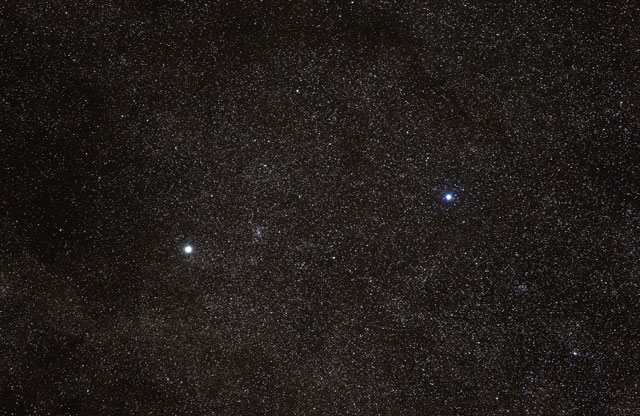
    Once all the technological development has taken place, and the chips are launched — which might be sooner rather than later, if the Breakthrough Starshot initiative is successful — where will they go and what will they do when they get there? The idea is that they will travel to our nearest neighbour beyond our solar system, Alpha Centauri, taking about 20 years to get there, travelling at a speed of about 60 000km/s.

    This is not just an amazingly short time to travel a distance of 40 trillion kilometres, it is also a reasonable length of time for a space mission to last — think of how long the Hubble space telescope has been operating and returning spectacular images. En route for Alpha Centauri, the chips will act as tourists — taking pictures, meeting the local inhabitants (planets? comets?), and looking at the scenery (such as more distant stars).

    These findings in themselves are probably sufficient scientific justification for the project. For example, we have never seen a star or a supernova from interstellar space — we are always looking through the lens of the solar system. Once the tiny travellers reach Alpha Centauri, the instruments will make measurements of a stellar system, giving us — again for the first time — a detailed insight into stars that are different from our own. They might even find planets and moons.

    We’ve had talk of surfing on gravitational waves to travel in time — which is still very much science fiction. Now, though, we are sailing in a solar wind, and interstellar travel is within our grasp. We might not yet be at the stage of interstellar travel for people, but being able to see what it is like to travel through interstellar space while still in the comfort of our own home is certainly a first step.The Conversation

    • Monica Grady is professor of planetary and space sciences, The Open University
    • This article was originally published on The Conversation


    Monica Grady Stephen Hawking
    Subscribe to TechCentral Subscribe to TechCentral
    Share. Facebook Twitter LinkedIn WhatsApp Telegram Email Copy Link
    Previous ArticleRace is on to reach our nearest stars
    Next Article The amazing science behind SpaceX’s Falcon 9

    Related Posts

    Go higher with Xerox Iridesse

    30 August 2022

    AI hysteria could set the technology back by decades

    24 July 2019

    Bizarre ‘dark fluid’ with negative mass could dominate the universe

    5 December 2018
    Company News
    AI is not a technology problem - iqbusiness

    AI is not a technology problem – iqbusiness

    5 December 2025
    Telcos are sitting on a data gold mine - but few know what do with it - Phillip du Plessis

    Telcos are sitting on a data gold mine – but few know what do with it

    4 December 2025
    Unlock smarter computing with your surface Copilot+ PC

    Unlock smarter computing with your Surface Copilot+ PC

    4 December 2025
    Opinion
    Your data, your hardware: the DIY AI revolution is coming - Duncan McLeod

    Your data, your hardware: the DIY AI revolution is coming

    20 November 2025
    Zero Carbon Charge founder Joubert Roux

    The energy revolution South Africa can’t afford to miss

    20 November 2025
    It's time for a new approach to government IT spend in South Africa - Richard Firth

    It’s time for a new approach to government IT spend in South Africa

    19 November 2025

    Subscribe to Updates

    Get the best South African technology news and analysis delivered to your e-mail inbox every morning.

    Latest Posts
    Netflix, Warner Bros talks raise fresh headaches for MultiChoice

    Netflix, Warner Bros talks raise fresh headaches for MultiChoice

    5 December 2025
    Big Microsoft 365 price increases coming next year

    Big Microsoft price increases coming next year

    5 December 2025
    AI is not a technology problem - iqbusiness

    AI is not a technology problem – iqbusiness

    5 December 2025
    Vodacom to take control of Safaricom in R36-billion deal - Shameel Joosub

    Vodacom to take control of Safaricom in R36-billion deal

    4 December 2025
    © 2009 - 2025 NewsCentral Media
    • Cookie policy (ZA)
    • TechCentral – privacy and Popia

    Type above and press Enter to search. Press Esc to cancel.

    Manage consent

    TechCentral uses cookies to enhance its offerings. Consenting to these technologies allows us to serve you better. Not consenting or withdrawing consent may adversely affect certain features and functions of the website.

    Functional Always active
    The technical storage or access is strictly necessary for the legitimate purpose of enabling the use of a specific service explicitly requested by the subscriber or user, or for the sole purpose of carrying out the transmission of a communication over an electronic communications network.
    Preferences
    The technical storage or access is necessary for the legitimate purpose of storing preferences that are not requested by the subscriber or user.
    Statistics
    The technical storage or access that is used exclusively for statistical purposes. The technical storage or access that is used exclusively for anonymous statistical purposes. Without a subpoena, voluntary compliance on the part of your Internet Service Provider, or additional records from a third party, information stored or retrieved for this purpose alone cannot usually be used to identify you.
    Marketing
    The technical storage or access is required to create user profiles to send advertising, or to track the user on a website or across several websites for similar marketing purposes.
    • Manage options
    • Manage services
    • Manage {vendor_count} vendors
    • Read more about these purposes
    View preferences
    • {title}
    • {title}
    • {title}