Close Menu
TechCentralTechCentral

    Subscribe to the newsletter

    Get the best South African technology news and analysis delivered to your e-mail inbox every morning.

    Facebook X (Twitter) YouTube LinkedIn
    WhatsApp Facebook X (Twitter) LinkedIn YouTube
    TechCentralTechCentral
    • News
      Vodacom to take control of Safaricom in R36-billion deal - Shameel Joosub

      Vodacom to take control of Safaricom in R36-billion deal

      4 December 2025
      Black Friday goes digital in South Africa as online spending surges to record high

      Black Friday goes digital in South Africa as online spending surges to record high

      4 December 2025
      BYD takes direct aim at Toyota with launch of sub-R500 000 Sealion 5 PHEV

      BYD takes direct aim at Toyota with launch of sub-R500 000 Sealion 5 PHEV

      4 December 2025
      'Get it now': Takealot in new instant deliveries pilot

      ‘Get it now’: Takealot in new instant deliveries pilot

      4 December 2025
      What South Africans searched for most in 2025

      What South Africans searched for most in 2025, according to Google

      4 December 2025
    • World
      Amazon and Google launch multi-cloud service for faster connectivity

      Amazon and Google launch multi-cloud service for faster connectivity

      1 December 2025
      Google makes final court plea to stop US breakup

      Google makes final court plea to stop US breakup

      21 November 2025
      Bezos unveils monster rocket: New Glenn 9x4 set to dwarf Saturn V

      Bezos unveils monster rocket: New Glenn 9×4 set to dwarf Saturn V

      21 November 2025
      Tech shares turbocharged by Nvidia's stellar earnings

      Tech shares turbocharged by stellar Nvidia earnings

      20 November 2025
      Config file blamed for Cloudflare meltdown that disrupted the web

      Config file blamed for Cloudflare meltdown that disrupted the web

      19 November 2025
    • In-depth
      Jensen Huang Nvidia

      So, will China really win the AI race?

      14 November 2025
      Valve's Linux console takes aim at Microsoft's gaming empire

      Valve’s Linux console takes aim at Microsoft’s gaming empire

      13 November 2025
      iOCO's extraordinary comeback plan - Rhys Summerton

      iOCO’s extraordinary comeback plan

      28 October 2025
      Why smart glasses keep failing - no, it's not the tech - Mark Zuckerberg

      Why smart glasses keep failing – it’s not the tech

      19 October 2025
      BYD to blanket South Africa with megawatt-scale EV charging network - Stella Li

      BYD to blanket South Africa with megawatt-scale EV charging network

      16 October 2025
    • TCS
      TCS+ | How Cloud on Demand helps partners thrive in the AWS ecosystem - Odwa Ndyaluvane and Xenia Rhode

      TCS+ | How Cloud On Demand helps partners thrive in the AWS ecosystem

      4 December 2025
      TCS | MTN Group CEO Ralph Mupita on competition, AI and the future of mobile

      TCS | Ralph Mupita on competition, AI and the future of mobile

      28 November 2025
      TCS | Dominic Cull on fixing South Africa's ICT policy bottlenecks

      TCS | Dominic Cull on fixing South Africa’s ICT policy bottlenecks

      21 November 2025
      TCS | BMW CEO Peter van Binsbergen on the future of South Africa's automotive industry

      TCS | BMW CEO Peter van Binsbergen on the future of South Africa’s automotive industry

      6 November 2025
      TCS | Why Altron is building an AI factory - Bongani Andy Mabaso

      TCS | Why Altron is building an AI factory in Johannesburg

      28 October 2025
    • Opinion
      Your data, your hardware: the DIY AI revolution is coming - Duncan McLeod

      Your data, your hardware: the DIY AI revolution is coming

      20 November 2025
      Zero Carbon Charge founder Joubert Roux

      The energy revolution South Africa can’t afford to miss

      20 November 2025
      It's time for a new approach to government IT spend in South Africa - Richard Firth

      It’s time for a new approach to government IT spend in South Africa

      19 November 2025
      How South Africa's broken Rica system fuels murder and mayhem - Farhad Khan

      How South Africa’s broken Rica system fuels murder and mayhem

      10 November 2025
      South Africa's AI data centre boom risks overloading a fragile grid - Paul Colmer

      South Africa’s AI data centre boom risks overloading a fragile grid

      30 October 2025
    • Company Hubs
      • Africa Data Centres
      • AfriGIS
      • Altron Digital Business
      • Altron Document Solutions
      • Altron Group
      • Arctic Wolf
      • AvertITD
      • Braintree
      • CallMiner
      • CambriLearn
      • CYBER1 Solutions
      • Digicloud Africa
      • Digimune
      • Domains.co.za
      • ESET
      • Euphoria Telecom
      • Incredible Business
      • iONLINE
      • IQbusiness
      • Iris Network Systems
      • LSD Open
      • NEC XON
      • Netstar
      • Network Platforms
      • Next DLP
      • Ovations
      • Paracon
      • Paratus
      • Q-KON
      • SevenC
      • SkyWire
      • Solid8 Technologies
      • Telit Cinterion
      • Tenable
      • Vertiv
      • Videri Digital
      • Vodacom Business
      • Wipro
      • Workday
      • XLink
    • Sections
      • AI and machine learning
      • Banking
      • Broadcasting and Media
      • Cloud services
      • Contact centres and CX
      • Cryptocurrencies
      • Education and skills
      • Electronics and hardware
      • Energy and sustainability
      • Enterprise software
      • Financial services
      • Information security
      • Internet and connectivity
      • Internet of Things
      • Investment
      • IT services
      • Lifestyle
      • Motoring
      • Public sector
      • Retail and e-commerce
      • Satellite communications
      • Science
      • SMEs and start-ups
      • Social media
      • Talent and leadership
      • Telecoms
    • Events
    • Advertise
    TechCentralTechCentral
    Home » Sections » AI and machine learning » How Intel spurned OpenAI – and lost the AI chip race

    How Intel spurned OpenAI – and lost the AI chip race

    For US chip giant Intel, the darling of the computer age before it fell on hard times, things might have been quite different.
    By Agency Staff7 August 2024
    Twitter LinkedIn Facebook WhatsApp Email Telegram Copy Link
    News Alerts
    WhatsApp

    How Intel spurned OpenAI - and lost the AI chip raceFor US chip giant Intel, the darling of the computer age before it fell on hard times, things might have been quite different.

    About seven years ago, the company had the chance to buy a stake in OpenAI, then a fledgling non-profit research organisation working in a little-known field called generative artificial intelligence, four people with direct knowledge of those discussions said.

    Over several months in 2017 and 2018, executives at the two companies discussed various options, including Intel buying a 15% stake for US$1-billion in cash, three of the people said. They also discussed Intel taking an additional 15% stake in OpenAI if it made hardware for the start-up at cost price, two people said.

    OpenAI was interested in an investment from Intel because it would have reduced its reliance on Nvidia’s chips

    Intel ultimately decided against a deal, partly because then-CEO Bob Swan did not think generative AI models would make it to market in the near future and thus repay the chip maker’s investment, according to three of the sources, who all requested anonymity to discuss confidential matters.

    OpenAI was interested in an investment from Intel because it would have reduced its reliance on Nvidia’s chips and allowed the start-up to build its own infrastructure, two of the people said. The deal also fell through because Intel’s data centre unit did not want to make products at cost, the people added.

    An Intel spokesman did not address questions about the potential deal. Swan did not respond to a request for comment and OpenAI declined to comment.

    Intel’s decision not to invest in OpenAI, which went on to launch the ground-breaking ChatGPT in 2022 and is now reportedly valued at about $80-billion, has not previously been made public.

    Strategic misfortunes

    It is among a series of strategic misfortunes that have seen the company, which was at the cutting edge of computer chips in the 1990s and 2000s, stumble in the era of AI, according to interviews for this article with nine people familiar with the matter including former Intel executives and industry experts.

    Last week, Intel’s second-quarter earnings triggered a stock price decline of more than a quarter of its value in its worst trading day since 1974. For the first time in 30 years, the tech company is worth less than $100-billion. The erstwhile market kingpin, whose marketing slogan “Intel Inside” long represented the gold standard of quality, is still struggling to get a blockbuster AI chip product to market.

    Intel is now dwarfed by $2.6-trillion rival Nvidia, which has pivoted from videogame graphics to AI chips needed to build, train and operate large generative AI systems like OpenAI’s GPT4 and Meta Platforms’ Llama models. Intel has also fallen behind the $218-billion AMD.

    Intel failed in AI because they didn’t present a cohesive product strategy to their customers

    Asked about its AI progress, the Intel spokesman referred to recent comments by CEO Pat Gelsinger, who said the company’s third-generation Gaudi AI chip, which it aims to launch in the third quarter of this year, would outperform rivals.

    Gelsinger said the company had “20-plus” customers for the second and third generation of Gaudi and that its next-generation Falcon Shores AI chip would launch in late 2025.

    “We are nearing the completion of a historic pace of design and process technology innovation, and we are encouraged by the product pipeline we’re building to capture a greater share of the AI market going forward,” the spokesman said.

    On the OpenAI front, Microsoft stepped in to make an investment in 2019, propelling itself to the forefront of the AI era triggered by the 2022 release of ChatGPT and a frenzy of activity among the largest companies in the world to deploy AI.

    Missed chance

    Although in hindsight the prospective deal was a missed chance for Intel, the company has been gradually losing the battle for AI supremacy for more than decade, according to the former executives and industry experts interviewed.

    “Intel failed in AI because they didn’t present a cohesive product strategy to their customers,” said Dylan Patel, founder of semiconductor research group SemiAnalysis.

    For more than two decades, Intel believed the CPU, or central processing unit, like the ones that power desktop and laptop computers, could more effectively handle the processing tasks required to build and run AI models, according to four former Intel executives with direct knowledge of the company’s plans.

    Intel engineers viewed the graphics processing unit (GPU) videogaming chip architecture, used by rivals Nvidia and AMD, as comparatively “ugly”, one of the people said.

    Read: Intel’s nightmare: ARM targets half of PC market by 2029

    By the mid-2000s, though, researchers had discovered that the gaming chips were far more efficient than CPUs at handling the intensive data crunching necessary to build and train large AI models. Because GPUs are designed for game graphics, they can perform an enormous number of calculations in parallel.

    Nvidia’s engineers have spent years since then modifying the GPU architecture to tune them for AI uses, and built the software necessary to harness the capabilities. “When AI hit … Intel just didn’t have the right processor at the right time,” said Lou Miscioscia, analyst at Japanese investment bank Daiwa.
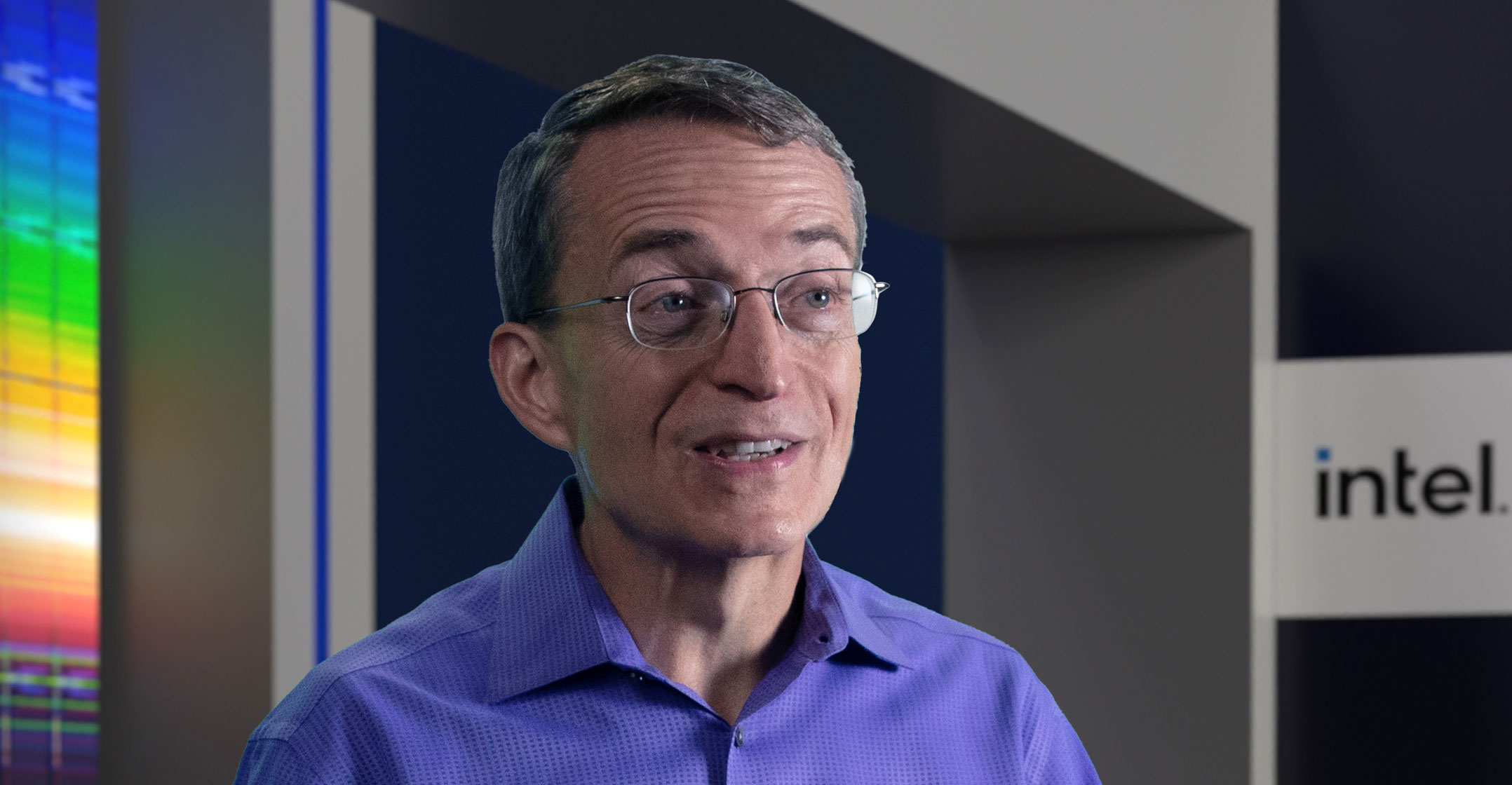
    Intel CEO Pat Gelsinger

    Since 2010, Intel has made at least four attempts to produce a viable AI chip, including acquiring two start-ups and at least two major homegrown efforts. None has made a dent against Nvidia or AMD in the rapidly expanding and lucrative market, according to three people with direct knowledge of the company’s internal activities.

    Intel’s entire data centre business is expected to generate sales of $13.9-billion this year — which includes the company’s AI chips but many other designs too — while analysts expect Nvidia to generate data centre revenue of $105.9-billion.

    In 2016, Intel CEO Brian Krzanich sought to buy its way into the AI business by acquiring Nervana Systems for $408-million. Intel executives were attracted to Nervana’s technology, which was similar to a tensor processing unit (TPU) chip made by Google, according to two former executives.

    Brian Krzanich sought to buy Intel’s way into the AI business by acquiring Nervana Systems for $408-million

    The TPU — specifically designed for building, or training, large generative AI models — stripped away a conventional GPU’s features useful for videogames and focused exclusively on optimising AI calculations.

    Nervana enjoyed some success with customers including Meta Platforms for its processor, though not enough to prevent Intel from switching horses and abandoning the project.

    In 2019, Intel bought a second chip start-up, Habana Labs, for $2-billion before it shut down Nervana’s efforts in 2020.

    Krzanich did not respond to a request for comment for this article.  — Max A Cherney, with Anna Tong and Arsheeya Singh Bajwa, (c) 2024 Reuters

    Read next: Implosion inside: the unfolding nightmare at Intel


    AMD Bob Swan Brian Krzanich Intel Nvidia OpenAI Pat Gelsinger
    Subscribe to TechCentral Subscribe to TechCentral
    Share. Facebook Twitter LinkedIn WhatsApp Telegram Email Copy Link
    Previous ArticleThe art of deception: unveiling the secrets of social engineering
    Next Article Why the SABC wants to go ‘extra-terrestrial’

    Related Posts

    Smartphone prices set to jump as memory crunch hits consumer tech

    Smartphone prices set to jump as memory crunch hits consumer tech

    3 December 2025
    Under fire, Nvidia goes to war with its critics

    Under fire, Nvidia goes to war with its critics

    27 November 2025
    Alphabet races toward $4-trillion valuation - Google

    Alphabet races towards $4-trillion valuation

    25 November 2025
    Company News
    AI is not a technology problem - iqbusiness

    AI is not a technology problem – iqbusiness

    5 December 2025
    Telcos are sitting on a data gold mine - but few know what do with it - Phillip du Plessis

    Telcos are sitting on a data gold mine – but few know what do with it

    4 December 2025
    Unlock smarter computing with your surface Copilot+ PC

    Unlock smarter computing with your Surface Copilot+ PC

    4 December 2025
    Opinion
    Your data, your hardware: the DIY AI revolution is coming - Duncan McLeod

    Your data, your hardware: the DIY AI revolution is coming

    20 November 2025
    Zero Carbon Charge founder Joubert Roux

    The energy revolution South Africa can’t afford to miss

    20 November 2025
    It's time for a new approach to government IT spend in South Africa - Richard Firth

    It’s time for a new approach to government IT spend in South Africa

    19 November 2025

    Subscribe to Updates

    Get the best South African technology news and analysis delivered to your e-mail inbox every morning.

    Latest Posts
    AI is not a technology problem - iqbusiness

    AI is not a technology problem – iqbusiness

    5 December 2025
    Vodacom to take control of Safaricom in R36-billion deal - Shameel Joosub

    Vodacom to take control of Safaricom in R36-billion deal

    4 December 2025
    Black Friday goes digital in South Africa as online spending surges to record high

    Black Friday goes digital in South Africa as online spending surges to record high

    4 December 2025
    BYD takes direct aim at Toyota with launch of sub-R500 000 Sealion 5 PHEV

    BYD takes direct aim at Toyota with launch of sub-R500 000 Sealion 5 PHEV

    4 December 2025
    © 2009 - 2025 NewsCentral Media
    • Cookie policy (ZA)
    • TechCentral – privacy and Popia

    Type above and press Enter to search. Press Esc to cancel.

    Manage consent

    TechCentral uses cookies to enhance its offerings. Consenting to these technologies allows us to serve you better. Not consenting or withdrawing consent may adversely affect certain features and functions of the website.

    Functional Always active
    The technical storage or access is strictly necessary for the legitimate purpose of enabling the use of a specific service explicitly requested by the subscriber or user, or for the sole purpose of carrying out the transmission of a communication over an electronic communications network.
    Preferences
    The technical storage or access is necessary for the legitimate purpose of storing preferences that are not requested by the subscriber or user.
    Statistics
    The technical storage or access that is used exclusively for statistical purposes. The technical storage or access that is used exclusively for anonymous statistical purposes. Without a subpoena, voluntary compliance on the part of your Internet Service Provider, or additional records from a third party, information stored or retrieved for this purpose alone cannot usually be used to identify you.
    Marketing
    The technical storage or access is required to create user profiles to send advertising, or to track the user on a website or across several websites for similar marketing purposes.
    • Manage options
    • Manage services
    • Manage {vendor_count} vendors
    • Read more about these purposes
    View preferences
    • {title}
    • {title}
    • {title}