Close Menu
TechCentralTechCentral

    Subscribe to the newsletter

    Get the best South African technology news and analysis delivered to your e-mail inbox every morning.

    Facebook X (Twitter) YouTube LinkedIn
    WhatsApp Facebook X (Twitter) LinkedIn YouTube
    TechCentralTechCentral
    • News
      MultiChoice scraps annual DStv price hikes for 2026 - David Mignot

      MultiChoice scraps annual DStv price hike

      20 February 2026
      What Gen Z really thinks about the tech world it inherited - Tinashe Mazodze

      What Gen Z really thinks about the tech world it inherited

      20 February 2026
      Showmax 'can't continue' in its current form

      Showmax ‘can’t continue’ in its current form

      20 February 2026
      Free Market Foundation slams treasury's proposed gambling tax

      Free Market Foundation slams treasury’s proposed gambling tax

      20 February 2026
      South Africa's dynamic spectrum breakthrough - Paul Colmer

      South Africa’s dynamic spectrum breakthrough

      20 February 2026
    • World
      Prominent Southern African journalist targeted with Predator spyware

      Prominent Southern African journalist targeted with Predator spyware

      18 February 2026
      More drama in Warner Bros tug of war

      More drama in Warner Bros tug of war

      17 February 2026
      Russia bans WhatsApp

      Russia bans WhatsApp

      12 February 2026
      EU regulators take aim at WhatsApp

      EU regulators take aim at WhatsApp

      9 February 2026
      Musk hits brakes on Mars mission

      Musk hits brakes on Mars mission

      9 February 2026
    • In-depth
      How liberalisation is rewiring South Africa's power sector

      How liberalisation is rewiring South Africa’s power sector

      21 January 2026
      The top-performing South African tech shares of 2025

      The top-performing South African tech shares of 2025

      12 January 2026
      Digital authoritarianism grows as African states normalise internet blackouts

      Digital authoritarianism grows as African states normalise internet blackouts

      19 December 2025
      TechCentral's South African Newsmakers of 2025

      TechCentral’s South African Newsmakers of 2025

      18 December 2025
      Black Friday goes digital in South Africa as online spending surges to record high

      Black Friday goes digital in South Africa as online spending surges to record high

      4 December 2025
    • TCS
      Watts & Wheels S1E4: 'We drive an electric Uber'

      Watts & Wheels S1E4: ‘We drive an electric Uber’

      10 February 2026
      TCS+ | How Cloud On Demand is helping SA businesses succeed in the cloud - Xhenia Rhode, Dion Kalicharan

      TCS+ | Cloud On Demand and Consnet: inside a real-world AWS partner success story

      30 January 2026
      Watts & Wheels S1E4: 'We drive an electric Uber'

      Watts & Wheels S1E3: ‘BYD’s Corolla Cross challenger’

      30 January 2026
      Watts & Wheels S1E4: 'We drive an electric Uber'

      Watts & Wheels S1E2: ‘China attacks, BMW digs in, Toyota’s sublime supercar’

      23 January 2026

      TCS+ | Why cybersecurity is becoming a competitive advantage for SA businesses

      20 January 2026
    • Opinion
      A million reasons monopolies don't work - Duncan McLeod

      A million reasons monopolies don’t work

      10 February 2026
      The author, Business Leadership South Africa CEO Busi Mavuso

      Eskom unbundling U-turn threatens to undo hard-won electricity gains

      9 February 2026
      South Africa's skills advantage is being overlooked at home - Richard Firth

      South Africa’s skills advantage is being overlooked at home

      29 January 2026
      Why Elon Musk's Starlink is a 'hard no' for me - Songezo Zibi

      Why Elon Musk’s Starlink is a ‘hard no’ for me

      26 January 2026
      A million reasons monopolies don't work - Duncan McLeod

      South Africa’s new fibre broadband battle

      20 January 2026
    • Company Hubs
      • Africa Data Centres
      • AfriGIS
      • Altron Digital Business
      • Altron Document Solutions
      • Altron Group
      • Arctic Wolf
      • AvertITD
      • Braintree
      • CallMiner
      • CambriLearn
      • CYBER1 Solutions
      • Digicloud Africa
      • Digimune
      • Domains.co.za
      • ESET
      • Euphoria Telecom
      • Incredible Business
      • iONLINE
      • IQbusiness
      • Iris Network Systems
      • LSD Open
      • Mitel
      • NEC XON
      • Netstar
      • Network Platforms
      • Next DLP
      • Ovations
      • Paracon
      • Paratus
      • Q-KON
      • SevenC
      • SkyWire
      • Solid8 Technologies
      • Telit Cinterion
      • Tenable
      • Vertiv
      • Videri Digital
      • Vodacom Business
      • Wipro
      • Workday
      • XLink
    • Sections
      • AI and machine learning
      • Banking
      • Broadcasting and Media
      • Cloud services
      • Contact centres and CX
      • Cryptocurrencies
      • Education and skills
      • Electronics and hardware
      • Energy and sustainability
      • Enterprise software
      • Financial services
      • Information security
      • Internet and connectivity
      • Internet of Things
      • Investment
      • IT services
      • Lifestyle
      • Motoring
      • Public sector
      • Retail and e-commerce
      • Satellite communications
      • Science
      • SMEs and start-ups
      • Social media
      • Talent and leadership
      • Telecoms
    • Events
    • Advertise
    TechCentralTechCentral
    Home » In-depth » Introvert? You may just be bad at recognising faces

    Introvert? You may just be bad at recognising faces

    By The Conversation10 September 2019
    Twitter LinkedIn Facebook WhatsApp Email Telegram Copy Link
    News Alerts
    WhatsApp

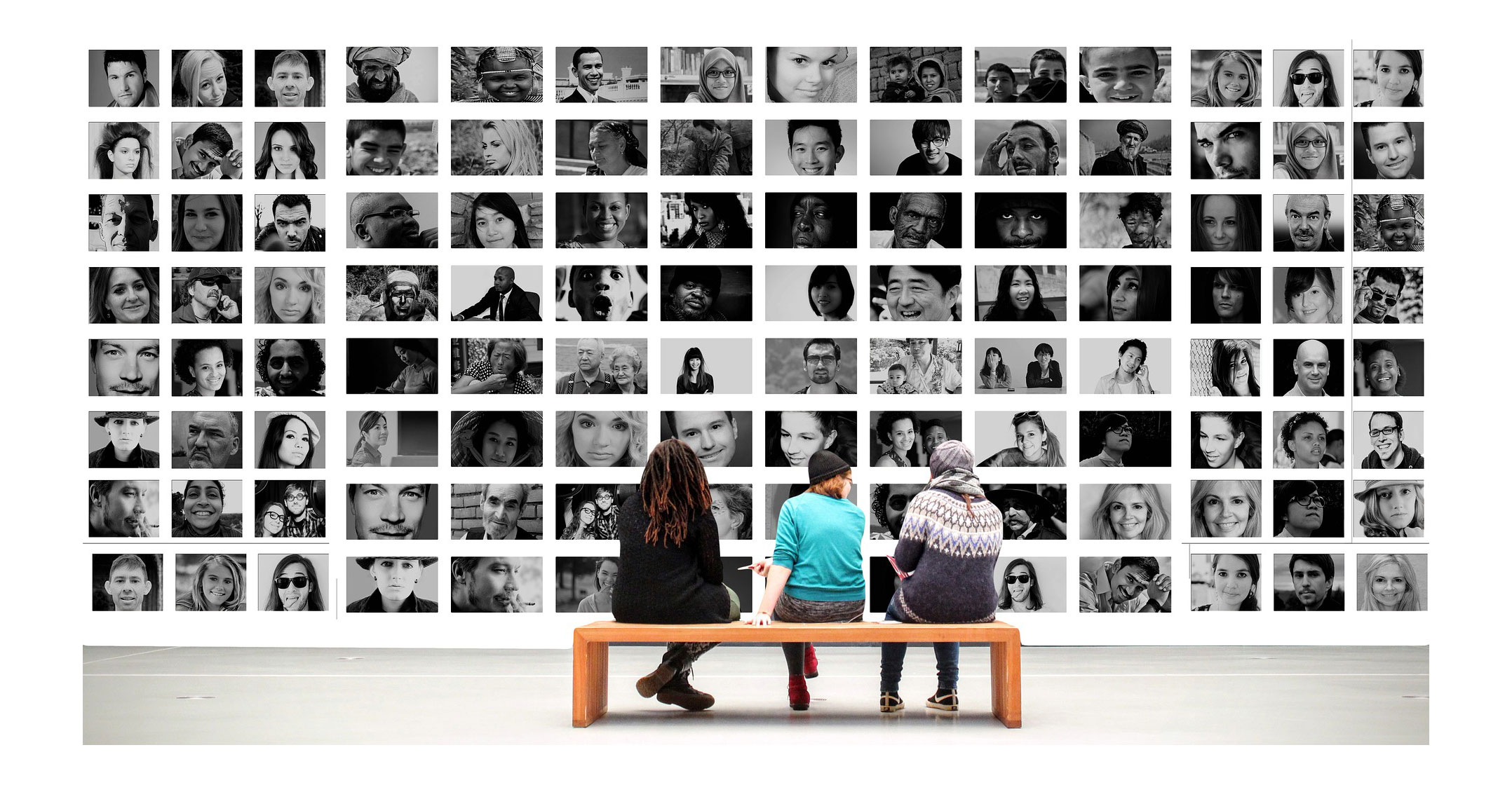
    Although most of us can distinguish between and remember hundreds of different faces, some people are better at it than others. “Super-recognisers” can accurately identify faces even when they have only seen them briefly previously. At the other extreme, “developmental prosopagnosics” are significantly impaired at recognising faces in many everyday situations.

    For most of us, though, our face recognition ability falls between these extremes. But why are there such huge individual differences? How do these abilities affect us and where do they come from? Psychologists have started to investigate such questions and found several answers. For example, we have discovered that it is linked to personality.

    Face recognition differences may reflect processing or structural differences in the brain. For example, people with prosopagnosia may have reduced connectivity between brain regions in the face processing network.

    Research has also found that people who report significantly lower levels of general anxiety have better face recognition skills

    Another idea is that face recognition ability is related to other more general cognitive abilities, like memory or visual processing. Here, though, findings are mixed. Some research supports a link between face recognition and specific abilities like visual processing. But other research has discounted this idea.

    Yet another possibility is that individual differences in face recognition reflect a person’s personality or their social and emotional functioning. Interestingly, face recognition ability has been linked to measures of empathy and anxiety.

    Empathy reflects a person’s ability to understand and share the feelings of another person. In 2010, researchers asked volunteers to try and remember the identity of a number of faces presented one at a time. They were later presented with the same faces mixed together with new faces and were asked to state whether each face was “old” (learnt) or “new”. The performance was measured by the number of learnt faces correctly identified as being familiar. The researchers found that those who rated themselves as high in empathy performed significantly better at a face recognition memory task than those with low empathy skills.

    More prominent for women

    Research has also found that people who report significantly lower levels of general anxiety have better face recognition skills than those who are have higher anxiety.

    Interestingly, more recent research has suggested the link between anxiety and face recognition ability may be more prominent for women, and may be particularly related to anxiety in social situations (social anxiety).

    Situational anxiety may also play a role. For example, face recognition may be impaired when an eyewitness is asked to try and identify the face of a suspect viewed in a stressful situation.

    In our own work we have considered the relationship between extroversion and individual face recognition ability. Extroverts are known to be superior at decoding social information and to be more involved in social activities than introverts. It may therefore be that extroverts are more skilled at recognising different identities.

    In a previous study, researchers collected data from a group of 20 highly extroverted and 23 highly introverted volunteers (from an original sample of 339 volunteers). They found that extroverts performed significantly better in a face recognition memory task compared with the introverts.

    In our own work we looked at 100 volunteers with a range of extroversion levels. The volunteers were shown famous faces and were asked to try and identify them by giving their name or some other identifying information.

    Volunteers were also asked to say whether two unfamiliar faces belonged to the same person or different people — a task dubbed face matching. While there was no relationship between extroversion and face matching, there was a positive relationship between extroversion and famous face recognition. So, to answer our own question, although there is individual variation, extroverts do tend to be better at recognising faces.

    It may be that extroversion causes superior face recognition or that people who are better at identifying faces become more extroverted as a result

    We do not yet understand the importance and reason for these findings, however. It may be that extroversion causes superior face recognition or that people who are better at identifying faces become more extroverted as a result.

    If so, then a person’s inability to learn and recognise faces may lead them to become more introverted, to avoid potentially embarrassing social situations. Alternatively, introverted people may meet fewer people and therefore never develop good face recognition skills.

    It may also work both ways. If you are slightly worse at recognising faces to start with you may end up meeting fewer people, and therefore becoming even worse at it over time. It could also be that both extroversion and face recognition are related to yet another factor that we still don’t know about.

    Ongoing work

    In future work, we need to consider how our findings with extroversion fit together with research on empathy and anxiety. We also need to consider how much practical impact these issues have on face identification in applied situations — from identification by police officers to passport control.

    Our own ongoing work is looking at the impact of wider individual factors like altruism and optimism on face recognition. It may be that we soon find even more explanations for why some of us are just better at recognising faces than others.The Conversation

    • Written by Karen Lander, senior lecturer in experimental psychology, University of Manchester
    • This article is republished from The Conversation under a Creative Commons licence

    Follow TechCentral on Google News Add TechCentral as your preferred source on Google


    top
    WhatsApp YouTube
    Share. Facebook Twitter LinkedIn WhatsApp Telegram Email Copy Link
    Previous ArticleJack Ma ends 20-year reign over Alibaba wealth creation empire
    Next Article Why investors are beginning to question WeWork’s value

    Related Posts

    18GW in unplanned breakdowns cripple Eskom

    2 November 2021

    Nersa kicks the Karpowership can down the road

    13 September 2021

    If you think South African load shedding is bad, try Zimbabwe’s

    13 September 2021
    Company News
    Service is everyone's problem now - and that's exactly why the Atlassian Service Collection matters

    Service is everyone’s problem now – why the Atlassian Service Collection matters

    20 February 2026
    Customers have new expectations. Is your CX ready? 1Stream

    Customers have new expectations. Is your CX ready?

    19 February 2026
    South Africa's cybersecurity challenge is not a tool problem - Nicholas Applewhite, Trinexia South Africa

    South Africa’s cybersecurity challenge is not a tool problem

    19 February 2026
    Opinion
    A million reasons monopolies don't work - Duncan McLeod

    A million reasons monopolies don’t work

    10 February 2026
    The author, Business Leadership South Africa CEO Busi Mavuso

    Eskom unbundling U-turn threatens to undo hard-won electricity gains

    9 February 2026
    South Africa's skills advantage is being overlooked at home - Richard Firth

    South Africa’s skills advantage is being overlooked at home

    29 January 2026

    Subscribe to Updates

    Get the best South African technology news and analysis delivered to your e-mail inbox every morning.

    Latest Posts
    MultiChoice scraps annual DStv price hikes for 2026 - David Mignot

    MultiChoice scraps annual DStv price hike

    20 February 2026
    What Gen Z really thinks about the tech world it inherited - Tinashe Mazodze

    What Gen Z really thinks about the tech world it inherited

    20 February 2026
    Showmax 'can't continue' in its current form

    Showmax ‘can’t continue’ in its current form

    20 February 2026
    Free Market Foundation slams treasury's proposed gambling tax

    Free Market Foundation slams treasury’s proposed gambling tax

    20 February 2026
    © 2009 - 2026 NewsCentral Media
    • Cookie policy (ZA)
    • TechCentral – privacy and Popia

    Type above and press Enter to search. Press Esc to cancel.

    Manage consent

    TechCentral uses cookies to enhance its offerings. Consenting to these technologies allows us to serve you better. Not consenting or withdrawing consent may adversely affect certain features and functions of the website.

    Functional Always active
    The technical storage or access is strictly necessary for the legitimate purpose of enabling the use of a specific service explicitly requested by the subscriber or user, or for the sole purpose of carrying out the transmission of a communication over an electronic communications network.
    Preferences
    The technical storage or access is necessary for the legitimate purpose of storing preferences that are not requested by the subscriber or user.
    Statistics
    The technical storage or access that is used exclusively for statistical purposes. The technical storage or access that is used exclusively for anonymous statistical purposes. Without a subpoena, voluntary compliance on the part of your Internet Service Provider, or additional records from a third party, information stored or retrieved for this purpose alone cannot usually be used to identify you.
    Marketing
    The technical storage or access is required to create user profiles to send advertising, or to track the user on a website or across several websites for similar marketing purposes.
    • Manage options
    • Manage services
    • Manage {vendor_count} vendors
    • Read more about these purposes
    View preferences
    • {title}
    • {title}
    • {title}